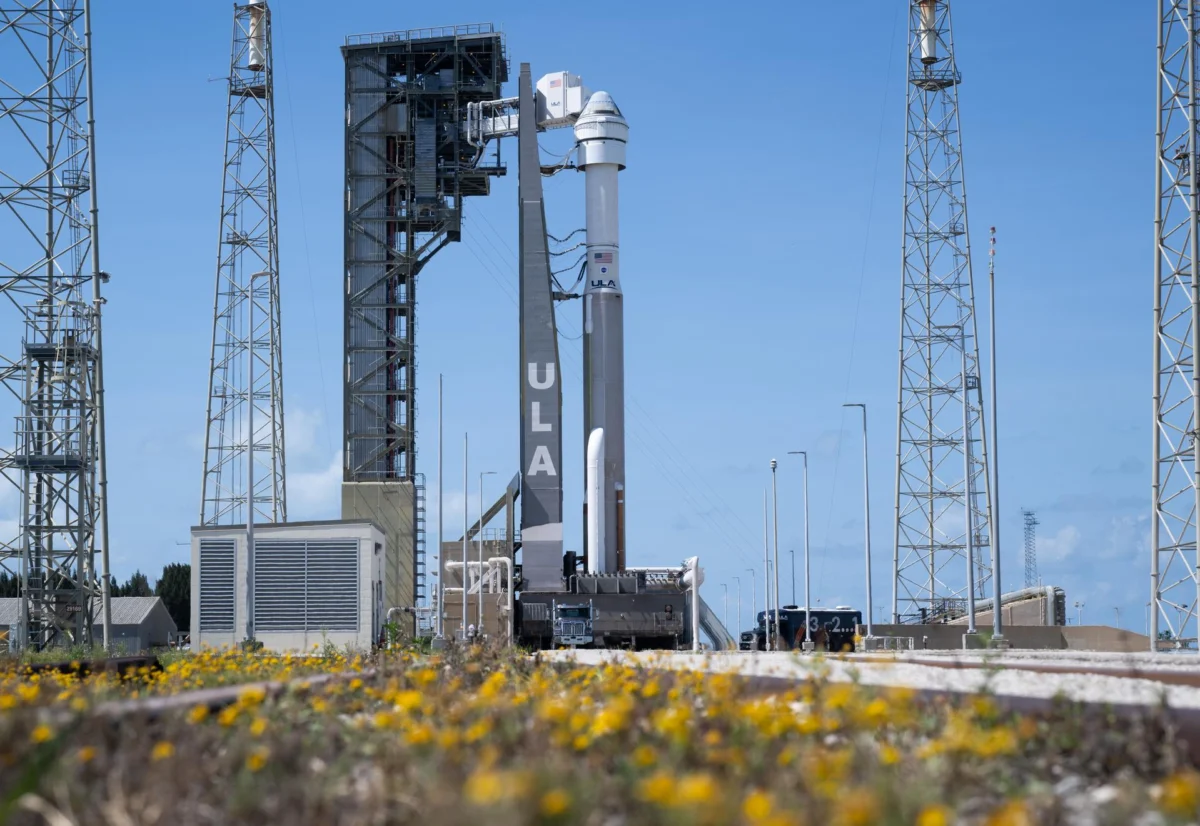
WASHINGTON — In a series of financial and operational disclosures, Boeing has pushed back the return-to-flight timeline for its CST-100 Starliner spacecraft and confirmed its participation in a massive joint financial rescue of United Launch Alliance (ULA).
During a second-quarter earnings call on July 28, 2026, Boeing’s President and Chief Executive, Kelly Ortberg, addressed the ongoing technical hurdles facing the commercial crew program, characterizing Starliner as the final legacy fixed-price contract within the company’s defense and space division that requires stabilization. Concurrently, regulatory filings revealed that Boeing and Lockheed Martin have each stepped in with $500 million loan guarantees to shield ULA from a severe cash-flow crisis triggered by the ongoing grounding of its Vulcan Centaur rocket.
Main Facts
The latest updates from Boeing and its partners highlight several critical developments:
- Starliner Delay: An uncrewed validation flight of the CST-100 Starliner, designated as the Starliner-1 mission, has been officially delayed to no earlier than the fourth quarter of 2026.
- Contractual Redesign: Originally built as a crewed transport vehicle, Starliner-1 is being replanned in coordination with NASA as an uncrewed cargo-only flight to verify systemic fixes before astronauts are permitted back on board.
- Financial Exposure: Boeing’s cumulative losses on the fixed-price Commercial Crew Transportation Capability (CCtCap) contract remain holding at approximately $2 billion. Management does not currently project immediate additional write-offs, though future mission schedules remain highly uncertain.
- ULA Emergency Funding: Due to the prolonged grounding of the Vulcan Centaur rocket, Boeing and Lockheed Martin have each guaranteed $500 million of ULA’s credit facilities, totaling $1 billion in emergency financial backing. These credit facilities are scheduled to mature on July 30, 2027.
Chronology of Programmatic Hurdles
To understand the current state of both the Starliner and Vulcan Centaur programs, it is necessary to trace the technical and operational timelines that led to these mid-2026 bottlenecks.
The Troubled Path of CST-100 Starliner (2014–2026)
NASA awarded Boeing a $4.2 billion CCtCap contract in 2014 to develop Starliner, alongside a $2.6 billion award to SpaceX for its Crew Dragon spacecraft. While SpaceX successfully launched its first crewed mission in 2020, Boeing’s development path was marked by consecutive hardware and software anomalies:
- December 2019 (OFT-1): The first uncrewed Orbital Flight Test failed to reach the International Space Station (ISS) due to a mission elapsed timer software error, forcing an early return to Earth.
- May 2022 (OFT-2): A second uncrewed test successfully docked with the ISS, though the mission was preceded by years of delays caused by corroded oxidizer valves in the service module.
- June 2024 (Crew Flight Test): Starliner launched its first crewed mission (CFT) carrying NASA astronauts Butch Wilmore and Suni Williams. During rendezvous, the spacecraft suffered five reaction control system (RCS) thruster failures and multiple helium leaks in its propulsion plumbing.
- Late 2024–Early 2025: Citing safety concerns regarding thruster reliability during atmospheric reentry, NASA elected to return Starliner to Earth uncrewed. Wilmore and Williams remained on the ISS for nine months, eventually returning home aboard a SpaceX Crew Dragon.
- Mid-2026: Following two years of root-cause analysis and hardware redesigns, Boeing and NASA agreed that Starliner’s return-to-flight mission must be uncrewed, shifting the spacecraft’s next flight into late 2026.
[2014: Contract Award] ──> [2019: OFT-1 Failure] ──> [2022: OFT-2 Success]
                                                               │
[2026: Target Uncrewed Flight] <── [2024: CFT Thruster Issues & Empty Return]
Vulcan Centaur’s Grounding and Financial Strain (2024–2026)
United Launch Alliance, a 50-50 joint venture between Boeing and Lockheed Martin, developed the Vulcan Centaur rocket to replace its legacy Atlas V and Delta IV launch vehicles. Vulcan’s entry into service was designed to secure ULA’s share of the lucrative National Security Space Launch (NSSL) Phase 2 contracts.
However, following its debut flights, technical anomalies involving the Centaur upper stage led to a prolonged suspension of Vulcan launches. This suspension halted ULA’s manifest, starving the launch provider of operational revenue and preventing it from fulfilling its high-cadence launch commitments to both the U.S. Space Force and Amazon’s Project Kuiper. By May 2026, the financial strain forced ULA to seek emergency credit guarantees from its parent companies.
Supporting Financial and Operational Data
The financial metrics disclosed in the second-quarter 2026 filings outline the high stakes of these delay cycles.
Boeing’s Starliner Balance Sheet
Boeing’s development of Starliner under a fixed-price contract structure means the company, rather than NASA, must absorb all costs exceeding the original contract ceiling.

| Metric | Details |
|---|---|
| Original NASA CCtCap Award (2014) | $4.2 Billion |
| Cumulative Overrun Charges (To Date) | ~$2.0 Billion |
| Current Financial Quarters Impacted | Q2 2026 (No new charges taken, but risk remains) |
| Earliest Uncrewed Cargo Flight | Q4 2026 |
ULA Joint Venture Credit Guarantees
In SEC Form 10-Q filings, both Boeing and Lockheed Martin confirmed they have taken equal shares in stabilizing ULA’s balance sheet to avoid a technical default on existing credit facilities.
- Boeing Guarantee Commitment: $500 million
- Lockheed Martin Guarantee Commitment: $500 million
- Total Joint Venture Support: $1.0 billion
- Maturity Date of Credit Facilities: July 30, 2027
The filings explicitly warn that both parent corporations "expect to provide additional financial support and could incur losses if ULA is unable to resume Vulcan launches."
Official Responses and Executive Perspectives
Corporate and agency leaders have adopted a cautious, collaborative tone as they seek to resolve these systemic issues.
Boeing Executive Leadership
Boeing CEO Kelly Ortberg, who took the helm with a mandate to resolve the company’s systemic manufacturing and defense program losses, emphasized that Starliner remains a primary focus of his recovery plan.
"The one program we have work yet to do with the customer on is commercial crew, or the Starliner program. The redesign of the Starliner deficiencies is going quite well. We’re feeling pretty good about that. We’ve got to work with NASA to align on when the launches are going to be, both the crewed and uncrewed launches, going forward."
— Kelly Ortberg, Boeing CEO
In its official SEC Form 10-Q filing, Boeing was more candid about the regulatory and operational hurdles ahead:
"We had expected to launch an uncrewed mission followed by a crewed mission during 2026. Based on recent discussions with NASA, we now expect to complete an uncrewed mission no earlier than the fourth quarter of 2026… We and NASA are currently in discussions regarding timing and requirements for follow-on missions, and the outcome of those discussions is uncertain."
NASA and Independent Advisory Bodies
NASA’s Aerospace Safety Advisory Panel (ASAP) has repeatedly warned that flight safety must dictate the schedule, regardless of commercial pressure. At a late June 2026 meeting, panel members noted that validating the redesigns of Starliner’s thrusters and helium manifolds could easily push the next launch window past the end of the year.

Bill Spetch, NASA’s ISS operations and integration manager, highlighted the scheduling difficulties of integrating Starliner back into the busy ISS visiting vehicle manifest:
"Our schedule is pretty busy, but we’re trying to maintain windows where we can go fly that."
Strategic and Industry-Wide Implications
The compounding delays of Boeing’s Starliner and ULA’s Vulcan Centaur carry profound consequences for the broader aerospace sector, national security, and international space station logistics.
Impacts on ISS Logistics and Redundancy
NASA’s commercial crew strategy was built entirely on the concept of dissimilar redundancy—having two independent spacecraft (SpaceX’s Crew Dragon and Boeing’s Starliner) capable of carrying astronauts to the ISS. This redundancy was intended to protect the space station from being uncrewed if one vehicle was grounded by a systemic failure.
With Starliner’s crewed flight delayed until at least 2027, NASA remains entirely reliant on SpaceX for domestic crew access. With the ISS scheduled for retirement and decommissioning in 2030, Starliner’s operational window to fly routine, contracted crew rotation missions (Starliner-1 through Starliner-6) is shrinking rapidly. The vehicle may only complete a fraction of its intended operational life before the station is deorbited.
ISS Retirement Horizon (2030)
───────────────────────────────────────────────────────────────────────────►
[2024: CFT] ───> [2026: Uncrewed Test] ───> [2027: Earliest Crewed] ───> [Short Operational Window]
The Future of United Launch Alliance
The $1 billion credit guarantee from Boeing and Lockheed Martin underscores the fragile state of ULA during Vulcan’s flight suspension. Vulcan Centaur is critical to the U.S. Space Force’s national security space launch architecture and is also contracted to fly dozens of launches for Amazon’s Project Kuiper broadband constellation.
If Vulcan remains grounded, ULA risks missing critical regulatory deployment deadlines for Amazon and failing to meet Space Force launch schedules. This financial vulnerability could also complicate ongoing efforts by Boeing and Lockheed Martin to sell ULA to a private buyer, a strategic divestiture that has been rumored in the financial press for several years.
The Decline of Fixed-Price Defense Contracting
Starliner’s financial trajectory serves as a cautionary tale for the aerospace industry’s shift toward fixed-price development contracts. Under these structures, commercial companies bid a set price to develop complex, cutting-edge technology, agreeing to cover any overruns.
Boeing’s $2 billion in Starliner losses—combined with multi-billion dollar write-offs on other fixed-price programs like the KC-46 Pegasus tanker and the VC-25B (Air Force One) replacement aircraft—have led to a dramatic reassessment of risk. Industry analysts expect both Boeing and its competitors to reject fixed-price terms on future highly complex, first-of-their-kind aerospace development projects, favoring traditional cost-plus contracting models to protect their balance sheets from technical setbacks.