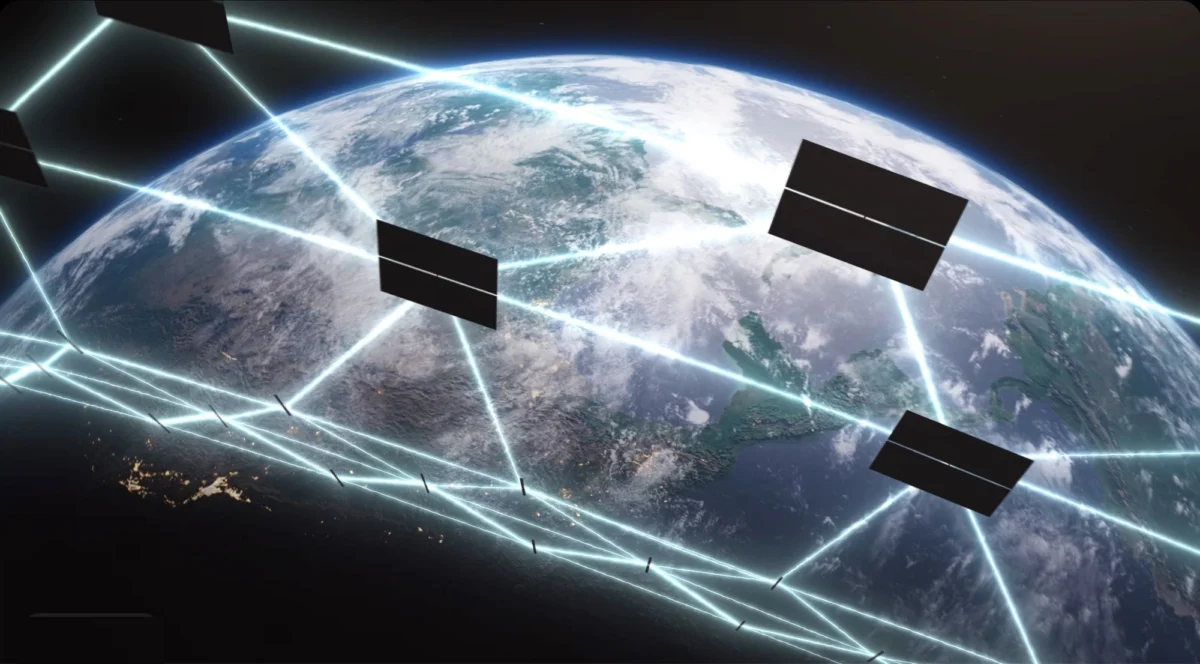
WASHINGTON — The commercial space sector is standing on the precipice of a paradigm shift. As tech companies and aerospace startups draft blueprints for massive constellations of orbital data centers, the international space community is facing an existential question: how can low Earth orbit (LEO) safely accommodate hundreds of thousands—or even a million—new active satellites?
During a panel discussion organized by the Secure World Foundation, government officials, regulatory experts, and industry pioneers warned that the window of opportunity to establish rules of the road is rapidly closing. With orbital edge computing poised to transition from a niche concept to a massive infrastructure reality, the industry must proactively address space safety, collision avoidance, and international coordination before orbital pathways become irreparably congested.
Main Facts: The Rise of the Orbital Cloud
The concept of orbital data centers has transitioned from science fiction to regulatory reality. Startups and established aerospace firms alike are filing plans to position high-performance computing clusters directly in orbit. The drivers behind this trend are clear: by processing data in space, operators can bypass the bandwidth bottlenecks of sending raw data back to Earth, leverage constant solar energy, utilize the natural vacuum of space for thermal management, and reduce latency for global end-users through inter-satellite laser links (ISLs).
However, the sheer scale of these planned constellations is unprecedented:
- Starcloud’s Massive Filing: Starcloud, an orbital computing startup, has filed regulatory plans for an astronomical constellation of 88,000 satellites.
- The Scale Problem: While SpaceX’s Starlink constellation—currently numbering around 10,000 operational satellites—is frequently cited as the benchmark for modern space safety, it represents a mere fraction of the scale envisioned for future orbital data clouds. Some industry projections and filings suggest total orbital assets could eventually scale to a million spacecraft.
- The Threat of Exponential Maneuvers: Experts warn that as satellite numbers grow, the sheer volume of daily collision-avoidance maneuvers could overwhelm current automated systems, escalating from hundreds of thousands of maneuvers annually to hundreds of millions.
- The Dawn-Dusk Solution (and its Catch): To power these energy-hungry data centers, operators are targeting "dawn-dusk" sun-synchronous orbits (SSO). While these orbits allow satellites to avoid the Earth’s shadow and maintain constant solar exposure, they require strict directional coordination. If operators do not agree on a single direction of travel, the risk of catastrophic head-on collisions increases exponentially.
Chronology: From Telecommunications to Mega-Computing Constellations
To understand the urgency of the current space traffic debate, it is necessary to trace the rapid evolution of commercial operations in low Earth orbit over the last three decades.
[1990s: Early LEO Pioneers] ──> [2019: The Starlink Era Begins] ──> [2024: The Rise of Orbital Edge Computing] ──> [Future: The Million-Satellite Era]
  - Iridium & Globalstar          - Mega-constellations launch     - Starcloud files for 88k satellites     - Extreme traffic density
  - Dozens of satellites          - Thousands of active nodes      - Focus shifts to space-based data       - TraCSS & OSC active
The Early Pioneers (1990s–2000s)
The first wave of LEO constellations, such as Iridium and Globalstar, deployed dozens of satellites to provide global voice and data services. During this era, space traffic was sparse, and collision avoidance was largely handled through manual tracking and periodic, human-calculated orbital adjustments.
The Mega-Constellation Revolution (2019–Present)
The launch of SpaceX’s Starlink in 2019 fundamentally altered orbital dynamics. For the first time, a single operator managed thousands of active satellites in LEO. To cope with the traffic, SpaceX developed highly automated collision-avoidance algorithms. While Starlink has operated with a remarkable safety record, its 10,000-satellite fleet is now recognized as just the baseline for the next phase of orbital industrialization.
The Era of Orbital Edge Computing (2024 and Beyond)
Today, the industry is transitioning from simple communications relays to high-density orbital data processing centers. Starcloud’s filing for 88,000 satellites marks the beginning of this third wave. This surge has forced regulatory bodies, such as the U.S. Office of Space Commerce (OSC), to accelerate the development of civilian-led space traffic coordination systems to replace legacy military tracking models.
Supporting Data and Technical Analysis: The Mathematics of Congestion
The core challenge of managing a million-satellite environment lies in the physics of orbital intersections and the mathematical scaling of potential collisions.
The Conjunction Scaling Law: $N^2$ vs. Concentric Shells
In a disorganized orbital environment where satellite trajectories cross at various inclinations, the number of potential conjunctions (close passes) does not scale linearly with the number of satellites ($N$). Instead, it scales quadratically, proportional to the square of the number of active spacecraft:
$$textPotential Conjunction Pairs approx fracN^22$$

Under this standard model, a tenfold increase in satellites results in a hundredfold increase in potential collisions.
- Current Environment: With tens of thousands of active satellites and tracked debris, operators collectively perform hundreds of thousands of collision-avoidance maneuvers annually.
- The Million-Satellite Projection: Ron Birk, principal director of The Aerospace Corporation’s Space Enterprise Evolution Directorate, noted that in an uncoordinated environment of one million spacecraft, the system would face an unsustainable 500 million maneuvers annually.
Active Satellites vs. Annual Maneuver Volume (Estimated)
┌──────────────────────────┬────────────────────────────────┐
│ Active Satellites (N)    │ Annual Maneuver Volume         │
├──────────────────────────┼────────────────────────────────┤
│ ~10,000 (Current LEO)    │ Hundreds of Thousands          │
│ ~100,000 (Mid-term)      │ Tens of Millions               │
│ ~1,000,000 (Projected)   │ ~500,000,000                   │
└──────────────────────────┴────────────────────────────────┘
The Dawn-Dusk Sun-Synchronous Orbit (SSO) Paradigm
To bypass this quadratic scaling law, orbital data center operators like Starcloud propose utilizing highly specialized, non-intersecting concentric orbital "shells." Specifically, they are targeting dawn-dusk sun-synchronous orbits.
In a dawn-dusk SSO, a satellite rides the terminator line—the boundary between day and night on Earth. This orbit offers two massive engineering advantages for data centers:
- Continuous Solar Power: The satellite’s solar panels are almost constantly illuminated, eliminating the need for heavy, expensive battery arrays to survive eclipse phases.
- Simplified Thermal Management: The thermal profile remains highly stable, which is critical for cooling power-dense silicon chips in a vacuum.
       [Sunlight] ───>  ☼
                        │
                        ▼
           ┌────────────────────────┐
           │  Dawn-Dusk Terminator  │ <── [Satellite Constellation Shell]
           │         Orbit          │     (Constant power, no intersection)
           └────────────────────────┘
                        ▲
                        │
           [Earth] ─────┴───── [Shadow / Eclipse Zone]
By placing thousands of satellites into these highly structured, parallel, non-intersecting rings, operators can pack spacecraft tightly together without risking cross-plane intersections. Ezra Feilden, co-founder and CTO of Starcloud, argues this approach mirrors how the industry manages Geostationary Orbit (GEO), where satellites occupy designated "slots" along a single equatorial ring.
The "Two-Way Highway" Hazard
However, the dawn-dusk SSO strategy introduces a catastrophic point of failure: directionality.
If all operators in a specific dawn-dusk shell launch their satellites in a prograde direction (e.g., traveling north over the morning terminator and south over the evening terminator), the relative velocity between any two satellites remains extremely low, virtually eliminating high-speed collision risks.
However, if even one operator chooses to launch a constellation in the opposite (retrograde) direction within the same shell, the situation degenerates. The relative closing velocity of a head-on collision in LEO can exceed 14 to 15 kilometers per second (over 30,000 mph).
"It’s going to be like a highway without deciding which side of the road the traffic goes on, with an enormous number of head-on collision risks," Feilden warned.
Official Responses and Regulatory Frameworks
The rapid scaling of commercial space architecture has left national and international regulatory frameworks scrambling to catch up. Government and industry representatives on the panel emphasized that voluntary best practices must be established immediately, even as formal regulations grind through bureaucratic channels.
Office of Space Commerce (OSC)
Matias Cava, the national space policy lead at the U.S. Office of Space Commerce, highlighted the ongoing development of the Space Commerce Certification system. This voluntary mission authorization framework is designed to ensure commercial operators comply with the Outer Space Treaty’s mandate for "authorization and continuing supervision" of non-governmental entities.
Cava acknowledged that the certification system is still in its infancy and remains voluntary. Recognizing the slow pace of government rulemaking, he issued a direct call to action to the private sector:

"I would encourage operators to not wait for government action to develop and abide by best practices, and think about how they would want their competitors to act in space."
Department of Commerce and TraCSS
To address the immediate operational threat of collisions, the Department of Commerce is actively building the Traffic Coordination System for Space (TraCSS).
Jeff O’Neil, director of government affairs at Earth-imaging company Planet, compared the current TraCSS initiative to the foundational years of global aviation. Decades ago, the United States and international partners established a unified civil aviation framework to share safety data, which eventually matured into the highly regulated global air traffic control system managed under the International Civil Aviation Organization (ICAO).
"It’s a perfect example of how we can set the right rules of the road for everyone," O’Neil stated, urging the space industry to embrace TraCSS as a vital utility for global data sharing.
Implications for the Future of Space Operations
The transition to orbital data center constellations will have sweeping implications for the future of the space economy, international geopolitics, and environmental preservation.
1. The Geopolitical Race for Orbital Real Estate
Because non-intersecting dawn-dusk shells represent the most economically viable orbits for space-based computing, these specific regions of LEO will become highly contested real estate. First-mover advantage will be critical. The companies—and by extension, the nations—that deploy their fleets first may effectively lock out competitors from these premium orbits, claiming a monopoly on low-latency orbital processing.
2. The Vulnerability of Global Space Infrastructure
If a single head-on collision occurs within a high-density dawn-dusk shell, the resulting debris cloud would travel at hypervelocity directly along the orbital pathway. This could trigger a localized cascade of collisions—a phenomenon known as the Kessler Syndrome—rendering that entire orbital shell unusable for decades. For global industries reliant on space-based data, weather tracking, and national security communications, the economic fallout would be catastrophic.
3. Automated Coordination and the Trust Deficit
To manage millions of daily conjunction assessments, human operators must be entirely removed from the decision-making loop. Collision avoidance will rely on real-time, machine-to-machine coordination where satellites autonomously negotiate right-of-way. However, this level of automation requires absolute trust between competing commercial entities and adversarial nations. Establishing secure, tamper-proof communication protocols between American, European, Chinese, and Russian commercial operators remains a daunting diplomatic and technological hurdle.
Summary: Deciding "Which Side of the Road" to Drive On
Ultimately, the technology to build orbital data centers is outpacing the international consensus required to operate them safely. As Ezra Feilden summarized, the industry cannot afford to delay the conversation on basic operational norms. If the commercial space sector is to avoid turning low Earth orbit into an chaotic, unusable highway, operators must align on the fundamentals today.
"Today," Feilden concluded, "we need to decide which side of the road we’re going to be driving on."