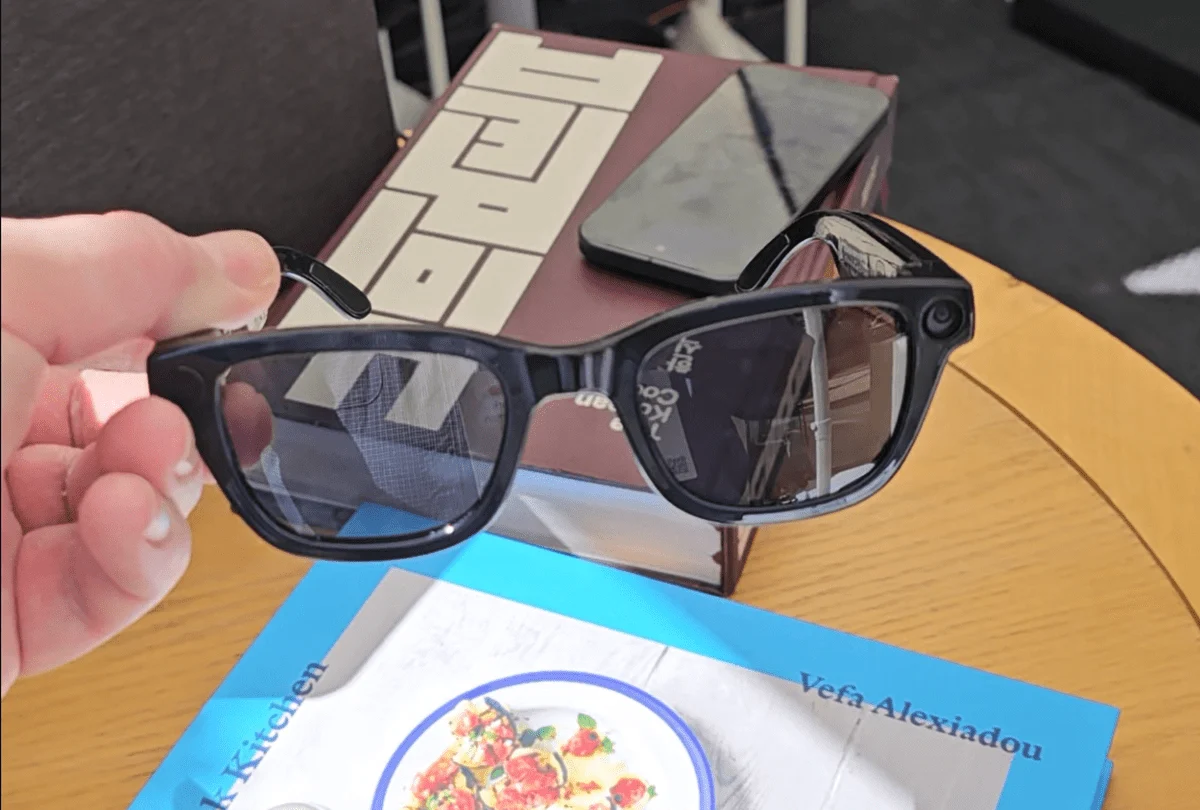
In an era where technology is increasingly integrated into the very fabric of human perception, the lines between personal convenience and public surveillance have never been thinner. This friction reached a boiling point this week as DefCon, the world’s most prestigious hacker and security conference, officially updated its conduct policy to include a comprehensive ban on smart glasses. As the industry races to normalize head-mounted AI, the move by DefCon signals a growing, industry-wide anxiety regarding the erosion of consent in an age of ubiquitous recording.
The Main Facts: A Total Ban on Head-Mounted Tech
DefCon, an event renowned for its commitment to digital privacy and information security, has formally added "smart glasses" to its prohibited list of audio and video recording devices. The policy is absolute: attendees are strictly forbidden from wearing eyewear equipped with cameras, microphones, or data-transmission capabilities.
The rationale provided by organizers is centered on the impossibility of verification. Unlike a smartphone, which is clearly visible when held up to capture a scene, or a professional camera, which is easily identified by its lens, smart glasses often mimic standard corrective eyewear. This "stealth" factor creates an environment where other attendees cannot reasonably know if they are being recorded, effectively ending the concept of a private conversation in public spaces.
Perhaps most notably, the ban offers no exemptions for those who require corrective lenses. DefCon’s mandate is clear: if a pair of spectacles features integrated smart technology, it stays at the door. Attendees who require visual aids are encouraged to bring traditional, analog eyewear, ensuring that the conference remains a "black box" where private research and conversation can occur without the looming threat of unauthorized digital capture.
Chronology: The Escalation of the "Eyes-On" Conflict
The journey toward this ban did not happen in a vacuum. It is the culmination of years of escalating tension between wearable tech developers and privacy advocates.
- Early 2010s: The "Google Glass" era. The first wave of head-mounted displays introduced the term "Glasshole" into the cultural lexicon, as early adopters were barred from movie theaters and bars for their intrusive recording potential.
- 2020–2023: The "Smart Glasses" Renaissance. Companies began refining designs to look indistinguishable from standard fashion eyewear. Meta’s Ray-Ban collaboration proved that users preferred subtle form factors over bulky headsets.
- Early 2024: The AI Inflection Point. The integration of large language models (LLMs) like Gemini into glasses turned them from passive cameras into active, context-aware observation tools.
- Mid-2024: Industry Rumors. Apple, Samsung, and Google signaled aggressive development cycles for AI-powered eyewear, prompting security experts to warn of the "data leakage" risks associated with such devices.
- August 2024: The DefCon Policy Shift. Following the rapid proliferation of these devices, the conference organizers determined that existing policies regarding photography were insufficient to handle the "always-on" nature of modern smart frames.
Supporting Data: The Rising Tide of Surveillance
The smart glasses market is currently experiencing a "gold rush" phase, with major players betting billions that consumers want to delegate their visual perception to AI. Google and Samsung have confirmed a collaborative effort to bring Gemini-powered experiences to eyewear, while Apple is rumored to be fast-tracking its own "Apple Vision" mobile integration for a 2025 launch.
However, the rapid adoption of this technology is creating a data security nightmare for corporations. Recent industry surveys indicate that over 65% of Chief Information Security Officers (CISOs) identify "wearable AI" as a top-three emerging threat to corporate intellectual property. The fear is not just social—it is tactical. If an employee walks into a secure facility wearing glasses that are actively transcribing, analyzing, and uploading their surroundings to a cloud server, the perimeter security of that organization is effectively neutralized.
Furthermore, the "photography policy" at DefCon has always been rigorous. Attendees are asked to refrain from group shots and to utilize "portrait mode" or wide apertures to blur backgrounds. This was intended to protect the privacy of attendees who may be security researchers, government employees, or whistleblowers who cannot risk being identified. Smart glasses, which can record 360-degree context or use AI to identify individuals in real-time, render these existing rules effectively obsolete.
Official Responses and Industry Perspectives
The reaction from the tech sector has been a mix of defensiveness and acknowledgment. Manufacturers argue that their devices include "privacy LEDs"—small lights that blink when a recording is in progress. However, security professionals at DefCon have repeatedly demonstrated that such hardware indicators can be bypassed, dimmed, or obscured with simple modifications.
"We are not opposed to technology," one DefCon organizer noted in a recent internal briefing. "We are opposed to the loss of agency. If you are at a conference dedicated to the ethics of technology, you must be able to control your own data footprint. If someone is wearing a device that could be streaming your private conversation to a server in another country without your knowledge, that is not innovation—that is an attack on the social contract."
In contrast, corporate spokespeople for the major tech firms have emphasized that privacy-by-design is a priority. Apple, for instance, has delayed several of its wearable projects specifically to ensure that the "privacy architecture" is robust enough to satisfy regulators and public sentiment. Despite these assurances, the gap between what companies promise and what security professionals trust remains cavernous.
Implications: The Future of Public Spaces
The ban at DefCon serves as a bellwether for how the rest of society may handle the "always-on" future. If the world’s most tech-savvy conference feels the need to ban smart glasses, it is highly likely that schools, corporate boardrooms, sensitive government facilities, and even high-end restaurants will follow suit.
1. The Legal Landscape
We are entering a period where "reasonable expectation of privacy" will be litigated in the context of wearable AI. If a person is wearing glasses that can record a conversation, does that constitute wiretapping? As smart glasses become more prevalent, legislators will be forced to define whether "passive recording" is a violation of the same magnitude as active surveillance.
2. Corporate Security Policies
CISOs are currently drafting new "Bring Your Own Device" (BYOD) policies that explicitly forbid smart eyewear within office premises. We can expect to see "smart glasses lockers" in the lobbies of major tech companies, similar to how secure facilities currently treat smartphones and laptops.
3. The Social Stigma
Just as the "No Phones at the Table" movement took hold in the 2010s, we may see a broader cultural shift against "head-mounted" tech. The social discomfort of being recorded by a stranger is amplified when that stranger doesn’t even have to raise a phone. This could lead to a permanent "analog-only" movement in social circles, where the act of wearing smart glasses becomes a social faux pas, akin to wearing a mask in a setting where it isn’t required.
4. Technical Countermeasures
Ironically, the rise of smart glasses will likely spawn a new industry of "privacy defense" technology. We may see the emergence of infrared emitters designed to "blind" camera sensors, or wearable jammers that scramble the audio capture of nearby devices. DefCon is already a hotbed for such anti-surveillance research, and the ban on glasses will likely accelerate the development of tools meant to detect, identify, and neutralize unauthorized recording hardware.
Conclusion: A Necessary Friction
The ban at DefCon is not an act of Luddism; it is a defensive maneuver by a community that understands the risks of unchecked technological integration better than anyone. By forcing a hard boundary between the digital and the physical, the organizers are sparking a necessary conversation about the future of the human experience.
As we move toward a future where our eyewear might be as powerful as our smartphones, we must ask ourselves what we are willing to sacrifice for the sake of convenience. If we cannot have a conversation in a public space without wondering if our image and audio are being parsed by an LLM in the cloud, then we have lost something fundamental.
DefCon has drawn a line in the sand. Whether the rest of the world follows suit will depend on how much value we place on the privacy of the individual versus the connectivity of the network. For now, if you are planning to attend the next DefCon, leave the smart frames at home. Your analog glasses—and the privacy of your peers—will thank you.