
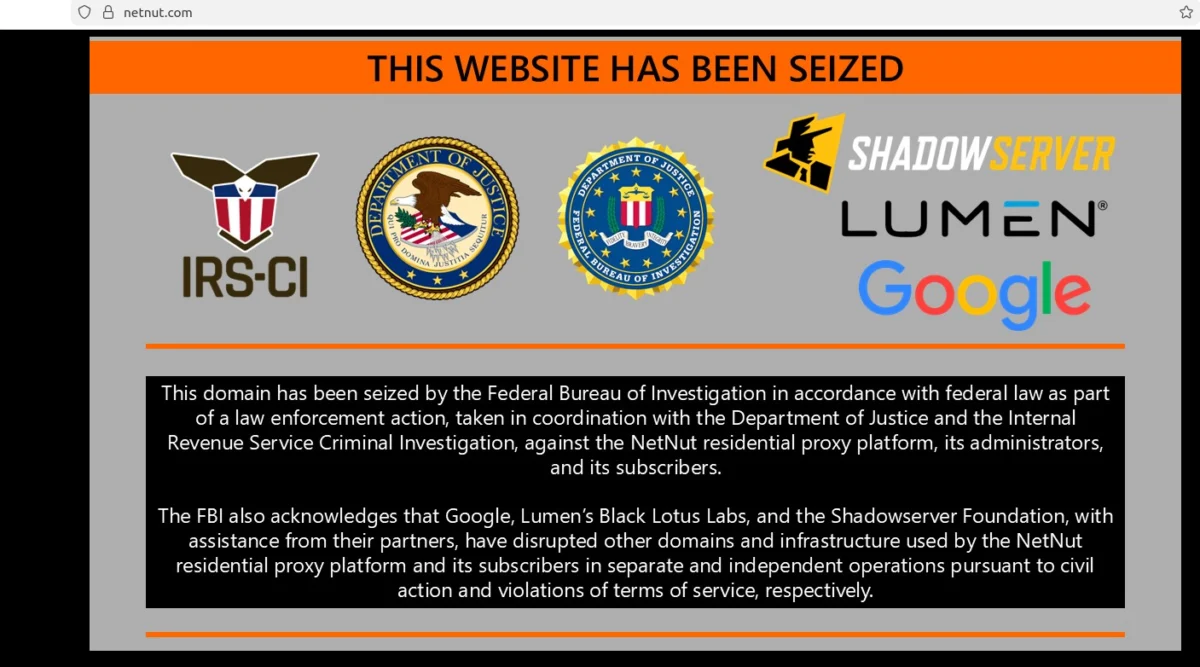
In a coordinated strike against the infrastructure fueling global cybercrime, the Federal Bureau of Investigation (FBI) has successfully seized hundreds of domains associated with NetNut, a sprawling residential proxy service operated by the publicly traded Israeli firm Alarum Technologies [NASDAQ: ALAR]. The operation, conducted in tandem with the Internal Revenue Service’s Criminal Investigation (IRS-CI) division, marks a significant escalation in the war against "residential proxy" services that exploit unsuspecting consumer devices to facilitate malicious internet activity.
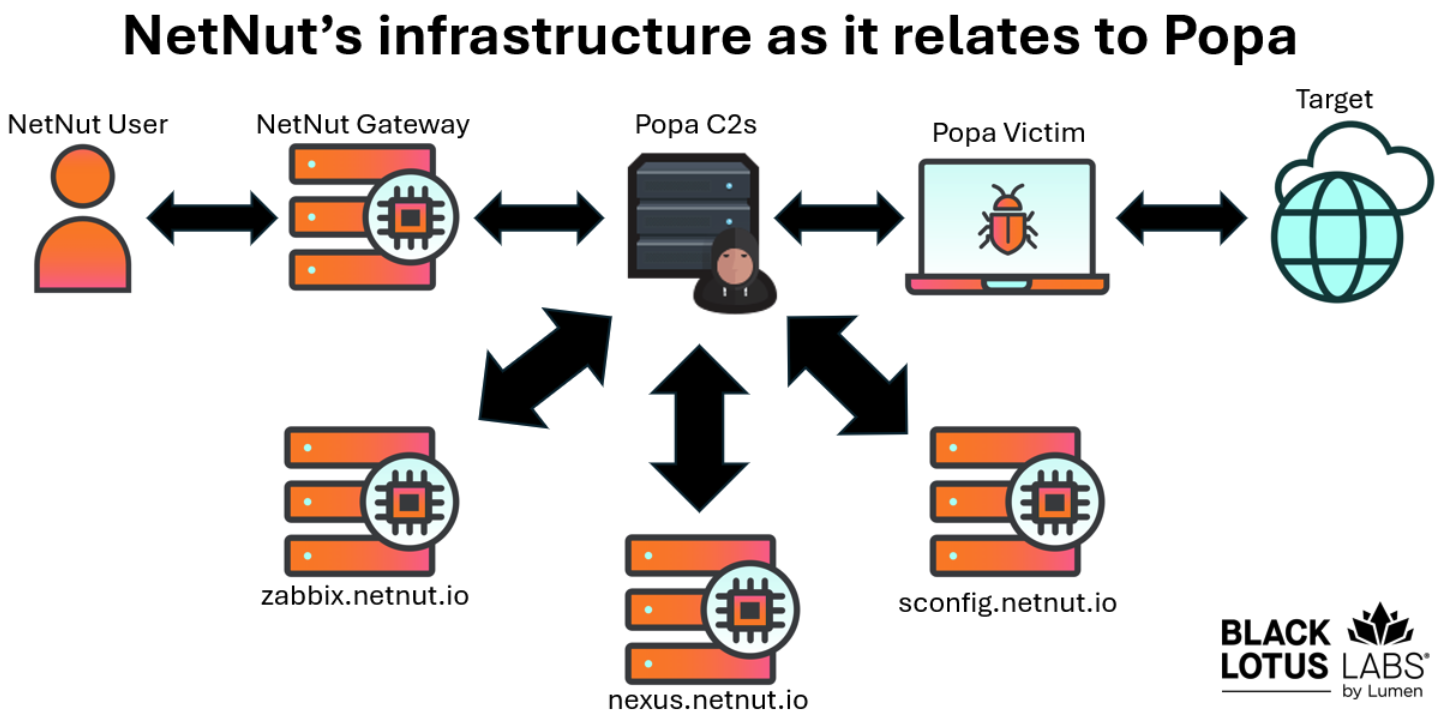
The takedown follows weeks of intense scrutiny after independent security researchers linked NetNut to the "Popa" botnet—a massive, illicit network of at least two million compromised devices. These devices, primarily smart TVs, streaming boxes, and IoT hardware, were unwittingly transformed into "always-on" proxy nodes, serving as a gateway for bad actors to conduct advertising fraud, account takeovers, and massive content scraping operations.
A Chronology of Discovery and Disruption
The downfall of NetNut was not an overnight occurrence but the culmination of a multi-agency investigation triggered by a flurry of research reports published in June 2026.
The Investigative Spark (June 19, 2026)
On June 19, three prominent security firms simultaneously published findings detailing the mechanics of the Popa botnet. The reports concluded that NetNut acted as the primary commercial storefront for a botnet composed of millions of compromised devices. The software, often bundled into obscure streaming applications, allowed the proxy network to hijack home bandwidth, effectively turning private residential internet connections into exit nodes for global cybercriminals.
The Enforcement Action (July 2026)
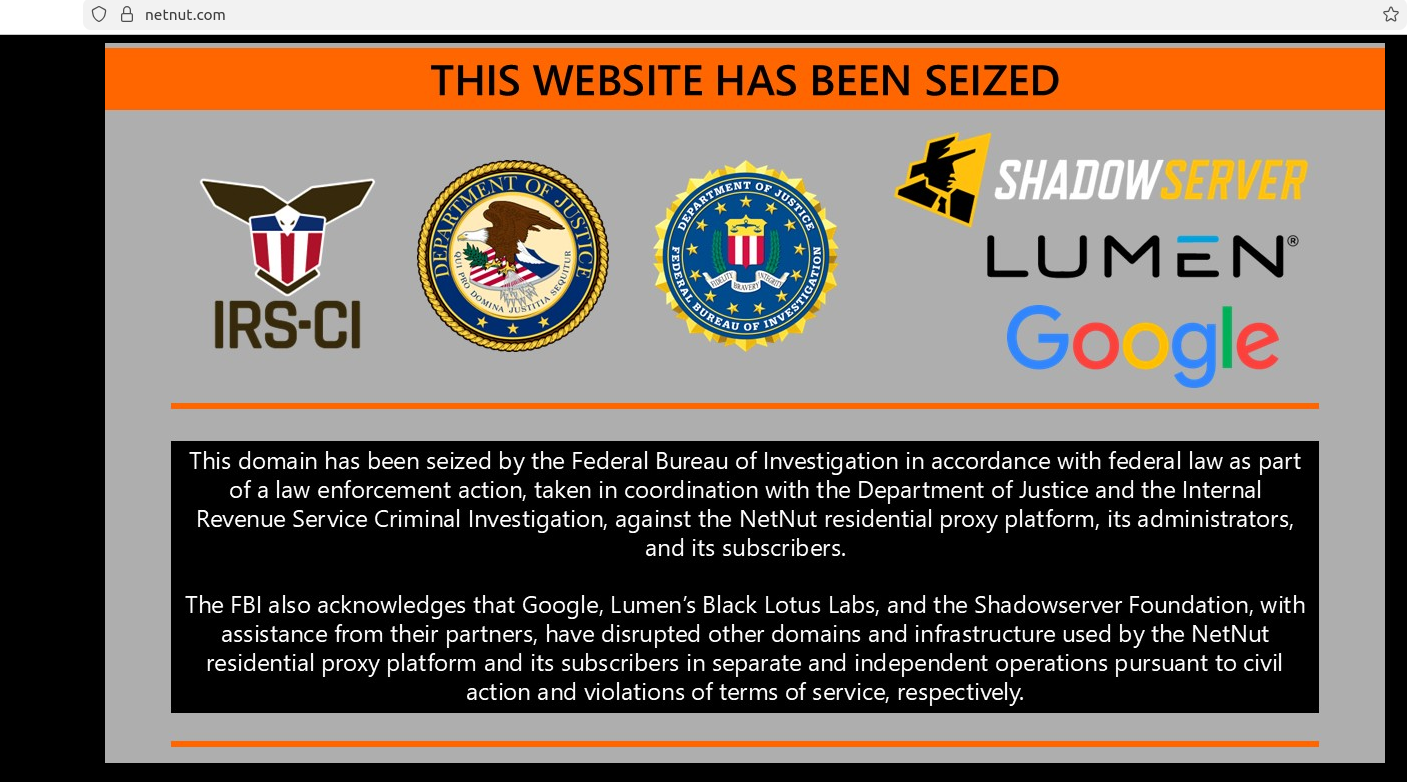
Following the publication of these findings, federal authorities moved to neutralize the threat. By early July, visitors to NetNut’s primary web portals were greeted with a stark, official seizure banner from the FBI and the IRS. The notice explicitly credited Google, Lumen, and the non-profit security organization Shadowserver for their roles in mapping and dismantling the infrastructure.
The Aftermath and Market Impact (July 8, 2026)
The impact on the parent company was immediate and catastrophic. Following the initial seizure of the NetNut domains, authorities also targeted the corporate infrastructure of Alarum Technologies. By July 8, the company’s official website, alarum.io, was also replaced with an FBI seizure notice. Investor confidence plummeted, with Alarum stock (ALAR) shedding approximately 67% of its value over the course of a single week, plummeting to roughly $2.62 per share.
Supporting Data: The Anatomy of an Illegal Proxy Network
The "residential proxy" model is designed to mimic legitimate internet traffic. By routing malicious data through actual residential IP addresses rather than data center servers, cybercriminals can bypass the security filters and rate-limiting protocols that would otherwise block their activities.
The Role of Google Threat Intelligence (GTIG)
In an analytical post-mortem, Google’s Threat Intelligence Group (GTIG) provided chilling insight into the scale of the abuse. According to their findings, NetNut’s network was not merely used by a handful of hackers; it was a foundational tool for a diverse array of threat actors, including sophisticated espionage groups.
During a single week in June 2026, Google researchers identified 316 distinct clusters of threat actors utilizing suspected NetNut exit nodes. GTIG noted that these actors leveraged the infrastructure to:
- Mask IP Origins: Concealing their true location to bypass geolocation-based restrictions.
- Password Spraying: Automating large-scale login attempts while appearing as "home" users to evade detection.
- Internal Network Exposure: By turning a TV box into a proxy node, the software often inadvertently granted external attackers access to other devices on the same local network, such as printers, personal computers, and security cameras.
The "White-Label" Proxy Ecosystem
One of the most alarming aspects revealed by security researchers is the prevalence of "white-labeling." Many smaller, less-known proxy providers do not build their own botnets; instead, they purchase access to existing infrastructure like NetNut. This created a "proxy-as-a-service" market where the original operators (like those behind Popa) could profit from the illicit traffic generated by thousands of independent resellers, making it incredibly difficult to fully extinguish the network in a single sweep.
Official Responses and Corporate Accountability
The response from Alarum Technologies has been one of forced cooperation. Omer Weiss, legal counsel for the firm, issued a statement following the seizure, confirming the company’s awareness of the federal action.
"Alarum takes this matter seriously and will fully cooperate with law enforcement to ensure any misuse of its infrastructure is thoroughly investigated and those responsible are held to account," Weiss stated.
However, security experts remain skeptical of the efficacy of such cooperation in the face of widespread, systemic abuse. Benjamin Brundage, founder of the proxy tracking service Synthient, argued that the takedown is a critical blow, but noted the "fluidity" of the cybercrime ecosystem. "I think this takedown is going to have a big impact," Brundage said. "NetNut was on par with IPIDEA [a previously dismantled competitor] in terms of quality, size, and price. Its removal significantly lowers the ‘quality’ of tools available to the average cybercriminal."
Implications for Global Cybersecurity
The dismantling of the NetNut/Popa infrastructure serves as a case study for the evolving threats in the Internet of Things (IoT) landscape.
A Turning Point for DDoS Botnets
Beyond simple proxy traffic, the infrastructure has been linked to the "Kimwolf" botnet, which researchers identified as the world’s largest DDoS (Distributed Denial of Service) botnet. By tunneling through proxy connections into poorly secured TV boxes, attackers could coordinate millions of devices to overwhelm targets. The FBI’s intervention is expected to provide a much-needed respite, as it physically severs the communication channels used to issue commands to these zombie devices.
The "Resilience" of Malicious Networks
Despite the success, Google warns that the ecosystem is far from dead. When one major network is dismantled, the operators often pivot to "reselling" capacity from remaining, less-scrutinized networks. Google’s GTIG report emphasized that the industry must scale its efforts to target the entire interconnected web of providers rather than focusing solely on a single brand.
A Warning for Consumers
The most significant takeaway for the general public is the extreme vulnerability of modern "smart" hardware. The report highlights that:
- Beware of "No-Name" Electronics: Many low-cost Android streaming boxes sold on major e-commerce platforms arrive pre-infected with proxy SDKs.
- Verify OS Authenticity: Devices that utilize unauthorized, non-Google-certified operating systems are the primary targets for the Popa botnet. Users are encouraged to verify their device status through official Google Play Protect guidelines.
- The "Smart TV" Risk: Research from the security firm Spur suggests that 42% of apps on LG’s webOS and over 25% on Samsung’s Tizen contain residential proxy SDKs. Consumers are advised to be judicious in the applications they install on their televisions, as these devices often lack the robust security posture of a traditional PC or smartphone.
Conclusion
The FBI’s operation against NetNut represents a landmark victory in the ongoing struggle to reclaim the residential internet from botnet operators. By targeting the financial and technical backbone of Alarum Technologies, law enforcement has sent a clear message to the industry: the "residential proxy" business model, when built upon the exploitation of consumer privacy, is not a legitimate service, but a criminal enterprise.
While the industry expects a period of disruption, the battle against the "proxy-for-hire" economy is far from over. As threat actors look for new ways to monetize compromised home devices, the responsibility falls not only on law enforcement but on hardware manufacturers and consumers to ensure that the "smart" home does not become a permanent tool for global malice.