AUGUSTA, Ga. — The landscape of modern combat is undergoing a radical, digital-first transformation. As the U.S. military moves away from the siloed operations of the early 21st century, a new command-and-control structure—the Joint Integrated Fire Cell (JIFC)—has emerged as the backbone of high-stakes, non-kinetic warfare. According to senior Army leadership, this organizational innovation was the secret engine behind the success of "Operation Epic Fury," marking a permanent shift in how the Department of Defense (DoD) integrates cyber effects into the theater of operations.
The Genesis of the JIFC: From Venezuela to Epic Fury
The concept of the JIFC did not emerge in a vacuum. It was forged in the crucible of Operation Absolute Resolve in Venezuela, a mission that saw the eventual capture of leader Nicolás Maduro. During that operation, Fleet Cyber Command established the first iteration of the JIFC, a centralized hub designed to harmonize cyber operations with the kinetic timing and tempo of a traditional military strike.
Described by Vice Adm. Heidi Berg, commander of the Navy’s Fleet Cyber Command, as "instrumental" to the mission’s success, the JIFC functioned as the cyber equivalent of a Combined Air Operations Center (CAOC). Just as a CAOC manages the complex logistics of sorties, refueling, and strikes, the JIFC provided a single focal point for the rapid deployment of digital effects.
Lt. Gen. Christopher Eubank, commander of U.S. Army Cyber Command (ARCYBER), confirmed that his command conducted a rigorous "lessons-learned" analysis of the Venezuela mission. Recognizing the efficacy of the model, ARCYBER implemented its own version of the JIFC for Operation Epic Fury. By tweaking the framework to better suit Army-specific operational requirements, ARCYBER successfully replicated the construct, creating a seamless interface between cyber capabilities and combatant commander needs.
Chronology of a New Paradigm
The evolution of the JIFC represents a rapid acceleration in military technology deployment.
- 2018: The DoD, supported by shifting executive and Congressional authorities, begins to relax restrictive rules of engagement (ROE) governing offensive cyber operations. This shift allows forces to operate with greater agility in the "gray zone" of conflict.
- Early 2026 (Venezuela): Fleet Cyber Command debuts the JIFC during Operation Absolute Resolve. Reports from the New York Times and defense analysts later reveal the operation successfully crippled Venezuelan air defense radars, disrupted handheld communication devices, and effectively "turned out the lights" in critical sectors.
- Late 2026 (Operation Epic Fury): Building on the Venezuela blueprint, ARCYBER stands up its own JIFC. This iteration focused on "seamless integration," allowing the Joint Force Headquarters (JFHQ) to surge intelligence and technical support into the JIFC without disrupting their core operational mandates.
- Post-Epic Fury: Senior military leadership signals that the JIFC model is now considered a "mainstay" for all future major named operations, signaling that cyber is no longer a supporting act, but a lead instrument in the orchestration of battle.
Operational Mechanics: The Integration of Force
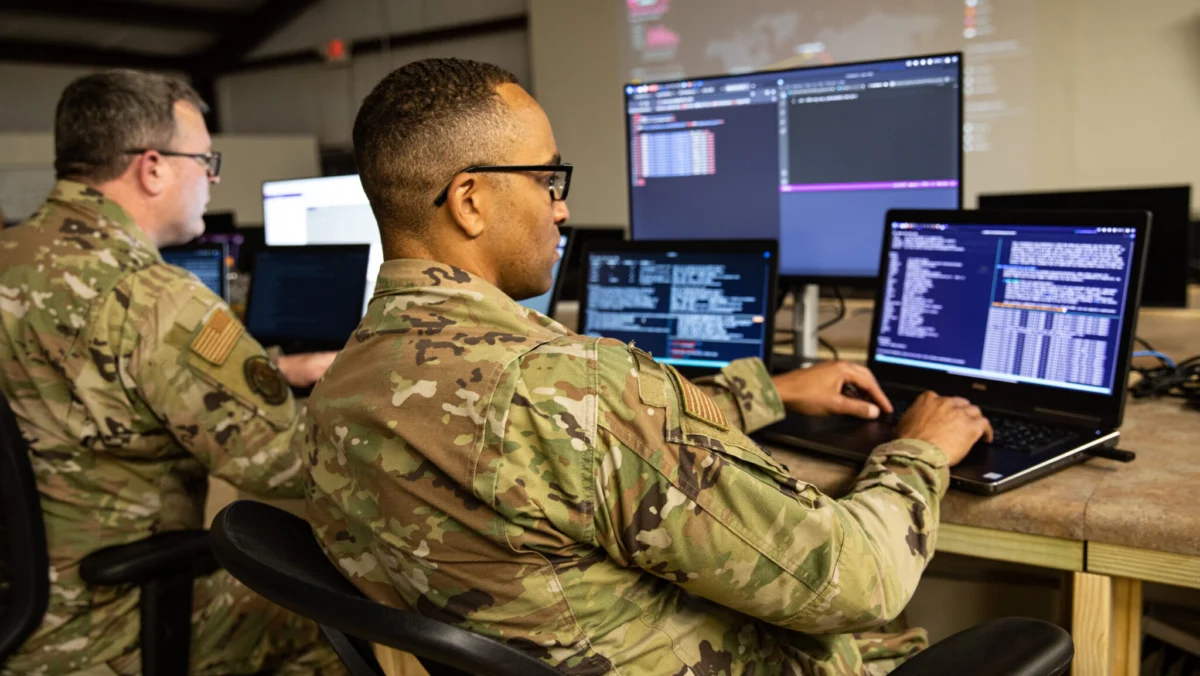
At the heart of the JIFC’s success is the ability to bridge the gap between intelligence gathering and operational execution. Each branch of the U.S. military maintains a cyber component commander who simultaneously serves as a Joint Force Headquarters-Cyber (JFHQ-Cyber). These units provide the essential planning, targeting, and command-and-control capabilities for combatant commands.
In his interview at the TechNet Augusta conference, Lt. Gen. Eubank articulated the specific value of the JIFC: "What I think the JIFC did for me was more seamlessly integrate Joint Force Headquarters to Army Cyber. If my deputy there said, ‘Sir, I need intel support,’ we were able to, through the JIFC, surge intel support into the JIFC so that the JFHQ could actually continue to work outside of that mission set."
This capacity to "surge" resources without paralyzing the broader headquarters is a tactical breakthrough. It allows the military to treat cyber capabilities like modular weapon systems that can be plugged into a command structure, activated for a specific objective, and then repurposed.
A Shift in Doctrine: Moving Beyond the Silos
For decades, the mention of offensive cyber capabilities was relegated to classified briefings and hushed tones. Brandon Pugh, the principal cyber advisor for the Army, notes that this culture of reticence is rapidly evaporating.
"Historically, we’ve kind of shied away from that topic," Pugh admitted. "But we’re seeing this not just be an isolated and siloed capability that only rests in Georgia or in Maryland. It is one element of how we fight against our adversaries, and I argue a key element. It can not only enable other types of objectives in conflict, but it can bring about its own objectives."
This candor reflects a broader acceptance that cyber warfare is now synonymous with traditional warfare. The ability to disrupt power grids or neutralize radar arrays—as demonstrated in Venezuela—has fundamentally changed the calculus for adversaries who previously assumed their physical infrastructure was immune to digital intrusion.
ARCYBER’s Structural Reorganization
The success of the JIFC has catalyzed a broader structural metamorphosis within ARCYBER. General Eubank revealed that the command is transitioning toward a "corps-like" structure to enhance its ability to support regular Army units. This is not merely a change in administrative labels; it is a fundamental shift in how ARCYBER prepares for conflict.
From TDA to TOE
A critical component of this reorganization is the shift from Table of Distribution Allowances (TDA) to Table of Organizational Equipment (TOE).
- TDA Units: Historically used by cyber forces, these are flexible but often non-deployable. They allowed for rapid growth in a nascent field but lacked the standardized, ruggedized structure required for sustained, long-term combat operations.
- TOE Units: By moving to a TOE structure, ARCYBER is adopting the standardized unit model of the Army’s combat brigades. This provides uniform equipment, a clear rank-and-file hierarchy, and the ability to deploy as a cohesive, "war-fighting" entity.
"The change to TOE puts the headquarters in a main command post, contingency command post formation, just like a corps, so we war fight better," Eubank explained. "We have brigades and battalions, and then below that we go to a team-like structure. This change is going to allow us to put in teams, company commanders, battalion commanders, brigade commanders."
The reorganization also includes a significant scaling of forces, with the number of Cyber Protection Teams (CPTs) slated to rise from 20 to 22. This expansion, combined with the new organizational structure, will allow ARCYBER to project power across multiple theaters simultaneously.
Strategic Implications and Future Outlook
The normalization of the JIFC and the structural transition of ARCYBER signify that the U.S. military is entering an era of "Cyber-Kinetic Convergence."
As Lt. Gen. Eubank noted, the past five months of operational activity have provided a "live environment" that has accelerated the command’s proficiency. "The teams have really been able to hone their skills based on the work they’re doing inside of a live environment, and I think we’re getting better and better every day because of that."
This "live-fire" learning cycle is critical. In the past, cyber forces relied heavily on simulation and training exercises. Today, they are learning in real-time, adapting their tactics to the realities of near-peer competition.
However, the shift toward a corps-like, TOE-driven structure carries its own risks. Standardizing forces can sometimes lead to rigidity. The challenge for ARCYBER will be maintaining the agility of its cyber-warriors while adopting the formal discipline of a traditional military command.
As the military continues to integrate these digital tools into its primary war-fighting toolkit, the JIFC will likely serve as the model for future joint operations. Whether the mission is a targeted capture, a large-scale disruption of enemy logistics, or defensive posturing, the ability to centralize, synchronize, and surge cyber effects has become the new benchmark for operational superiority.
The era of the "cyber experiment" is over. We have entered the era of the "cyber corps," and as the recent successes in South America have proven, the battleground of the future will be as much about the lines of code behind the firewall as it is about the boots on the ground.