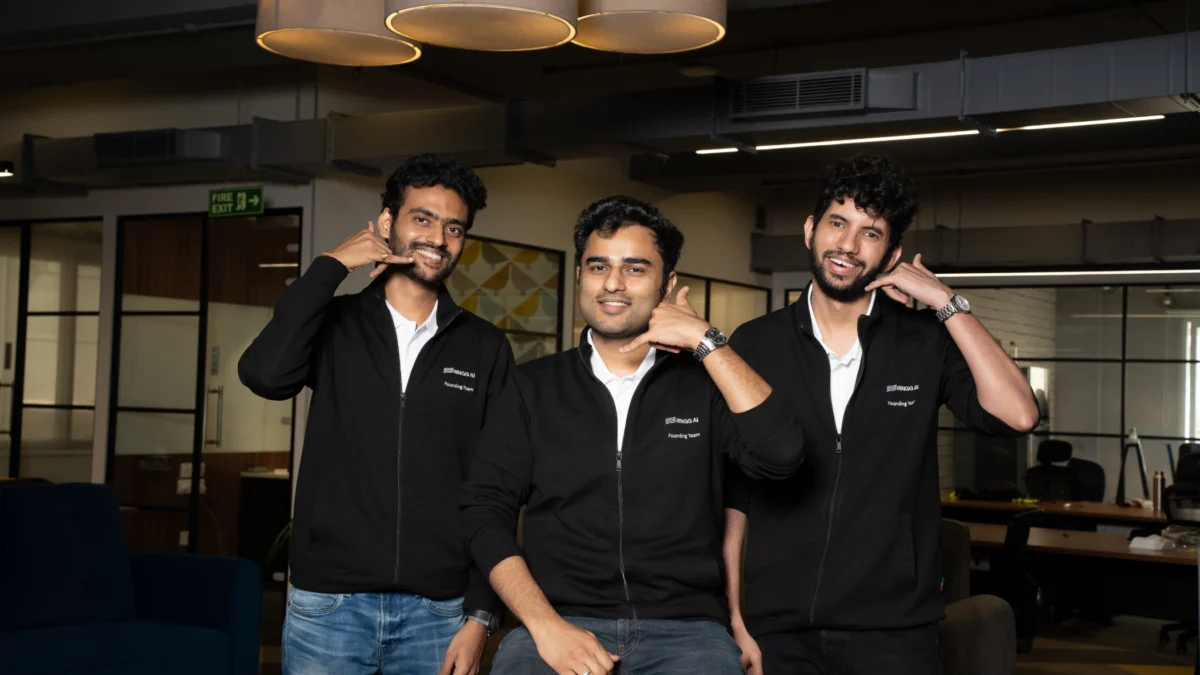
In a market where the human voice remains the primary interface for commerce, Indian startup Ringg is betting big on the future of enterprise communication. As consumer preference for voice-based interaction continues to dominate the Indian landscape, Ringg—a sophisticated voice AI platform—has announced a significant $10 million extension to its Series A funding round, led by Peak XV Partners. This fresh injection of capital brings the company’s total Series A raise to $15.5 million, underscoring a growing investor appetite for "outcome-oriented" AI agents that do more than just talk—they get things done.
The State of the Voice Economy in India
To understand Ringg’s trajectory, one must first look at the unique landscape of Indian consumer behavior. According to recent data from Truecaller, more than 76% of consumers in India prefer interacting with businesses via phone calls. Despite the global trend toward asynchronous messaging, the phone remains the "trust" medium in the Indian subcontinent.
This reliance on voice creates a massive, untapped opportunity for automation. Enterprises have long relied on bloated, human-staffed call centers to manage lead qualification, collections, and customer support. Ringg, which currently processes an impressive 20 million call attempts per month, is positioning itself as the high-efficiency alternative to these traditional, labor-intensive operations. By automating the voice channel, Ringg is not merely reducing costs; it is enabling businesses to scale their outreach in a way that aligns with consumer habits.
From DesiVocal to Ringg: A Strategic Pivot
The story of Ringg is one of rapid evolution and strategic recalibration. The startup began its journey under the name "DesiVocal," initially operating as a text-to-speech venture. However, the founders quickly encountered the harsh economic realities of the AI industry: the cost of training and maintaining proprietary speech models is prohibitively high.
Recognizing that the true value did not lie in merely perfecting an accent or a synthetic voice, the leadership team "moved up the stack." They transitioned from being a model-maker to an enterprise-grade orchestration layer. This pivot allowed them to focus on the application layer, where they could solve complex enterprise workflows rather than competing in the "race to the bottom" of voice synthesis.
This shift proved prescient. By moving away from low-complexity, high-volume tasks—such as generic outbound calling—Ringg began focusing on "sticky" enterprise use cases. Today, their portfolio of clients reads like a "who’s who" of the Indian tech ecosystem, including industry giants such as Flipkart, Practo, Groww, and PolicyBazaar.
Chronology of Growth and Enterprise Adoption
Ringg’s journey has been marked by a transition from experimental pilot programs to mission-critical infrastructure for some of India’s largest companies:
- The Early Days (DesiVocal): The company launched as a niche text-to-speech provider, focusing on the technological foundations of Indian-language synthesis.
- The Pivot: Realizing the commoditization of speech models, the company rebranded as Ringg and shifted focus toward end-to-end enterprise voice agents.
- The Cred Partnership: Indian fintech unicorn Cred became the startup’s foundational customer, providing the testing ground for complex financial workflows.
- Scaling Up (2024–2025): The company expanded into high-stakes sectors, including healthcare (Practo) and e-commerce, while securing its initial $5.5 million Series A.
- The Current Milestone: In early 2026, the company successfully closed a $10 million extension from Peak XV Partners, bringing the total round to $15.5 million to fuel further product development and team expansion.
Moving Beyond the "Price Game"
Co-founder Siddharth Tripathi has been vocal about the dangers of remaining in the commodity tier of the AI industry. "At the start, we were doing high-volume, low-complexity use cases like outbound calling, lead qualification, and loan collection," Tripathi explained. "We quickly realized these are not sticky use cases, and so it’s always going to be a price game."
To escape this race to the bottom, Ringg has pivoted toward complex, high-value workflows. A standout example of this is their integration with the healthcare platform Practo. Ringg’s voice agents now operate across 1,200 clinics, handling the intricacies of appointment scheduling and post-visit follow-ups—a task that requires nuance, accuracy, and emotional intelligence.
Similarly, the company has begun handling abandoned-cart recovery for e-commerce sites and KYC (Know Your Customer) onboarding for fintech apps. These are not merely informational calls; they are revenue-generating and compliance-critical processes that require a higher level of integration with a client’s backend systems.
Supporting Data and Technical Architecture
Ringg operates as an "orchestration layer," a strategic choice that keeps their operational costs manageable while maintaining high performance. Rather than being tied to a single, monolithic model, Ringg’s platform routes tasks to different AI models depending on the specific requirement of the call.
- Processing Volume: 20 million call attempts per month.
- Team Expansion: Hired over 15 specialized engineers in the last three months alone.
- Channel Diversity: While voice accounts for 70% of business, the company has expanded into WhatsApp, chat-based support, and browser-based automation (notably for Shell).
This technical depth is exactly what attracted investors. Rishen Kapoor, a principal at Peak XV, noted that Ringg’s origins as a research lab provided them with the "technical chops" to handle complex workflows that other "wrapper" startups cannot touch. "Because of their technical capabilities, they can actually do these hard-won enterprise workflows end-to-end," Kapoor said. "They can complete higher-value tasks like merchant onboarding and L1/L2 support with consistency."
Implications for the Global Voice AI Market
The competition in the voice AI space is intensifying. On the global stage, behemoths like Deepgram and ElevenLabs are pushing the boundaries of what models can do, while firms like Cartesia are focused on efficiency. In India, local players like the unicorn Sarvam and the agile Smallest.ai are competing for the same enterprise mindshare.
However, the "Ringg model" offers a unique perspective on where the money will ultimately be made. The industry is currently divided into three distinct layers:
- The Model Makers: Those building the foundational intelligence (often burning massive amounts of capital).
- The Orchestrators: Startups like Ringg that connect the models to the business reality.
- The Application Players: Niche firms focused on specific verticals like finance or healthcare.
The market is coalescing around the idea that the "defensibility" of a business—its moat—doesn’t necessarily come from the model itself, but from owning the customer relationship and the business outcome. By positioning themselves as a platform that "gets things done" rather than just a voice interface, Ringg is attempting to lock in enterprise clients at a deep, operational level.
The Road Ahead
Ringg’s current strategy involves a clever bypass of the saturated U.S. consumer market. Instead of fighting for direct contracts with American firms, the startup is partnering with Global Capability Centers (GCCs) in India. These offshore hubs, which handle the back-office and support operations for the world’s largest multinational corporations, are increasingly looking for ways to automate their workflows. Ringg provides the "automation capacity" that allows these centers to scale without proportional increases in headcount.
With a team of 40 and a mission to "own the full voice stack" eventually, Ringg is clearly looking to move beyond the orchestration layer in the long term. For now, however, the focus remains on hiring forward-deployed engineers—professionals who can bridge the gap between complex research and the messy, nuanced reality of enterprise support.
As the lines between human and machine communication continue to blur, Ringg’s ability to prove that its agents can navigate the complexities of a doctor’s appointment or a financial KYC check will be the ultimate test of its $15.5 million conviction. In a country that refuses to stop talking, the company that automates the conversation best may well end up defining the future of business in India.