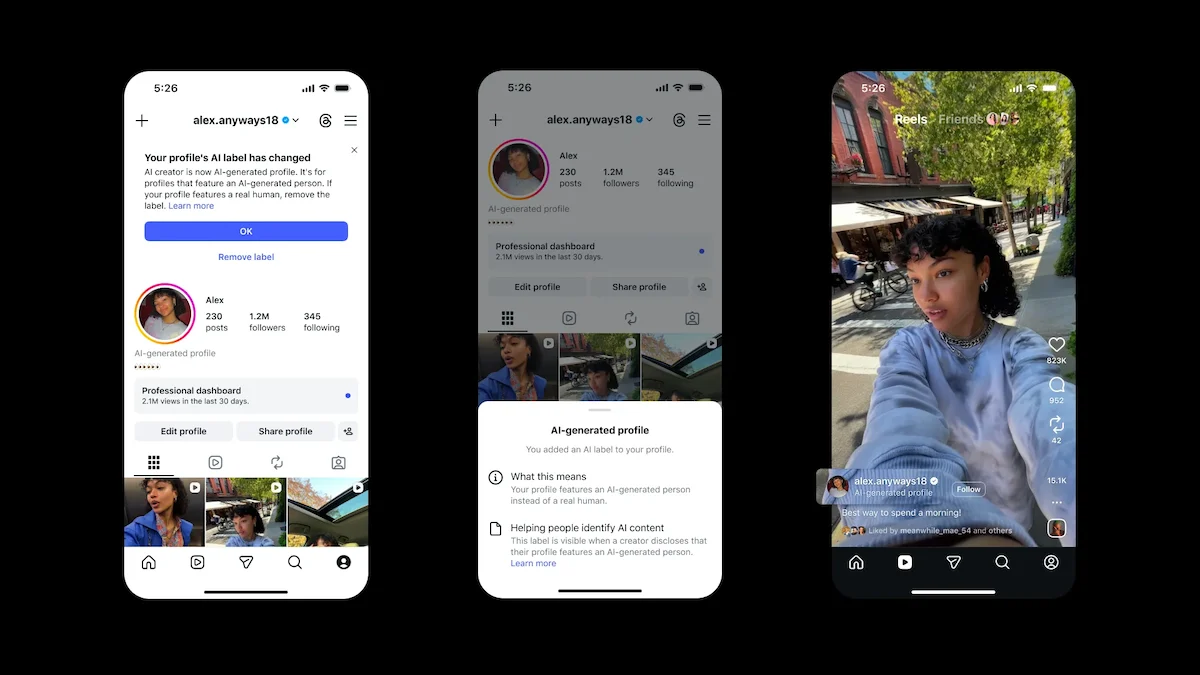
In an effort to restore transparency to the creator economy, Instagram announced on Monday a significant overhaul of its policy regarding AI-generated content. Moving forward, the platform will implement a new "AI-generated profile" label, specifically designed to identify accounts that feature AI-created personas. More importantly, the company confirmed that it will begin limiting the algorithmic reach of accounts that utilize AI-generated human figures without proper disclosure.
This policy shift represents a pivotal moment for Meta’s flagship photo-sharing app as it grapples with the blurring lines between authentic human connection and synthetic media. While the use of generative AI has become a cornerstone of modern digital creativity, the rise of "AI influencers"—digital avatars that appear human—has sparked widespread user distrust and concerns regarding misinformation.
The Mechanics of the New Disclosure Policy
The core of the update involves rebranding the existing "AI creator" tag to the more descriptive "AI-generated profile." According to Instagram, this nomenclature is intended to eliminate ambiguity, clearly signaling to viewers that the person featured on the profile was either entirely generated or substantially crafted by artificial intelligence.
Under the new regulatory framework, creators are required to apply this label to any profile where the primary subject is an AI-generated person. Instagram has clarified that the policy is targeted specifically at synthetic identities rather than general AI utility. Users who employ generative tools for minor edits, such as polishing captions, generating background graphics, or performing standard color corrections and creative filters, are exempt from the labeling requirement.
The consequences for non-compliance are structured to incentivize transparency. Accounts that fail to disclose their use of AI-generated personas face the risk of reduced reach, meaning their content will be deprioritized by the platform’s recommendation engine. Conversely, creators who proactively use the label will not be penalized, signaling that Instagram is not seeking to ban AI content, but rather to organize it and manage user expectations.
A Growing Crisis of Trust: A Chronological Overview
The move comes as a direct response to a mounting wave of incidents where users felt misled by digital avatars. The timeline of this growing friction highlights why Instagram felt compelled to act:
- Early 2026: The "Goose" Investigation. Wired published an investigation into a new gay dating app called "Goose," which utilized a clandestine network of AI-generated male influencers. These accounts were used to aggressively promote the app via direct messages and curated content, raising ethical alarms about the use of fake identities to drive user acquisition.
- July 2026: The Rise of Synthetic Health Personalities. The New York Times uncovered hundreds of AI-generated "doctors" and wellness influencers across social platforms. These personas were used to lend a veneer of professional authority to the promotion of supplements and questionable health advice, posing a tangible risk to public safety.
- July 2026: The "Muse" Backlash. Meta faced severe criticism after rolling out "Muse," an AI image generator that allowed users to create images using the likenesses of real people without an explicit opt-in. The ensuing public outcry forced the company to pull the feature just days after its launch, underscoring the sensitivity surrounding digital likeness rights.
- August 2026: The Landmark Legal Settlement. Meta agreed to an $18 billion settlement with various U.S. states regarding the documented negative impacts of its platforms on children and teenagers. This settlement included sweeping changes to teen safety features, such as "Night Mode" blocks and mandatory daily usage limits, further cementing a period of intense regulatory scrutiny for the company.
Data and Industry Implications
The proliferation of AI influencers is not merely a novelty; it is a burgeoning industry. As generative AI becomes more accessible, the barrier to entry for creating a "perfect" influencer has plummeted. However, the data suggests that this ease of creation is being exploited.
The New York Times report on health influencers revealed that synthetic actors are being deployed to mimic human experience, effectively weaponizing the trust people place in "influencers." By presenting a digital face that claims to have "tried" a product or "cured" a condition, these actors bypass the skepticism typically applied to traditional corporate advertisements.
Instagram’s decision to limit the reach of undisclosed AI profiles serves as an algorithmic guardrail. By tethering reach to transparency, the platform is attempting to force AI creators to choose between the potential benefits of the "AI-generated" label and the desire for organic virality. It remains to be seen if audiences will continue to engage with AI influencers once the label is prominently displayed, or if the "uncanny valley" effect will lead to a decline in the popularity of synthetic personalities.

Official Stances and Meta’s Strategy
In a statement released on the official Instagram Creators blog, the company acknowledged the user frustration that catalyzed this policy change. "As generative AI becomes a bigger part of how people create, we’ve heard that people don’t like seeing a profile that seems human, only to find out later that the person featured is AI-generated," the statement read. "They want to know when a profile features an AI-generated person."
Meta is walking a tightrope. On one hand, the company is heavily invested in AI, integrating it into everything from its ad tools to its consumer-facing creative suites. On the other, it faces an increasingly hostile regulatory environment and a user base that is growing weary of being manipulated by bots.
By distinguishing between "creative AI" (such as caption editing) and "person-centric AI" (such as AI influencers), Meta is trying to protect the tools that keep creators on its platform while pruning the deceptive elements that threaten the app’s integrity.
Broader Implications for Social Media
This policy change has implications that extend far beyond Instagram. As the primary host for the creator economy, Instagram’s standards often become the de facto rules for the rest of the industry.
1. The Death of the "Fake Authenticity" Business Model
Influencer marketing has long relied on the concept of "parasocial relationships"—the one-sided bond between a creator and their audience. When that creator is revealed to be a string of code, the bond is shattered. By mandating labels, Instagram is essentially acknowledging that the "AI influencer" business model must move toward radical transparency if it is to survive.
2. Legal and Ethical Accountability
The $18 billion settlement with U.S. states proves that Meta is under a microscope regarding how its algorithms affect human behavior. By addressing the "fake person" issue, Meta is attempting to proactively mitigate claims that it is allowing its platform to be used for mass-scale deception.
3. The Future of Disclosure
We are likely entering an era where "Watermarking" and "Labeling" will become the standard for all digital content. Whether it is a state-sponsored disinformation campaign or an influencer promoting a supplement, the pressure to disclose the synthetic nature of content is reaching a fever pitch. Instagram’s move is likely the first of many updates designed to satisfy both regulators and a user base that is demanding a return to human-verified reality.
Conclusion
Instagram’s new labeling policy is a necessary, if late, admission that the internet is reaching a saturation point of synthetic content. While the platform remains committed to the creative potential of artificial intelligence, it has drawn a hard line at the deception of human identity.
For the average user, this means a clearer view of the digital landscape. For creators, it marks the end of an era of "stealth" AI influence. As the company continues to navigate the fallout from its recent legal battles and the rapid evolution of generative technology, the success of this policy will depend entirely on its enforcement. If the platform can effectively identify and throttle those who hide their synthetic origins, it may succeed in restoring a degree of authenticity to the feeds of its billions of users. If not, the "AI-generated" label may become just another ignored icon in an increasingly noisy digital world.