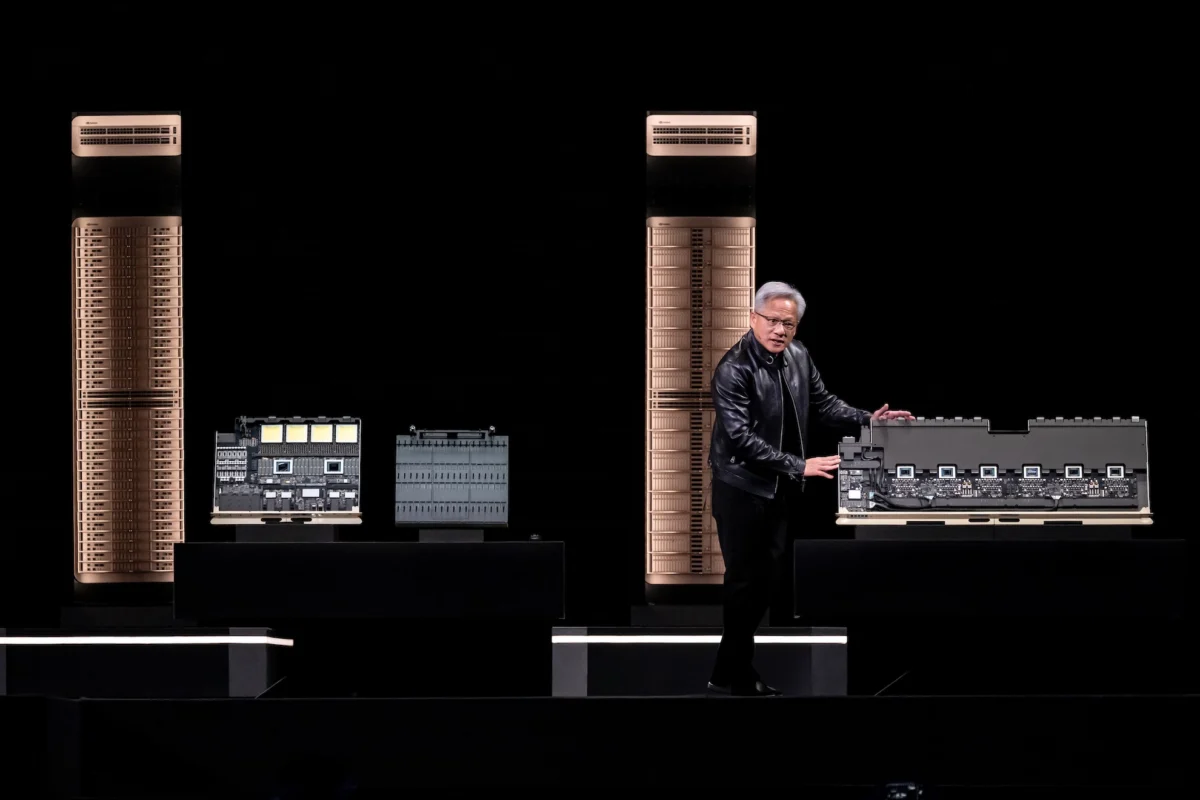
For years, the narrative surrounding Nvidia was deceptively simple: the company was the undisputed king of the “picks and shovels” gold rush. As the primary architect of the state-of-the-art Graphics Processing Units (GPUs) that powered the generative AI revolution, Nvidia enjoyed a near-monopoly. However, as the AI boom matured, a counter-narrative emerged. Investors began to worry that as hyperscalers like Amazon, Google, and Microsoft pivoted toward building their own custom silicon, Nvidia’s dominance would inevitably erode.
That narrative has shifted dramatically following the company’s latest earnings report. Wall Street is beginning to realize that Nvidia’s competitive advantage is not tethered solely to the GPU, but to the entire, increasingly complex stack of systems required to operate at the gigawatt scale.
The Chronology of the AI Compute Arms Race
To understand the current state of the market, one must look back at the trajectory of the last three years. Between the start of 2023 and mid-2025, Nvidia’s market capitalization surged tenfold, fueled by insatiable demand for H100 and subsequent chips. During this period, the industry focused almost exclusively on raw compute power—the ability to churn through tokens faster than the competition.
However, the "easy" phase of scaling is over. By 2024, the major cloud providers realized that relying on a single vendor for the most critical component of their infrastructure was a strategic vulnerability. This led to a wave of internal chip development. As GPU competition intensified, Nvidia’s stock performance leveled off, reflecting investor anxiety that the "Nvidia era" might be reaching a plateau.
This week’s earnings, however, provided a different picture. The conversation has pivoted from "Who makes the fastest chip?" to "Who can orchestrate the most efficient data center?" Nvidia’s management signaled that the challenge of the next decade isn’t just the processor; it is the infrastructure that allows thousands of processors to act as a single, coherent brain.
The Architecture of Efficiency: Rack by Rack
The true innovation in Nvidia’s latest offerings—specifically the Vera Rubin architecture—lies in its holistic approach to system design. The Rubin GPU is undoubtedly a powerhouse, but it is merely the engine in a much larger vehicle.
The Rubin architecture integrates a suite of specialized units designed to handle the logistical nightmares of modern AI:
- Vera CPU: Designed specifically for data orchestration, this processor solves the "memory wall" problem, ensuring that the GPU is never starved of data.
- Groq 3 LPX Inference Accelerator: A specialized unit that optimizes the delivery of tokens, ensuring that inference—the process of AI "thinking"—is as efficient as possible.
- Integrated Storage and Networking Racks: These components ensure that data flows through the system without bottlenecks, keeping the GPU at peak utilization.
In an interview regarding the launch of these systems, Nvidia’s VP of storage technology, Jason Hardy, emphasized that the bottleneck in modern AI is rarely just the processor speed; it is the traffic management of data between memory, storage, and the compute unit. "Vera is critical because there is a physical limit to how much memory you can pack onto a single compute platform," Hardy explained. By leveraging the Vera CPU, Nvidia claims to have achieved a 3x improvement in operations, allowing flash storage to be utilized to its absolute potential.
Supporting Data: The Physics of "Tokens-per-Watt"
As data centers scale to the gigawatt level, the physics of power consumption becomes the primary constraint on profitability. Every millisecond of latency or every watt of wasted energy is a direct hit to a company’s bottom line. This is why "compute as a commodity" is a misnomer; while the basic math can be performed by many chips, managing the traffic flow at scale is an elite engineering challenge.
Consider the role of memory manufacturers like Micron. As the demand for memory capacity scales alongside compute power, memory has become a critical strategic asset. However, raw memory is useless if it cannot be fed into the GPU at the exact moment it is needed. Nvidia’s orchestration layer acts as the "traffic cop," ensuring that the data pipeline is synchronized.
Companies outside the Nvidia ecosystem are keenly aware of this bottleneck. OpenAI’s recent release of the "Jalapeño" chip demonstrates a radically different philosophy: instead of optimizing the traffic between chips, they aim to minimize the distance data has to travel by housing the entire workload within a single, highly integrated system. Whether the industry moves toward Nvidia’s "orchestrated system" model or OpenAI’s "integrated chip" model, the result is the same: the focus has shifted from raw processor cycles to smarter traffic control.
Official Responses and Strategic Shifts
Nvidia’s leadership has been notably quiet about the specific "GPU vs. Competition" debate, preferring to focus on the "Total System Value." Their messaging in recent earnings calls emphasizes the "Nvidia Stack"—a combination of software, networking, and hardware that creates a lock-in effect far more durable than hardware alone.
Conversely, hyperscalers are responding by attempting to build their own software layers to match Nvidia’s CUDA platform. However, the complexity of orchestrating a rack-scale system—where networking, cooling, and data management are interconnected—is immense. As one industry analyst noted, "You can clone a chip, but you cannot easily clone the last ten years of systemic integration."
Implications: The New Moat
What does this mean for the future of the AI industry?
- The End of the Commodity Era: The idea that AI chips will become simple, interchangeable commodities is being proven false. The "infrastructure of infrastructure"—the networking and orchestration—is becoming the most valuable real estate in the tech world.
- Increased Barriers to Entry: If the competition has moved from the GPU to the entire system rack, the barrier to entry has just increased by an order of magnitude. A company can design a fast GPU, but if they cannot design a CPU that orchestrates memory and a network that prevents bottlenecks, their chip will remain an underutilized asset.
- The Shift to Efficiency Metrics: Expect to see "tokens-per-watt" and "latency-per-rack" become the primary metrics by which Wall Street measures success, rather than simple Teraflops. Nvidia’s focus on these metrics places them in a position of strength, as they are selling the entire environment where those metrics are optimized.
Conclusion
The story of Nvidia is no longer just about who builds the fastest engine. It is about who can build the most efficient car, pit crew, and fuel delivery system all at once. While rivals and hyperscalers continue to pour billions into developing silicon that mimics Nvidia’s core hardware, the company has already moved the goalposts.
By focusing on the orchestration of data—the hidden, complex, and vital work that happens between the chips—Nvidia has built a moat that is far wider than a simple GPU. As long as the AI industry continues to scale toward the megascale, the demand for this holistic system will remain, and for now, Nvidia is the only company with the entire blueprint.
The competitive landscape of 2026 and beyond will not be decided by who can manufacture the best processor, but by who can manage the massive, chaotic, and incredibly profitable flow of data that powers the modern artificial intelligence economy. In that high-stakes game of systems engineering, Nvidia remains in the driver’s seat.