In a staggering development for global digital security, a newly surfaced dark web repository known as "Nexus" has sent shockwaves through the cybersecurity community. The platform, which launched this week, claims to host high-resolution digital scans of more than 153 million driver’s licenses and government-issued identification cards belonging to residents of the United States and Canada. The sheer volume and sensitivity of the data—which includes infrared and ultraviolet scans of IDs—suggests a systematic, long-term breach of a major identity verification provider.
The implications of this leak are profound. Among the records available for purchase are the personal identification documents of high-ranking U.S. government officials, including U.S. Defense Secretary Pete Hegseth. The breach has triggered an immediate and aggressive investigation by the Federal Bureau of Investigation (FBI), specifically spearheaded by the agency’s New Orleans field office.
A Chronology of the Discovery
The existence of Nexus was first brought to light on Monday, August 31, when a source alerted independent security journalist Brian Krebs to a new user on the Russian-language cybercrime forum "Exploit." The threat actor, operating under the pseudonym associated with the "Nexus" service, was aggressively marketing a massive database of North American identity documents.
To demonstrate the legitimacy of the cache, the proprietor offered a "free sample" in their initial sales thread: the author’s own Virginia driver’s license. This personal connection provided the initial thread for an investigation that would eventually reveal a disturbing pattern of data collection tied to everyday consumer activities.
The Timeline of Exposure
- August 31: The Nexus service is identified on the Exploit forum, claiming to hold 170 million records.
- September 1–2: Independent researchers and victims conduct a review of the database, confirming the presence of their own credentials.
- September 2 (Afternoon): The FBI contacts security researchers to coordinate on the investigation, citing an official inquiry into a suspected breach at the identity verification firm idscan.net.
- September 2 (Evening): Shortly after reports on the breach go live, the Nexus website abruptly vanishes from the dark web, leaving behind a static message: "This service is no longer available."
The Scope of the Data: More Than Just Licenses
The data within Nexus is not merely a collection of simple photos. The records are sophisticated, often containing six distinct image files per individual: three pairs of front-and-back scans, including standard visual images alongside infrared and ultraviolet captures. These advanced imaging techniques are typically reserved for high-security verification systems designed to detect forged documents.

The breadth of the stolen data is extensive:
- 153 million+ driver’s licenses from the U.S. and Canada.
- 10 million+ identification cards.
- 3 million+ travel documents and international IDs.
- 579,000+ medical marijuana dispensary cards.
The inclusion of marijuana dispensary cards and documents labeled "CAC" (Common Access Cards)—which are used by federal employees and military personnel to access secure government facilities—highlights the danger to national security. The database appears to be growing, with researchers observing an increase of nearly 400,000 records within a single 24-hour window, suggesting the exfiltration mechanism remained active until the site’s sudden closure.
Tracing the Source: The Fingerprint of idscan.net
A crucial breakthrough in identifying the origin of the leak came from analyzing the timestamps appended to the stolen files. By comparing these timestamps with the real-world activities of individuals whose data appeared in the leak, researchers were able to pinpoint the likely point of failure.
The investigation centered on the New Orleans-based company idscan.net. This firm is a major player in the identity verification industry, boasting partnerships with Fortune 500 companies and service providers including Hertz, Target, FedEx, Motorola Solutions, and Caesars Entertainment.
The "Hertz" and "Dispensary" Connection
Several individuals, including security researcher Zach Edwards and various colleagues, found their own records in the database. In every instance, the timestamp on their file correlated precisely with a time they had presented their physical ID to a third-party vendor.

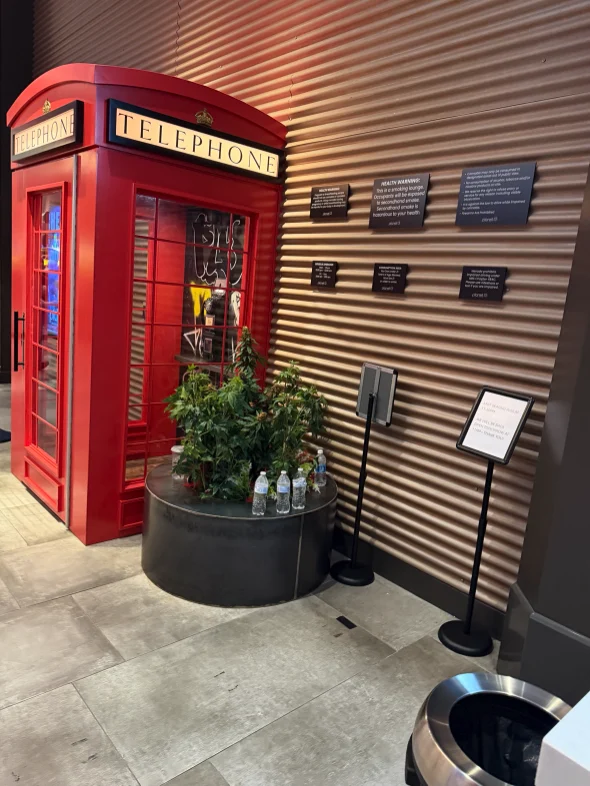
One striking example involves a mother and son who provided their licenses simultaneously at a Hertz rental car counter. Their digital records appeared in the Nexus database with timestamps just seconds apart, strongly implying that the data was harvested during the rental verification process. Similarly, Zach Edwards’ records were traced to a visit to a "Planet13" marijuana dispensary in Las Vegas. Planet13 has a documented, exclusive partnership with idscan.net for identity verification.
The evidence points to a scenario where idscan.net’s systems, which process over 21 million verifications monthly at 20,000 locations worldwide, were compromised, allowing hackers to siphon raw image data as it was uploaded for verification.
Official Responses and Corporate Silence
The response from idscan.net has been cautious. Jillian Kossman, a leader in marketing and operations for the firm, confirmed that the company is investigating the matter but has declined to provide a substantive statement or address specific questions regarding the potential breach of their infrastructure.
The FBI’s involvement, however, confirms the severity of the situation. In a conference call with security experts, FBI agents from the agency’s cyber division acknowledged the breach at idscan.net and are currently working to determine how much of the data was exfiltrated and where it may have been distributed before the Nexus site went dark.
The Broader Implications: A Fragile Identity Infrastructure
The Nexus scandal has ignited a fierce debate regarding the "verification economy." In recent years, an increasing number of online services and physical businesses have begun demanding government-issued IDs, often under the banner of "protecting children" or "improving security."

The Security-Privacy Paradox
Security experts like Larry Baldwin of the firm Cybera warn that this breach has created a "perpetual identity crisis." Because a driver’s license is a foundational document used to open lines of credit, rent homes, and access government services, its compromise is not a temporary inconvenience—it is a permanent vulnerability.
"Just when it seems like we’re making headway in improving authentication controls," Baldwin noted, "this happens, and the very thing those improvements are dependent on are compromised."
Vulnerable Populations
The leak carries life-altering risks for vulnerable groups. Individuals fleeing domestic violence, witnesses in federal protection programs, and those who have legally changed their identities face an existential threat. These people rely on the secrecy of their credentials to remain safe; now, their digital identity has been exposed to the highest bidder on the dark web.
The Call for Regulatory Reform
Zach Edwards, who has been vocal about the dangers of excessive data collection, argues that the Nexus incident is a wake-up call. "These systems are putting sensitive data into more and more third-party vendors," Edwards said. "We don’t have nearly the oversight to ensure they are safe."
The consensus among privacy advocates is that the current model—where private, often opaque third-party companies act as the "gatekeepers" of our national identity—is fundamentally broken. Without strict federal mandates requiring the deletion of sensitive scans after verification and holding companies liable for the negligent handling of biometric and identification data, the Nexus breach may be merely the first in a series of catastrophic identity leaks.

As the FBI continues its investigation, the millions of Americans affected by this breach are left with little recourse. While the Nexus site is currently offline, the data has likely already been downloaded, archived, and sold to bad actors across the globe, ensuring that the fallout from this incident will be felt for years to come.