For years, the narrative surrounding corporate America and climate change seemed one of inevitable, accelerating progress. From boardrooms in Manhattan to tech campuses in Silicon Valley, CEOs competed to announce aggressive net-zero targets, pledging to transition to renewable energy and slash emissions by 2030 or 2050. However, a landmark study released by Harvard University’s Salata Institute reveals that the tide has turned. Far from a steady climb toward sustainability, the commitment of U.S. firms to climate action appears to have hit a ceiling, followed by a tangible, systemic decline.
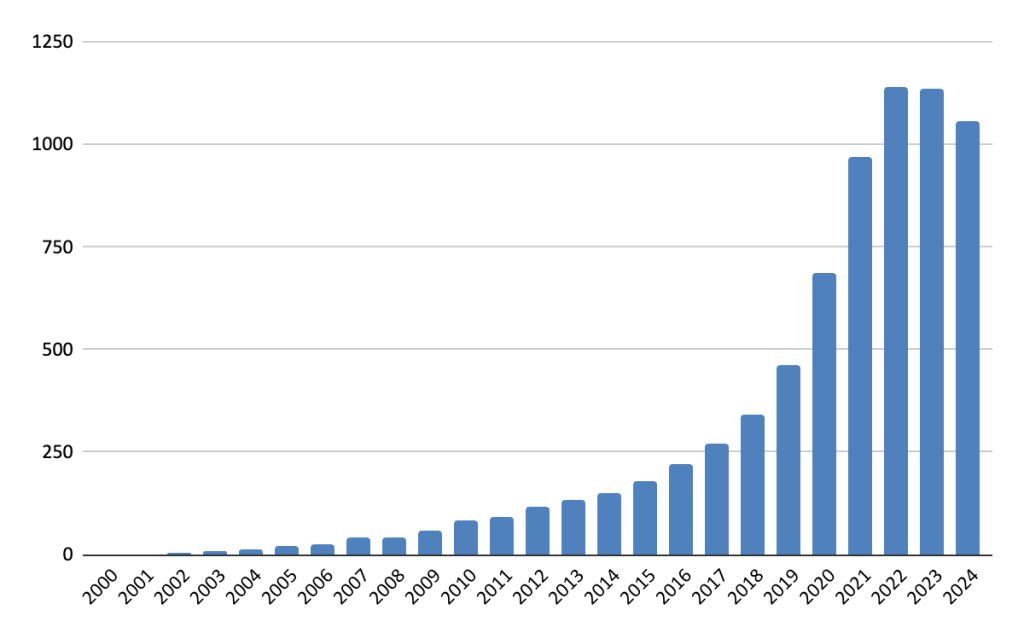
According to the newly released Corporate Climate Targets Database, the number of U.S. companies with active climate goals peaked in 2022 and has been trending downward ever since. This finding challenges the prevailing optimism often fueled by organizations like the Science Based Targets initiative (SBTi), which continue to tout the growth of voluntary pledges globally. By drilling down into the Russell 3000—a benchmark representing 98% of the investable U.S. equity market—the Harvard team has provided the most granular look yet at the shifting sands of corporate climate governance.
The Data: A Quarter-Century of Corporate Commitment
The Harvard database, published on September 21, is the result of a rigorous two-year investigation conducted by a team of 27 researchers. Unlike broader reports that often aggregate global data or count new pledges without accounting for those that have been abandoned, the Harvard team tracked the same cohort of businesses over a 25-year period.
The data reveals a stark trajectory:
- The Peak: In 2022, the number of Russell 3000 companies with formal climate targets reached an all-time high of 1,140—representing just over one-third of the index.
- The Plateau: 2023 saw a period of stagnation, with the number of firms maintaining targets remaining relatively flat.
- The Decline: 2024 marked the first significant reversal, with a net loss of 79 companies abandoning or failing to renew their climate commitments.
This decline is particularly striking because it occurs against a backdrop of increasing climate-related disasters and global pressure to decarbonize. While the SBTi recently celebrated its 10,000th validated pledge globally, the Harvard data suggests that the U.S. domestic market is experiencing a "corporate chill," where the risks of maintaining a public climate target are beginning to outweigh the perceived reputational benefits.
The Anatomy of the Retreat: Why Targets Are Vanishing
The reasons behind this reversal are multifaceted, involving a volatile mix of political hostility, shifting economic incentives, and a realization that federal policy support may be more ephemeral than initially hoped.
1. The Chilling Effect of Anti-ESG Campaigns
Perhaps the most significant driver of this retreat is the aggressive political campaign against Environmental, Social, and Governance (ESG) investing. Led by a coalition of Republican attorneys general, this movement has transformed climate-conscious business practices into a political liability.
Joseph Aldy, an environmental policy expert and a key member of the Harvard research team, points to the "chilling effect" this has had on corporate strategy. Investigations into ESG investing, and more recently, direct pressure on organizations like the SBTi and various climate-focused nonprofits, have signaled to corporate leaders that climate commitments are now a target for litigation and shareholder activism from the right. For many CEOs, the risk of being labeled "woke" or facing subpoena-heavy oversight from state officials has led to a "quiet quitting" of climate goals.
2. The Mimicry of Policy Cycles
Corporate climate action has long been a mirror image of government ambition. As Aldy notes, "The structure of corporate voluntary targets mimics the kinds of ambitious voluntary goals we get in the policy arena." When the Biden administration set aggressive national decarbonization targets in 2021—including the pledge to halve U.S. emissions by 2030—many corporations followed suit to signal alignment with federal priorities.
However, this reliance on political alignment creates a vulnerability. When the political climate shifts, or when the durability of national policy is called into question, the corporate goals tied to those policies often dissolve. The Harvard data suggests that the surge in targets between 2020 and 2022 was, in part, a response to a perceived federal mandate that has since become fragmented.
3. The IRA and the Limits of Regulatory Support
The decline in corporate targets is paradoxical, occurring during a period of intense focus on industrial policy. The 2022 passage of the Inflation Reduction Act (IRA) was intended to be the ultimate catalyst for corporate decarbonization. Yet, for many companies, the implementation of the IRA was a lesson in disappointment.
Some firms analyzed the IRA’s provisions, hoping for specific, sustained support for their particular transition needs. When they realized the scope of the subsidies—and saw those provisions subsequently challenged or reversed by current administration shifts—the economic justification for maintaining a formal, public-facing climate target vanished. Realizing that the federal government was unlikely to provide the "next wave" of necessary legislative support, these companies chose to cut their losses rather than attempt to reach ambitious goals without the expected federal tailwinds.
Implications: What a Retreat Means for the Planet
The withdrawal of 79 major U.S. companies from the climate target landscape is more than a administrative footnote; it represents a fundamental change in how the private sector views its role in the climate crisis.
The Erosion of Transparency
When companies drop their climate targets, they often do so quietly, avoiding press releases or major announcements. This reduces the overall transparency of the corporate sector. Investors who rely on climate pledges as a proxy for risk management are now left with less data to evaluate how a company is preparing for a low-carbon economy. As these targets disappear, the ability for stakeholders to hold firms accountable for their carbon footprints diminishes.
A Fragmented Landscape
The decline of voluntary, broad-based climate targets could lead to a fragmented landscape where only the most "resilient" or "mission-driven" firms maintain their commitments, while the broader market reverts to a short-term focus. If the largest U.S. companies—the drivers of capital allocation—back away from decarbonization, the entire supply chain becomes less incentivized to innovate. The "cascade effect" that climate advocates hoped would push small and medium-sized enterprises toward green technology is now at risk of stalling.
The Return of Political Risk
The Harvard findings underscore that climate action is no longer just a technical or environmental issue; it is a central battlefield in American political polarization. For corporations, the lesson from 2022–2024 is that neutrality is becoming increasingly difficult to maintain. As the anti-ESG movement continues to gain momentum in certain jurisdictions, companies are calculating that the safest path is to distance themselves from any policy that could be construed as "political."
Conclusion: A Turning Point?
The Harvard study serves as a sobering reminder that voluntary corporate commitments, while well-intentioned, are fragile. They are highly sensitive to the political, regulatory, and social winds of the day. The "peak" of 2022 may now be viewed by future historians as a high-water mark of corporate enthusiasm—a moment when the private sector believed that the transition to net-zero was a unified, national project.
As we look toward the remainder of the decade, the question is whether this decline is a temporary correction or the beginning of a long-term abandonment of climate stewardship. If the number of Russell 3000 companies with targets continues to fall, it will suggest that the U.S. business community has effectively retreated from its role as a leader in global climate action, leaving the heavy lifting to government mandates and international treaties—neither of which have yet proven sufficient to fill the gap left by a silent, withdrawing corporate sector.
The data is clear: the era of easy, performative climate pledges is ending. What replaces it—be it a more cautious, pragmatic approach or a wholesale rejection of climate responsibility—remains the most important question for the next decade of corporate governance.
This article is based on the findings of the "Corporate Climate Targets Database," published by the Salata Institute for Climate and Sustainability at Harvard University. Research was compiled by a team of 27 scholars over 24 months.