

For years, the consumer data broker Radaris.com operated with a sense of untouchable impunity. Despite persistent public outcry and repeated formal requests for the removal of sensitive personal information, the site remained a fixture in the digital ecosystem, harvesting and selling the data of millions of Americans. That era of perceived immunity has come to an abrupt and dramatic end. In a milestone development for digital privacy, a New Jersey court has ordered the transfer of Radaris.com—along with more than a dozen associated data broker domains—to the plaintiffs in a landmark lawsuit, marking a significant victory for privacy advocates and the enforcement of "Daniel’s Law."
The seizure follows a protracted legal battle against Atlas Data Privacy Corp, a firm that has aggressively pursued data brokers for alleged violations of New Jersey’s Daniel’s Law. The statute, named in honor of the late son of a federal judge, was designed to provide a critical shield for law enforcement, government personnel, and judicial officials by mandating the removal of their personal data from commercial search engines under penalty of substantial fines.
The Chronology of a Digital Shell Game
The downfall of the Radaris empire did not happen overnight. It was the result of a high-stakes game of legal cat-and-mouse that spanned nearly a decade.
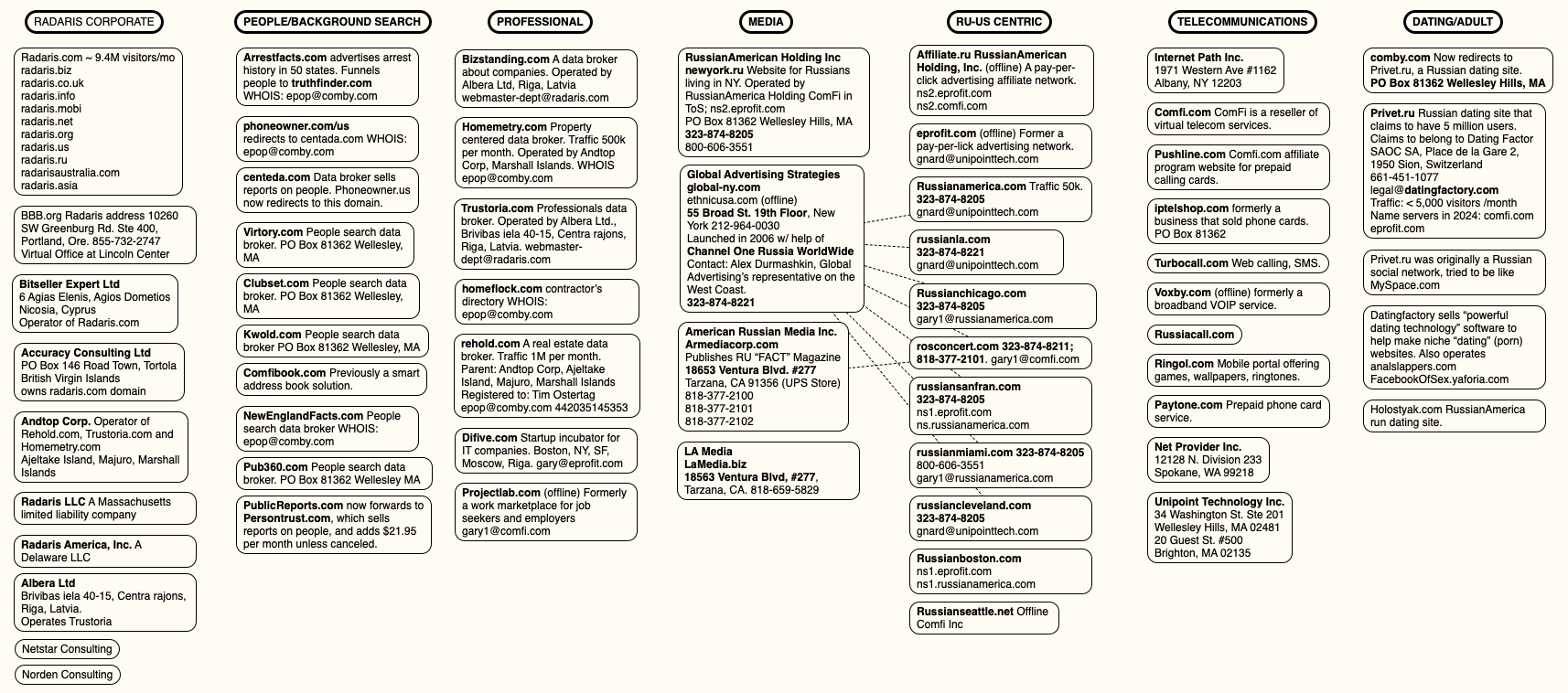
In 2017, Radaris faced a class-action lawsuit where it was hit with a $7.5 million default judgment. When the plaintiffs attempted to collect, they found themselves stymied by a labyrinthine corporate structure designed specifically to evade liability. By the time the dust settled on that initial skirmish, Radaris had shifted its operational shell from a Cyprus-based entity, Bitseller Expert Limited, to a new Marshall Islands-based corporation known as Andtop Company.
The current legal offensive, initiated by Atlas Data Privacy Corp in February 2024, signaled a shift in strategy. Rather than merely chasing damages, the plaintiffs targeted the infrastructure of the business itself. Throughout the proceedings, attorneys for Radaris employed a "scorched earth" delay strategy, repeatedly challenging service of process, claiming the "real" owners were elsewhere, and shifting corporate identities with alarming frequency.
Matt Adkisson, CEO of Atlas, describes this period as the brokers’ "island-hopping" phase. As soon as a court would focus on a specific entity, that entity would be discarded, and a new shell—often registered in tax havens like the Seychelles or the British Virgin Islands—would emerge to claim ownership of the domains. When Radaris updated its terms of service to claim management by a Marshall Islands firm, Atlas investigators discovered that the entity did not even exist at the time of the claim.
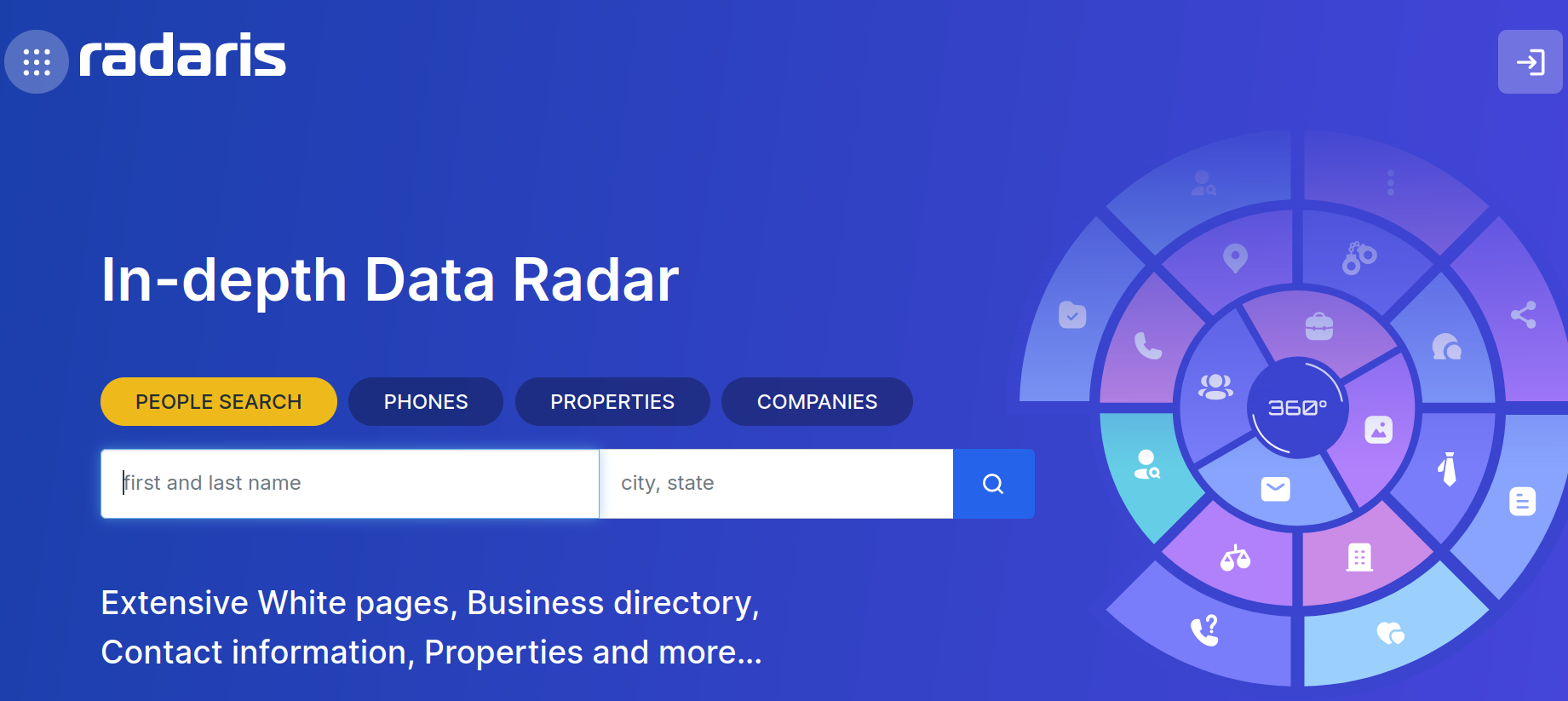
Ultimately, the court grew impatient with the obfuscation. On August 26, the judge presiding over the New Jersey case ruled that the defendants had been afforded ample opportunity to defend themselves, and upon their failure to do so, ordered the registry Verisign to transfer control of the domains to Atlas.
The Faces Behind the Data: The Lubarsky Brothers
The controversy surrounding Radaris reached a fever pitch in March 2024, when an investigation by KrebsOnSecurity exposed the individuals behind the operation: Russian-born brothers Igor and Dmitry (also known as "Dan") Lubarsky. Residing in Massachusetts, the brothers allegedly managed a sprawling network of people-search companies, affiliate programs, and even Russian-language dating services.
The investigation revealed that the brothers maintained a facade of legitimacy by employing a fictitious CEO, "Gary Norden." Radaris had, for years, issued press releases and solicited investor capital using statements attributed to this non-existent executive. When confronted, counsel for the Lubarsky brothers, Val Gurvits of the Boston Law Group, initially threatened defamation suits, claiming the company was owned by Ukrainians living in Ukraine. However, subsequent documentation—including thousands of emails obtained during discovery—shattered these claims.
The evidence confirmed that the "Radaris family"—including entities like Veripages, Nuform Solutions, and Digital Orbit—shared the same administrative mailboxes, banking infrastructure, and virtual office addresses. This single operation, run by a small Boston-area group, was effectively generating millions in annual revenue by scraping and selling the digital identities of the American public.
The Economics of Surveillance: Revenue and Partnerships
The documents secured by Atlas provide a rare, unvarnished look at the lucrative nature of the people-search industry. Internal records suggest that Radaris.com alone pulled in approximately $42,000 in monthly revenue, while its sibling site, Veripages.com, generated roughly $45,000 per month.
These revenues were bolstered by strategic partnerships with major marketing firms, such as the Lifetime Value Company, which manages brands like PeopleLooker and Bumper. Perhaps most ironically, the data shows that the Radaris network also profited from partnerships with "privacy" services like Onerep.

The relationship between such companies is often circular: a data broker sells the information, and a privacy service—frequently operated by the same underlying parties—charges consumers a subscription fee to "remove" it. As previously reported, the founder of Onerep had also been linked to the operation of numerous people-search sites, illustrating a cycle of "selling the disease and the cure" that has become endemic to the data broker industry.
Official Responses and Legal Implications
In the wake of the domain transfer, legal representatives for the Radaris interests have maintained a defensive stance. Victor Worms, the attorney now representing the entities, has filed motions to vacate the default judgment. Worms contends that the New Jersey court’s action was fundamentally flawed because "Radaris.com" is not a legal entity, but merely a domain name.
"We intend to pursue all appropriate appeals because we believe the transfer of Radaris.com amounts to a forfeiture in violation of various constitutional principles," Worms stated.
Meanwhile, the broader industry is watching the case with significant anxiety. The constitutional validity of Daniel’s Law is currently being challenged in federal court by roughly 150 other data brokers. These companies argue that the law is overly broad and infringes upon First Amendment rights regarding the dissemination of public information. The outcome of these appeals, which are widely expected to reach the U.S. Supreme Court, will set the precedent for how states can regulate the data-brokering industry moving forward.
The 21st Century Privacy Crisis
The fall of Radaris is a tactical win, but experts suggest it is far from a systemic solution. Justin Sherman, a leading privacy expert and author of The Middlemen, argues that the current legal framework is woefully inadequate for the digital age.
"The lack of a comprehensive federal privacy law is not for a lack of knowledge," Sherman says. "We have had millions of wake-up calls, yet the legislative process remains stalled by intense lobbying from big tech, social media firms, and AI proponents who fear that limiting data scraping will stifle innovation."
The core issue, according to Sherman, is that most privacy legislation—including Daniel’s Law—is limited in scope. These laws often exempt "public" or "government" records, such as motor vehicle databases, property filings, and court documents. Because data brokers aggregate this exempt data, they continue to operate within the letter of the law while violating the spirit of individual privacy.
The recent breach at IDScan.net, which exposed the driver’s license information of over 153 million Americans to the dark web, serves as a grim reminder of the risks associated with this industry. When data is collected without restriction and held with inadequate security, it inevitably becomes a commodity for identity thieves.
Conclusion: A Precarious Future
For now, the Radaris.com homepage serves as a digital monument to the litigation, redirecting visitors to a notice regarding the domain transfer. While this marks a definitive end for one major player in the people-search market, the underlying ecosystem remains intact.
As fourteen other states move to adopt legislation modeled after Daniel’s Law, the battle between privacy advocates and the data-broker industry is entering a new, more intense phase. Whether these measures will prove to be a robust defense for the average citizen or merely a temporary hurdle for a multi-billion dollar industry remains to be seen. One thing, however, is clear: the days of brokers operating with absolute impunity in the shadows are being challenged, and the legal foundations of the digital surveillance state are beginning to crack.