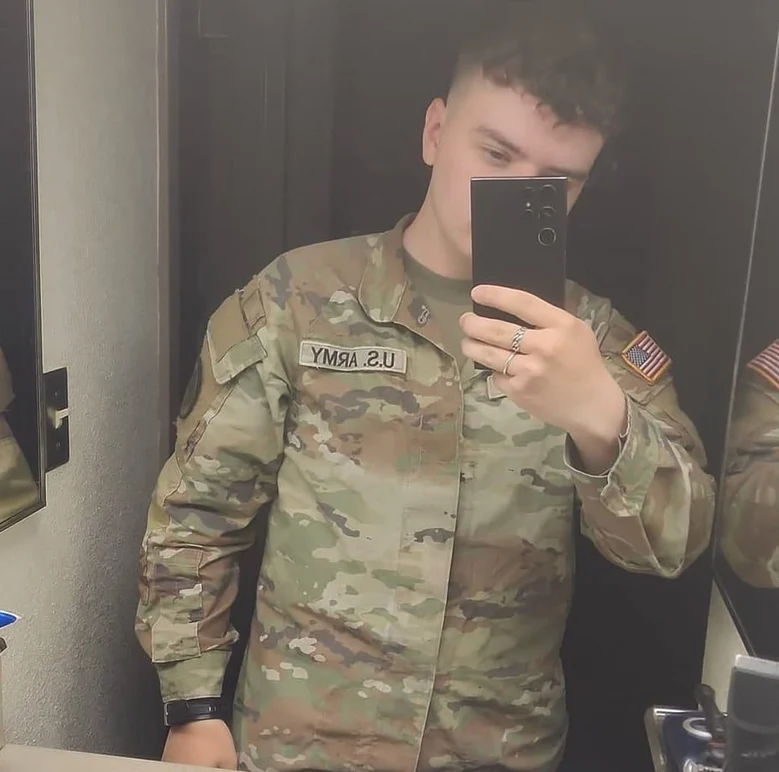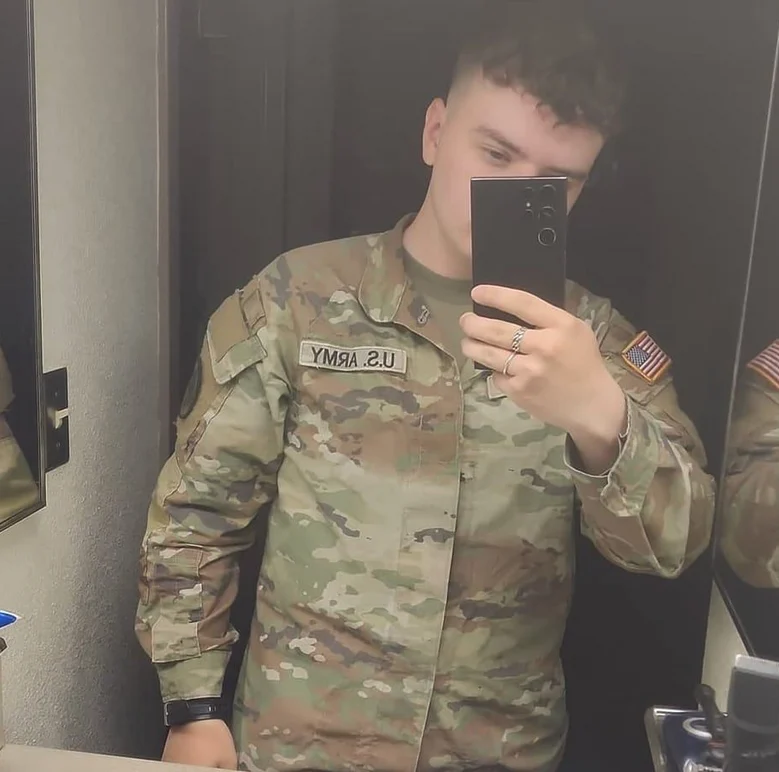
In a sentencing hearing that marks a significant conclusion to one of the most complex cyber-espionage cases in recent U.S. history, 22-year-old former U.S. Army soldier Cameron John Wagenius was sentenced to 70 months in federal prison today. Wagenius, who operated under the chilling cyber-alias “Kiberphant0m,” was convicted of orchestrating a massive campaign of data theft and extortion that compromised the metadata of over 100 million AT&T customers and targeted numerous global telecommunications firms.
The case, which involved a collaborative investigative effort between the FBI, the Defense Criminal Investigative Service (DCIS), the Army Criminal Investigative Division (CID), and the U.S. Secret Service, underscores the profound risks posed by the "insider threat" phenomenon—particularly when such individuals possess high-level security clearances and advanced technical capabilities.
The Scope of the Breach
The scale of Wagenius’s operations was staggering. By exploiting exposed credentials and targeting Snowflake cloud storage accounts that lacked multi-factor authentication (MFA), the young soldier was able to harvest vast quantities of sensitive call and text metadata. This data included source and destination phone numbers, timestamps, and call durations—information that, while not containing the content of the communications, is invaluable for intelligence gathering and stalking.
While the breach impacted over 100 million AT&T customers, the campaign was global in nature. Wagenius targeted more than a dozen telecommunications companies worldwide, including Verizon’s specialized "Push-to-Talk" business units. Despite the high-stakes nature of his crimes, federal prosecutors revealed a startling irony: for all the disruption and widespread alarm he caused, Wagenius’s actual financial gain from the schemes totaled a mere $1,500.
Chronology of a Cyber-Criminal Career
The unraveling of “Kiberphant0m” was a meticulous process of digital forensics and investigative persistence.
- 2024 (Early): While stationed at a U.S. Army base in South Korea, Wagenius adopts the persona of Kiberphant0m and begins collaborating with a cohort of cybercriminals to harvest data from inadequately secured Snowflake cloud instances.
- October 2024: Kiberphant0m begins bragging on dark-web cybercrime forums, claiming credit for the massive AT&T metadata theft. He initiates a public extortion campaign, threatening to dump the stolen data unless companies pay a ransom.
- November 2024: KrebsOnSecurity publishes an investigative report identifying Kiberphant0m as a likely U.S. soldier stationed in South Korea.
- December 2024: Federal agents arrest Wagenius. He is hit with two separate federal indictments. He pleads guilty to all counts almost immediately.
- August 2026: Conor Riley Moucka, an associate of Wagenius, pleads guilty in a Canadian court for his role in the Snowflake extortion ring.
- September 2026: Federal prosecutors file a sentencing memo revealing that even while incarcerated and awaiting his fate, Wagenius attempted to probe Bureau of Prisons (BOP) network vulnerabilities using artificial intelligence.
- Today: Wagenius is sentenced to nearly six years in federal prison and ordered to pay $294,978 in restitution to his victims.
A Web of Co-Conspirators
Wagenius did not act alone. His operation was supported by a network of seasoned cybercriminals. Notable among them is 28-year-old Kenneth Schuchman of Vancouver, Washington. Schuchman is no stranger to federal authorities; he previously gained notoriety for his 2019 guilty plea in connection with the "Satori" botnet, a massive collection of compromised IoT devices used for large-scale distributed denial-of-service (DDoS) attacks.
Other key figures include Conor Riley Moucka (“Judische”), based in Ontario, Canada, and John Erin Binns, an American currently residing in Turkey. Binns remains a person of significant interest to U.S. authorities, linked to the massive 2021 T-Mobile data breach that exposed the records of 76 million customers. The international nature of this conspiracy highlights the difficulty of policing decentralized, borderless digital criminal enterprises.
Official Responses: The Challenge of the Insider Threat
For the Defense Criminal Investigative Service, the Wagenius case represented a "worst-case scenario." Paul Russell, a resident agent in charge at the DCIS, described the internal shock when the agency realized an active-duty soldier with a secret clearance was actively trafficking in sensitive data and creating hacking tools.
"We don’t often get leads where there’s an active-duty soldier with a secret clearance who’s creating hacking tools and trafficking in data," Russell stated. "That doesn’t happen every day. It was very serious from jump street because it was a unique insider threat, and we weren’t sure what we were dealing with."
The investigation required an unprecedented level of inter-agency cooperation. The Department of Defense had to act quickly to assess whether the soldier had compromised national security secrets. Following the arrest of his co-conspirator, Moucka—and despite an earlier $370,000 Bitcoin payment made by AT&T—Kiberphant0m attempted to escalate the situation by leaking purported call logs belonging to then President-elect Donald Trump and Vice President Kamala Harris, alongside documents he claimed were stolen from the National Security Agency (NSA).
The Persistence of the Criminal Mind
Perhaps the most alarming aspect of the government’s sentencing memo is the revelation that, even while in custody, Wagenius remained a threat to network security. The Bureau of Prisons (BOP) detected that the defendant was using fellow inmates’ email accounts to conduct research on how to exploit prison computer systems.
Wagenius attempted to use commercial AI tools to bypass security, asking for instructions on Windows 10 privilege escalation and specific vulnerabilities in networking hardware. He even utilized "prompt injection"—a technique used to bypass the safety guardrails of AI models—by framing his requests as research for a book he claimed to be writing. Furthermore, he sought information on how to construct radio antennas from commissary items and even researched methods for prison escape.
While the government noted there was no evidence he successfully deployed these exploits, the behavior serves as a sobering reminder of the compulsive nature of high-level cybercriminals.
Implications for Global Cybersecurity
The Kiberphant0m case serves as a masterclass in the vulnerabilities of modern infrastructure. The reliance on cloud storage providers like Snowflake, combined with a failure to mandate multi-factor authentication, allowed a young, motivated individual to bypass the security of some of the world’s largest telecommunications companies.
1. The MFA Imperative
The primary lesson for corporations remains clear: multi-factor authentication is no longer optional. The Snowflake breach, which resulted in significant global data loss, was fundamentally rooted in the failure of client accounts to enforce robust identity verification. Since the incident, many cloud providers have moved to mandate MFA across all accounts, but as this case proves, the implementation of such standards is often lagging behind the evolution of threat actors.
2. The Insider Threat in the Military
The involvement of a soldier with a secret clearance has forced the Department of Defense to re-evaluate how it monitors the digital activities of personnel who have access to sensitive infrastructure. The ability of a soldier to use military-grade discipline to organize an international hacking ring suggests a need for stricter oversight regarding the personal computing habits of those entrusted with high-level access.
3. The Weaponization of AI
The use of artificial intelligence by an incarcerated defendant to conduct reconnaissance on prison networks illustrates a new frontier in cyber-warfare. As AI tools become more powerful, they also become tools for those looking to weaponize "prompt injection" to bypass security filters. This case will likely be cited in future legislative and regulatory discussions regarding the responsible development and deployment of generative AI.
Conclusion
As Cameron John Wagenius begins his 70-month sentence, the global telecom industry is left to grapple with the fallout of his actions. While the $1,500 he earned from his crimes is a pittance, the $294,978 in restitution and the intangible cost of public trust represent a massive loss for both the victims and the perpetrator. The case of Kiberphant0m will stand as a landmark example of how easily the digital walls around our personal data can be breached—and how essential it is that both governments and private corporations treat every terminal as a potential point of entry for the next insider threat.