
In 1962, marine biologist Rachel Carson released Silent Spring, a work of such profound investigative rigor that it effectively punctured the post-war industrial consensus. By documenting the devastating, indiscriminate application of synthetic pesticides, Carson did more than identify a chemical threat; she introduced the modern world to the concept of systemic ecological interconnectedness. That insight—that industrial actions ripple through complex biological webs in ways often invisible to balance sheets—remains the bedrock of the modern sustainability profession.
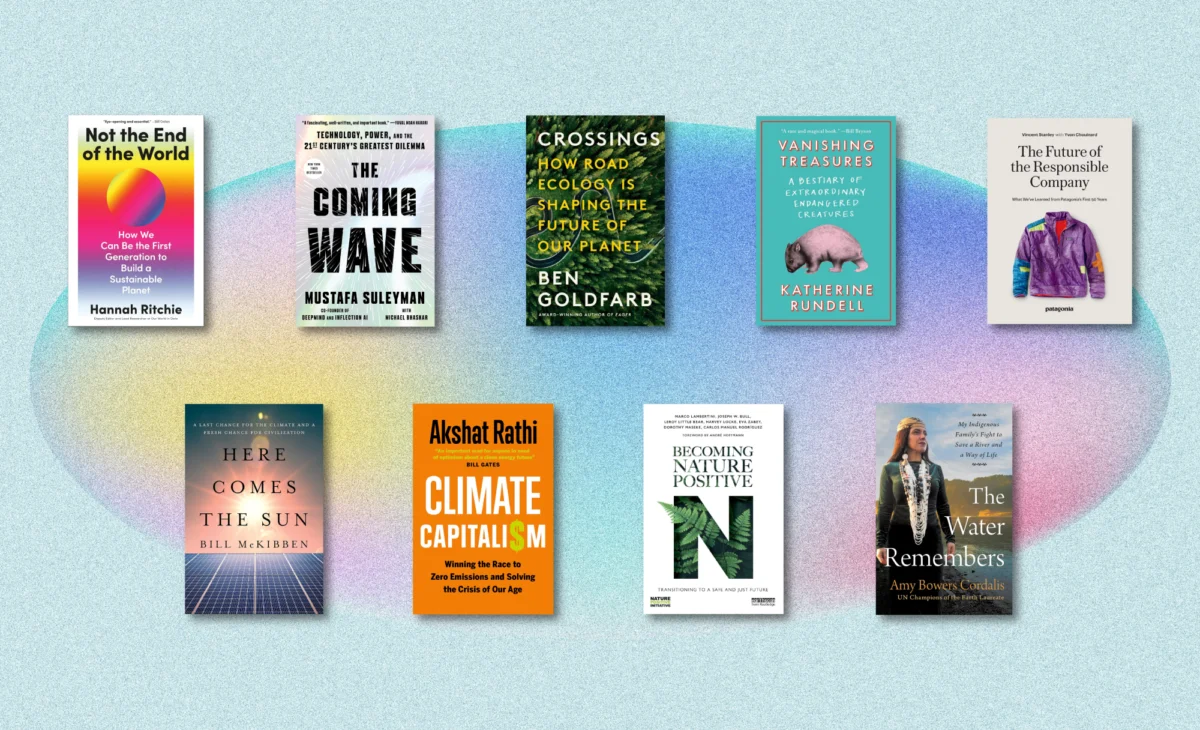
However, the field has evolved significantly in the six decades since Carson’s seminal text. Today, sustainability is no longer confined to ecology. It has expanded into a multi-disciplinary frontier that intersects with artificial intelligence, corporate governance, global supply chain management, and the very mechanics of international finance. For the contemporary professional, keeping pace with this expanding canon is essential. Below, we examine nine recent works that define the current state of the sustainability discourse.
The Evolution of the Sustainability Narrative: A Chronology
To understand where we are, one must look at how the literature has shifted. The early canon (1960s–1980s) was characterized by warnings and the "limits to growth" rhetoric. The middle era (1990s–2010s) shifted toward corporate social responsibility (CSR) and the development of metrics like ESG.
We are now in the "Third Wave" of sustainability literature. This era is defined by:
- Data-Driven Optimism: Moving away from "doomism" toward actionable, empirical progress.
- Technological Integration: Addressing the dual role of technology as both a climate threat and a solution.
- Restorative Governance: Moving beyond "doing less harm" to "giving back" (Nature Positive, Indigenous rights).
Nine Essential Reads for the Modern Sustainability Leader
1. The Data Perspective: Not the End of the World (2024)
Author: Hannah Ritchie
Ritchie, a veteran of Our World in Data, challenges the polarized climate debate by applying a cold, hard look at the numbers. Spanning seven critical sectors—from ocean plastics to food systems—she argues that humanity is making real, measurable progress. For professionals, this book serves as an essential manual for navigating internal corporate communications, helping leaders balance the urgency of the crisis with the reality of tangible improvements.
2. The Technological Paradox: The Coming Wave (2023)
Authors: Mustafa Suleyman and Michael Bhaskar
As AI consumes an increasing share of the global energy budget, sustainability leaders must confront what the authors call the "containment problem." The book explores the tension between AI’s massive water and energy footprint in data centers and its potential to optimize energy grids and accelerate breakthroughs in green materials science. It is a cautionary, yet hopeful, exploration of power and oversight in the 21st century.
3. Biodiversity and Infrastructure: Crossings (2023)
Author: Ben Goldfarb
Goldfarb provides a masterclass in "road ecology." By reporting on the 40 million miles of roadway that fragment global habitats, he offers a new lens for sustainability professionals to evaluate land-use decisions. This is not just a book about animals; it is a profound critique of how we build our physical world and how we might repair the fractured connectivity of our ecosystems.
4. The Value of Wonder: Vanishing Treasures (2024)
Author: Katherine Rundell
Rundell brings a literary, scholarly touch to the extinction crisis. By documenting 23 endangered creatures, she poses a question that rarely appears in corporate reports: Do we protect what we love? For leaders focused on ESG metrics, this book argues that the "business case" for sustainability is ultimately rooted in the human capacity for wonder.
5. Governance as Philosophy: The Future of the Responsible Company (2023)
Authors: Vincent Stanley and Yvon Chouinard
This update to the classic The Responsible Company arrives following Patagonia’s landmark transition to a purpose trust. Stanley, the company’s "director of philosophy," offers a blueprint for how firms can align their governance with their environmental goals, ensuring the earth remains the primary stakeholder.
6. Defining "Nature Positive": Becoming Nature Positive (2025)
Authors: Marco Lambertini, et al.
As "nature positive" transitions from a buzzword to a regulatory requirement, this open-access volume provides the necessary rigor. It bridges the gap between biodiversity science and corporate finance, offering a framework for professionals under pressure to integrate nature-related targets into their climate reporting.
7. The Business Case for Transition: Climate Capitalism (2024)
Author: Akshat Rathi
Rathi offers a rebuttal to the anti-capitalist sentiment of early climate literature. By tracking the economics of the energy transition, he proves that it is often cheaper to innovate than to pollute. For those in the C-suite, this book is an arsenal of real-world proof points, demonstrating that the race to zero emissions is the greatest business opportunity of our era.
8. Economic Realism: Here Comes the Sun (2024)
Author: Bill McKibben
Moving away from his earlier, darker tone, McKibben presents the undeniable economic reality: renewable energy has won the price war. By documenting the rapid adoption of solar and wind globally, he provides a roadmap for how society is shifting, despite the entrenched efforts of the fossil fuel lobby.
9. Advocacy and Rights: The Water Remembers (2025)
Author: Amy Bowers Cordalis
This memoir details the historic Klamath River dam removal. For sustainability professionals, it is a crash course in long-term, generational stakeholder engagement and the necessity of respecting Indigenous water and fishing rights when executing large-scale environmental restoration.
Implications for the Sustainability Professional
The transition from the era of Silent Spring to the era of Climate Capitalism and Nature Positive frameworks is profound. The implications for the modern professional are threefold:
- Metric Integration: Carbon reporting is no longer enough. The inclusion of biodiversity, water security, and social governance—as evidenced by the work of Cordalis and the Nature Positive Initiative—is now mandatory.
- Technological Literacy: Sustainability leaders must become fluent in the language of AI and synthetic biology. The "containment problem" mentioned by Suleyman will define the next decade of corporate energy policy.
- Narrative Discipline: As Ritchie and McKibben argue, the profession must abandon the binary of "doom" vs. "complacency." The modern professional must be a purveyor of "constructive realism"—using data to show that while the situation is dire, the solutions are not only available but economically superior.
Official and Industry Responses
Recent industry trends indicate that these books are not merely being read; they are being utilized as frameworks for policy. The shift toward mandatory climate disclosure in the EU and parts of the US mirrors the "rigor" requested by the authors of Becoming Nature Positive. Similarly, the tech sector has begun to acknowledge the "containment problem," with major data center operators increasing their investments in renewable energy and water-neutral operations—a direct response to the pressures highlighted in The Coming Wave.
Conclusion: A New Foundation
The sustainability canon has grown from a single, quiet warning to a library of global solutions. While Rachel Carson’s central insight regarding interconnectedness remains as true today as it was in 1962, the scale of our response must now match the scale of our tools. Whether it is the restoration of a river or the deployment of a gigawatt-scale solar array, the modern sustainability professional is no longer just an observer of ecological decline; they are the architects of a new, durable, and regenerative economic system. By engaging with these texts, leaders can move beyond the slogans of the past and build the infrastructure of the future.