Main Facts
In a development that could reshape the future of global cloud infrastructure, Pasadena-based startup Sophia Space, in joint partnership with the California Institute of Technology (Caltech), has officially secured a foundational patent for large-scale, modular, space-based data centers. The patent, officially issued on July 14 and publicly announced on July 30, describes a revolutionary architecture for scalable, passively cooled computing and data storage units designed for assembly in orbit.
The patented system utilizes solar energy to power high-performance computing (HPC) platforms directly in space. By shifting heavy computation from Earth to Low Earth Orbit (LEO) and beyond, the technology offers a novel solution to the escalating power and thermal challenges faced by terrestrial data centers.
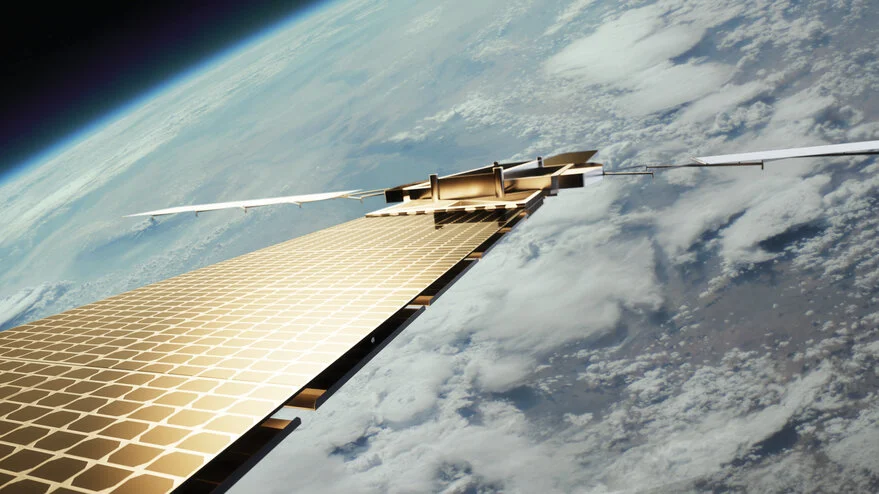
The core of Sophia Space’s commercial roadmap relies on its proprietary "Thermal Integrated LEO Edge" (TILE) computing module. Measuring one meter by one meter with a thickness of just one centimeter, the ultra-thin TILE module is designed to maximize surface area to passively radiate heat into the vacuum of space.
To bring this technology to market, Sophia Space—founded in 2023 under the incubator Mandala Space Ventures—has raised $22 million in early-stage funding. The company has secured a partnership with satellite manufacturer Apex to launch its first in-orbit demonstration payload aboard a Nova satellite bus in 2027.
+-----------------------------------------------------------------+
|                    SOPHIA SPACE & CALTECH                       |
|                 Joint Patent: Space Data Centers                  |
+-----------------------------------------------------------------+
                                 │
                                 ▼
+-----------------------------------------------------------------+
|                    THE TILE MODULE CONCEPT                      |
|  • Dimensions: 1m x 1m x 1cm                                    |
|  • Passive Radiative Cooling (No liquid/convective loops)       |
|  • Scalable modular grid powered by solar arrays                 |
+-----------------------------------------------------------------+
                                 │
                                 ▼
+-----------------------------------------------------------------+
|                   COMMERCIAL DEMONSTRATION                      |
|  • Parent Incubator: Mandala Space Ventures                     |
|  • Capital Raised: $22 Million                                  |
|  • Satellite Bus: Apex Nova                                     |
|  • Target Launch Year: 2027                                     |
+-----------------------------------------------------------------+
Chronology of Development
The journey toward orbital data centers represents a decade-long convergence of academic research, government aerospace expertise, and private venture capital.
The SSPP Foundation (2013–2023)
The intellectual origins of the patent trace back to Caltech’s Space-based Solar Power Project (SSPP). Initiated over a decade ago through philanthropic funding, the SSPP sought to develop extremely lightweight, deployable structural systems capable of collecting solar energy in space and transmitting it wirelessly to Earth using radiofrequency (RF) beams.
In January 2023, Caltech launched the Space Solar Power Demonstrator (SSPD-1) into orbit. Among its payloads was MAPLE (Microwave Array for Power-transfer Low-orbit Experiment), which successfully demonstrated the wireless transmission of power in the vacuum of space.
The Conceptual Pivot (2021–2023)
While SSPP focused on sending power down to Earth, a team of researchers at Caltech and the NASA Jet Propulsion Laboratory (JPL)—led by retired JPL technical fellow Dr. Leon Alkalai—began exploring an alternative paradigm: What if, instead of beaming raw power to Earth, the power was used directly in space to run computer servers?
Under this concept, raw data collected by Earth observation satellites, defense constellations, and deep-space probes would be routed directly to orbital data centers. Only the processed, high-value computational output would be beamed back to ground stations, drastically reducing the bandwidth and energy required for downlink transmissions.

Corporate Foundation and Patent Approval (2023–2026)
- Early 2023: Dr. Leon Alkalai founded Sophia Space as a portfolio company of Mandala Space Ventures, a Southern California aerospace venture studio.
- Mid-2023 to Late 2025: Sophia Space raised $22 million in capital and initiated formal collaborative research agreements with Caltech to refine lightweight deployable structures and passive thermal management systems.
- July 14, 2026: The United States Patent and Trademark Office (USPTO) officially issued the joint patent to Sophia Space and Caltech.
- July 30, 2026: Sophia Space publicly announced the patent award and revealed its plans for the 2027 TILE orbital demonstration on the Apex Nova bus.
Technical Specifications and Supporting Data
The Thermodynamics of Space Computing
Terrestrial data centers rely heavily on convective cooling, using massive volumes of water and electricity-guzzling HVAC systems to prevent silicon processors from melting. In the vacuum of space, convection is impossible because there is no air. Heat can only be dissipated through conduction and radiation.
TERRESTRIAL COOLING (Convective/Liquid)     ORBITAL COOLING (Radiative)
          [Air/Water Flow]                      [Deep Space (3 Kelvin)]
                 │                                        ▲
                 ▼                                        │ (Infrared Radiation)
         ┌───────────────┐                        ┌───────────────┐
         │ Server Racks  │                        │  TILE Module  │
         └───────────────┘                        └───────────────┘
                 │                                        ▲
                 ▼                                        │ (Conduction)
         [Thermal Exhaust]                        [On-Board Chips]
To address this challenge, the patented Sophia-Caltech architecture bypasses active cooling loops, pumps, and working fluids, which are prone to mechanical failure over multi-year missions. Instead, the design relies on passive radiative cooling.
The TILE Architecture
The core building block of the system is the Thermal Integrated LEO Edge (TILE) module:
- Form Factor: 1 meter x 1 meter x 1 centimeter.
- Surface Area-to-Volume Ratio: Maximized to allow heat generated by high-density compute chips on one side of the tile to conduct directly to the opposite side, where it is radiated as infrared energy into the 3 Kelvin (-270°C) cold sink of deep space.
- Modularity: Individual TILEs are designed to plug together like tiles on a floor, allowing operators to scale a spacecraft’s computing capacity from a single kilowatt to multi-megawatt orbital supercomputing arrays.
- Structural Deployment: Utilizing Caltech’s research into ultra-lightweight, flexible carbon-fiber structures, these arrays can be folded compactly inside a standard rocket fairing and deployed autonomously once in orbit.
Commercial Roadmaps and Launch Timelines
Sophia Space is executing a phased approach to validate this architecture in orbit:
| Phase | Objective | Platform / Partner | Key Metrics | Estimated Date |
|---|---|---|---|---|
| Phase 1 | In-orbit TILE thermal and compute demonstration | Apex Nova Satellite Bus | Single TILE module performance | 2027 |
| Phase 2 | Multi-tile modular deployment | Dedicated SmallSat | Scaled passive cooling validation | 2029 |
| Phase 3 | First commercial megawatt-class orbital cloud array | Heavy-lift launcher (e.g., SpaceX Starship) | Multi-megawatt computing capacity | 2031+ |
Official Responses and Collaborative Frameworks
The joint patent represents a textbook model of technology transfer between elite academic institutions, federally funded research centers, and private enterprise.
Dr. Leon Alkalai, founder of Sophia Space and a retired NASA JPL technical fellow, emphasized that solving the thermal equations of space is the primary barrier to orbital cloud computing:
"It is one way of solving the problem of energy in space, meaning energy in and heat out. It’s not the only way, but it is a highly scalable, elegant solution that leverages decades of structural and thermal engineering."
The patent lists seven key inventors, representing a highly decorated roster of aerospace engineering experts from JPL and Caltech:
- Dr. Leon Alkalai (Founder, Sophia Space; Retired JPL Technical Fellow)
- John R. Brophy (JPL Engineering Fellow and pioneer in ion propulsion)
- Sergio Pellegrino (Caltech Professor of Aerospace and Civil Engineering; Co-Director of the Space-based Solar Power Project)
- Jonathan Sauder (Former JPL Technology Infusion Group Lead)
- Timothy P. McElrath (JPL Technology Consultant)
- Douglas J. Sheldon (Former JPL Mission-Assurance Manager)
- Don J. Hunter (JPL Advanced Electronic Packaging Engineering Section)
Commenting on the collaborative nature of the patent, co-inventor John R. Brophy stated:

"This patent illustrates how JPL, Caltech, and private industry can work together to rapidly develop solutions to difficult technical problems for the benefit of the nation."
Under the current licensing and development framework, Sophia Space will continue to fund and collaborate with Caltech’s laboratories. Professor Sergio Pellegrino’s research group will focus on developing the next generation of lightweight, ultra-thin deployable structures and advanced thermal materials required to transition the TILE concept from a single-satellite payload into massive, multi-acre orbital computing structures.
Broad Implications: Environmental, Geopolitical, and Technological
Alleviating Earth’s Terrestrial Energy Crisis
The commercialization of space-based data centers arrives at a critical juncture for terrestrial infrastructure. The rapid expansion of artificial intelligence (AI), machine learning (ML), and large language model (LLM) training has triggered an unprecedented surge in electricity and water demand.
TERRESTRIAL VS. SPACE-BASED DATA CENTERS

Feature                  Terrestrial Data Centers             Space-Based Data Centers (TILE)
---------------------------------------------------------------------------------------------
Power Source             Fossil fuels / terrestrial grid      Direct solar energy (24/7 in sun-synchronous orbit)
Cooling Medium           Water / mechanical HVAC air flow    Passive radiative cooling to deep space
Land Footprint           Large physical land use             Zero terrestrial footprint
Water Consumption        Millions of gallons daily           None
Carbon Emissions         High indirect emissions             Zero operational emissions
Terrestrial data centers are projected to consume upwards of 8% to 10% of global electricity by the end of the decade. By moving high-duty-cycle, non-latency-sensitive calculations—such as LLM training, climate modeling, and genomic sequencing—to orbit, humanity could offload gigawatts of demand from terrestrial power grids. Space offers an environment with constant, unfiltered solar radiation and a virtually infinite cold sink, eliminating the need to consume terrestrial water or fossil fuels for computing.
The Next Frontier of Edge Computing
Beyond environmental benefits, orbital data centers will fundamentally transform space operations. Modern Earth observation satellites generate petabytes of high-resolution hyperspectral imagery, radar data, and optical imagery daily. Currently, these satellites face severe bottlenecks when trying to downlink this raw data through limited, weather-dependent ground station networks.
By utilizing Sophia Space’s orbital data centers, a satellite constellation could route its raw data to a nearby LEO TILE array via high-speed optical laser links. The TILE array, acting as an edge-computing hub, could process the data in real-time—using AI algorithms to detect military movements, wildfire outbreaks, or agricultural anomalies—and transmit only the actionable, compressed insights to ground users. This would reduce the response time for critical intelligence from hours or days to mere milliseconds.
Geopolitical Resilience and National Security
Orbital data centers also offer a level of geopolitical resilience that terrestrial facilities cannot match. Ground-based data centers are vulnerable to localized power grid failures, natural disasters, cyber-physical sabotage, and military strikes.
A decentralized, modular data center constellation distributed across Low Earth Orbit is inherently resilient. If one node is compromised or degraded, the computational load can be instantly rerouted to other nodes in the network. For defense and intelligence agencies, this architecture provides a highly secure, survivable "cloud in the sky" that guarantees continuous operational capability even during severe global crises.