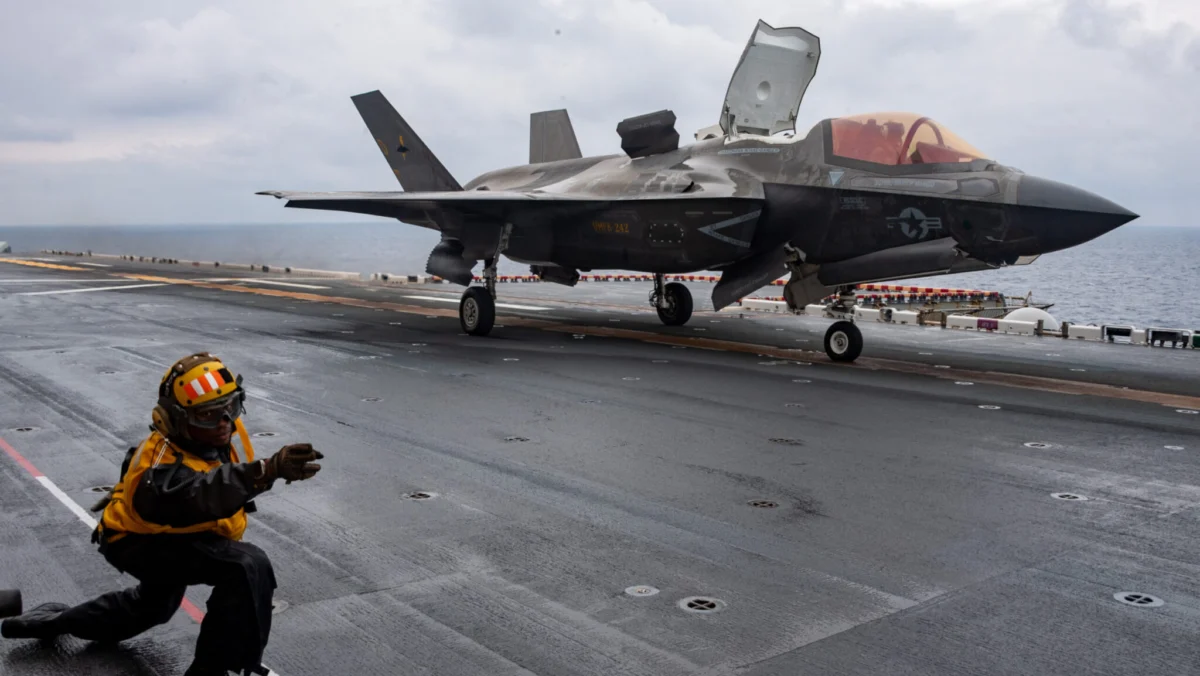
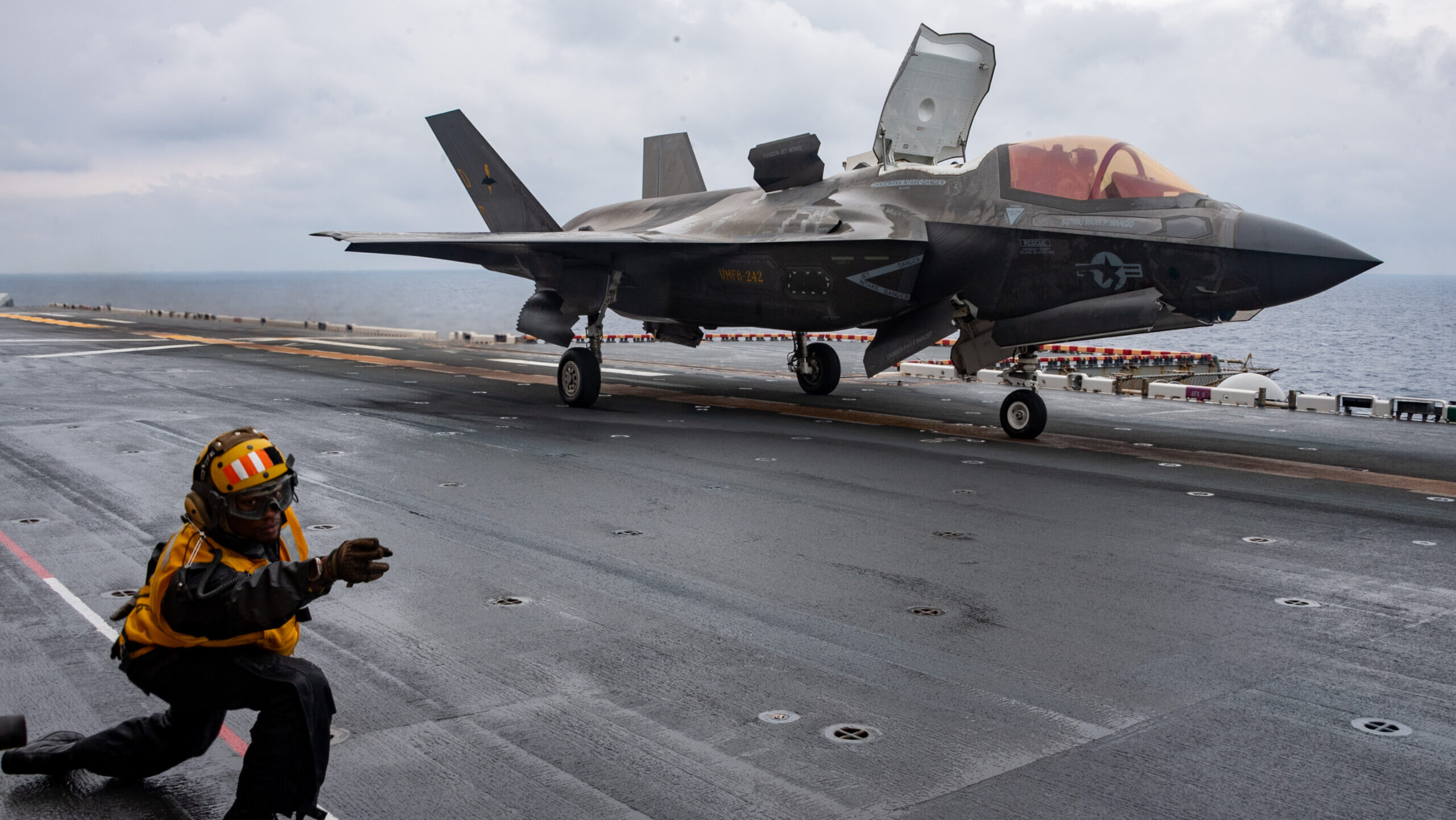
WASHINGTON — A U.S. Marine Corps F-35B Lightning II fighter jet crashed today at Marine Corps Air Station (MCAS) Miramar in Southern California, marking yet another high-profile incident involving the Pentagon’s most expensive and complex weapons program.
The incident, which occurred at approximately 10:00 a.m. local time, prompted an immediate emergency response at the base. While the aircraft was destroyed in the mishap, the pilot successfully ejected from the cockpit. According to a statement released by the 3rd Marine Aircraft Wing, the pilot was transported to a local medical facility and is currently in stable condition, undergoing evaluation for non-life-threatening injuries.
The aircraft was reportedly assigned to Marine Aircraft Group (MAG) 11, a key tactical aviation unit within the 3rd Marine Aircraft Wing. While officials have kept specific details regarding the cause of the crash under wraps, the incident has reignited broader discussions regarding the fleet-wide readiness and sustainment challenges currently facing the F-35 program.
Chronology of the Incident
At this stage, the timeline of the crash remains focused on the immediate emergency response. According to base officials, the aircraft was conducting routine flight operations when the incident occurred.
- 09:30 AM (Local): Pre-flight protocols and launch sequences initiated for the sortie.
- 10:00 AM (Local): The mishap occurred within the vicinity of MCAS Miramar. Emergency personnel were dispatched immediately to the crash site to secure the area and provide medical aid.
- 10:30 AM (Local): Initial reports confirmed that the pilot had successfully ejected and was being transported for medical care.
- 12:00 PM (Local): The Marine Corps issued a formal statement confirming the crash of an F-35B and the safety of the pilot.
- Ongoing: A safety investigation board has been convened to analyze flight data recorders, debris, and ground communications to determine the root cause of the crash.
The F-35B: A Technological Marvel with Growing Pains
The F-35B is the Short Takeoff and Vertical Landing (STOVL) variant of the Lockheed Martin-produced Joint Strike Fighter. It is specifically engineered for the Marine Corps’ unique mission set, capable of operating from amphibious assault ships and austere, short-field runways. With an average flyaway price tag of approximately $109 million, the loss of an airframe represents a significant financial blow to the Department of Defense, in addition to the operational loss of a cutting-edge combat asset.
The aircraft is renowned for its sophisticated sensor fusion, stealth capabilities, and vertical lift fan system, which allows it to hover and land like a helicopter. However, the complexity of this vertical lift system has historically been a point of focus for maintenance crews and safety inspectors. While investigators have not suggested a mechanical failure as the definitive cause, the intricate nature of the F-35B’s propulsion system remains a standard area of scrutiny in any investigation involving the variant.
Official Responses and Procedural Transparency
In the immediate aftermath of the crash, the F-35 Joint Program Office (JPO) issued a brief statement confirming their awareness of the situation.
"We are aware of the mishap at MCAS Miramar involving a Marine Corps F-35B," a JPO spokesperson said. "The JPO is standing by to provide all necessary technical and logistical support to the Marine Corps as they conduct a thorough investigation into the circumstances surrounding this event. We remain committed to ensuring the safety of our warfighters and the integrity of the fleet."
The Marine Corps has maintained a policy of operational transparency while balancing the needs of an ongoing investigation. By assigning the mishap to a formal investigation board, the service aims to identify whether the crash was the result of human error, environmental factors, or a material failure. Such investigations often take months to complete, as experts must piece together complex digital flight logs and physical evidence from the wreckage.
Broader Implications: Readiness and Sustainment
The crash at Miramar arrives at a sensitive time for the F-35 program. Across the services, the Pentagon has been grappling with persistent readiness issues, often attributed to the aging logistics infrastructure and the high cost of maintaining the aircraft’s stealth coatings and software-heavy avionics.
In recent months, the Government Accountability Office (GAO) has highlighted concerns regarding the program’s long-term sustainability. Congress has been urged to authorize a $13.7 billion boost in funding to address these readiness lags, aiming to improve the mission-capable rates of the global F-35 fleet.
The Cost of Complexity
The financial burden of the F-35 program is not limited to the initial acquisition costs. The total lifecycle cost of the program is estimated to be over $1.7 trillion. Critics argue that as the fleet ages, the cost to maintain these jets is outpacing initial projections. When an aircraft is lost in a mishap, the loss is felt not only in dollars but in the availability of "combat-coded" airframes needed for training and global deployments.
Impact on Pilot Training
For the Marine Corps, the loss of an F-35B also impacts the pilot training pipeline. Each pilot flying these aircraft undergoes years of rigorous, highly specialized training. The loss of an aircraft necessitates a reallocation of resources and potentially disrupts training schedules for the pilots of MAG-11. However, the primary focus of the service remains the health and recovery of the pilot, whose successful ejection serves as a testament to the safety features integrated into the Martin-Baker ejection seat and the overall design of the cockpit.
Looking Ahead: The Investigation Process
As the investigation progresses, the Marine Corps will likely examine three primary areas:
- Maintenance Records: A deep dive into the maintenance history of the specific airframe to determine if any recurring issues were reported prior to the flight.
- Environmental Factors: Analysis of weather conditions, air traffic control communications, and any potential bird strikes or external factors that could have incapacitated the pilot or the aircraft.
- Software and Systems: Given the F-35’s reliance on software, investigators will look at the aircraft’s "ALIS" (Autonomic Logistics Information System) or its successor, ODIN (Operational Data Integrated Network), to see if there were any recorded anomalies in the jet’s performance leading up to the ejection.
For the residents surrounding MCAS Miramar, the incident is a stark reminder of the inherent risks associated with high-performance military aviation. While the base is an integral part of the local community and national defense, such mishaps serve to underscore the dangerous nature of the work performed by Marine aviators every day.
This story is developing. Future updates will be provided as the Department of the Navy releases the findings of the safety investigation and clarifies the status of the investigation board.