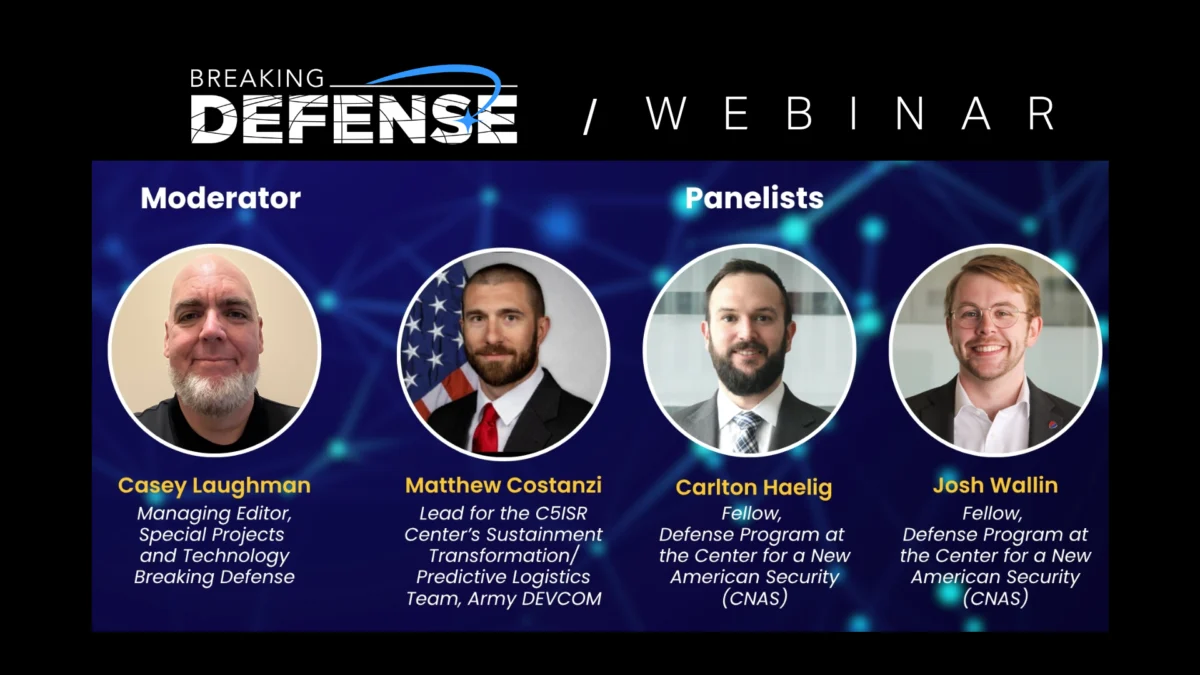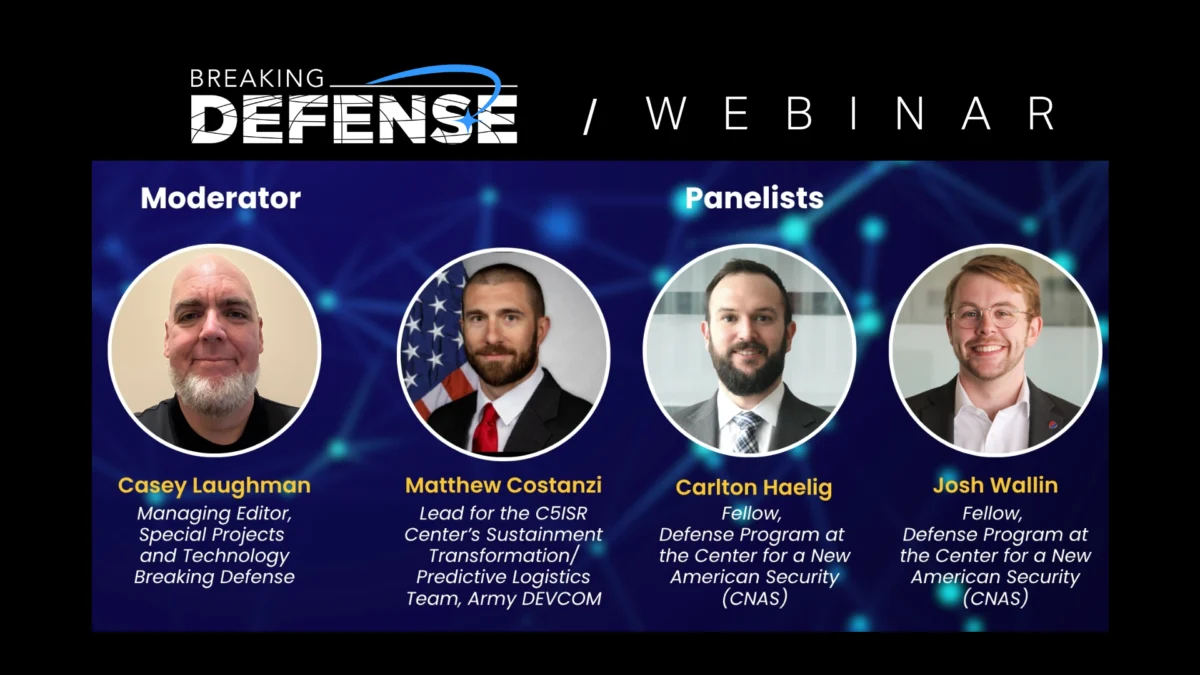
Date: October 21, 2026 | Time: 2:00 PM ET / 11:00 AM PT
Event: Building Logistics Networks that Survive Contested Environments (Live Webinar)
Executive Summary: The New Logistics Imperative
In modern warfare, the "iron mountain" of traditional logistics is increasingly vulnerable. As the Pentagon shifts its strategic focus toward near-peer competition, the ability to move fuel, munitions, and spare parts is no longer the sole arbiter of success. Victory in a future conflict will be determined by the digital backbone that underpins the supply chain.
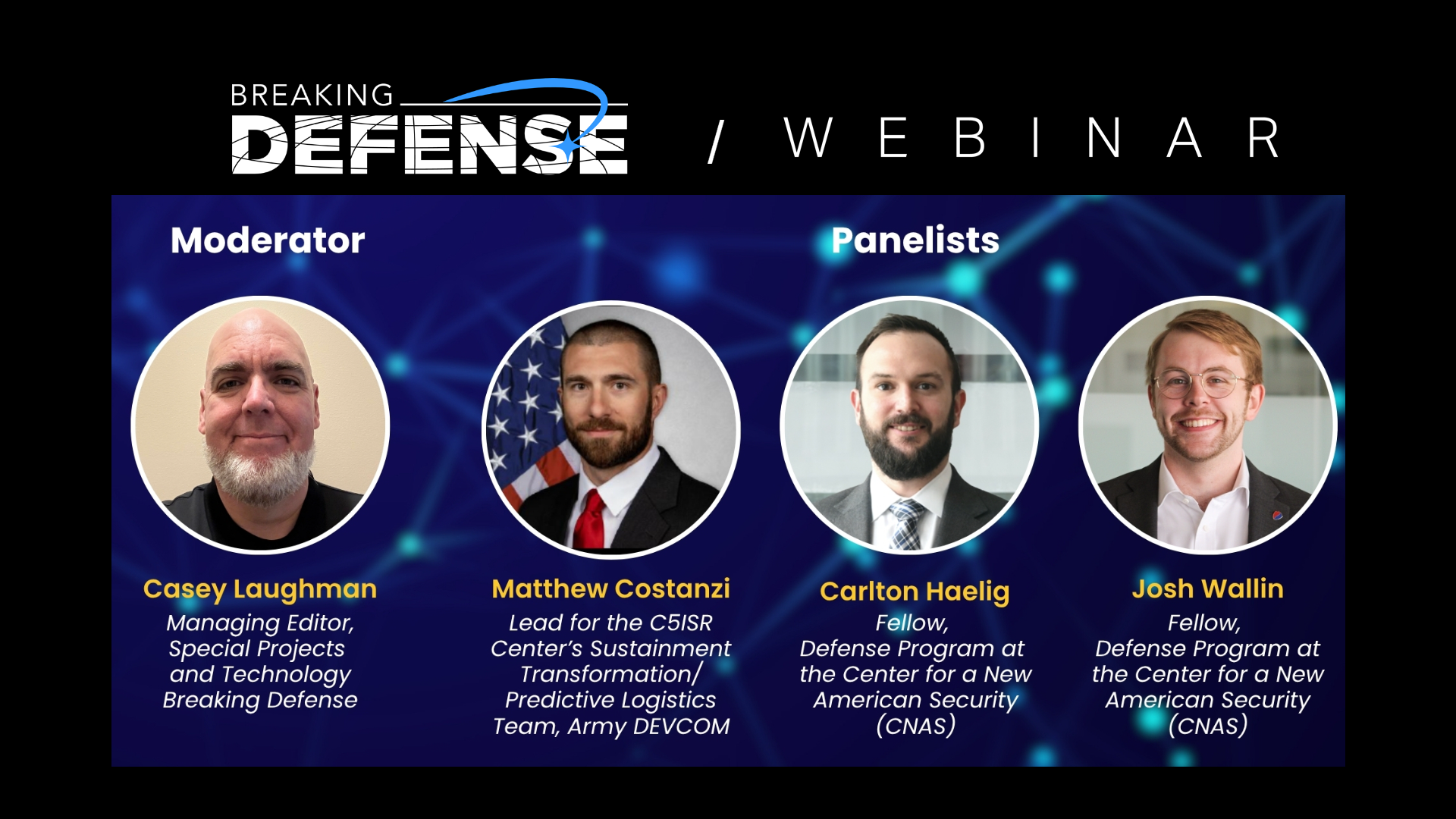
On October 21, 2026, Breaking Defense will host a high-level technical symposium featuring Mike Zizza, Sales and Growth Leader at Wind River, to address the critical transition toward adaptive, observable, and survivable logistics networks. This session, which offers 1 CPE credit in Business Management & Organization, serves as a critical touchpoint for defense leaders navigating the intersection of software-defined systems, edge AI, and tactical connectivity.
The Evolution of Contested Logistics: A Chronology of Necessity
The Legacy Era (Pre-2020)
For decades, U.S. logistics were predicated on "permissive environments"—the assumption of air superiority, reliable GPS, and constant, high-bandwidth satellite communication. Logistics were linear, predictable, and heavily reliant on centralized hub-and-spoke models.
The Turning Point (2020–2024)
The realization that adversaries could target the electromagnetic spectrum and cyber-physical infrastructure led to the formalization of the "Contested Logistics" doctrine. The Pentagon began recognizing that if a commander cannot see their assets in real-time due to electronic warfare (EW) interference, the supply chain effectively ceases to exist.
The Software-Defined Future (2025–Present)
We are currently in the era of "intelligent distribution." The focus has shifted from mere movement to "digital sustainment." This includes the integration of autonomous vehicles, predictive maintenance algorithms, and private tactical 5G, creating a mesh network of logistics nodes that can heal themselves if a specific link is severed.
Supporting Data: Why Connectivity is the New Frontline
The shift toward a software-defined defense ecosystem is driven by three primary technological pillars:
- Edge-Based Artificial Intelligence: By processing data at the source—whether at a forward operating base or a smart warehouse—forces can reduce their reliance on reach-back communications to the continental United States. This reduces latency and minimizes the "electronic signature" that adversaries use to track troop movements.
- Condition-Based Maintenance (CBM): Traditional logistics relied on interval-based maintenance, which is inefficient and creates massive supply chain backlogs. Modern CBM utilizes IoT sensors to predict failures before they occur, allowing for "just-in-time" delivery of specific parts, drastically reducing the physical footprint of logistics convoys.
- Spectrum-Agile Connectivity: The integration of private tactical 5G is not merely about speed; it is about agility. These networks allow for high-density data sharing within a local theater, ensuring that even if global SATCOM is degraded, the tactical edge remains fully operational.
Technical Perspectives: The Role of Software-Defined Systems
In the upcoming Breaking Defense webinar, Mike Zizza of Wind River will dissect how software-defined systems provide the elasticity required for modern defense.
"Software-defined systems are the bedrock of modern survivability," industry analysts suggest. By decoupling the hardware from the application, commanders can push remote updates to weapon systems and logistics platforms without needing physical access to the asset. This "over-the-air" capability allows for rapid adaptation to new threats—such as patching a vulnerability identified in the field—without waiting for a maintenance cycle.
The Role of Smart Warehousing
Smart warehouses are no longer just about automation; they are about observability. By creating a "Digital Twin" of the logistics network, commanders can simulate the impact of losing a specific node. If a port is destroyed or a supply route is blocked, the AI-driven logistics network can automatically reroute supplies, ensuring that critical munitions reach the front lines despite systemic disruptions.
Implications for the Warfighter and Industry
Implications for Defense Leadership
For commanders, the transition to contested logistics represents a move away from centralized command and control toward "Mission Command" logistics. Leaders must trust decentralized nodes to make local decisions based on real-time data. This requires a cultural shift, moving from a culture of "hoarding supplies" (in case of uncertainty) to "precision sustainment" (based on data-backed certainty).
Implications for the Defense Industrial Base (DIB)
The industry is seeing a seismic shift in procurement. Contracts are increasingly favoring firms that provide open-architecture solutions. The days of "vendor lock-in" are fading, as the Pentagon demands systems that can interoperate across different platforms, branches, and allied forces. Companies that fail to prioritize cybersecurity and spectrum-resilience in their logistics software will likely find themselves excluded from future defense tenders.
Fireside Chat: The Strategic Pivot
The webinar will conclude with an in-depth fireside chat addressing how these technological trends are reshaping industry strategy. Key topics include:
- Investment Priorities: Where should capital be deployed to maximize impact? (e.g., cybersecurity, resilient hardware, or autonomous delivery platforms?)
- The Talent Gap: How can the DoD attract the software engineers necessary to maintain these complex digital logistics architectures?
- Interoperability Challenges: The struggle to integrate legacy systems with modern AI-driven platforms.
Professional Development and Certification
Participants in this live program are eligible for 1 CPE credit in the Field of Study: Business Management & Organization.
Requirements for Credit:
- Attendance of the full live session.
- Successful submission of responses to all three polling questions administered during the broadcast.
- Registration must be completed via the official Breaking Defense portal.
Conclusion: The Path Forward
As we look toward the remainder of the decade, the ability to survive in a contested environment will not be defined by the size of our stockpiles, but by the intelligence of our networks. The Breaking Defense webinar on October 21 serves as a foundational exploration of these themes.
By marrying high-tech solutions like edge AI and tactical 5G with the rigorous demands of military logistics, the Pentagon and its industry partners are building a foundation that is not just efficient, but inherently survivable. In the future fight, the logistics network will not just support the mission—it will be the mission.
Register today to join the conversation and ensure your organization is prepared for the next generation of logistics operations.
For more information on registration, technical requirements, and to view the full speaker lineup, visit the official Breaking Defense webinar registration page.