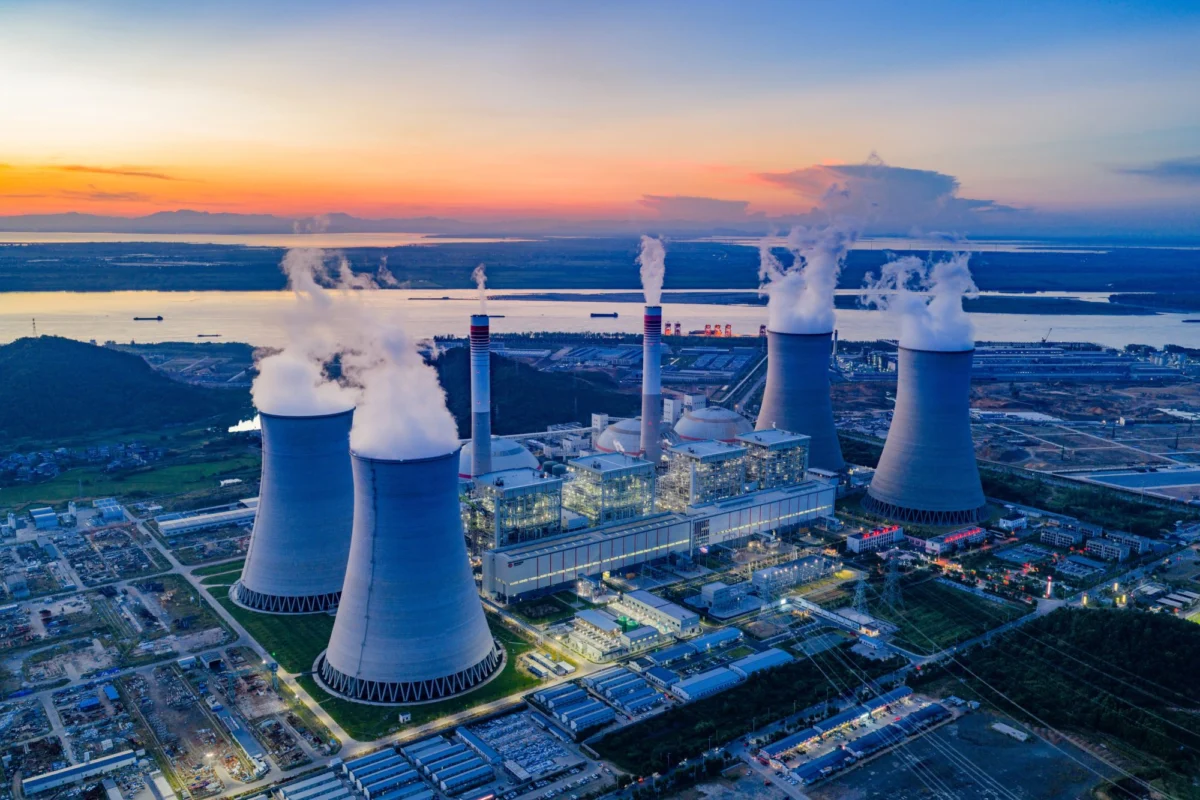
The rapid, unprecedented expansion of artificial intelligence is fueling a technological revolution, but it is simultaneously triggering an environmental crisis that threatens to derail decades of corporate decarbonization progress. As tech giants scramble to build out massive, purpose-built data centers to house the compute power necessary for generative AI, a troubling trend has emerged: a renewed, heavy reliance on fossil fuels.
New data suggests that the massive electricity demands of AI are forcing a significant spike in emissions for industry titans like Amazon, Google, and Microsoft. However, a new benchmarking tool—the Data Center Air Pollution Tracker, launched by climate communications firm Climate Power—reveals that the most aggressive frontier AI players may be causing the most substantial long-term damage.
The Data Center Air Pollution Tracker: A New Metric for Accountability
The Data Center Air Pollution Tracker serves as a critical diagnostic tool for investors, regulators, and corporations aiming to reconcile their AI ambitions with their environmental, social, and governance (ESG) commitments. By aggregating data from research firm Cleanview and cross-referencing it with carbon-intensity metrics from the EPA, the United Nations, and major international news outlets, the tracker provides a standardized score for the industry’s biggest players.
Understanding the Scoring Methodology
The tracker evaluates companies on a scale of 1 to 100 based on two primary, equally weighted factors:
- Behind-the-Meter (BTM) Generation: The extent to which a company utilizes localized fossil fuel generators (primarily natural gas) to bypass grid constraints.
- Grid Carbon Intensity: The carbon footprint of the electricity supplied by the local grid where the data center resides, ranging from 200 lbs. CO2/MWh (cleanest) to 1,000 lbs. CO2/MWh (dirtiest).
A perfect score of 100 represents an idealized scenario where a company exclusively draws power from the world’s cleanest electrical grids without relying on auxiliary, high-emission, on-site fossil fuel generation.
Chronology: The Escalation of the AI Energy Crisis
The tension between AI development and environmental sustainability did not occur overnight. It is the result of a multi-year collision between exponential compute demand and aging energy infrastructure.
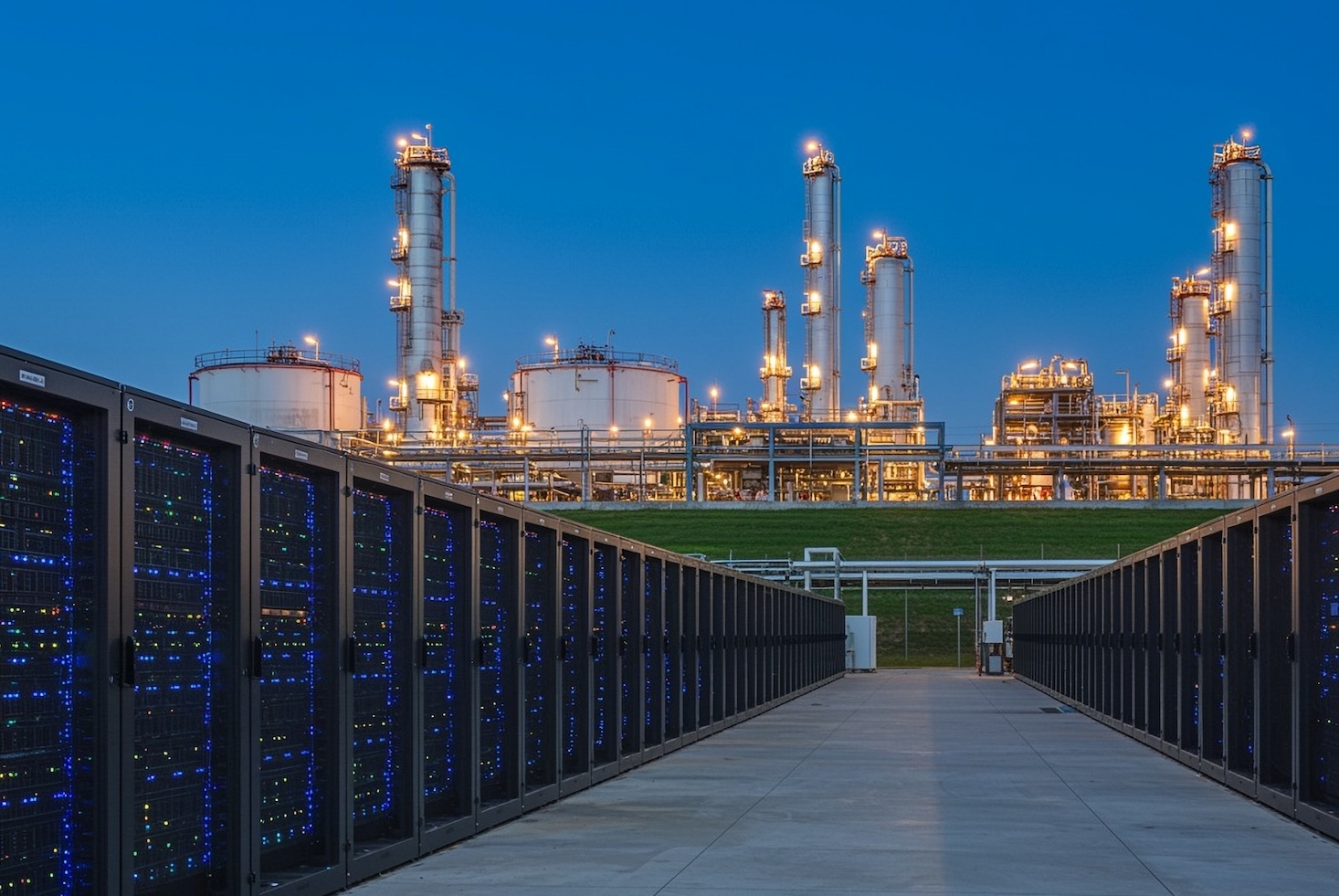
- 2022-2023: The Generative AI Explosion: The release of ChatGPT and the subsequent "arms race" in Large Language Model (LLM) development created an immediate, massive spike in demand for data center capacity.
- Early 2024: The Infrastructure Bottleneck: As tech companies began exhausting available capacity in established, renewable-rich data center hubs, they began looking toward regions with cheaper, but often dirtier, energy sources.
- Mid-2025: Regulatory Loosening: Under the Trump administration, policies were enacted to fast-track the permitting of new fossil fuel-powered infrastructure, specifically designed to support the energy-intensive needs of AI clusters.
- July 2026: The Transparency Milestone: With the release of the Data Center Air Pollution Tracker, the scale of the "emissions gap" became public, highlighting that even "green" companies are struggling to keep their AI projects carbon-neutral.
Supporting Data: Who Leads the Pollution Rankings?
The current landscape of AI energy usage is highly bifurcated. While some established tech giants are making efforts to integrate renewable energy, newer entrants and specific projects are leaning heavily into traditional, high-carbon fuels.
The Tier 1 Giants (Amazon, Microsoft, Google, Meta)
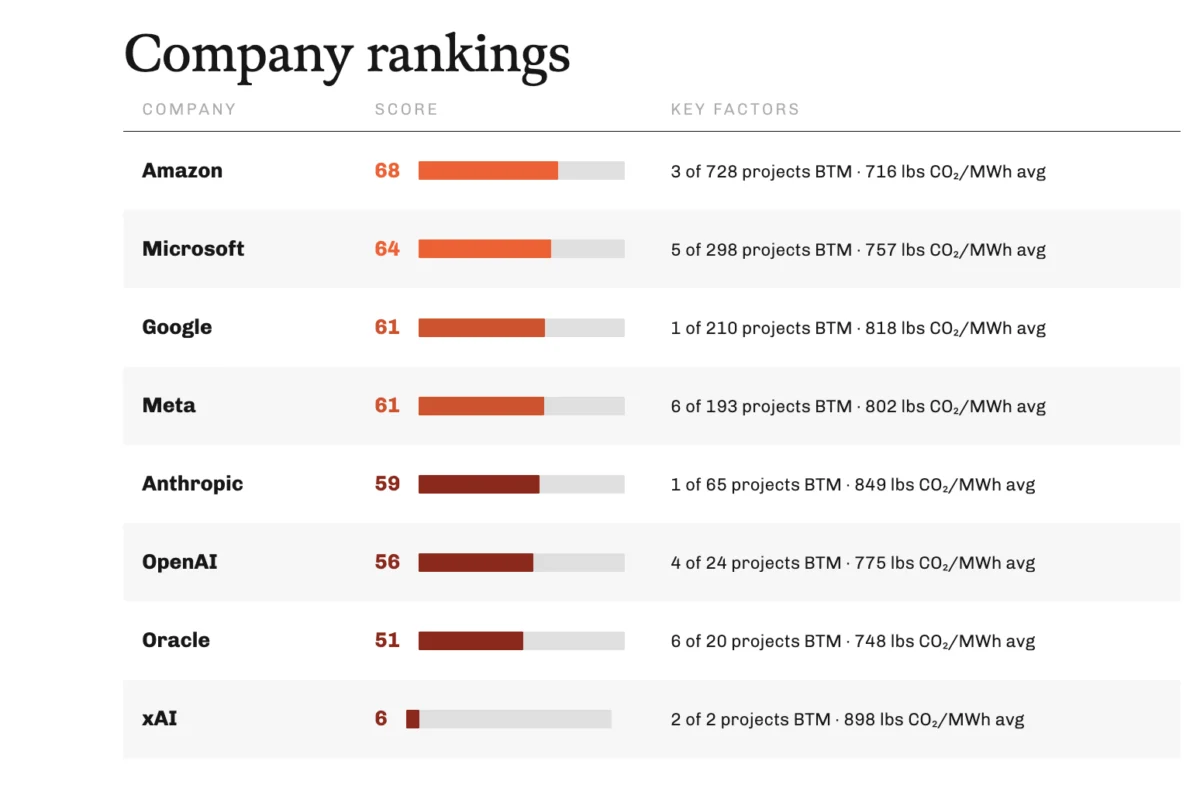
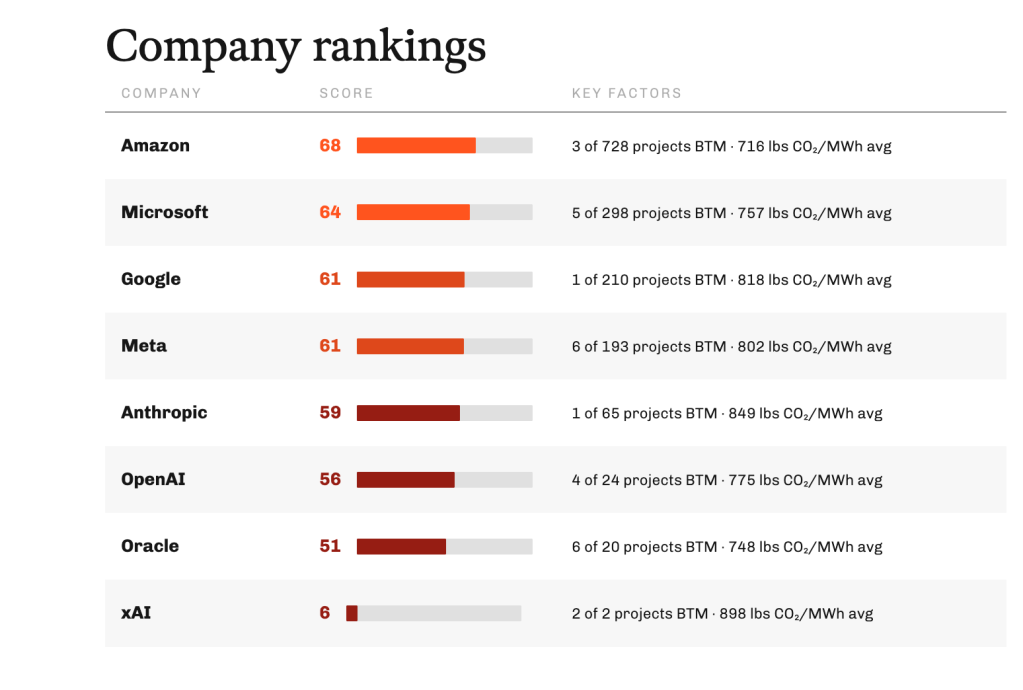
Amazon currently holds the highest score on the tracker at 68, with an average carbon intensity of 716 lbs. CO2/MWh. This is largely attributed to its lower ratio of behind-the-meter natural gas projects compared to its peers. Microsoft follows with a 64 (757 lbs. CO2/MWh), while Google and Meta sit at 61, with Google exhibiting a higher carbon intensity (857 lbs. CO2/MWh) compared to Meta (802 lbs. CO2/MWh).
The AI Frontier Firms
Companies focusing exclusively on frontier AI development show a varied performance. Anthropic and OpenAI earned scores of 59 and 56, respectively, indicating they are struggling to maintain the same clean-energy ratios as the larger, more diversified cloud infrastructure companies.
The Outlier: xAI and the "Colossus" Factor
Perhaps the most concerning figure in the data is the score of 6 assigned to Elon Musk’s xAI. The company’s "Colossus" data center in Memphis has become a flashpoint for environmental criticism. The facility relies on large-scale, largely unregulated natural gas turbines, which produce significant quantities of smog-inducing pollutants. This radical reliance on fossil fuels places xAI in a category of its own, signaling a potential shift toward "unfettered" energy consumption in the AI sector.
Official Responses and Corporate Strategy
The implications of these scores are being felt in boardrooms across Silicon Valley. For companies like Google and Microsoft, which have publicly committed to "24/7 carbon-free energy" goals, these scores represent a significant reputational risk.
Industry analysts note that companies are currently caught in a "trilemma": balancing the need for low-latency compute power, the requirement for 99.999% uptime, and the pressure to meet aggressive sustainability targets. Most companies argue that the current grid infrastructure simply cannot support the massive surges in power required by modern AI clusters, forcing them to rely on backup generators or prioritize geographic locations where the grid is dominated by natural gas.
Climate Power’s data suggests that these justifications are increasingly falling on deaf ears. The environmental cost of AI is no longer a theoretical concern for future years; it is a current reality that is actively degrading air quality in the communities surrounding these massive, energy-hungry data centers.
Implications: The Political and Social Fallout
The "Great AI Buildout" is projected to require an estimated 194 gigawatts of power by 2035—or roughly 20 percent of total U.S. power production. This massive transformation of the energy sector has moved AI from a niche technological debate to a central issue in national energy policy.
Community Opposition
Fierce community opposition is rising against the construction of new, gas-heavy data centers. Local residents, concerned about air quality, noise, and the depletion of local resources, are increasingly organizing against companies like xAI. The lack of stringent regulation on behind-the-meter generation has left many of these communities without a voice in the siting process.
Voter Sentiment
Climate Power’s recent polling indicates a clear preference among the American electorate: voters are significantly more likely to support data center projects that incorporate renewable energy sources like wind and solar. Conversely, projects associated with coal or natural gas expansion suffer from low public support. This creates a dangerous long-term political risk for tech companies; if they continue to prioritize fossil fuels to power their AI models, they may eventually face federal-level restrictions, carbon taxes, or forced divestment.
The Path Forward
The path to sustainable AI is not impossible, but it requires a fundamental shift in strategy. Instead of building data centers in regions with "dirty" grids, or relying on localized natural gas, companies must commit to:
- Direct Procurement: Investing in new, long-term renewable energy projects (PPA/Virtual PPAs) to green the grids they tap into.
- Efficiency Upgrades: Investing in AI hardware and software that requires less energy per inference cycle.
- Transparency: Providing real-time, granular data on the carbon footprint of individual data centers, rather than opaque corporate-level averages.
The data provided by the Air Pollution Tracker serves as a wake-up call. As AI continues to evolve, the industry must decide whether it will be a leader in the transition to a low-carbon future or the primary engine of a new, fossil-fueled age. For now, the scoreboard suggests that the tech sector has a long way to go before its environmental footprint matches its technological ambition.