
WASHINGTON — After two decades of technological development, bureaucratic hurdles, and significant acquisition setbacks, the U.S. Air Force has signaled a shift in the trajectory of the Military GPS User Equipment (MGUE) program. Officials now predict that operational testing for the chip cards necessary to enable maritime and aviation platforms to utilize jam- and spoof-resistant M-code signals will finally conclude in fiscal year 2027.
The delay is profound, particularly given that the first satellite broadcasting the secure M-code signal was launched in 2005. For defense analysts, the slow pace of implementation is a critical vulnerability. In an era where near-peer adversaries possess sophisticated electromagnetic warfare capabilities, the ability to maintain precise positioning, navigation, and timing (PNT) is not merely an advantage—it is a necessity for survival.
The State of Play: Operational Checkout Underway
"Development activity has already finished; we’re now in just operational checkout," Col. Jameson Locklear, senior materiel leader for the M-code Aviation Receivers Joint Program Office at the Air Force Life Cycle Management Center (AFLCMC), told reporters in Dayton, Ohio.
The program’s management underwent a significant structural shift last year when the Space Force and Air Force finalized a transition plan on July 17. The multifaceted MGUE program, previously under the purview of the Space Systems Command (SSC), has been moved to the AFLCMC. This reorganization is intended to streamline the complex task of equipping approximately 700 cross-service weapon systems—ranging from Army ground vehicles and Navy destroyers to Air Force fighter jets and dismounted infantry radios—with M-code-capable hardware. According to Government Accountability Office (GAO) estimates, the joint force may ultimately require up to a million such receivers to achieve full operational capability.
A Chronology of Delays and Institutional Friction
The M-code program is frequently cited as one of the Department of Defense’s most troubled acquisition efforts. The journey began in 1999, sparked by early warnings that the military’s existing L1 band and Precision (P(Y)) code signals were increasingly susceptible to sophisticated jamming and spoofing techniques.
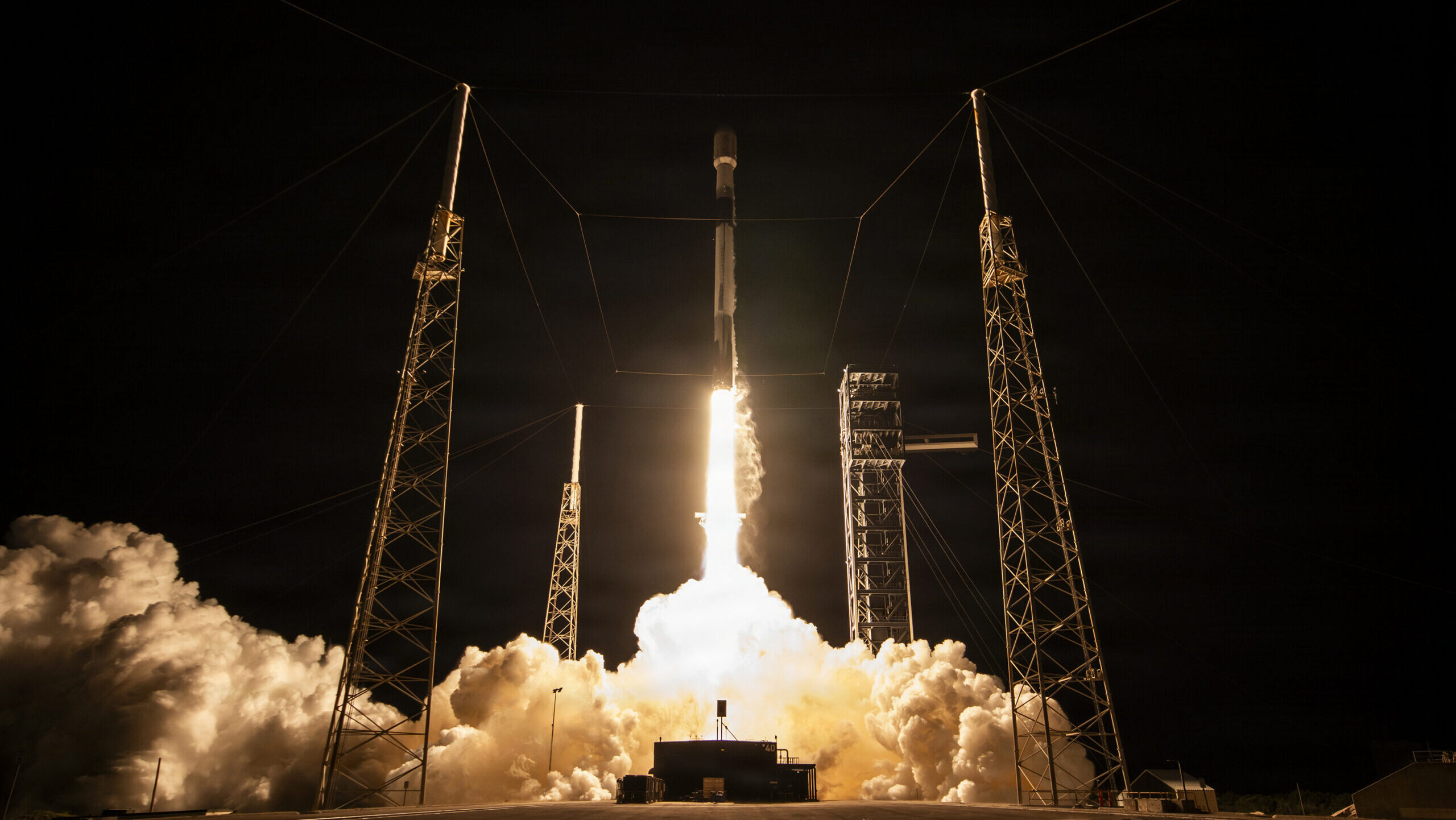
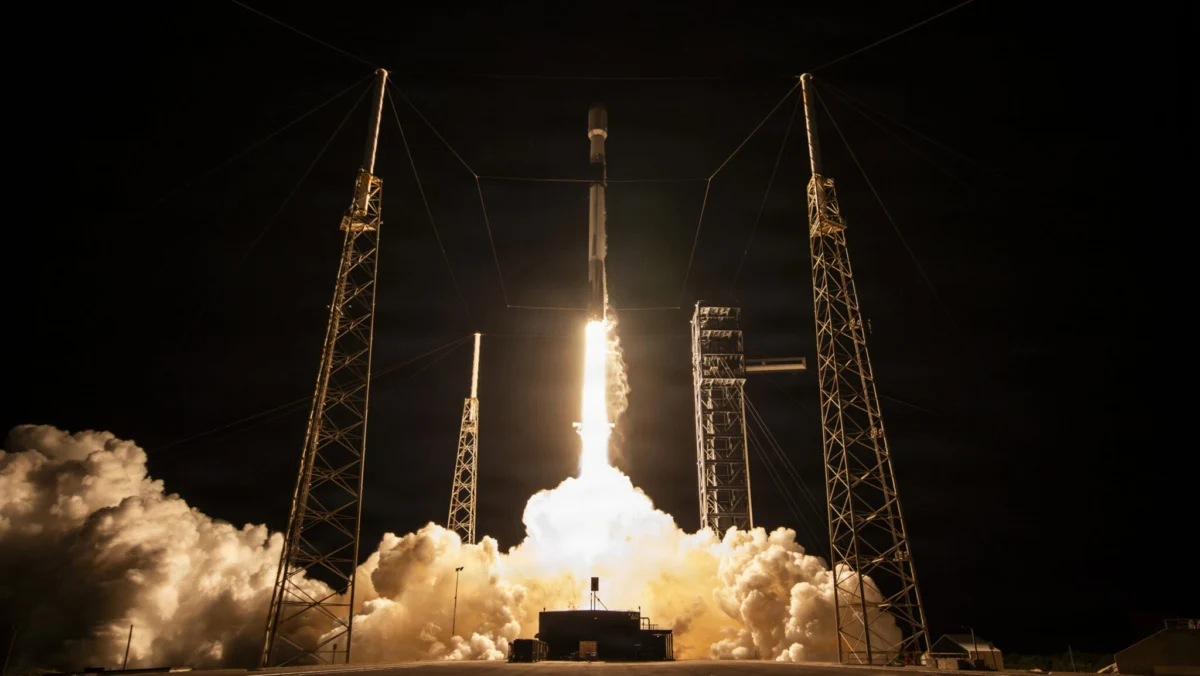
- 2005: The first GPS satellite equipped with M-code broadcasting capabilities is launched by the Air Force Space Command. The Pentagon sets an optimistic goal for Initial Operational Capability (IOC) by 2009.
- 2012: Following a failed attempt at a previous iteration, the current MGUE program is formally launched. Contracts are awarded to Rockwell Collins (now BAE Systems), Raytheon (RTX), and L3Harris.
- 2019: The newly established U.S. Space Force assumes responsibility for developing and procuring the M-code chip cards, while the individual services remain responsible for platform integration.
- 2020: SSC awards $552 million in contracts for Increment 2 chip cards, targeting a 2026 delivery date.
- 2024–2025: Persistent software shortfalls in maritime and aviation cards trigger a pivot in testing priorities. The Army’s Gray Eagle UAV is moved to the front of the line to bypass B-2 bomber integration delays.
- 2026: The program is officially transferred to the AFLCMC to improve delivery timelines.
MGUE Increments: Breaking Down the Hardware
The MGUE program is bifurcated into two distinct increments, each designed to address specific technical needs.
Increment 1 focuses on baseline application-specific integrated circuit (ASIC) cards. These were designed for initial integration across the services. The program faced significant hurdles in creating a standardized card for maritime and aviation platforms, leading to the aforementioned software delays. While the ground vehicle cards have seen successful integration into platforms like the Stryker and the Joint Light Tactical Vehicle (JLTV), the aviation variants required intensive remedial work to meet navigation precision requirements.
Increment 2 represents the next generation of technology: smaller, faster, and more powerful ASIC chips designed to leverage the advanced capabilities of the GPS III Follow-On satellite constellation. This increment includes the development of the Miniaturized Serial Interface (MSI) receiver, intended for high-speed precision-guided munitions and handheld radios. While the original vision for Increment 2 was broad, the program has been trimmed; of the original three contractors, only BAE Systems and L3Harris remain actively involved in the effort.
Software Shortfalls and Technical Adjustments
The path to operational status has been plagued by "software kinks." A July 2026 GAO report highlighted that aviation-specific chip cards initially failed to meet signal processing accuracy requirements.
Col. Locklear noted that while these issues were initially concerning, they were mitigated by a pragmatic approach. "It turned out we didn’t actually need something better," Locklear said regarding a decision to adjust requirements for aviation precision after determining the existing hardware met Army-centric standards. Further software glitches affecting navigation precision have since been resolved through a stable update, currently undergoing final verification by the Pentagon’s Office of Test and Evaluation (DOT&E).

For the Army, the implementation process is accelerating. The service has already fielded nearly 4,000 M-code receivers to high-priority units and plans to field an additional 2,000 units by the end of this fiscal year. However, the Army has acknowledged that "size, weight, and power" constraints will prevent some smaller drone platforms from carrying M-code equipment, necessitating alternative PNT solutions.
The Maritime Challenge: Logistics and Availability
The Navy’s integration efforts have proven equally difficult, with operational testing for the DDG-51 Arleigh Burke-class destroyers pushed back to 2027. The challenge is as much logistical as it is technical. Because of the high operational tempo and global deployment schedule of the Navy’s 75-strong destroyer fleet, finding a vessel available for dedicated testing is a constant struggle.
"We don’t know exactly when, because of ongoing operations it can be tough to get a DDG," Locklear admitted. "But the Navy is committed to finding one."
For the Air Force, the path forward involves three distinct receiver projects: MAGR-2K-M, R-EGI, and EGI-M. The service anticipates achieving IOC for the MAGR-2K-M on two platforms in 2027, with the remaining systems slated for readiness in 2028 and 2029.
Official Responses and Strategic Implications
The stakes for these delays remain high. Clayton Swope, deputy director of the Aerospace Security Project at the Center for Strategic and International Studies (CSIS), emphasized that orbital hardware is useless without the corresponding ground-based infrastructure.

"Having the satellites in orbit does not matter if the right equipment is not in the hands of warfighters on Earth," Swope told Breaking Defense. "The efficacy of GPS in a battlespace where the electromagnetic spectrum is contested depends on operationalizing the new receivers at scale—the sooner, the better."
Swope remains cautiously optimistic about the move to the AFLCMC. "AFLCMC has a history of managing very complex programs, serving a variety of customers, over their whole soup-to-nuts lifecycles. It seems like the right type of expertise and experience for taking over this program."
Meanwhile, the Department of Defense is looking toward the future of sustainment. Col. Locklear highlighted that the AFLCMC is establishing a "sustainment strategy" for MGUE software, a departure from previous program models. Recognizing that "software is kind of never done," the office is creating a framework to push rolling updates as technology evolves.
Looking Ahead: The Future of M-Code
Despite past recommendations by former acquisition leaders to potentially scrap Increment 2 due to a lack of a "sound business case," the program persists. Recent test events for the Joint Modernized Handheld Next-Gen GPS receiver have brought together a coalition of U.S. services and international partners, including Norway and France, suggesting that the demand for these capabilities extends well beyond the U.S. military.
As the program enters its third decade, the focus has shifted from mere development to integration and scaling. With the transition to the AFLCMC and a clearer roadmap for testing through 2027, the Pentagon hopes to finally close the gap between the sophisticated signals broadcast from space and the vulnerable hardware operating on the ground. The success of this endeavor will be a primary indicator of the U.S. military’s ability to maintain technological dominance in a contested electromagnetic environment.