WASHINGTON — In a move designed to overcome persistent bottlenecks in the Pentagon’s next-generation orbital communications, the U.S. Space Force has awarded California-based startup K2 Space a $22.9 million contract to serve as a flight-testbed for standardized laser-link terminals. This award, finalized on July 31, 2026, represents a critical pivot in the military’s strategy to transition from bespoke, mission-specific hardware to a modular, "enterprise-grade" optical infrastructure.
The contract, which runs through 2028, covers the procurement of terminals, their integration onto K2’s high-power satellite buses, and the subsequent launch and orbital demonstration. Managed by the Space Based Sensing and Targeting portfolio, the project utilizes fiscal 2025 research and development funds to accelerate the deployment of the Enterprise Space Terminal (EST) program.
The Strategic Importance of Optical Intersatellite Links
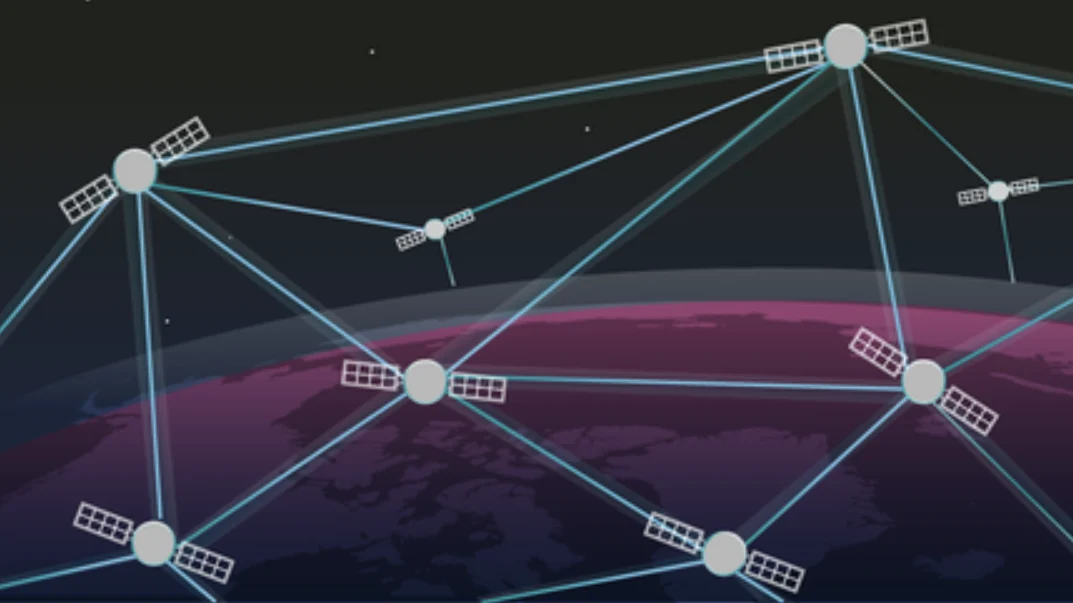
At the heart of the U.S. military’s modern space architecture is the shift from radio-frequency communications—which are susceptible to jamming and capacity constraints—to high-bandwidth optical intersatellite links (OISLs). These laser terminals are the "connective tissue" of the Proliferated Warfighter Space Architecture (PWSA).
Without these links, the Pentagon’s goal of creating a "mesh network" in space—capable of detecting, tracking, and targeting hypersonic, ballistic, and cruise missiles in real-time—would remain an impossibility. The links are intended to provide high-speed, secure data transport between the Space Development Agency’s (SDA) Tracking Layer in Low Earth Orbit (LEO) and the Space Force’s Resilient Missile Warning-Missile Tracking network in Medium Earth Orbit (MEO).
These constellations are the bedrock of the "Golden Dome," a multi-layered missile defense shield designed to provide a continuous, unblinking eye over global battlefields. By allowing satellites to talk to one another via laser, the military can pass targeting data from a sensor in LEO to an interceptor in MEO in milliseconds, bypassing the need to relay data down to a ground station and back up, which introduces latency and vulnerability.
Chronology of the EST Development
The path to this contract has been marked by a series of technical hurdles and supply chain constraints that have plagued the defense industrial base for the past two years.
- 2024: The Space Force initiates the Enterprise Space Terminal (EST) program. Recognizing that proprietary, non-interoperable terminals are a strategic liability, the service mandates the development of "common standards" to ensure any satellite can talk to another, regardless of the manufacturer.
- Early 2026: Supply chain studies reveal a critical capacity gap for nine specialized components required for high-performance laser terminals, leading to delays in the SDA’s deployment schedule.
- Spring 2026: The Space Force awards Phase 3 EST contracts to industry giants CACI and General Atomics, signaling a push to move from prototype laboratory testing to full-scale flight demonstration.
- April 2026: K2 Space, led by former Pentagon space policy chief John Plumb, begins working with the Space Force on the Overhead Persistent Infrared (OPIR) modernization initiative to test OISLs across different orbital regimes.
- July 31, 2026: The $22.9 million award to K2 Space is announced, formalizing their role as a flight-demonstration host for the EST initiative.
K2 Space: Scaling at the Speed of Industry
The contract award comes at a pivotal moment for K2 Space. Only one day prior, the firm announced a massive $500 million Series D funding round, bringing its total capital raised to over $1 billion. This valuation, now sitting at approximately $6.8 billion, underscores the growing investor confidence in "large-bus" satellite manufacturers who can handle heavy payloads and high-power requirements.
K2 Space has differentiated itself by focusing on the "heavy lifting" of the orbital economy. Their satellites are designed to be massive, high-power platforms capable of hosting complex sensors and laser terminals that would overwhelm smaller, traditional CubeSats.
"With this latest round, K2 has cumulatively raised over $1 billion in capital and secured over $1 billion in signed commercial and government contracts," the company stated in a press release. This capital is being funneled into the construction of some of the largest satellites currently flying in space.
The company’s rapid ascent is evidenced by their recent performance. On March 30, 2026, K2 launched their first satellite, Gravitas. In a bold demonstration of technical capability, the company performed a self-funded orbital maneuver, boosting the satellite from LEO to MEO. Looking ahead, the company is preparing for the "Trinity" mission next February, which will see three satellites deployed to three distinct orbits, providing a comprehensive test environment for the Space Force’s new hardware.

Supporting Data and Partnerships
K2 Space is not operating in a vacuum. Their current contract portfolio reflects the Pentagon’s "disaggregated" approach to space defense, where different contractors provide the bus, the sensor, and the communication suite.
Key partnerships include:
- Anduril: K2 is supplying satellite buses for Anduril’s space-based interceptor demonstration, a key component of the Golden Dome shield.
- Viasat: K2 acts as a subcontractor, providing high-capacity platforms for the Protected Tactical SATCOM – Global (PTS-G) program, which aims to provide anti-jam communications to warfighters in contested environments.
By integrating these diverse missions onto high-power buses, the Space Force is attempting to solve the "payload-to-orbit" problem that has historically kept defense programs grounded.
Implications for Global Security
The implications of this initiative extend far beyond the procurement of laser hardware. The success of the EST program will fundamentally change how the U.S. conducts warfare in the 21st century.
1. Resiliency through Interoperability
By forcing vendors like CACI, General Atomics, and K2 Space to adhere to standardized laser-link interfaces, the Space Force is eliminating the "vendor lock-in" that has hindered military space procurement for decades. If one satellite constellation is compromised or suffers a failure, the network can theoretically route data through another satellite, provided they share the same optical standards.
2. Closing the Latency Gap
Current missile warning systems rely on ground stations that are geographically limited and vulnerable to physical or cyber-attacks. An operational laser-link network allows for "space-to-space" relay, effectively removing the ground from the "sensor-to-shooter" loop. This is critical for defending against hypersonic threats, where the window for detection and interception is measured in seconds.
3. Supply Chain Hardening
The struggle to secure specialized components for these terminals has been a wake-up call for the Department of Defense. By funding companies like K2 Space to serve as testing platforms, the Pentagon is effectively creating a "demand signal" that encourages domestic manufacturers to ramp up production of the nine critical components identified in the 2026 supply chain study.
Future Outlook: The Road to 2028
As the EST program transitions into its production phase, the focus will shift from "can we make it work?" to "can we launch it at scale?" The 2028 deadline for the current K2 contract aligns with the timeline for the full operational capability of the SDA’s Tracking Layer.
The success of the Trinity mission next February will be the first major litmus test for this standardized approach. If K2 Space can successfully demonstrate high-speed, reliable laser crosslinks between their satellites in different orbits, it will provide the Space Force with the confidence needed to roll out the technology across the entire U.S. military space fleet.
Ultimately, the $22.9 million awarded to K2 Space is a small fraction of the total cost of the PWSA, but it represents the most critical investment yet in ensuring that the United States retains its "high-ground" advantage in an increasingly crowded and contested orbital environment. As the space domain becomes a primary theater for future conflict, the ability to communicate across the void will be the deciding factor between strategic deterrence and vulnerability.