By TechCrunch Staff
August 4, 2026
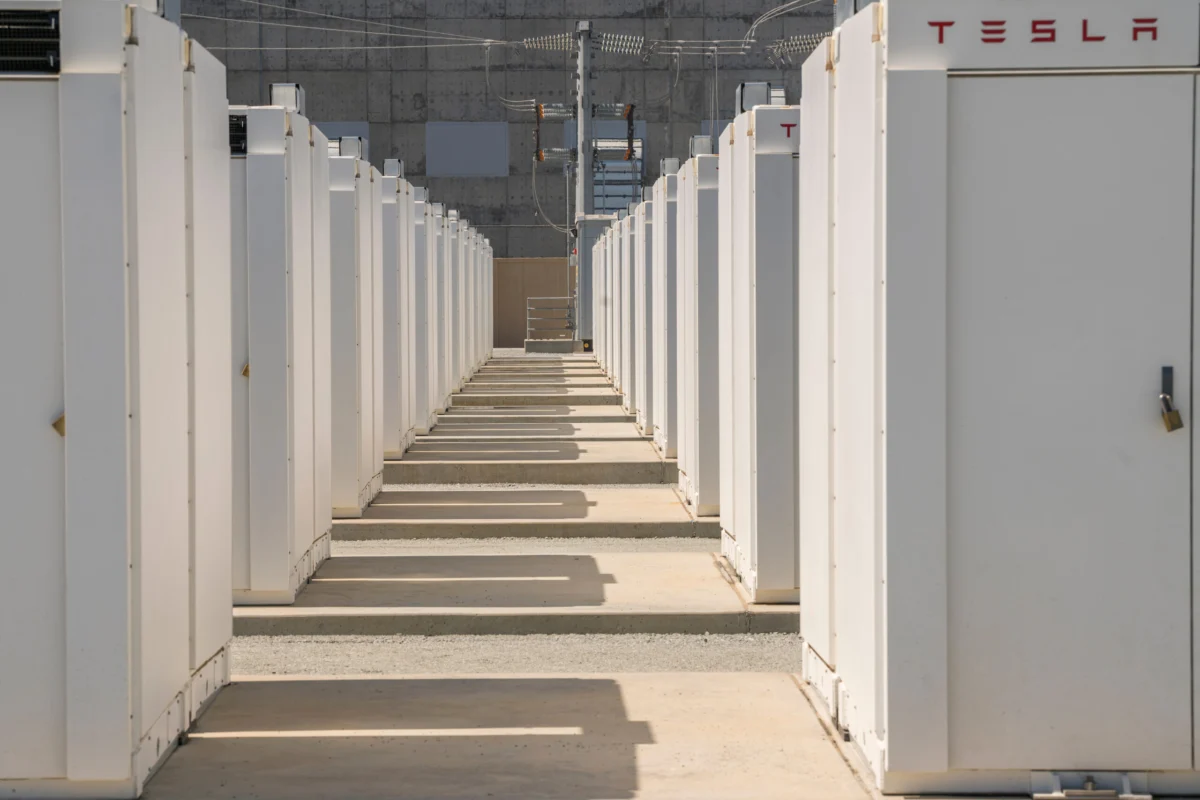
In an era where the lines between aerospace, artificial intelligence, and sustainable energy are increasingly blurred, Elon Musk’s corporate empire has reached a new level of operational integration. According to a regulatory filing released Tuesday, SpaceX has significantly ramped up its capital expenditure on Tesla’s Megapack battery storage technology, signaling a strategic shift in how the aerospace giant powers its rapidly expanding footprint of artificial intelligence data centers.
The Q2 earnings report reveals that SpaceX invested $295 million in Tesla Megapacks during the second quarter alone, bringing its total spending on the storage devices to $329 million for the year to date. This move not only underscores the deepening reliance between Musk’s companies but also illuminates the gargantuan energy requirements necessitated by the current AI arms race.
The Interconnected Ecosystem: SpaceX, Tesla, and xAI
The financial relationship between SpaceX and Tesla is a prime example of the "Musk Universe"—a collection of companies that frequently act as customers, suppliers, and strategic partners to one another. Musk, who serves as the CEO and largest shareholder of SpaceX while simultaneously steering Tesla, has overseen a series of consolidations that have fundamentally altered the landscape of his holdings.
The acquisition of X (formerly Twitter) by xAI in 2025, followed by SpaceX’s absorption of xAI earlier this year, has created a vertical integration model rarely seen in the tech industry. By folding an AI research entity into an aerospace company, Musk has effectively placed the massive computing power required for AI training under the umbrella of a company primarily focused on rocket manufacturing and satellite deployment.
This, however, requires massive infrastructure. The $295 million in Megapack purchases is not merely an internal transfer of wealth; it is a tactical deployment of battery storage to ensure that the data centers now owned by SpaceX—formerly under the xAI banner—maintain uptime and operational efficiency in a power-hungry environment.
Chronology of an Energy Build-Out
The trajectory of this investment suggests that the energy demands of Musk’s AI projects were underestimated or, at the very least, scaled with unprecedented speed.
- Early 2025: Following the acquisition of X, xAI began an aggressive expansion of its compute capacity. Reports from the time indicate that the company was already eyeing massive battery storage solutions to manage the intermittent nature of AI workloads.
- March 2025: xAI officially acquired the social media platform X, signaling a pivot toward data-intensive AI training that would require persistent, reliable power.
- Late 2025: By the close of the year, SpaceX filings disclosed that the company had acquired $131 million worth of Tesla Cybertrucks. While this appeared to be an operational logistics purchase, it signaled the beginning of a broader trend of "Tesla-to-SpaceX" internal procurement.
- Early 2026: SpaceX formally acquired xAI. This merger consolidated the AI firm’s infrastructure, including its ongoing data center projects, under the aerospace company’s balance sheet.
- Q1 2026: Initial procurement reports showed xAI had purchased $34 million in Megapacks.
- Q2 2026: A massive surge in spending occurred, with SpaceX committing $295 million to Tesla Energy, indicating that the scale of data center construction had hit a critical, high-intensity phase.
Supporting Data: Why Megapacks?
The technical necessity for such a massive investment in battery storage stems from the erratic nature of data center power loads. Unlike a traditional factory that draws a steady, predictable amount of electricity, AI data centers are "spiky" in their power consumption.
The Role of Peak Shaving
AI training—the process by which models like Grok learn from massive datasets—demands high-intensity bursts of electricity to power thousands of GPUs simultaneously. When the training cycles conclude or transition, the power draw drops significantly. These fluctuations can trigger "peak demand" charges from local utility providers, which are often prohibitively expensive.
Megapacks act as a buffer. They store energy during periods of low demand and release it instantly when the GPUs reach their peak consumption, effectively "shaving" the demand peaks. This ensures the data center maintains a consistent, cost-effective power profile.
Backup and Resilience
Furthermore, the Megapack system provides critical short-term backup. In the event of a grid instability or a power failure, batteries can discharge in a fraction of a second, bridging the gap until on-site, fossil-fuel-backed generators can ramp up to full capacity.
This is particularly relevant given the recent controversies surrounding xAI’s power strategy. As reported by TechCrunch in May 2026, the company has faced scrutiny for deploying dozens of unpermitted natural gas turbines at its Mississippi data center site. While the company relies on these turbines for bulk power generation, the Megapacks act as the "shock absorbers" for the electrical system, ensuring that the volatile nature of turbine-generated power does not damage or slow down the high-precision GPU clusters.
Official Responses and Regulatory Transparency
SpaceX’s regulatory filings serve as the primary source for these figures, as the company is not publicly traded in the traditional sense, though it maintains a massive footprint in institutional investment circles. The SEC filings provide a window into how the company manages its capital.
While representatives for SpaceX and Tesla have declined to comment on specific infrastructure strategies, the filings are clear about the intent behind the procurement. The company has characterized these expenditures as "essential infrastructure for the maintenance and expansion of computational capabilities."
Industry analysts have noted that while the high volume of internal transactions between Musk-owned entities is perfectly legal, it invites heightened scrutiny from regulators who monitor "related-party transactions." However, the sheer scale of the Megapack deployment suggests that SpaceX is getting a competitive price for a product that is currently in extremely high global demand, which may ultimately benefit shareholders of both companies by streamlining project delivery.
Broader Implications for the Tech Sector
The massive pivot by SpaceX into energy storage has several far-reaching implications for the tech industry and the energy market at large.
1. The Energy-Compute Convergence
We are witnessing the end of the era where AI companies could simply "plug into the grid." As data centers grow to the scale of gigawatts, they are becoming independent power producers. By integrating battery storage, SpaceX is signaling that the future of big tech is inseparable from the future of energy infrastructure.
2. The Tesla Energy Opportunity
Tesla has long been viewed primarily as an automotive company, but its "Energy" division is rapidly becoming a significant revenue driver. By supplying SpaceX with nearly $330 million worth of hardware in a single year, Tesla is demonstrating the scalability of its Megapack product. This serves as a powerful proof-of-concept for other enterprise clients, showing that Megapacks can handle the extreme demands of massive-scale AI.
3. Sustainability vs. Practicality
The reliance on natural gas turbines in Mississippi, tempered by the inclusion of Tesla’s clean energy storage, presents a complex narrative. On one hand, Musk’s companies are pioneering the transition to sustainable energy storage; on the other, they are currently reliant on traditional fossil fuels to meet the unprecedented electricity demands of their AI models. This highlights a universal tension in the industry: how to scale high-compute AI while maintaining environmental commitments.
4. Vertical Consolidation
The consolidation of SpaceX, xAI, and the reliance on Tesla hardware is a masterclass in vertical integration. By controlling the data center site (SpaceX/xAI), the compute infrastructure (xAI), and the power management solution (Tesla), Musk has created a self-contained ecosystem. This reduces dependence on external vendors, accelerates deployment timelines, and allows for proprietary optimization of every component in the stack.
Conclusion
As SpaceX continues to push the boundaries of what is possible in aerospace and artificial intelligence, its relationship with Tesla Energy has become the bedrock of its terrestrial operations. The $295 million expenditure in Q2 is not just a line item in an earnings report; it is a declaration that the company is prepared to invest heavily in the infrastructure required to stay at the forefront of the AI revolution.
Whether this strategy will lead to the sustainable future promised by the use of battery storage or whether the reliance on natural gas will remain a point of contention remains to be seen. What is clear, however, is that the "Musk Universe" is moving faster than ever, and its reliance on internal synergies will likely serve as a blueprint for the next decade of industrial growth.