The global logistics industry stands at a critical crossroads. As corporations face mounting pressure to shrink their carbon footprints, the humble freight train has emerged as one of the most potent weapons in the climate arsenal. By shifting heavy cargo from asphalt to steel, companies can achieve massive emissions reductions almost instantaneously. The math is compelling: a single gallon of diesel can propel one ton of freight approximately 150 miles via truck, whereas that same gallon can move the same ton over 400 miles on the rails.
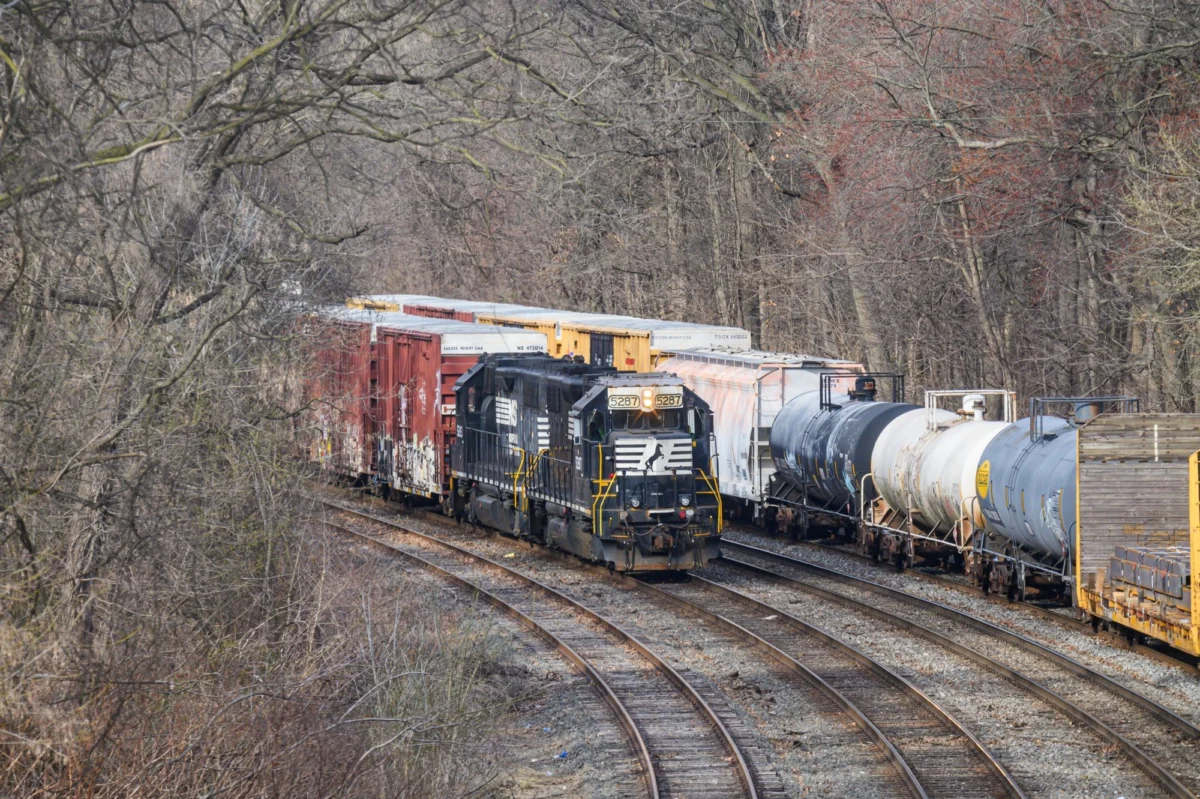
However, moving goods by rail is only half the battle. If the logistics sector is to reach its net-zero ambitions, the carriers themselves—the "Class I" railroads that serve as the backbone of the North American economy—must undergo a radical decarbonization of their own massive operations. Norfolk Southern, one of the primary giants of the U.S. rail industry, is currently navigating this transformation. As the company reaches the midpoint of its journey toward a 2034 emissions target, the industry is watching closely to see if the railroad can successfully transition from fossil fuels to a cleaner, more efficient future.
The Magnitude of the Challenge
Norfolk Southern operates a vast network spanning more than 19,000 miles of track across the eastern United States. This infrastructure supports a fleet of approximately 3,000 locomotives, which form the heart of the company’s environmental footprint. In 2025, the railroad generated $12 billion in revenue, but that economic engine came with a cost: 5.8 million tons of carbon dioxide equivalent emissions (tCO2e).
For the railroad, the challenge is heavily concentrated in its Scope 1 inventory, with locomotives accounting for more than two-thirds of the company’s total carbon output. In 2021, the company took a significant step by committing to a Science Based Targets initiative (SBTi)-validated goal: to reduce its Scope 1 and Scope 2 emission intensity by 42 percent between 2019 and 2034.
Chronology of a Decarbonization Roadmap
The timeline for Norfolk Southern’s environmental transition is defined by incremental, data-driven progress:
- 2019: The baseline year for the company’s sustainability commitments.
- 2021: The Science Based Targets initiative (SBTi) officially validates Norfolk Southern’s 2034 reduction goals, cementing the company’s path toward a 42 percent cut in emissions intensity.
- 2023–2024: The company accelerates its focus on operational efficiency, deploying "energy management" software across its entire active fleet.
- 2025: Norfolk Southern releases its latest sustainability report, revealing a 12 percent decline in tCO2e per million ton-miles traveled.
- 2026 and Beyond: The focus shifts toward the scaling of renewable diesel and the resolution of regulatory hurdles surrounding proposed mergers.
Supporting Data: Efficiency as an Environmental Lever
While the long-term goal requires a total shift in energy sources, Norfolk Southern is currently achieving its most immediate gains through technological optimization. According to the company’s recent performance data, fuel efficiency improved by 5 percent in 2025 alone.
A critical driver of this improvement is the universal adoption of energy management equipment. This technology functions as an advanced "cruise control" for locomotives, engaging once the train reaches a threshold of 10 miles per hour and maintaining optimal efficiency throughout the journey. Joshua Raglin, the railroad’s chief sustainability officer, notes that this system consistently outperforms manual operation. By leveraging this automation, the company has realized a 6 to 8 percent boost in fuel efficiency compared to human-led operation.
"That’s been a huge lever for us," Raglin explains. By removing the variability of individual engineer habits, the company has effectively standardized fuel consumption across its thousands of miles of track, providing a reliable foundation for future emissions reductions.
Official Responses: Navigating the Fuel Transition
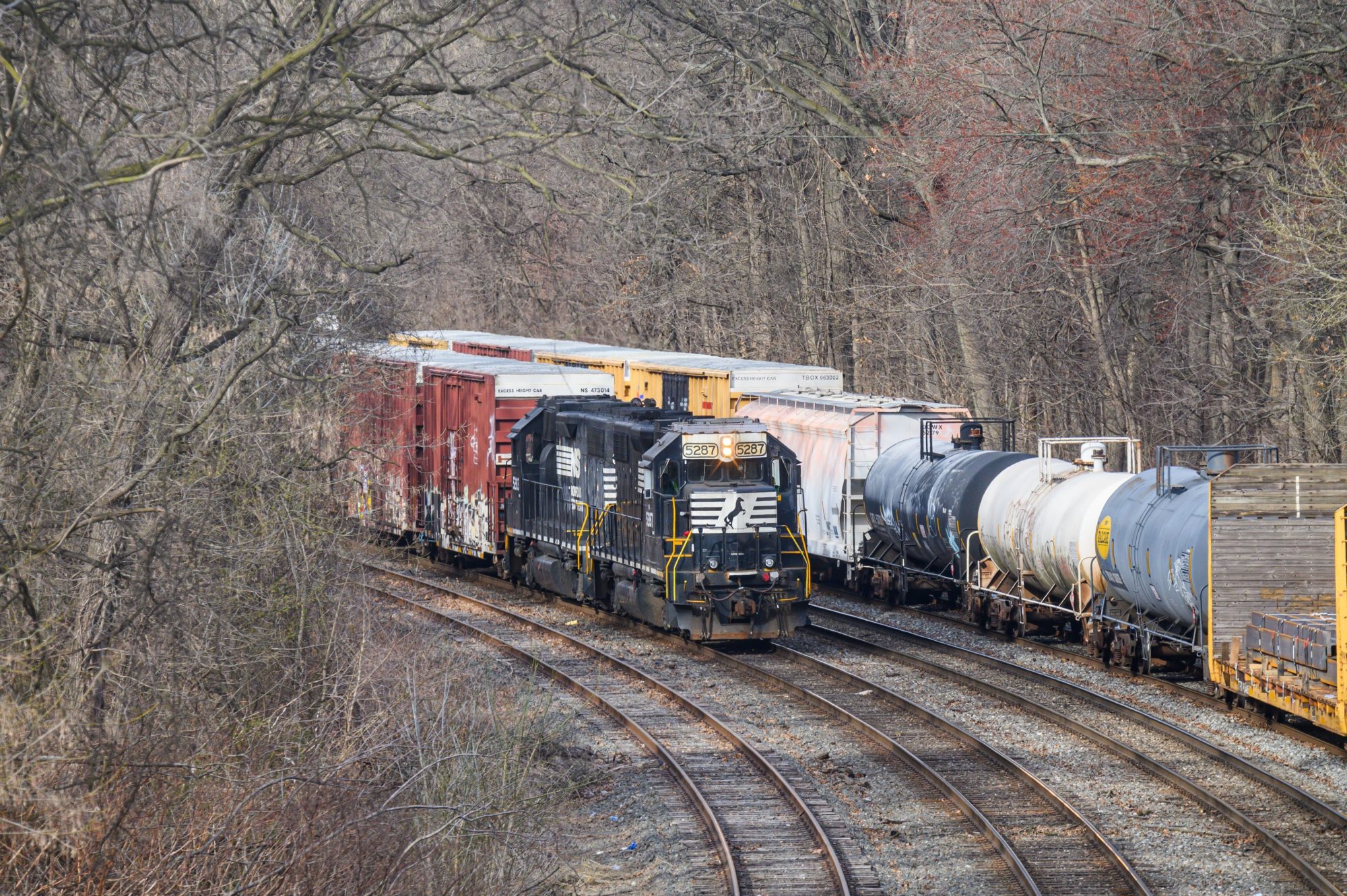
The transition away from fossil diesel is the most daunting hurdle for any railroad, yet Norfolk Southern’s leadership remains optimistic. The strategy has evolved from a reliance on biodiesel—which can displace up to 20 percent of traditional fuel—to an aggressive pursuit of renewable diesel. Unlike other experimental technologies, renewable diesel is a "drop-in" fuel that requires no mechanical modifications to existing locomotives, making it a highly attractive option for an operator with a massive, legacy fleet.
"We’ve had a lot more suppliers reaching out to us, specifically related to renewable diesel," says Raglin. While the economics remain challenging—renewable diesel currently commands a 20 percent price premium over fossil fuels in regions without government subsidies—the company is finding creative ways to bridge the cost gap.
Last year, Norfolk Southern launched a "book and claim" scheme, allowing customers to purchase environmental attribute certificates (EACs) that correspond to the carbon savings of rail transport. This mechanism decouples the environmental benefit from the physical cargo, allowing companies to meet their Scope 3 goals even when their specific goods are not being transported by renewable-diesel-powered trains. The recent decision by the SBTi to officially allow the use of EACs for Scope 3 target achievement has provided a major boost to this program, turning a niche concept into a viable financial instrument for the company.
Implications: The Merger Debate and the Future of Rail
Perhaps the most significant external factor impacting Norfolk Southern’s climate trajectory is its proposed merger with Union Pacific. This consolidation would create a trans-continental network, theoretically allowing for the seamless movement of freight across the entire U.S. landscape.
The projected environmental impact of such a merger is substantial. Norfolk Southern anticipates that the combined entity would convert roughly 2.1 million truckloads from road to rail annually, preventing the release of 3.8 million tCO2. This conversion is essential for the industry’s broader climate goals, as rail transport is objectively less carbon-intensive than long-haul trucking.
However, the proposal has sparked a fierce debate. Critics—including labor unions and major industrial shippers in the chemical sector—are concerned that the merger could lead to service degradation and monopolistic pricing. The implication is that if the service fails to meet the standards required by shippers, the market will naturally revert to trucking, thereby negating any potential environmental gains.
"The efficiency of rail is undeniable, but it is only effective if it remains a reliable, cost-competitive alternative to road transport," notes one industry analyst.
Conclusion: A Balancing Act
As Norfolk Southern pushes toward its 2034 target, it faces a complex balancing act. It must continue to squeeze efficiency out of its existing fleet through software and operational management, scale the use of renewable fuels despite price volatility, and navigate the precarious regulatory waters of a massive merger.
The company’s progress—a 12 percent reduction in emissions intensity since the baseline—suggests that its strategy is sound. However, the next decade will require more than just steady progress; it will require the successful integration of new fuels and the maintenance of a service quality that ensures shippers stay on the tracks rather than returning to the highway.
For the logistics industry, Norfolk Southern’s journey serves as a vital case study. If a legacy giant can successfully pivot its massive infrastructure toward a lower-carbon future, it provides a blueprint for others to follow. But as the debate over the company’s future structure highlights, the path to decarbonization is not merely a technical challenge—it is a competitive, regulatory, and economic one as well. Whether or not the railroad hits its 42 percent reduction target by 2034 will depend on its ability to prove that environmental responsibility and industrial performance are not mutually exclusive, but are instead, the dual engines of a modern, sustainable freight system.