In the rapidly evolving landscape of the global semiconductor industry, China is executing a calculated pivot toward self-sufficiency and technological sovereignty. Central to this mission are two companies often dubbed the “Two Changs”—ChangXin Memory Technologies (CXMT) and Yangtze Memory Technologies Co. Ltd (YMTC). While CXMT has made headlines with a record-breaking $10 billion IPO, its sibling in the memory space, YMTC, is now moving with equal urgency. Following the successful capital injection into its DRAM counterpart, YMTC has officially commenced preparations for its own IPO on the Shanghai STAR Market, signaling a new phase in China’s bid to challenge the long-standing hegemony of Samsung, SK Hynix, and Micron.
Main Facts: The Strategic Pivot
Founded in July 2016 in Wuhan, YMTC has emerged as China’s sole domestic hope for mass-producing NAND flash memory. While the company has long operated in the shadow of established global titans, the second quarter of 2026 served as a watershed moment: YMTC secured 14% of global NAND flash shipments, leapfrogging industry heavyweights like Kioxia, Micron, and SanDisk.
However, volume does not equate to value. While YMTC is moving record amounts of silicon, it remains fifth in global revenue rankings. The upcoming IPO is designed to bridge this gap, providing the capital necessary to upgrade fabrication facilities, invest in next-generation lithography, and shift the company’s product mix toward high-margin, enterprise-grade storage solutions—a sector currently dominated by non-Chinese firms.

Chronology: From Startup to Global Contender
The trajectory of YMTC is a microcosm of China’s broader “Made in China 2025” ambitions.
- 2016: YMTC is established in Wuhan, Hubei province, with substantial backing from government-affiliated investment funds.
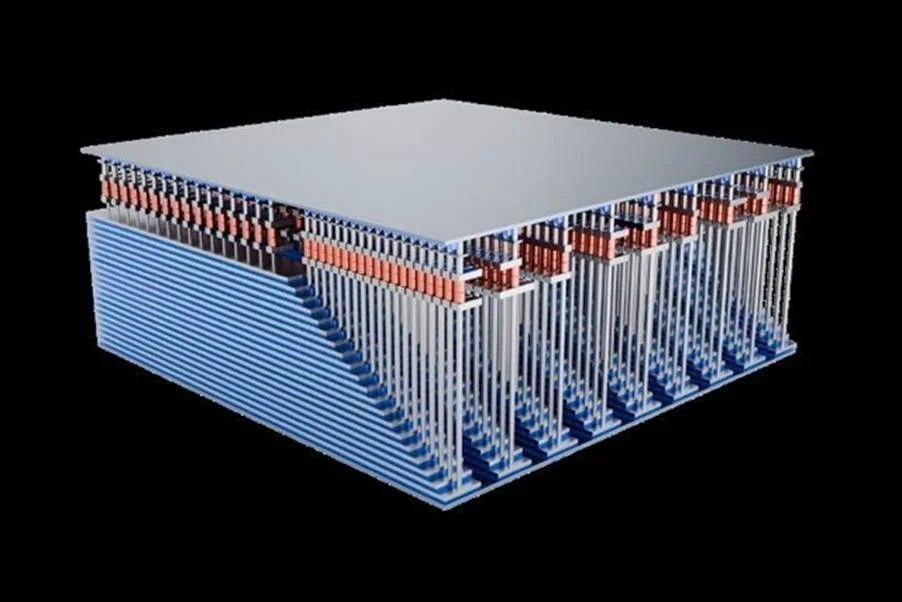
- 2018–2020: The company focuses on foundational R&D, introducing its proprietary Xtacking architecture, which separates the peripheral logic and the NAND cell array onto different wafers, allowing for higher density and faster I/O speeds.
- 2022: The U.S. Department of Commerce places YMTC on the Entity List, restricting its access to advanced U.S.-origin semiconductor manufacturing equipment. This creates a massive hurdle for the firm’s roadmap, forcing a reliance on internal process control innovation.
- 2026 (Q2): Counterpoint Research data confirms YMTC has captured 14% of global shipments, marking its ascent to the third-largest supplier by volume.
- Late 2026: YMTC completes its pre-IPO advisory process and signals formal intent to list on the Shanghai STAR market, mirroring the path taken by CXMT just months prior.
Supporting Data: The Architecture of Success
The technical backbone of YMTC’s recent success is the Xtacking 4.0 architecture. This proprietary design has enabled the mass production of 267-layer 3D NAND chips, which deliver 1Tb of Triple-Level Cell (TLC) storage per chip. This achievement is not merely a quantitative victory in layer count; it represents a fundamental advancement in process control and vertical integration.
According to technical analysis, YMTC’s 267-layer device sits within striking distance of Micron’s 276-layer offerings and is closing the gap on the 286-layer products currently shipped by Samsung and the Kioxia-Western Digital alliance. Furthermore, YMTC has confirmed that it is already in the development phase for a successor generation that will exceed 300 layers.

Despite these technical gains, the revenue disparity remains a critical point of analysis. YMTC currently ships a high volume of bits, but these are largely destined for the consumer market—smartphones and budget-friendly notebooks. Conversely, the high-revenue enterprise sector—data centers and AI-driven cloud infrastructure—remains elusive. Data from the second quarter of 2026 indicates that enterprise SSDs accounted for 48% of global NAND bits shipped, a significant increase from 26% the previous year. YMTC’s challenge, and the primary objective of its IPO capital, is to pivot its production lines to capture this enterprise demand.
Official Responses and Strategic Hurdles
The U.S. sanctions imposed in 2022 remain the "elephant in the room." While YMTC has displayed remarkable resilience, the inability to purchase the latest EUV (Extreme Ultraviolet) lithography machines from companies like ASML places a hard ceiling on its process nodes.
Industry analysts suggest that YMTC is attempting to circumvent these limitations through "architectural innovation"—essentially doing more with less by maximizing yield and density through clever design rather than raw lithographic precision. However, this is a difficult path to sustain. The IPO is intended to provide the financial runway to develop domestic alternatives to Western equipment, though this remains a long-term and capital-intensive endeavor.

When asked about the future of the domestic memory market, Chinese authorities have emphasized the necessity of a "dual-track" strategy: prioritizing supply for domestic OEMs to ensure the stability of the local electronics ecosystem, while simultaneously building the brand equity required to compete in the international market.
Implications for the Global Memory Landscape
The implications of a well-capitalized YMTC are profound for the global memory industry.
1. The End of the Oligopoly
For decades, the global memory market has been a cozy, high-barrier-to-entry oligopoly shared by Samsung, SK Hynix, and Micron. The emergence of the "Two Changs" threatens to disrupt the price stability that these incumbents have enjoyed. By increasing global supply, YMTC and CXMT are effectively putting downward pressure on prices, which is a boon for global consumers but a threat to the profit margins of traditional suppliers.

2. The AI Inference Shift
As AI workloads transition from training models to inference—where the model is put to work in real-time applications—the demand for high-capacity, high-speed storage has exploded. AI inference requires immediate access to vast amounts of data stored in key-value (KV) caches. YMTC’s stated plan to increase its enterprise SSD mix in the latter half of 2026 is a direct response to this trend. If successful, YMTC could become a critical supplier for the infrastructure that powers the next wave of generative AI.
3. Geopolitical Tech-Sovereignty
The IPOs of CXMT and YMTC represent a broader trend of "Financial Nationalism." By tapping into the A-share market, these companies are insulating themselves from foreign capital risks while simultaneously signaling to global markets that China is no longer reliant on external funding to build its high-tech champions.
4. Supply Chain Diversification
While the U.S. and its allies continue to tighten export controls, the global supply chain is increasingly bifurcated. Manufacturers of consumer electronics are now faced with a choice: utilize the cost-effective, high-volume memory coming out of China, or stick to the established, albeit more expensive, Western and Korean vendors. This bifurcation will likely lead to a "two-tier" global market for memory, where supply chain provenance becomes as important as technical specifications.

Conclusion: A New Era for the Memory Market
As YMTC prepares to ring the bell on the Shanghai STAR market, the company stands at a pivotal crossroads. It has successfully moved from a state-funded experiment to a legitimate, top-tier global supplier. However, the path ahead is fraught with the challenges of geopolitical friction and the need to break into the lucrative, high-stakes world of enterprise data center hardware.
The success of the "Two Changs" will not just be measured in IPO proceeds or layer counts; it will be measured by their ability to transition from "domestic alternatives" to "global standards." As the world accelerates into the AI era, the memory chips produced in Wuhan and Hefei will play an outsized role in defining the limits of what the next generation of artificial intelligence can achieve. Whether they can overcome the barriers imposed by the international community remains the most compelling question in the semiconductor industry today.