The barrier to entry for software development has never been lower. As artificial intelligence integrates deeper into the fabric of the digital economy, the traditional gatekeepers of programming—years of syntax study and complex environment configurations—are being dismantled. At the heart of this tectonic shift stands Replit, a platform that has transformed from a simple browser-based code editor into a powerhouse of AI-assisted creation.
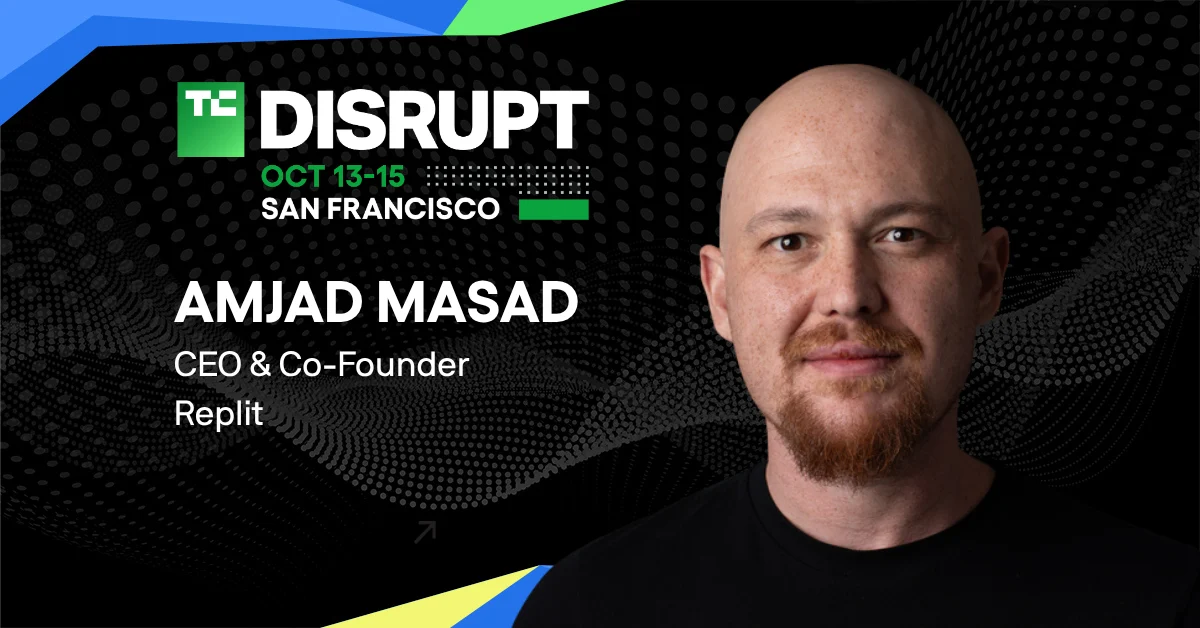
As we look toward TechCrunch Disrupt 2026, scheduled for October 13–15 at San Francisco’s Moscone West, the spotlight turns to Replit CEO and co-founder Amjad Masad. His keynote will serve as a definitive pulse-check on an industry that is simultaneously empowering millions and challenging the fundamental definition of what it means to be a "developer."
The Main Facts: A Paradigm Shift in Programming
The AI boom has fundamentally altered the software development lifecycle (SDLC). For the first time in history, a non-technical founder can articulate a product vision to an AI agent, which then generates, tests, and deploys the underlying code. This "natural language to product" pipeline is exactly where Replit has positioned itself.
While established developers face the professional pressure of integrating AI into their workflows—often at the risk of becoming obsolete if they fail to adapt—the broader community is seeing a surge in "citizen developers." These are individuals who previously lacked the technical training to build software but are now launching products, managing databases, and scaling applications through Replit’s integrated AI stack.
Masad’s appearance at Disrupt 2026 is timely. As the industry grapples with the quality of AI-generated code and the security implications of rapid-fire development, Masad is expected to discuss the philosophy of "intent-based programming," where the value of a developer shifts from writing lines of code to curating architectural logic.
A Chronology of Hyper-Growth
Replit’s trajectory over the last decade is a study in exponential scaling, but the most dramatic inflection point occurred within the last 18 months.
- 2016–2023: Replit establishes itself as the premier collaborative browser-based IDE, gaining popularity among students and hobbyists.
- 2024: The company reports a modest but stable annual revenue of $2.8 million. The foundation for AI integration is laid as the company pivots toward large language model (LLM) support.
- March 2026: Replit achieves a staggering $9 billion valuation, a 3x increase from its $3 billion valuation just six months prior, signaling massive institutional confidence in the platform’s role in the AI era.
- May 2026: The company hits a major operational milestone, with its annual run-rate tracking toward $1 billion. This meteoric rise mirrors the explosive adoption of AI coding assistants across the global enterprise.
- October 2026: Replit takes the main stage at TechCrunch Disrupt to outline the next phase of its evolution—moving from a prototyping tool to a full-lifecycle production environment.
Supporting Data: The Economics of the AI Era
The numbers behind Replit tell a story of an industry that is moving faster than even the most optimistic venture capitalists predicted. The leap from $2.8 million in 2024 revenue to a billion-dollar run-rate in 2026 is virtually unprecedented in the developer tools space.
This growth is driven by three primary vectors:
- Lower Churn: Once users integrate Replit’s AI agents into their workflow, the switching cost becomes prohibitively high, creating sticky, long-term user retention.
- Enterprise Adoption: Large organizations, struggling to find qualified software engineers, are increasingly adopting Replit as a training and rapid-development platform for their internal teams.
- Capital Efficiency: The $9 billion valuation, while astronomical, is supported by a clear path to monetization that moves beyond seat-based licensing and into compute-based and agent-based revenue models.
However, the rapid growth also invites scrutiny. Critics argue that the ease of creating software may lead to a "bloat" of low-quality, insecure applications. The challenge for Masad and his team is to ensure that while the creation process is democratized, the integrity of the resulting software remains high.
Official Responses and Strategic Vision
In recent communications, Amjad Masad has been vocal about his vision for the future of programming. He often posits that the current "AI coding assistant" phase is merely the beginning.
"We are moving toward a world where the act of programming is secondary to the act of problem-solving," Masad noted in previous interviews. "At Replit, our goal isn’t just to make it easier to write a function; it’s to provide a space where an idea can go from a thought to a globally accessible application in a single afternoon."
The company has deliberately resisted the urge to be acquired, opting instead to stay the course as an independent entity. This decision to remain independent has been a core pillar of Replit’s identity, allowing them to remain agile in a market where competitors—often backed by big-tech incumbents—are scrambling to integrate their own LLMs into legacy IDEs.
The Implications: What This Means for the Industry
The implications of Replit’s success extend far beyond the company itself. We are entering an era where software development is becoming a utility, much like electricity or cloud storage.
The Future of Employment
For professional software engineers, the rise of platforms like Replit necessitates a shift in focus. The "coders" of yesterday must become the "system architects" of tomorrow. Those who rely solely on their ability to write syntax are increasingly finding themselves at a disadvantage against peers who leverage AI to handle the drudgery of boilerplate code.
The Sustainability Question
A critical theme of TechCrunch Disrupt 2026 is the challenge of building a sustainable company in the AI era. Many startups are burning cash on high-inference costs associated with LLMs. Replit’s ability to turn a $2.8 million revenue stream into a billion-dollar run-rate demonstrates a mastery of the "AI unit economics" puzzle that continues to baffle many of their peers.
The Democratization of Innovation
Perhaps the most significant implication is the shift in who gets to build. By lowering the cost of experimentation, Replit is effectively enabling a new generation of entrepreneurs who might not have a traditional computer science background. This could lead to an explosion of niche software solutions for industries that have historically been underserved by Silicon Valley.
Joining the Conversation at Disrupt 2026
The discussion with Amjad Masad is just one piece of a much larger puzzle at this year’s TechCrunch Disrupt. With six stages dedicated to the most pressing questions in the startup ecosystem, the event is designed to provide actionable intelligence for founders and investors alike.
For those looking to understand the mechanics of the AI transition, the event offers a unique opportunity to engage with the leaders who are defining the new rules of the road. Whether it’s navigating the complexities of AI regulation, mastering the art of the pivot, or simply understanding how to balance rapid growth with sustainable business models, Disrupt 2026 is the place to be.
Take Action:
For those interested in attending, there is still time to benefit from promotional pricing. Until 11:59 p.m. PT on Tuesday, August 25, attendees can secure tickets with up to $300 in savings.
As we look ahead to October, the central question remains: Will the democratization of coding lead to a golden age of software, or a crisis of quality? The answer, at least in part, will be written on the stages of Moscone West.
Additional Disrupt 2026 Resources:
- Headline Speakers: Explore the full list of visionaries and industry titans joining us in San Francisco.
- The Founder’s Guide: Everything you need to know to maximize your experience at the conference.
- Hotel & Logistics: Secure your stay early to ensure you are at the heart of the action.
- Side Events: Apply to host your own event and connect with the community on your own terms.
- Exhibitor Opportunities: Learn how to put your startup in front of the thousands of investors and tech enthusiasts attending this year.
When you purchase through links in our articles, we may earn a small commission. This doesn’t affect our editorial independence.