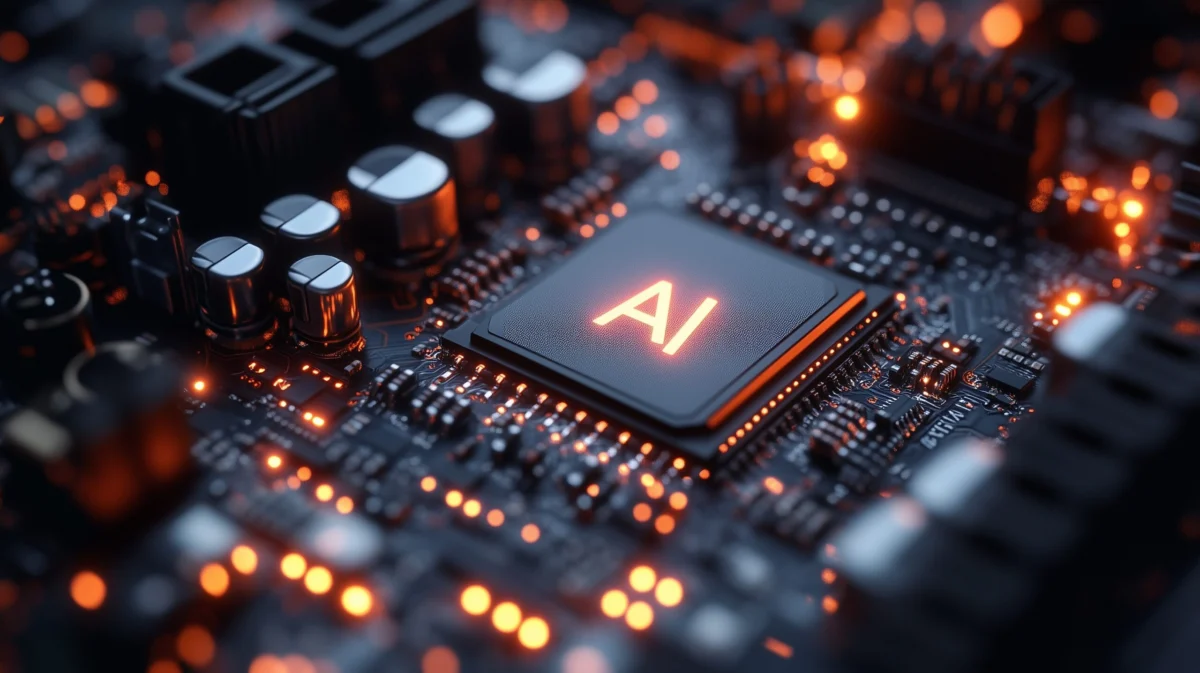
For the past several years, the narrative surrounding generative AI has been inextricably linked to a single company: Nvidia. As the primary architect of the GPU-driven AI boom, Nvidia’s hardware became the gold standard, the "picks and shovels" of the digital gold rush. However, as the industry matures, the ground beneath this monolithic market is beginning to shift. The recent Hot Chips symposium in California served as a watershed moment, signaling a transition from the era of "GPU-only" dominance toward a more fragmented, diverse, and efficient future.
Driven by mounting corporate anxieties over skyrocketing energy costs, budget efficiency, and the looming threat of AI project slowdowns, the tech industry is pivoting. A new generation of hardware—led by OpenAI, Intel, Meta, and others—is emerging, promising to perform the same heavy lifting at a fraction of the cost and power.
The Main Facts: A Paradigm Shift in Compute
The central takeaway from recent industry discourse is that the "one-size-fits-all" approach to AI hardware is unsustainable. For enterprise CIOs, the objective has shifted from simply acquiring compute power to optimizing it.
Current trends indicate a significant move away from centralized, GPU-heavy data centers toward a hybrid model. This includes specialized AI chips, enhanced CPU inferencing, and edge computing. The industry is no longer satisfied with the massive power draw required by high-end GPUs for every task; instead, the focus is on "right-sizing" the hardware for specific AI workloads. Whether through custom silicon like OpenAI’s "Jalapeño" chip or the integration of neural processing units (NPUs) into standard PC architectures, the goal is clear: lower the cost per token and increase the accessibility of AI services.
Chronology of a Disruption
The path to this shift was not overnight. It has been a systematic progression influenced by economic and technical pressures:
- 2022–2023 (The GPU Monopoly): Generative AI explodes onto the scene. Demand for Nvidia’s H100 and A100 GPUs outstrips supply, leading to massive capital expenditure spikes among hyperscalers and startups alike.
- Early 2024 (The Efficiency Crisis): As models scale, the energy and cooling costs of massive GPU clusters begin to threaten the profitability of AI deployments. Companies realize that not every AI task requires the brute force of a top-tier GPU.
- Mid-2024 (The Rise of Specialized Silicon): Major players, including OpenAI and Meta, announce internal hardware initiatives. Simultaneously, Intel and AMD accelerate their "AI-everywhere" CPU roadmaps, emphasizing NPUs and integrated inferencing capabilities.
- Late 2024 (Hot Chips Symposium): The industry officially recognizes the "Great Unbundling." Presentations from Hot Chips confirm that the future of AI is heterogeneous, involving a mix of CPUs, GPUs, and bespoke ASICs (Application-Specific Integrated Circuits).
Supporting Data: The Economics of Efficiency
The economic imperative behind this shift is profound. According to recent reporting, OpenAI is reportedly contemplating massive infrastructure investments reaching $750 billion to secure the compute necessary for its future ambitions. To sustain such a trajectory, the unit economics of AI must improve—and they must improve quickly.
Research firm SemiAnalysis recently tested OpenAI’s new Jalapeño chip, and the results have sent shockwaves through the industry. While first-generation custom chips rarely outperform market leaders, SemiAnalysis noted that Jalapeño is "industry-leading," successfully outperforming existing Nvidia, AMD, and Google chips on several top open-source models.
This data point underscores a critical realization: specialized silicon, when designed for a specific model architecture, can yield performance gains that generic, high-purpose GPUs cannot match. As Stephen Sopko, an analyst at Hyperframe Research, noted, "The market underneath Nvidia is becoming much more diverse." The focus has turned to "squeezing more AI work out of the same watt, rack, or dollar."
Official Responses and Strategic Pivots
The hardware giants are not sitting idle. Recognizing that the market for inferencing—the process of running a pre-trained AI model—is shifting, companies like Nvidia are actively diversifying their portfolios.
Nvidia’s Response
Nvidia is not ceding ground; it is expanding its definition of "AI hardware." At Hot Chips, the company showcased its Vera CPU and the Groq 3 LPX inferencing chip. This indicates a strategic shift toward controlling the entire compute stack, moving beyond the GPU to ensure that even when the workload shifts to CPU-heavy environments, Nvidia technology remains at the core.
Intel’s "Edge-First" Strategy
Intel is leaning heavily into its legacy strength: the CPU. By developing the Diamond Rapids server CPU, which features dedicated AI extensions, and the Wildcat Lake chip for PCs, Intel aims to push AI inferencing to the "edge." By integrating NPUs and Xe3 graphics features, Intel is betting that the future of AI isn’t just in the cloud—it’s on the user’s desk.
The Analyst Perspective
Industry experts, including Jack Gold of J. Gold Associates, emphasize that the next 24 months will be characterized by the proliferation of AI agents running on localized hardware. "It’s going to be a larger number of vendors’ chips running different apps that are not all GPUs from one vendor," Gold predicts.
Jim McGregor, principal of Tirias Research, highlights that the "secret sauce" of the next phase of AI will be in system architecture. The industry is moving toward eliminating data movement bottlenecks by computing closer to—or even inside—the memory.
The Implications for CIOs and IT Strategy
For the modern enterprise, the implications of this hardware diversification are significant. The era of "vendor lock-in" is reaching its natural conclusion, replaced by a need for architectural flexibility.
1. The Death of Rigid Architectures
The most dangerous strategy for a modern IT department is to commit entirely to a single hardware vendor for the next five years. Because the economics of AI are changing so rapidly, CIOs must prioritize "architectural agility." This means building software layers that can abstract the underlying hardware, allowing the company to switch from GPUs to CPUs or specialized ASICs as new, cheaper, or more efficient options become available.
2. The Rise of Heterogeneous Computing
IT decision-makers must move toward a heterogeneous strategy. Certain workloads—like large-scale training—may remain in the domain of powerful, centralized GPU clusters. However, high-volume, low-latency inferencing tasks are increasingly being offloaded to specialized chips or local edge devices. Successfully managing this mix will be the primary technical challenge of the next decade.
3. Long-Term Strategic Risk
Stephen Sopko offers a poignant warning: "The strategic risk isn’t choosing the wrong chip in 2026. It’s building an AI architecture that prevents you from taking advantage of a much cheaper or better one in 2028."
In summary, while Nvidia remains a titan, the "Gold Rush" phase of AI is ending. We are entering the "Industrial" phase, where efficiency, cost-management, and architectural adaptability define the winners. The future of AI will not be written by a single company or a single chip architecture; it will be a fragmented, diverse, and highly competitive landscape that rewards those who prioritize flexibility over brand loyalty. As the industry moves forward, the ability to pivot between computing platforms will be the defining trait of successful, future-proofed enterprises.