In a significant leap toward modernizing battlefield intelligence, the United States Army has officially greenlit the production phase of its Tactical Intelligence Targeting Access Node (TITAN) program. With a total investment of $192 million awarded to industry titans Palantir and Anduril, the service is moving rapidly to field a system designed to redefine how commanders process, synthesize, and act upon multi-domain intelligence in real-time.
As the centerpiece of the Army’s intelligence modernization strategy, TITAN represents a departure from legacy systems that often struggled to bridge the gap between space-based assets and ground-level tactical units. By fusing data from terrestrial and orbital sensors into a single, cohesive picture, the Army aims to slash the time between detecting a threat and neutralizing it—the "sensor-to-shooter" timeline.
The Strategic Framework: What is TITAN?
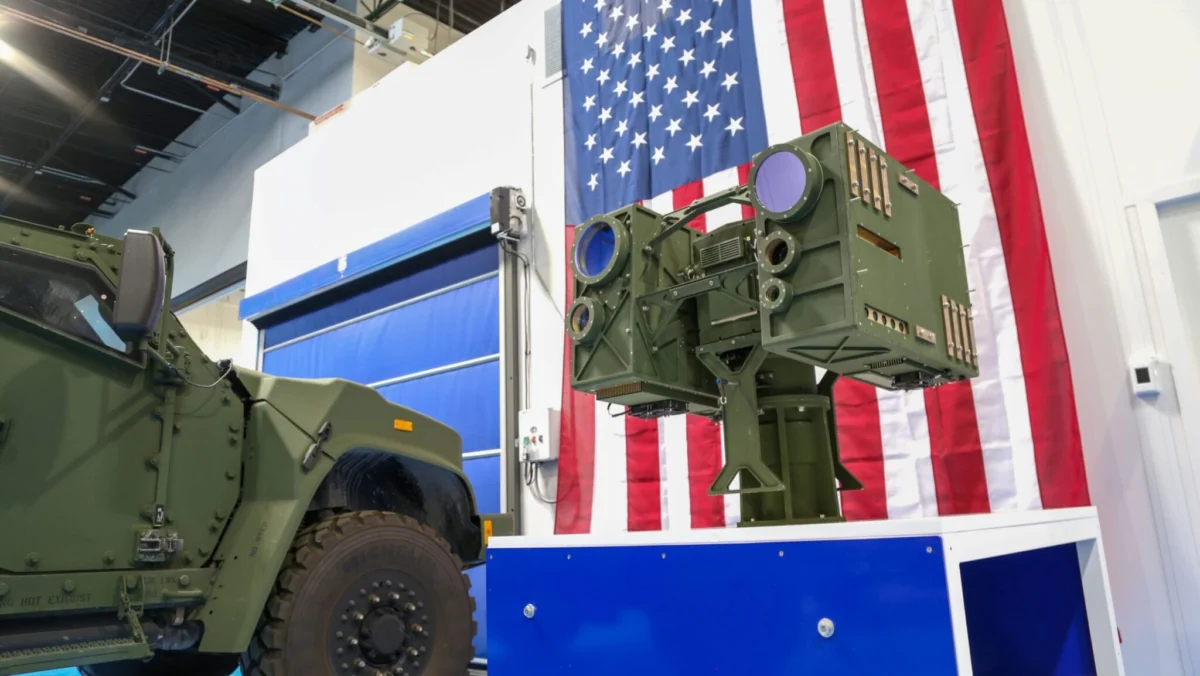
TITAN is essentially a next-generation mobile intelligence ground station. Its primary function is to ingest massive amounts of raw data—ranging from high-resolution satellite imagery to tactical drone feeds—and use advanced software to synthesize that information into actionable intelligence.
The program is split into two primary variants designed for different echelons of the military structure:
- The Basic Variant: Optimized for mobility, these units are mounted on Joint Light Tactical Vehicles (JLTVs) and Infantry Squad Vehicle-Utilities (ISV-Us). These are intended to operate at the division level, providing rapid, agile intelligence support for infantry and maneuver units on the move.
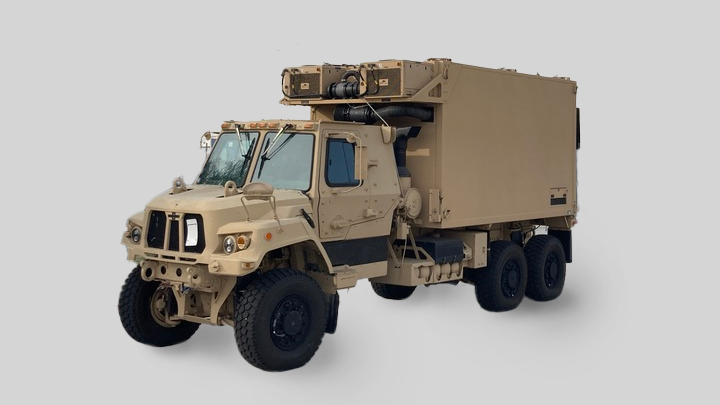
- The Advanced Variant: Built for higher-level command, these units are mounted on the Family of Medium Tactical Vehicles (FMTVs). These serve as theater-level and multi-domain command assets, supporting Military Intelligence Brigades and providing deep-sensing capabilities across complex operational environments.
The Army’s allocation strategy is notably lean: units will receive only two basic and one advanced variant each. This scarcity underscores the high-value nature of these systems; they are force multipliers that must be carefully shielded from enemy kinetic and electronic targeting.
A Chronology of Innovation: From Prototype to Production
The road to the current $192 million production contract was paved by years of iterative experimentation. The TITAN program did not appear in a vacuum; it was the result of a deliberate, multi-year "fail fast, learn faster" approach by the Army’s acquisition community.
- 2020–2021: Concept Development: The Army began formalizing requirements for a ground system capable of processing data from the burgeoning "Space Layer" of the military-industrial complex.
- 2022: Global Testing: The service deployed "pre-prototypes" to the Indo-Pacific and Europe. These deployments were not merely for performance testing but were critical for understanding how the equipment fared in real-world, harsh environments.
- 2022–2023: The "Humidity Lesson": During a deployment in the Philippines, soldiers reported unforeseen failures in the hardware caused by extreme humidity. This proved to be a pivotal moment for the program. The Army, working closely with industry partners, pivoted to more rigorous environmental engineering and ruggedization standards.
- March 2024: Prime Contract Award: Palantir was selected as the prime contractor for the system, solidifying its role as the primary software and intelligence integration lead.
- August 2024: Production Greenlight: The $192 million contract was announced, covering the procurement of eight total systems—four basic and four advanced—to be delivered over the next 18 months.
Technical Specifications and Industrial Collaboration
The success of the TITAN program relies on a robust partnership between software innovation and hardware durability. While Palantir provides the "brain" of the system—the AI-driven data fusion software—the physical resilience of that brain is provided by Anduril.
Anduril’s $65 million share of the contract is focused on developing the ruggedized hardware housing and integrating complex power subsystems. These components must ensure the system remains operational despite the physical rigors of transport and the harsh environmental conditions of the modern battlefield.
The ecosystem supporting TITAN is vast, involving several specialized contractors:
- L3Harris Technologies: Providing specialized communication and sensor integration.
- Sierra Nevada Corporation: Assisting in electronic warfare and signal processing capabilities.
- Strategic Technology Consulting and World Wide Technology: Providing the logistical and architectural backbone for the network-heavy system.
This "team of teams" approach is intentional. By diversifying the contributors, the Army ensures that no single point of failure exists in the supply chain and that the system can evolve as new, off-the-shelf technologies emerge.
Official Perspectives: The Path to "Sensor-to-Shooter" Superiority
Col. Jonathan Lipscomb, the Army’s project manager for intelligence systems and analytics, has been a vocal advocate for the program’s user-centric development. Speaking from the Aberdeen Proving Ground, Lipscomb emphasized that TITAN is not a static piece of hardware, but a living system built on four years of soldier feedback.
"TITAN is a key solution that enhances the speed of target recognition and geolocation from multiple sensors," Lipscomb stated during an August demonstration. "It drastically reduces sensor-to-shooter timelines through automated target nominations while fusing the common intelligence picture."
Perhaps the most compelling aspect of the program, according to Army leadership, is its adaptability in "Denied, Degraded, Intermittent, and Limited" (DDIL) environments. In a conflict with a near-peer adversary, the Army expects to face significant electronic warfare, potentially cutting off access to cloud-based intelligence.
To counter this, the Army is moving toward a "vehicle-agnostic" variant. This version can be pulled out of a vehicle, housed in a portable case, and plugged into any infrastructure, allowing intelligence officers to ingest local sensor data directly when the wider theater network is compromised.
Strategic Implications: Why TITAN Changes the Game
The deployment of TITAN signals a fundamental shift in the Army’s approach to the battlefield. For decades, the intelligence community has been hampered by "data silos"—where information from a satellite might take hours to reach a commander on the ground, by which time the target has moved.
1. Reducing Cognitive Load
By utilizing automated target nominations, TITAN reduces the cognitive burden on intelligence analysts. Instead of manually cross-referencing feeds, they can rely on the system to fuse and present the most relevant threats, allowing them to focus on decision-making rather than data entry.
2. Multi-Domain Integration
TITAN bridges the gap between the Space, Air, and Ground domains. It integrates data from national-level assets (like spy satellites) with tactical-level assets (like drone feeds or ground-based radar), providing a unified intelligence picture that was previously impossible to achieve at the edge.
3. Resilience in Contested Environments
The move toward vehicle-agnostic hardware ensures that even if a command vehicle is disabled, the "intelligence node" itself can be salvaged and redeployed. This survivability is crucial for the "multi-domain operations" doctrine the Army is currently adopting.
4. The "Data-Centric" Army
TITAN is a testament to the Army’s commitment to becoming a "data-centric" force. By investing $192 million in this specific node, the Department of Defense is signaling that the future of warfare will be won by those who can process information the fastest. As Maj. Dell Barnes noted, the prototyping effort is not over; even as the first eight units head to production, the Army continues to experiment with new configurations, ensuring that the technology remains a step ahead of emerging threats.
Conclusion
The TITAN program represents a maturing of the Army’s relationship with the tech sector. By integrating the agile software development practices of companies like Palantir with the industrial hardware expertise of Anduril and its partners, the Army has created a model for future modernization programs.
As these eight systems are fielded over the next 18 months, the focus will shift from "can it work?" to "how can it be scaled?" If successful, TITAN will likely serve as the blueprint for how the Army handles intelligence in every theater, ensuring that when the next conflict arises, the commander on the ground is the most informed person in the room.