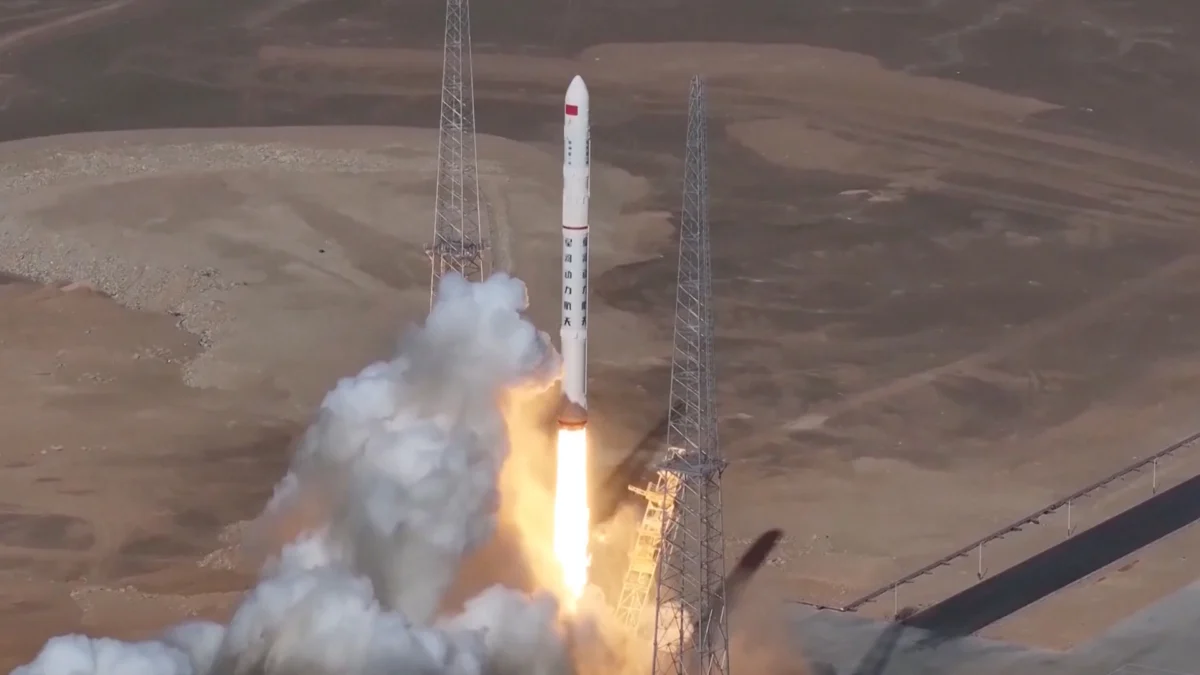
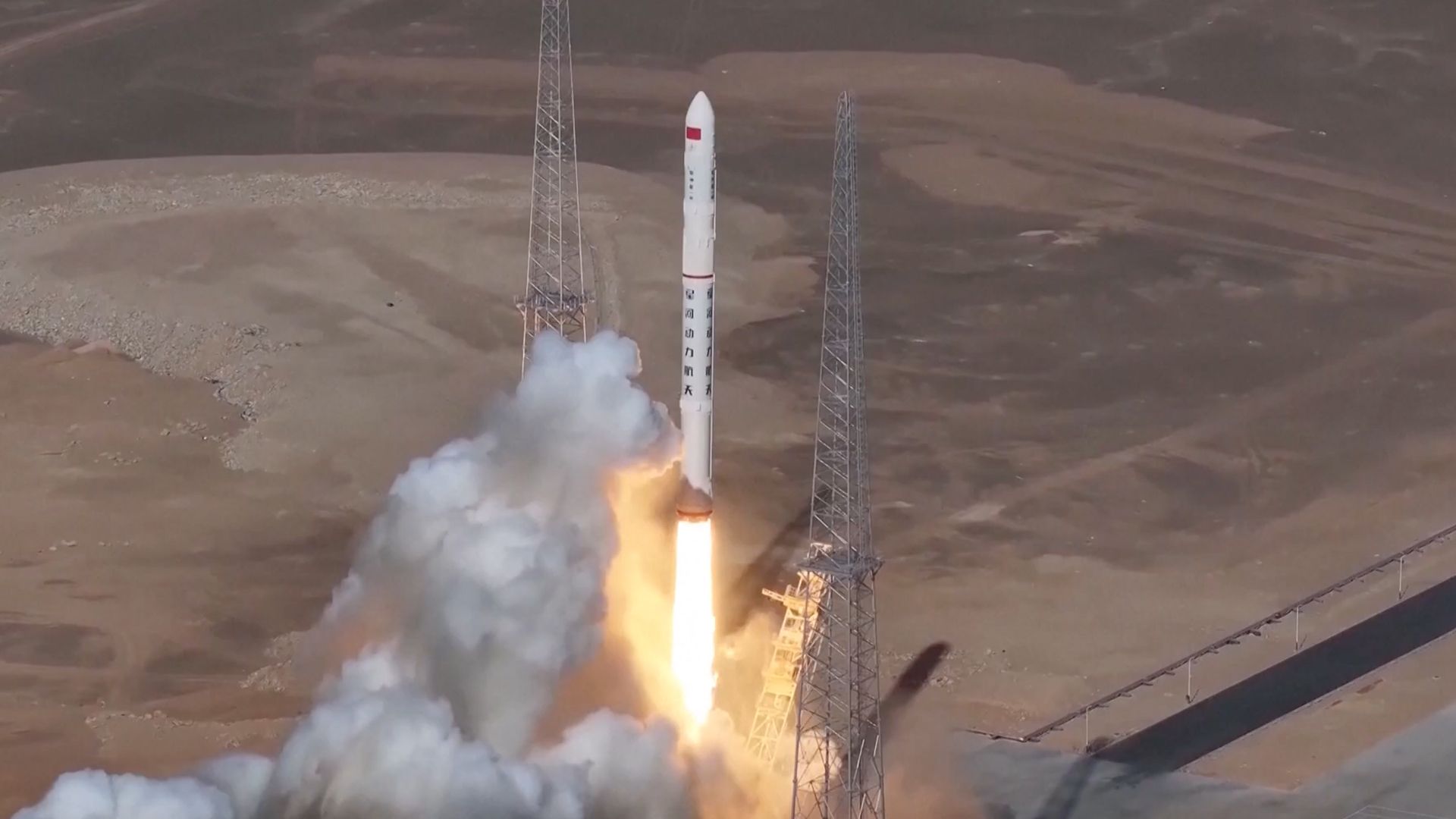
In a significant leap for the burgeoning private aerospace sector in China, Beijing-based company Galactic Energy successfully launched its Pallas-1 rocket for the first time on Monday, August 31, 2026. The liftoff, which occurred at the Jiuquan Satellite Launch Center in northwest China, represents a pivotal moment in the nation’s quest to achieve reliable, cost-effective, and reusable orbital transportation—a technology currently dominated globally by SpaceX’s Falcon 9.
The mission, which commenced at 10 p.m. EDT (0200 GMT, Sept. 1), saw the 171-foot (52-meter) tall vehicle soar into the night sky. While the flight was primarily a validation of the rocket’s structural integrity and propulsion systems, it marked a transformative transition for Galactic Energy, moving the company from a small-satellite launch provider to a major player in the medium-lift, reusable launch vehicle market.
The Maiden Flight: Chronology of a Successful Debut
The mission profile was executed with precision, according to internal telemetry provided by Galactic Energy. Approximately 30 minutes after departing the launch pad at Jiuquan, the company confirmed via social media that the Pallas-1 had successfully inserted itself into its predetermined orbital trajectory.
A Measured Approach to Deployment
Unlike many inaugural launches, which are often fraught with high-stakes payload requirements, Galactic Energy opted for a conservative profile. The company did not disclose the presence of specific payloads, focusing instead on the performance of the vehicle’s dual-engine architecture.
The launch represents the culmination of years of engineering, integrating liquid and solid propellant technologies—a "dual-engine" strategy that the company believes will provide the necessary thrust-to-weight ratios required for future high-cadence launch schedules. By successfully reaching orbit on its first attempt, Galactic Energy has bolstered investor confidence and signaled that its design philosophies are sound.
Technical Specifications: The Anatomy of Pallas-1
The Pallas-1 is a two-stage launch vehicle designed to compete in the increasingly crowded medium-lift segment. With the capability to haul approximately 15,400 pounds (7,000 kilograms) into low Earth orbit (LEO), it is engineered to serve as a workhorse for the rapid deployment of massive satellite constellations—a sector that is currently expanding exponentially.
Design for Reusability
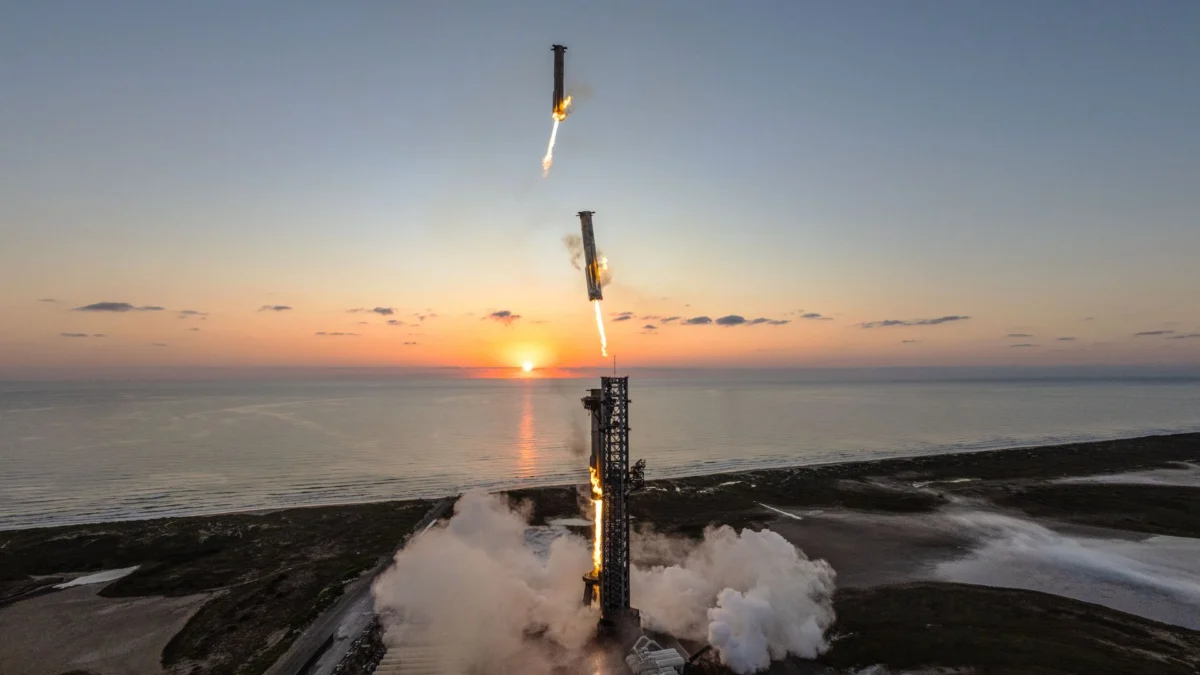
The core philosophy behind Pallas-1 is the reduction of cost through hardware recovery. Much like the SpaceX Falcon 9, the Pallas-1 features a first-stage booster designed to be flown up to 25 times. To achieve this, the rocket is equipped with several critical recovery technologies:
- Hypersonic Grid Fins: These aerodynamic control surfaces allow the booster to navigate the upper atmosphere during its descent, providing precision steering back to a recovery zone.
- Deployable Landing Legs: Engineered for structural resilience, these legs are designed to absorb the impact of landing on either solid ground or a recovery ship.
- Propulsion Management: The rocket utilizes advanced throttling capabilities to facilitate a "suicide burn" or controlled hover, essential for a vertical landing.
While the debut flight focused on orbital insertion rather than recovery, Galactic Energy has set an ambitious internal timeline: a fully realized, landing-capable test flight is targeted for the second half of 2027.
A Competitive Landscape: The Race to Recover
Galactic Energy is not acting in a vacuum. The Chinese aerospace sector is currently undergoing a "Cambrian explosion" of private enterprise, heavily supported by state-led industrial policies. The success of Pallas-1 arrives in the wake of two other monumental achievements in the Chinese private space sector that have fundamentally changed the status quo.
The Precedent Set by Peers
In July 2026, the state-owned China Aerospace Science and Technology Corporation (CASC) made history with its Long March 10B rocket, which successfully returned its first stage to a floating net at sea. Shortly thereafter, in August 2026, the private startup LandSpace saw its Zhuque-3 rocket perform a perfect vertical landing on touchdown legs.
These events have created a "reusability arms race" within China. Companies such as CAS Space, Deep Blue Aerospace, iSpace, and Orienspace are all aggressively pursuing their own vertical landing programs. For Galactic Energy, the pressure to succeed with Pallas-1 is not merely about business; it is about maintaining a competitive edge in a market where the barrier to entry is rising rapidly.
Official Responses and Strategic Vision
In a statement released shortly after the launch, representatives for Galactic Energy emphasized that this maiden flight was "the official entry into a new development stage." The company’s focus is clearly on the industrialization of space. By mastering the combination of solid and liquid propellants, they aim to achieve a level of operational flexibility that can handle a diverse array of mission profiles, from rapid-response military deployments to commercial communications array launches.
Industry analysts suggest that the success of the Pallas-1 is indicative of a broader shift in Beijing’s space strategy. By fostering private competition alongside state-owned entities, China is attempting to create a self-sustaining ecosystem that can drive down the cost-per-kilogram of launch services, effectively mirroring the "NewSpace" model that redefined the industry in the United States over the last decade.
Future Implications: Why This Matters
The successful launch of Pallas-1 carries profound implications for the global space economy.
1. The Proliferation of LEO Constellations
The demand for bandwidth and high-speed internet globally has sparked a race to build "mega-constellations" in low Earth orbit. To maintain these constellations, which often require hundreds of satellites, companies need frequent, low-cost, and reliable launch services. Pallas-1 is specifically designed to meet this demand, offering a medium-lift capacity that is ideal for the mid-sized satellites favored by modern telecom providers.
2. Geopolitical Shifts in Space Access
For decades, the United States maintained a virtual monopoly on rapid, reusable space access. The emergence of reliable, reusable Chinese launch vehicles suggests that this era of dominance is being challenged. As Chinese companies like Galactic Energy refine their recovery technologies, the cost of space access for non-Western nations will likely plummet, leading to a more multipolar space landscape.
3. Technological Maturation
The "dual-engine" approach mentioned by Galactic Energy is a sophisticated engineering challenge. By successfully managing the transition between different propellant systems during flight, the company has demonstrated a level of technical maturity that distinguishes it from basic launch providers. This expertise could be leveraged in future heavy-lift or even deep-space exploration vehicles.
Conclusion: Looking Toward 2027
As the dust settles at the Jiuquan Satellite Launch Center, the eyes of the aerospace world now turn toward the next 18 months. For Galactic Energy, the mission is clear: refine the Pallas-1 flight control software, optimize the booster’s re-entry profile, and prepare for the 2027 landing test.
If successful, they will join an elite, exclusive club of aerospace organizations capable of bringing hardware back from the edge of space. The Pallas-1 debut on August 31 was more than just a successful rocket launch; it was a definitive statement that the next chapter of the space race will be defined by reusability, efficiency, and a new generation of private Chinese innovation.
As Galactic Energy prepares for its next flight, the industry watches with bated breath, knowing that in the world of orbital launch, the only thing more difficult than reaching orbit is returning from it—and then doing it all over again.