WASHINGTON — When the U.S. Space Force was established, it was championed as a lean, agile branch of the military capable of bypassing the notorious bureaucratic quagmires of traditional Pentagon procurement. However, a comprehensive government watchdog report indicates that despite its modern branding, the Space Force remains tethered to the same systemic acquisition pathologies—such as schedule slips, ballooning budgets, and technological immaturity—that have plagued the Department of Defense (DoD) for decades.
The Government Accountability Office’s (GAO) annual assessment of major defense acquisition programs, released on July 2, offers a sobering evaluation of the nation’s newest military branch. While acknowledging incremental progress on several high-profile satellite constellations, the watchdog warns that slow development timelines, significant cost growth, and a deepening workforce crisis threaten to compromise the United States’ competitive edge in an increasingly contested space domain.
Main Facts: A Systemic Struggle with Modernization
The GAO’s report evaluated more than 100 of the Pentagon’s largest acquisition programs, including 13 critical Space Force procurements. These programs span vital national security capabilities, including next-generation missile-warning satellites, secure military satellite communications (MILSATCOM), national security launch services, and the Space Development Agency’s (SDA) proliferated Low Earth Orbit (pLEO) constellation.
The overarching conclusion of the GAO extends far beyond orbital assets: despite years of legislative reforms, the introduction of rapid middle-tier acquisition (MTA) pathways, and a rhetorical commitment to "space speed," the Pentagon continues to take too long to field major weapon systems. The watchdog identified two primary drivers of these delays:
- Immature Technologies: Programs routinely enter the engineering and manufacturing development phase before their critical technologies are fully proven.
- Superficial Digital Engineering: While the Space Force has enthusiastically embraced "digital engineering" in its public relations, the GAO found that these modern practices remain largely conceptual. In reality, "digital twins" (virtual representations of physical systems) are virtually non-existent across major programs, "digital threads" (integrated data flows across a system’s lifecycle) are only partially implemented, and advanced software practices are lagging.
Chronology of Acquisition Developments
To understand the current state of the Space Force’s portfolio, it is necessary to trace the developmental timelines of its key programs, which reveal a pattern of optimistic planning colliding with technical and budgetary realities.
[Late 2025] Air Force Acquisition Executive recommends cancellation of Raytheon's GPS OCX program.
     │
[Jan 2026] Lockheed Martin completes the first Next Gen OPIR GEO satellite payload; launch remains delayed.
     │
[April 2026] Pentagon officially announces the public termination of the long-delayed GPS OCX program.
     │
[July 2, 2026] GAO releases its annual defense acquisition assessment, highlighting systemic Space Force challenges.
     │
[FY 2027] White House budget proposal seeks to eliminate Next Gen OPIR Polar; Congress intervenes to restore funding.
     │
[2028] Target launch window for the first Next Gen OPIR Polar satellite (subject to ongoing budget battles).
The Demise of GPS OCX (Late 2025 – April 2026)
For over a decade, the Next Generation Operational Control System (OCX), developed by Raytheon, was the poster child for defense software acquisition failures. Designed to replace the legacy ground system controlling the Global Positioning System (GPS) constellation and enable advanced, jam-resistant M-code signals, OCX suffered from chronic software defects, cybersecurity vulnerabilities, and management issues.
According to the GAO, the program’s fate was sealed in late 2025 when the Air Force acquisition executive formally recommended its cancellation. The Space Force quietly decided to pivot toward modernizing the existing GPS Operational Control Segment (OCS) to meet the requirements originally assigned to OCX. This decision was officially made public in April 2026, marking the end of a multi-billion-dollar effort.
Next Gen OPIR GEO and Polar Evolution (2025–2028)
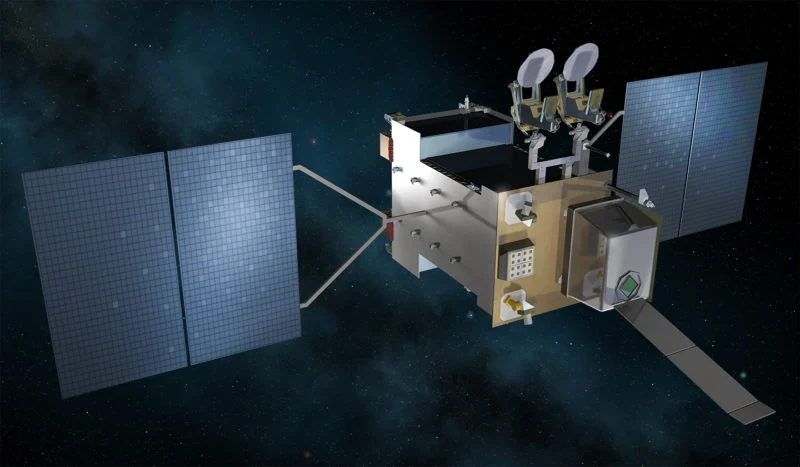
The Next Generation Overhead Persistent Infrared (Next Gen OPIR) program was initiated to replace the aging Space Based Infrared System (SBIRS) and provide early warning of ballistic and hypersonic missile launches.

- GEO Component: Lockheed Martin completed the first Next Gen OPIR GEO satellite in January. However, its launch has been deferred due to delays with its designated launch vehicle, United Launch Alliance’s (ULA) Vulcan Centaur rocket.
- Polar Component: Developed by Northrop Grumman, the Polar constellation is designed to cover highly elliptical polar orbits. The program ran into severe political and budgetary turbulence when the administration’s fiscal year 2027 budget proposal eliminated its funding. However, congressional appropriators stepped in during mid-2026 to restore funding, preserving a projected first launch in 2028.
Supporting Data and Program Breakdown
The GAO report provides granular financial and logistical data illustrating the scale of the challenges facing the Space Force’s primary acquisition lines.
| Program Name | Lead Contractor | Estimated Total Cost | Key Findings & Financial Data |
|---|---|---|---|
| Next Gen OPIR GEO | Lockheed Martin | $9.5 Billion | Experienced a $340 million cost overrun driven by payload subcontractor software complexity and engineering challenges. First satellite completed in Jan, but launch is delayed. |
| Next Gen OPIR Polar | Northrop Grumman | $5.9 Billion | Slated for a 2028 launch. Threatened with cancellation in the FY2027 budget request, but kept alive via congressional funding restorations. |
| Protected Tactical Satcom-Global (PTS-G) | SES / Viasat | $2.9 Billion | Re-scoped from a four-satellite production buy to a two-satellite prototyping effort to evaluate commercial integration risks. Constellation target remains 24 satellites. |
| National Security Space Launch (NSSL) | ULA / SpaceX | N/A | Preparing for ~50 Phase 2 launches through FY2028 and ~85 Phase 3 launches. Facing a severe workforce shortage due to retirements and hiring freezes. |
The Launch Provider Bottleneck
The National Security Space Launch (NSSL) program is facing a supply-and-demand mismatch. While the Space Force plans to drastically scale up its launch cadence, its primary launch vehicles face certification and operational delays:
- ULA Vulcan Centaur: Remains grounded following a recent launch anomaly, leaving the first Next Gen OPIR GEO satellite without a ride.
- Blue Origin New Glenn: A recent launch failure has delayed its national security certification timeline.
- SpaceX Falcon 9 / Falcon Heavy: Currently bears the primary operational burden of national security launches alongside ULA’s legacy fleet.
Official Responses and Institutional Perspectives
The findings of the GAO report have elicited a range of responses from defense officials, lawmakers, and industry representatives, highlighting differing views on how to resolve these acquisition bottlenecks.
The Watchdog’s Assessment
The GAO maintains that the Pentagon’s rapid acquisition pathways are being undermined by a failure to reform underlying engineering and cultural practices. The watchdog emphasized that the Space Force cannot simply "contract its way to speed" without establishing rigorous technical baselines.
"Adopting digital engineering in theory is not the same as implementing it in practice," the GAO report notes. "Without fully realized digital twins and integrated digital threads, the Space Force continues to rely on fragmented data, which leads to late-stage design changes, integration failures, and subsequent schedule slips."
Space Force and Air Force Leadership
In response to the cancellation of the GPS OCX program, Space Force officials defended the decision as a pragmatic step to cut losses and protect warfighter capabilities. By redirecting resources toward modernizing the legacy GPS Operational Control Segment (OCS), the service argues it can deliver necessary M-code capabilities faster than continuing to salvage Raytheon’s troubled software architecture.
Regarding the NSSL program, Space Force acquisition officials acknowledged the strain on their workforce but emphasized that mission assurance remains their top priority. They noted that while federal deferred resignation programs, voluntary early retirements, and civilian hiring freezes have thinned their engineering ranks, they are actively working to optimize oversight processes to prevent launch delays.
Congressional Intervention
The budget battle over the Next Gen OPIR Polar program highlights the ongoing tension between the executive branch’s strategic shifts and Congress’s legislative oversight. While the administration sought to terminate the polar constellation in its fiscal 2027 budget proposal—arguing that proliferated LEO architectures could eventually assume the missile-warning mission—House and Senate appropriators pushed back. Lawmakers restored funding for the Northrop Grumman-led program, arguing that truncating the polar coverage before alternative systems are fully fielded presents an unacceptable gap in northern strategic warning capabilities.

Implications for National Security and the Space Industry
The bottlenecks detailed in the GAO report have significant strategic implications for the United States as space increasingly becomes a contested operational domain.
┌────────────────────────────────────────────────────────┐
│               GAO Identified Bottlenecks               │
└───────────────────────────┬────────────────────────────┘
                            │
         ┌──────────────────┼──────────────────┐
         ▼                  ▼                  ▼
┌─────────────────┐ ┌────────────────┐ ┌───────────────┐
│ Launch Deficits │ │ Software Delay │ │ Staff Drain   │
│  (Vulcan/Glenn  │ │  (Next Gen GEO │ │ (Hiring Freeze│
│   Groundings)   │ │   & GPS OCX)   │ │  & Retirees)  │
└────────┬────────┘ └────────┬───────┘ └───────┬───────┘
         │                  │                  │
         └──────────────────┼──────────────────┘
                            ▼
┌────────────────────────────────────────────────────────┐
│                   Strategic Fallout                    │
│  • Missile tracking gaps against hypersonic threats    │
│  • Single-provider reliance on SpaceX                  │
│  • Delayed transition to modern M-code GPS signals     │
└────────────────────────────────────────────────────────┘
1. Vulnerability to Advanced Missile Threats
The delays in the Next Gen OPIR constellation directly impact the United States’ ability to detect and track advanced missile threats, specifically hypersonic glide vehicles (HGVs) and fractional orbital bombardment systems developed by China and Russia. Legacy SBIRS satellites are optimized for tracking traditional ballistic trajectories. Every delay in launching the Next Gen OPIR GEO and Polar satellites extends the period during which the U.S. relies on older systems to detect highly maneuverable, low-altitude hypersonic threats.
2. The Single-Provider Launch Risk
The operational delays of ULA’s Vulcan and Blue Origin’s New Glenn have created a temporary monopoly for SpaceX in the national security launch market. While SpaceX’s Falcon 9 and Falcon Heavy have proven reliable, relying on a single provider presents a systemic risk to national security. A single fleet-wide grounding of Falcon rockets due to a technical anomaly could halt all U.S. military access to space.
3. The Mission Assurance Workforce Crisis
The loss of experienced civilian engineers and mission assurance personnel within the Space Force’s launch enterprise comes at a critical time. As the NSSL program transitions from Phase 2 to Phase 3, the complexity of certifying new launch vehicles increases. Without a robust, highly technical government workforce to oversee these certifications, the Space Force faces a difficult choice: either delay the onboarding of new launch providers, or rush the certification process and accept higher operational risks.
4. The Pitfalls of Commercial Technology Integration
The Space Force’s shift toward commercial acquisitions, as seen in the Protected Tactical Satcom-Global (PTS-G) program, is designed to reduce costs and leverage private sector innovation. However, as the GAO warns, integrating commercial buses and payloads with highly secure military communication networks is technically complex. Interface mismatches, cybersecurity compliance issues, and differing operational lifespans can quickly erode the cost savings and speed advantages that commercial acquisition is intended to provide.
Ultimately, the GAO’s assessment indicates that while the Space Force has successfully established itself as a distinct military branch, it has not yet escaped the systemic acquisition challenges of its predecessors. Resolving these issues will require more than new acquisition pathways; it will require a sustained focus on technological maturity, rigorous software development, and the retention of a highly skilled technical workforce.