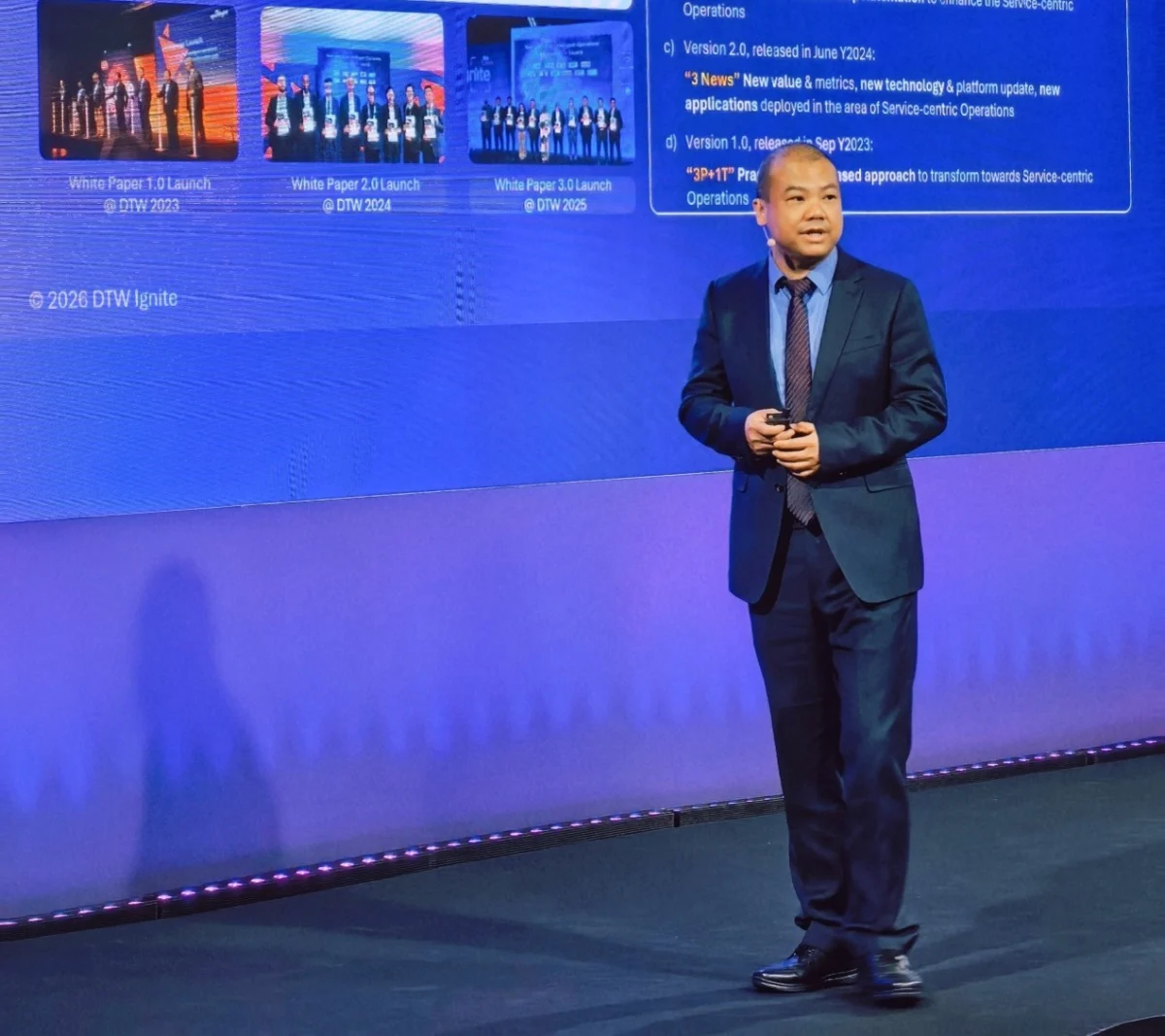
COPENHAGEN, Denmark – At the prestigious DTW Ignite 2026 conference, a pivotal shift in the telecommunications landscape was unveiled. Huawei, in a strategic partnership with the TM Forum and a consortium of 12 leading global telecommunications operators, officially launched the New-Generation Intelligent Operations White Paper 4.0. This landmark document serves as both a roadmap and a manifesto for the next phase of ICT evolution: the transition from human-centric tool management to the era of Agentic Operations.
As telecommunications networks grow in complexity—driven by the proliferation of 5G-Advanced and the looming integration of 6G—traditional operational models are proving insufficient. White Paper 4.0 addresses these systemic challenges by proposing a fundamental reinvention of how networks are monitored, maintained, and optimized.
The Core Mandate: Transitioning to AI-Native Operations
The central thesis of White Paper 4.0 is the integration of "Agentic Operations." Unlike previous generations of AI that focused on predictive analytics or simple automation, the new paradigm envisions an ecosystem where AI Agents possess the autonomy to identify, diagnose, and resolve network issues with minimal human intervention.
The white paper formalizes the industry’s shift toward an AI-native architecture. By leveraging a combination of Digital Twin Networks (DTN) and Domain Specific Models (EDNS 2.0), the framework allows for a continuous, real-time feedback loop. This creates a virtual replica of the physical network, enabling the simulation of potential faults and the proactive deployment of remediation strategies before service degradation even occurs.
A Historical Chronology: The Evolution of Operational Excellence
To understand the significance of the 4.0 release, one must examine the progression of Huawei’s research and collaborative efforts since 2023. The journey has been marked by a deliberate, multi-year strategy to modernize telecom infrastructure:
- 2023 (The Genesis): Huawei released the inaugural version of the Intelligent Operations white paper. At this stage, the industry focus was primarily on "network-centric" operations, establishing foundational data standards and visibility protocols.
- 2024 (Service Expansion): The second generation transitioned the industry toward a "service-centric" approach. Here, the focus moved beyond just keeping the hardware running to ensuring the end-to-end quality of service (QoS) for the end-user.
- 2025 (Value Realization): The third generation introduced the "value-centric" model, where operational metrics were directly tied to business outcomes and revenue assurance, moving ICT from a cost center to a value-creation engine.
- 2026 (The Agentic Leap): The current 4.0 release completes the evolution. By integrating Hybrid Team and Agentic Process models, it moves beyond human-managed automation to AI-led execution, representing the most significant leap in operational intelligence to date.
Technical Framework: The "Three-Stage, Six-Step" Methodology
White Paper 4.0 is not merely a theoretical document; it provides a rigorous, actionable methodology for operators. The "Three-Stage, Six-Step" approach serves as the blueprint for organizational and technical transformation:
1. Data Governance Framework
At the heart of any AI system is data. The white paper introduces a four-stage cycle: Identify, Analyze, Optimize, and Retain. By standardizing how network data is ingested and categorized, operators can eliminate the "data silos" that have historically hindered AI performance.
2. The Dual Protection Mechanism
One of the most critical technical contributions of the white paper is the concept of "Dual Protection." By utilizing DTN and EDNS 2.0, the system monitors the network in real-time.
- T-1 Protection: The AI scans for vulnerabilities and potential points of failure, enabling the system to neutralize risks before they impact the user.
- T0 Protection: In the event of an unavoidable outage, the system triggers automated backup and recovery protocols at the exact moment of failure, ensuring that service continuity is maintained without manual intervention.
The New Operational Paradigm: From Tool-Users to AI Supervisors
Perhaps the most disruptive change proposed by the white paper is the redefinition of the human role in telecom operations. Traditionally, engineers have spent the majority of their time executing repetitive tasks—monitoring dashboards, performing health checks, and running manual scripts.
Under the new model, this is reversed. Humans are no longer the primary executors; they are the "supervisors" and "architects" of AI Agents.
- Automation at Scale: Tasks such as routine inspections, fault correlation, and traffic rerouting are now handled by intelligent agents.
- High-Value Allocation: With the drudgery of routine maintenance offloaded to AI, human talent can be redirected toward higher-level challenges, such as developing new agent capabilities, complex problem-solving, and strategic business innovation.
Early implementations by the 12 participating operators have already yielded staggering results. Internal data cited in the report indicates an "agent one-hop closure rate" exceeding 80%. This means that in four out of five instances, the AI Agent identifies and resolves the issue without the need for an engineer to escalate or intervene.
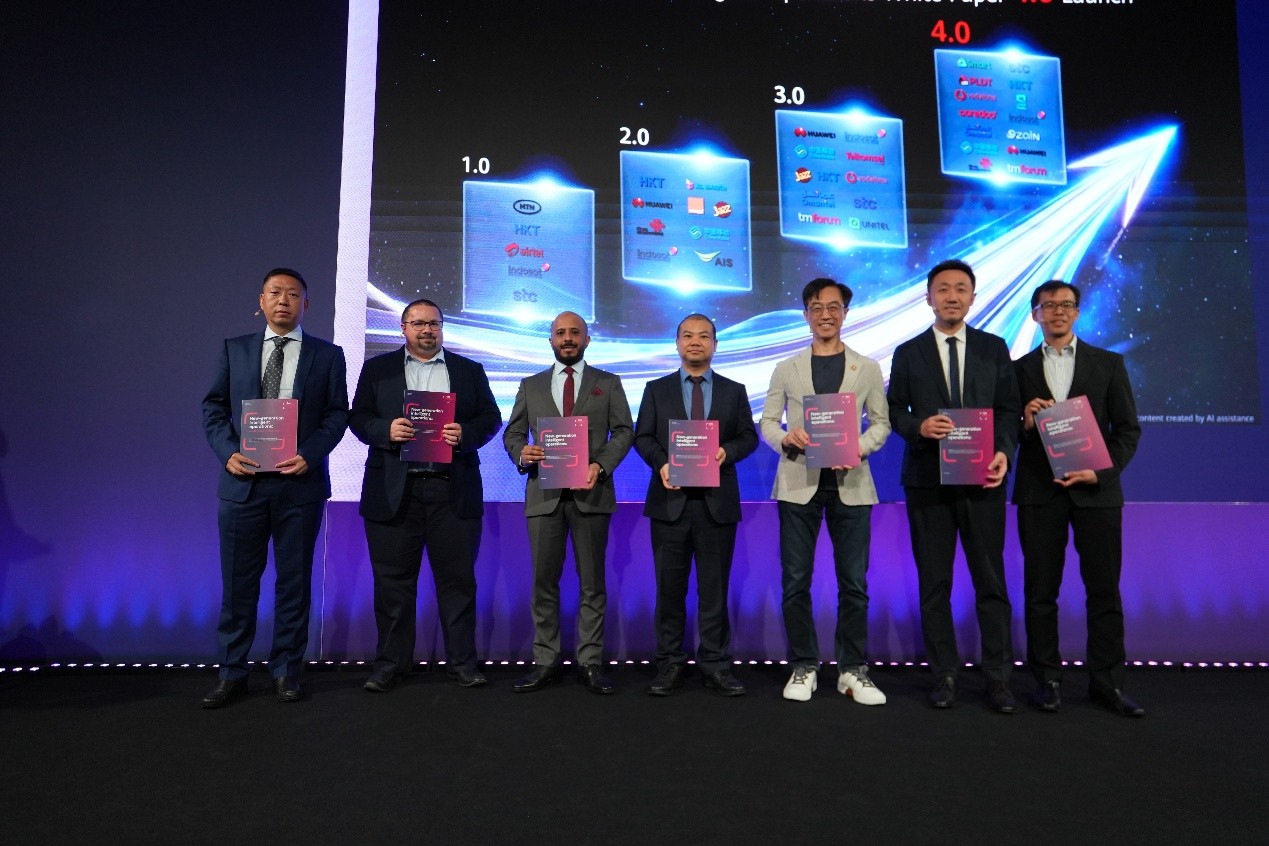
Official Perspectives: Driving the Industry toward L4
During the presentation at DTW Ignite 2026, Danwill Duan, President of Huawei ICT Assurance and Operation Services, emphasized the inevitability of this transition.
"Agentic Operations is no longer a futuristic concept; it is an inevitable trend in the evolution of network operations," Duan stated. "White Paper 4.0 consolidates the collective exploration and hard-won achievements of the entire industry. By aligning our efforts, we are not just optimizing networks; we are creating a new foundation for the autonomous networks of tomorrow."
Duan further noted that the primary goal is to accelerate the industry’s journey toward Autonomous Network (AN) Level 4 (L4). At L4, the network is capable of self-healing and self-optimization in nearly all scenarios, a milestone that has been the "holy grail" of telecom engineering for the past decade.
Implications for the Global ICT Ecosystem
The implications of this white paper extend far beyond Huawei and its partner operators. By providing a standardized framework, the 4.0 report invites the broader ecosystem—including software vendors, system integrators, and academic researchers—to align their development efforts.
The Economic Impact
Operators who successfully implement the Agentic Operations model are expected to see significant reductions in Operational Expenditure (OPEX). By automating the "fix" process and reducing the mean time to repair (MTTR), operators can achieve higher service uptime and, consequently, greater customer loyalty.
Accelerating Innovation
The emphasis on "Domain Specific Models" (EDNS 2.0) is a direct challenge to the "one-size-fits-all" approach of general-purpose AI. By building models specifically trained on the nuances of network telemetry and telecom protocols, operators can achieve precision that general LLMs simply cannot match. This creates a competitive moat for operators who lean into the AI-native approach early.
Conclusion: A Collaborative Future
The release of White Paper 4.0 is a testament to the power of cross-industry collaboration. By bringing together TM Forum’s standardization expertise with the deep-tech capabilities of Huawei and the real-world operational insights of 12 global operators, the industry has established a clear, credible path toward the future.
As the industry looks toward the latter half of 2026 and into 2027, the focus will shift from "theoretically possible" to "globally deployed." Huawei has pledged to continue its investment in the core pillars of the white paper—DTN, EDNS, and AI Agents—ensuring that the technological advancements made in the lab translate directly into tangible operational benefits for users worldwide.
For those interested in exploring the full depth of the technical architecture and the specific case studies provided by the participating operators, the full white paper is available for download through the TM Forum’s research portal.
For more information, visit: New-Generation Intelligent Operations: An AI-Native Reinvention