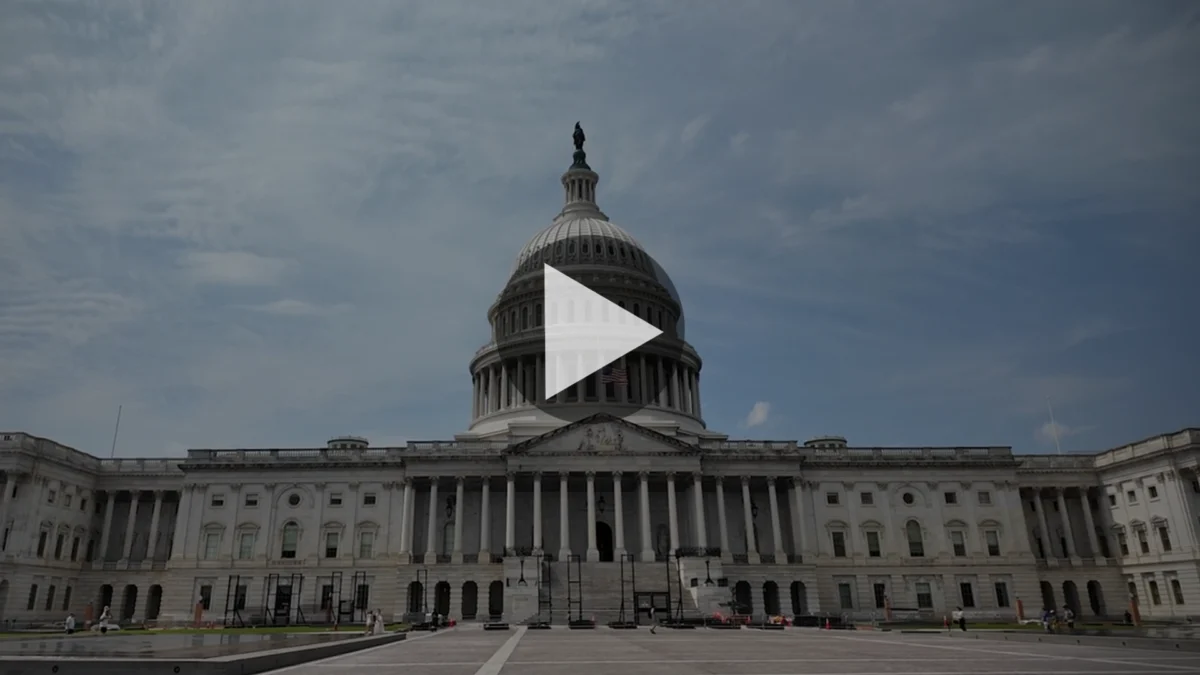
As the sweltering heat of August recedes, members of the House and Senate are preparing to return to a Washington, D.C., landscape defined by fiscal urgency and geopolitical volatility. The upcoming legislative session is not merely a routine return to business; it is a high-stakes showdown that will dictate the trajectory of American national security for the next fiscal year and beyond.
As Breaking Defense Multimedia Director Daniel Woolfolk outlines in the latest episode of Congressional Round Up, lawmakers are staring down a multifaceted legislative mountain. With the government’s fiscal year ending on September 30, the clock is ticking on a series of critical measures, including a stopgap spending bill to avoid a shutdown, a massive $1.15 trillion base defense budget, and an additional $350 billion in reconciliation funding. Perhaps most pressingly, Congress must grapple with a significant supplemental request tied to the ongoing conflict between the United States, Israel, and Iran.
Main Facts: The Triple Threat to Fiscal Stability
The primary challenge facing the 119th Congress is the synchronization of three distinct but interconnected funding streams.
1. The Continuing Resolution (CR)
With the fiscal year set to conclude at the end of September, the immediate priority is the passage of a Continuing Resolution. Without this, federal agencies—including the Department of Defense (DoD)—will face a government shutdown. A CR typically maintains current funding levels, but for the Pentagon, a long-term CR is widely viewed as a "poison pill." It prevents the initiation of new programs, stalls modernization efforts, and freezes procurement contracts, effectively paralyzing the military’s ability to respond to shifting global threats.
2. The FY27 Defense Budget and Reconciliation
The administration has submitted a robust $1.15 trillion base budget request for Fiscal Year 2027. However, this is supplemented by a $350 billion request through the reconciliation process. Reconciliation is a powerful legislative tool that allows for expedited passage of budget-related measures, shielding them from the threat of a filibuster in the Senate. This $1.5 trillion total investment reflects a strategic pivot toward multi-domain warfare and the rapid integration of emerging technologies.
3. The Israel-Iran Supplemental
The most politically charged element of the agenda is the supplemental funding package for the U.S.-Israeli war against Iran. This request includes direct military aid, replenishment of Iron Dome and Arrow interceptor stocks, and the financing of persistent intelligence, surveillance, and reconnaissance (ISR) operations in the Middle East.
Chronology: A Roadmap to the Fiscal Cliff
To understand the urgency, one must look at the calendar, which offers little room for error.
- Early September: The Senate and House return from the August recess. Leadership must immediately begin drafting the language for the CR to ensure it clears both chambers before the September 30 deadline.
- Mid-September: The House Appropriations Committee is expected to begin marking up the supplemental defense request. This will be the first true test of bipartisan support for the administration’s Middle East strategy.
- Late September: The "shutdown watch" begins. Historically, this is when brinkmanship peaks, with party leaders leveraging the threat of a government shutdown to extract concessions on secondary policy issues.
- October 1: The start of the new fiscal year. Failure to pass a CR or a full appropriations package by this date triggers automatic federal closures.
- November/December: Post-election "lame duck" session. If Congress fails to pass the full FY27 budget before the elections, the responsibility falls to a mix of returning and outgoing members, often leading to a "minibus" approach—bundling several appropriations bills together to clear the desk before the end of the calendar year.
Supporting Data: Why the FY27 Request is Unprecedented
The $1.15 trillion base request is not a random figure; it represents a fundamental restructuring of the U.S. military. Data from the Office of Management and Budget (OMB) and the DoD suggest that the funding is allocated across four critical pillars:
- Technological Modernization: Nearly $200 billion is earmarked for AI-integrated systems, hypersonic delivery vehicles, and autonomous maritime drones.
- Readiness and Training: With the operational tempo at an all-time high, the Pentagon has requested a 12% increase in O&M (Operations and Maintenance) accounts to support the rotational presence of U.S. forces in the Indo-Pacific and the Middle East.
- Industrial Base Expansion: Recognizing the strain caused by the conflict in the Middle East, the request includes $85 billion specifically for "warm production lines"—ensuring that the U.S. industrial base can surge manufacturing of 155mm artillery shells and precision-guided munitions.
- Reconciliation Spending: The $350 billion reconciliation request is primarily aimed at long-term infrastructure projects, such as upgrading domestic shipyards and expanding the semiconductor supply chain to reduce reliance on foreign entities.
Official Responses: The Partisan Divide
The mood in Washington remains tense, with official statements reflecting the deep ideological divides on how to best handle the looming fiscal decisions.
From the Majority Leadership:
Proponents of the administration’s request argue that failing to pass the full $1.15 trillion package would be a dereliction of duty. "We are in an era of persistent conflict," a spokesperson for the Senate Armed Services Committee noted. "The threat environment—from the Strait of Hormuz to the South China Sea—demands that we provide our warfighters with the resources they need. A CR is not an option; it is a retreat."
From the Minority/Fiscal Hawks:
Conversely, many fiscal conservatives are pushing back against the total price tag. "We cannot continue to print money to fund these massive supplemental requests without addressing the underlying deficit," said a prominent House member. "We support our allies, particularly Israel, but the $350 billion in reconciliation is a wish list that goes far beyond immediate defense needs. We need to see a plan for fiscal discipline."
The Pentagon’s Stance:
Secretary of Defense spokespersons have remained consistent in their messaging: the uncertainty of a long-term CR is the greatest threat to national security. "Every day that we operate under a CR is a day that our adversaries gain ground," said an official during a recent briefing. "The budget request was crafted with a clear eye on the threat landscape. We urge Congress to move past partisan friction and provide the necessary funding."
Implications: The Global Strategic Impact
The fallout from these legislative decisions will extend far beyond the Beltway.
1. The Geopolitical Message
The passage of the supplemental funding for the U.S.-Israeli war against Iran will serve as a definitive signal to global actors. A robust, bipartisan vote will demonstrate U.S. commitment to its Middle East allies. Conversely, a prolonged delay or a watered-down package could be perceived as a waning appetite for sustained intervention, potentially emboldening adversaries.
2. The Defense Industrial Base
The defense sector is currently operating at near-capacity. If Congress opts for a CR that restricts new contract starts, the ripple effects will be felt by Tier 2 and Tier 3 subcontractors. These smaller entities often lack the liquidity to survive long periods of uncertainty, which could lead to the consolidation of the industrial base—a trend that may ultimately decrease competition and increase costs in the long run.
3. Domestic Economic Stability
The total $1.5 trillion investment has profound economic implications. By pumping such significant capital into research, development, and manufacturing, the federal government is effectively setting the industrial policy for the next decade. This has the potential to spark a manufacturing renaissance, particularly in regions specializing in aerospace and defense, but it also risks exacerbating inflationary pressures if not carefully managed through the reconciliation process.
4. Long-term Military Readiness
The focus on "future-proofing" the military through AI and autonomous systems is a gamble on a specific theory of victory. If the funding is blocked, the U.S. risks falling behind in the "Great Power Competition" with China and Russia. The transition from legacy platforms to modernized, networked systems requires consistent, multi-year funding—something that the current "stop-and-start" fiscal cycle makes incredibly difficult to achieve.
Conclusion: The Path Forward
As the House and Senate return, they are not just dealing with line items on a spreadsheet; they are managing the security architecture of the Western world. The tension between fiscal responsibility and the demand for a modernized, highly capable military force is at its zenith.
The next six weeks will be a crucible for legislative leadership. Whether Congress can bridge the gap between competing visions for the nation’s defense budget will determine not only the stability of the federal government but the readiness of the U.S. military to face a rapidly evolving global battlefield. The eyes of the world are watching Washington; the results of these upcoming votes will ripple across continents, defining the balance of power for years to come.