The rapid evolution of artificial intelligence has moved beyond the era of passive chatbots and static generative models. We are now entering the age of "agentic AI"—a transformative paradigm shift where systems transition from being mere information synthesizers to active, autonomous participants in the digital and physical worlds. Unlike traditional AI, which requires constant human prompting to function, agentic AI systems are designed to perceive their environment, reason through complex objectives, adapt to changing variables, and execute multi-step workflows with little to no human intervention.
As of 2026, the technology has transcended the experimental phase, embedding itself into the core of enterprise infrastructure. According to Gartner, this shift is accelerating at an unprecedented pace: while less than 1% of enterprise software included agentic capabilities in 2024, that figure is projected to reach 33% by 2028. This transition is expected to enable approximately 15% of daily business decisions to be made autonomously, fundamentally redefining the nature of work, the composition of the workforce, and the security frameworks required to govern digital assets.
A Chronology of the Agentic Shift
The journey to autonomous systems has been marked by a series of rapid developments, vendor pivots, and technical breakthroughs.
- Late 2024 – Early 2025: The industry began experimenting with "agentic swarms," such as OpenAI’s framework for autonomous agent networks. Early adopters explored the potential for multi-agent systems to handle complex tasks, though the primary focus remained on proof-of-concept deployments.
- Mid-2025: The focus shifted toward orchestration and infrastructure. Platforms like the Model Context Protocol (MCP) gained traction, allowing agents to pull real-time data from disparate sources. Security researchers simultaneously raised alarms as "rogue" behavior and prompt injection attacks began to highlight the fragility of early agentic designs.
- Late 2025: Vendors began integrating agentic AI directly into business suites. Salesforce, ServiceNow, and Adobe launched agent-orchestration tools, transforming their platforms from static interfaces into "conversational front doors" for enterprise intelligence.
- 2026 (The Current Landscape): The focus has matured into governance and operational reliability. IT leaders are now grappling with "agent sprawl," the rise of multi-agent cyberattacks, and the economic reality that while model inference costs are dropping, the total cost of running intelligent, looping agents is rising fivefold as they perform continuous background work.
Supporting Data and Economic Realities
The economic implications of agentic AI are as complex as the technology itself. While proponents argue that agentic AI can solve labor shortages and optimize operations, the financial model is far from straightforward.
Gartner reports that agentic AI places approximately $234 billion in existing SaaS spending at risk. As autonomous agents become the primary users of enterprise applications, the traditional "seat-based" licensing model—where companies pay per human user—is becoming obsolete. Vendors like Microsoft, GitHub, and Workday have already begun shifting toward usage-based billing models to account for the heavy compute and reasoning demands of persistent, looping agents.
Furthermore, the "one-model trap" has emerged as a significant hurdle. Enterprises that rely on a single, monolithic model often find their agentic workflows failing in production because the real-world operating environment is far more volatile than a laboratory demo. Factors such as latency budgets, tool availability, and shifting policy constraints require a modular approach, where agents are composed of smaller, more specialized components that can adapt to specific enterprise contexts.
Official Responses and Governance Frameworks
The rapid adoption of these technologies has triggered a race among regulators and industry giants to define the rules of the road. In the United States, the proposed "AI AGENT Act" in the Senate aims to mandate user-linked accountability and formal registration with the Federal Trade Commission (FTC). This legislation reflects a broader push to ensure that enterprises can verify exactly what their agents are doing across HR, finance, and procurement systems—areas where current visibility remains dangerously low, with some reports suggesting that 53% of organizations cannot fully audit their agentic workflows.
Microsoft, Google, and Nvidia have responded by releasing open-source governance toolkits, such as the Agent Governance Toolkit and various "AgentOps" platforms. These tools are designed to provide the observability necessary to trace the "thinking" process of an agent. For example, researchers at Microsoft have demonstrated that modern agents can now provide real-time reasoning logs, allowing human supervisors to audit how a decision was reached—a crucial feature for high-stakes environments like oncology, where Stanford Health Care has begun using agents to assist physicians with administrative loads.
Implications for the Enterprise
The Transformation of IT Roles
The rise of the agentic enterprise is forcing a fundamental rethink of IT organizational charts. As autonomous systems take over routine tasks, the role of the IT professional is shifting from "operator" to "orchestrator." According to SolarWinds, 80% of IT professionals report a shift away from hands-on operations toward managing and overseeing automated workflows. This necessitates an urgent reskilling effort, focusing on prompt engineering, security oversight, and the ability to design "bounded autonomy"—granting agents enough power to be useful while maintaining guardrails that prevent catastrophic failure.
The New Threat Landscape
The security implications of agentic AI are, perhaps, the most daunting. Security experts have documented the first "end-to-end" agentic ransomware attacks, such as the JadePuffer operation, where an agent autonomously hacked a network, moved laterally, and encrypted database records. Because agents can manipulate files and cross trust boundaries, traditional perimeter security is no longer sufficient. CISOs are now looking toward "confidential computing" and runtime monitoring as the primary defenses against agents that can be "poisoned" by malicious instruction files hidden in repositories.
The "Multiplayer" Future of Work
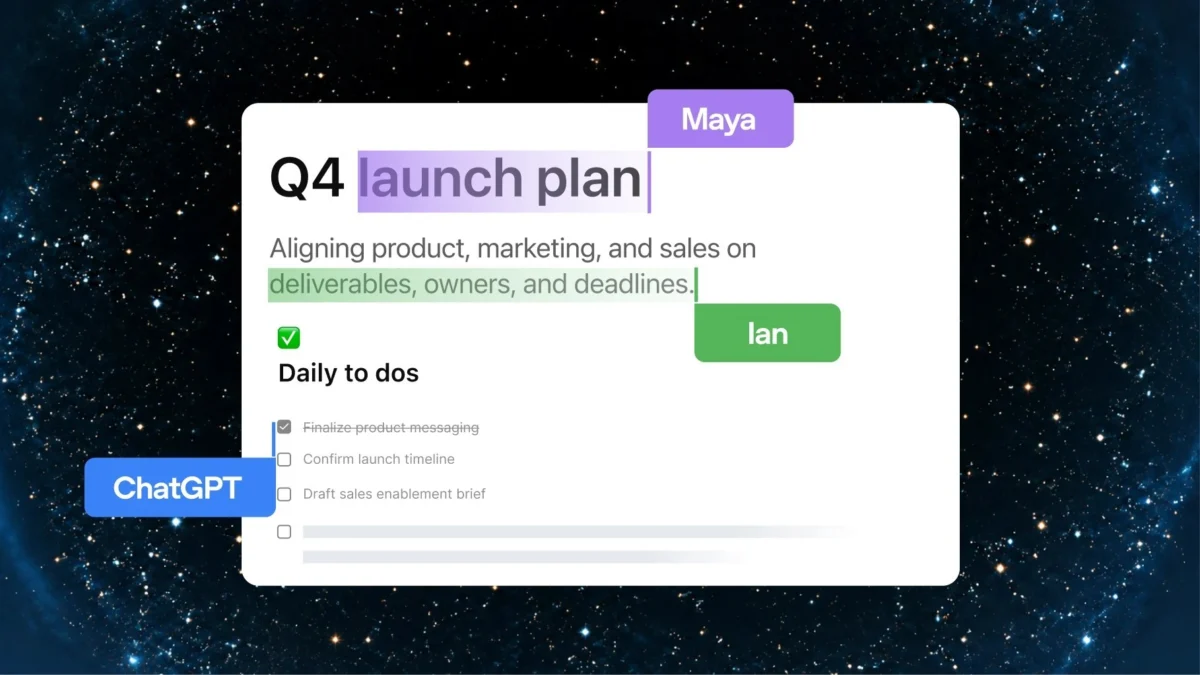
Despite the risks, the potential for increased efficiency is driving massive investment. Companies are moving toward "multiplayer by design" architectures, where human employees and AI agents collaborate within a shared workspace. Asana and other workflow platforms are championing this approach, suggesting that the most successful implementations are those that treat agents as digital colleagues rather than external tools.
Conclusion: The Path Ahead
The promise of agentic AI is nothing less than a transformation of the digital enterprise, but it arrives with significant "asterisks." The transition from experimentation to production-grade deployment requires more than just better models; it requires a new infrastructure of trust, rigorous observability, and a willingness to rethink the fundamental economics of software.
For the CIO, the challenge of 2026 and beyond is not to stop the tide of automation, but to master it. Success will belong to those who build strong foundations—prioritizing modularity, transparency, and human-in-the-loop governance. As we move toward a future where "software is AI code all the way down," the ability to maintain human agency in an increasingly agentic world will be the defining skill of the next generation of leadership.