Main Facts
In a move that underscores the rapid evolution of the commercial and national security space sectors, satellite manufacturer K2 Space has raised $500 million in a Series D funding round. The investment more than doubles the Torrance, California-based company’s valuation to $6.8 billion, achieved just seven months after its previous funding milestone. This capital injection positions K2 Space as one of the most highly valued private aerospace entities in the world, reflecting intense investor appetite for vertically integrated defense and aerospace technology.
The Series D round was co-led by venture capital heavyweights Kleiner Perkins and ICONIQ. A coalition of prominent institutional and growth investors also participated, including CapitalG, Lightspeed Venture Partners, Altimeter Capital, Spark Capital, Sands Capital, ARK Invest, and T. Rowe Price Associates, alongside existing early-stage backers.
This latest funding round marks a milestone for K2 Space. In December, the company was valued at $3 billion following a $250 million Series C round. At that time, K2 Space disclosed a backlog of $500 million in signed commercial and government contracts. Seven months later, the company has doubled its contract backlog to over $1 billion and surpassed $1 billion in total capital raised since its inception.
The primary objective of this new capital is to transition K2 Space from successful orbital technology demonstrations to high-rate industrial manufacturing. The company is scaling up its production capacity with the goal of manufacturing up to 100 heavy-class satellites annually. This ambitious production target aims to meet the growing demands of both commercial megaconstellations and the United States military’s expanding orbital architectures.
+------------------------------------------------------------+
|                  K2 SPACE VALUATION TRAJECTORY             |
+------------------------------------------------------------+
| Dec (Series C)  | $$$$$$$$$$$$$$$ $3.0 Billion             |
| July (Series D) | $$$$$$$$$$$$$$$$$$$$$$$$$$$$$$$$$ $6.8B  |
+------------------------------------------------------------+
Chronology of Growth and Flight Tests
Founded in 2022 by brothers Karan and Neel Kunjur, K2 Space emerged from stealth in 2023 with a contrarian vision: building large, heavy, high-power satellites at a fraction of the cost of legacy systems. The company’s financial and technical timeline highlights its rapid scaling:
2022          Founded by Karan and Neel Kunjur
2023          Emerges from stealth; raises $8.5M Seed & $7M follow-on
Feb 2024      Raises $50M Series A
Jan 2025      Launches first flight demonstration mission
Feb 2025      Raises $110M Series B
Mar 2025*     Launches Gravitas (Mega-class, 2-metric-ton satellite)
Dec           Raises $250M Series C (Valuation: $3B)
Q2 2027       Scheduled launch of Trinity mission
July 30       Raises $500M Series D (Valuation: $6.8B)
H2 2028       Planned introduction of Giga-class satellite platform
*Note: Flight and funding sequences reflect the chronological schedule provided by the company’s disclosure timeline.
Orbital Milestones
- January 2025 (Initial Demo): K2 Space conducted its maiden flight, a small-scale demonstration mission designed to validate its proprietary avionics, flight computers, reaction wheels, and software systems in the harsh environment of space.
- March (Gravitas Mission): The company launched Gravitas, a Mega-class satellite weighing approximately 2 metric tons. Carrying 12 distinct payloads, Gravitas successfully demonstrated a high-power electric propulsion system and completed a critical orbit-raising maneuver from low Earth orbit (LEO) to medium Earth orbit (MEO). The mission showcased K2’s dual-channel Hall-effect thrusters, which the company claims are the most powerful electric thrusters currently operating in space. This $60 million project was funded in part by the U.S. Space Force through a Strategic Funding Increase (STRATFI) agreement, which matches private venture capital with military research awards.
- Second Quarter 2027 (Trinity Mission): K2’s next scheduled orbital test, Trinity, will deploy multiple satellites into different orbital planes. This mission is designed to demonstrate long-range optical (laser) communications and multi-satellite constellation management.
- Second Half 2028 (Giga-class Debut): The company plans to introduce its Giga-class platform, a massive satellite bus designed to provide unprecedented levels of power and payload capacity.
Supporting Data: Technical Specs and Industrial Capacity
K2 Space’s strategy hinges on high-rate, vertically integrated manufacturing. The company manufactures more than 85% of its satellite components in-house, a level of integration designed to bypass traditional aerospace supply chain bottlenecks.
Manufacturing and Workforce Footprint
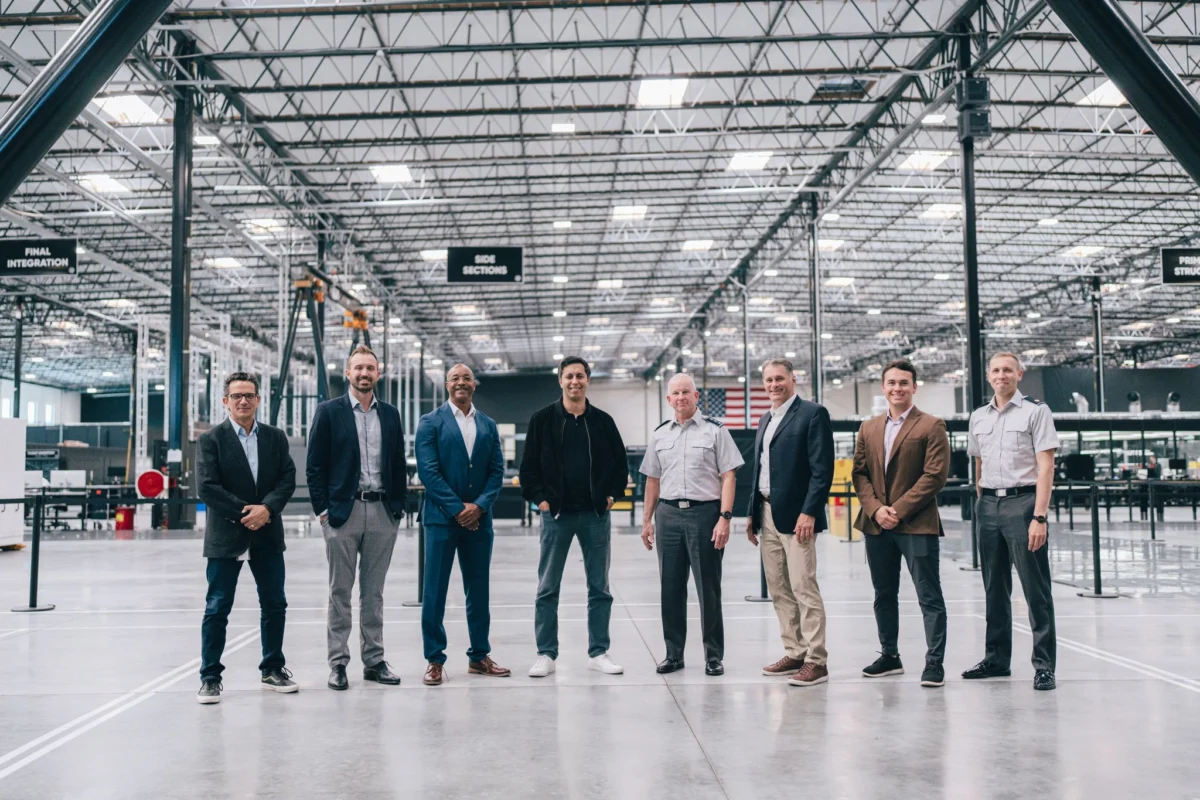
- Production Facility: A 180,000-square-foot state-of-the-art factory located in Torrance, California. The facility is optimized for automotive-style assembly line manufacturing, capable of producing up to 100 large-class satellites per year.
- Engineering Hub: A newly established engineering office near Seattle, Washington, designed to tap into the Pacific Northwest’s deep pool of aerospace and software talent.
- Workforce: Nearly 300 full-time employees, with plans to expand rapidly under the Series D funding.
Satellite Platform Specifications
Unlike the previous decade’s trend toward miniaturized "CubeSats," K2 Space is focusing on large-format, high-power satellite buses:
| Feature / Metric | Mega-class Platform | Giga-class Platform (Target: H2 2028) |
|---|---|---|
| Payload Mass Capacity | Up to 3,000 kilograms | Substantially larger (undisclosed exact limit) |
| Power Generation | Tens of kilowatts | Approximately 100 kilowatts |
| Primary Propulsion | Dual-channel Hall-effect thrusters | Next-generation heavy electric/chemical |
| Target Orbits | LEO, MEO, GEO | MEO, GEO, and Deep Space |
| Primary Applications | Communications, Tactical ISR, Missile Defense | Orbital Data Centers, Heavy Communications |
Official Responses and Strategic Vision
The leadership team at K2 Space views this funding round not just as a financial milestone, but as a mandate to scale operations to meet a backlog of national security and commercial demands.
Karan Kunjur, co-founder and Chief Executive Officer of K2 Space, emphasized the shift from design validation to industrial execution:
"The new financing gives K2 the resources to expand production as we work toward the capacity to build as many as 100 large satellites a year. Our focus is no longer just about proving our technology works in space—we have done that. Now, it is about proving we can manufacture these complex spacecraft repeatedly, control our unit costs, and meet rigorous delivery schedules for our customers who are building multiyear, multi-billion-dollar orbital programs."
Neel Kunjur, co-founder and Chief Technology Officer, highlighted the technical paradigm shift that the Giga-class platform represents, particularly for the emerging field of space-based cloud computing:
"With our upcoming Giga-class platform, we are designing a system that can deliver around 100 kilowatts of power. This is a game-changer. We are presenting Giga as a foundation for placing massive amounts of computing capacity directly into orbit. Companies are beginning to realize that space-based data centers are not a science fiction concept—they are a near-term market necessity for high-security, low-latency global processing. We plan to introduce this platform to the market in the second half of 2028."
Representatives from lead investors Kleiner Perkins and ICONIQ noted that the investment reflects a broader thesis on defense tech and space infrastructure. They highlighted K2’s ability to combine commercial cost structures with military-grade reliability as the primary driver behind the company’s rapid valuation growth.
Implications for the Global Space and Defense Sectors
The rapid rise of K2 Space carries profound implications for the broader aerospace industry, signaling a shift in both technical design philosophy and defense procurement.
       +-------------------------------------------------------+
       |             THE MASS-TO-ORBIT PARADIGM SHIFT          |
       +-------------------------------------------------------+
       | OLD PARADIGM:                                         |
       | - Scarce/expensive launch capacity                    |
       | - Miniaturization at all costs (CubeSats)             |
       | - Low power, limited payload capacity                 |
       +-------------------------------------------------------+
                                  VS
       +-------------------------------------------------------+
       | NEW PARADIGM (K2 Space):                              |
       | - Abundant, cheap heavy-lift launch (Starship, Glenn) |
       | - Heavy, large-format satellite buses                 |
       | - Tens to 100 kW of power for heavy computing & radar  |
       +-------------------------------------------------------+
1. The Death of Miniaturization: Embracing the "Mass is Cheap" Era
For the past fifteen years, the space industry has been dominated by miniaturization. Because launch capacity was scarce and expensive, satellite operators paid a premium to make spacecraft as light and compact as possible.
K2 Space is betting that the imminent arrival of next-generation, heavy-lift launch vehicles—such as SpaceX’s Starship and Blue Origin’s New Glenn—alongside the proven capacity of Falcon Heavy, will fundamentally alter the economics of space. As the cost per kilogram to orbit plummets, mass ceases to be the primary constraint. Instead, power and volume become the limiting factors. K2’s heavy buses allow customers to fly larger sensors, more powerful transmitters, and massive thermal management systems without the expensive engineering required to pack those systems into a micro-satellite.
2. Disruption of Defense Procurement and the Rise of "Defense Tech"
The U.S. Department of Defense is actively seeking alternatives to traditional, slow-moving aerospace prime contractors. By partnering with agile, venture-backed companies, the Pentagon hopes to deploy orbital hardware on commercial timelines. K2 Space’s inclusion in major defense initiatives demonstrates this transition:
- Golden Dome for America: K2 is partnering with defense-tech unicorn Anduril Industries to supply satellite platforms for space-based interceptors. Under this program, K2’s Mega-class spacecraft will host Anduril’s defense and tracking payloads, creating a highly responsive layer of missile defense.
- Protected Tactical Satcom-Global (PTS-G): The U.S. Space Force selected K2 Space as a satellite bus provider for this critical program of record. Partnering with SES Space & Defense, K2 will build a spacecraft designed to provide jam-resistant, highly secure communications from geostationary Earth orbit (GEO) for military operations in contested electronic warfare environments.
3. Commercial Megaconstellations and Orbital Data Centers
Beyond defense, K2’s commercial pipeline is anchored by massive communication networks. Its largest disclosed commercial contract is with satellite operator SES, which plans to deploy a next-generation network of 28 satellites in medium Earth orbit (MEO) using K2’s platforms.
Furthermore, the introduction of the Giga-class platform in 2028 targets the frontier of "orbital edge computing." By providing 100 kW of power, K2 aims to host space-based data centers. These orbital servers could process massive amounts of raw earth-observation and communications data in space, transmitting only the relevant insights back to Earth, bypassing bandwidth limitations and offering a secure tier of cloud computing insulated from terrestrial disasters and geopolitical conflicts.