
Across the United States, a quiet but fierce battle is being waged over the physical footprint of the digital revolution. As tech giants scramble to secure the massive computational power required to fuel the generative AI boom, the infrastructure necessary to sustain these dreams—colossal, energy-hungry data centers—is increasingly being proposed for suburban and urban backyards. While industry proponents market these facilities as engines of economic growth and job creation, a growing coalition of residents is sounding the alarm, citing long-standing environmental justice concerns, energy grid instability, and the looming threat of industrial pollution.
The Human Cost of Industrialization
For activists like Shawmar Pitts, the debate over data centers is not merely an abstract policy disagreement; it is a battle for survival. A lifelong resident of the Grays Ferry neighborhood in Southwest Philadelphia, Pitts grew up in the shadow of what was once the East Coast’s largest oil refinery. The facility was a constant presence until a catastrophic explosion in 2019 finally shuttered its operations.
For years, Pitts watched as friends and family members grappled with chronic, often mysterious, health conditions. The connection between their illnesses and the refinery remained obscured until he encountered Philly Thrive, an environmental justice organization. In 2018, as the group campaigned against a proposed expansion of the refinery, Pitts began to connect the dots.
"I read the information they had on the table about how living near the refinery affects you, and I’m looking at all the sicknesses on this paper, and I’m like, ‘My mother has this, my sister has that, my next-door neighbor suffers from this’ — every house, someone has something on that list," Pitts told TechCrunch. "From that point, I was all the way in."

Today, as the managing co-director of Philly Thrive, Pitts is leading the charge to ensure that his community is not subjected to the same cycle of industrial exploitation. City officials have identified two potential sites for future data center construction: one in Northeast Philadelphia and another in Grays Ferry. For residents who have spent decades fighting for clean air, the prospect of a new, massive industrial neighbor is an unwelcome deja vu.
Chronology of a Growing Resistance
The tension in Philadelphia is a microcosm of a national phenomenon. The following timeline illustrates how this resistance has evolved from localized community meetings to state-level executive action:
- 2018–2019: Residents in industrial-adjacent neighborhoods, such as Grays Ferry, begin organizing against legacy pollution, culminating in the closure of the Philadelphia Energy Solutions refinery following a major 2019 explosion.
- 2023–2024: The AI gold rush accelerates, leading to a surge in demand for data center permits. Energy grids in states like Virginia, Texas, and Pennsylvania show signs of strain.
- Early 2026: Municipalities across the country, including Denver, Indianapolis, and Asheville, begin implementing formal moratoriums on new data center development, citing the need for environmental impact studies.
- July 2026: New York Governor Kathy Hochul signs an executive order halting the approval of new permits for large-scale data centers, citing concerns over utility costs and water usage.
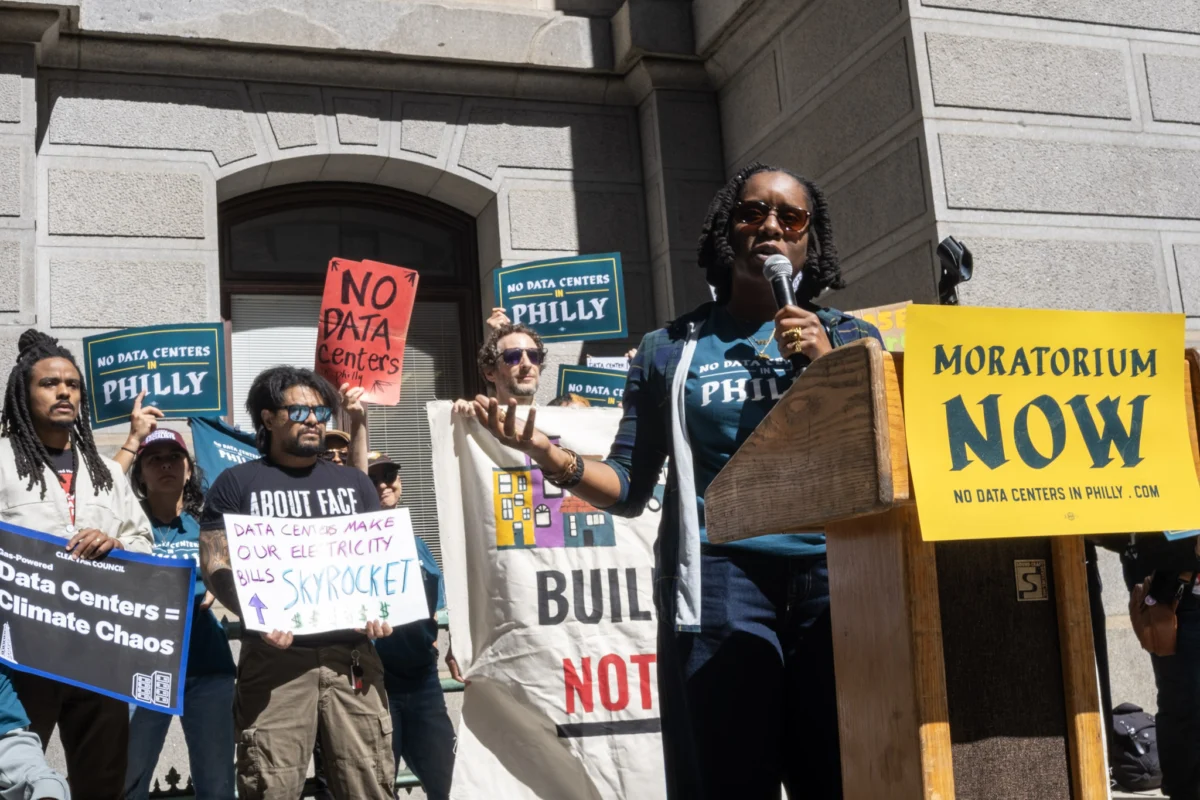
- September 2026: The "No Data Centers in Philly" campaign holds its inaugural rally at Philadelphia’s City Hall, signaling the start of a coordinated effort to prevent development in the city.
The Energy-AI Nexus: A Data-Driven Crisis
The opposition to data centers is backed by increasingly alarming projections regarding energy consumption. The international race to dominate the artificial intelligence industry is so aggressive that by 2035, BloombergNEF predicts that U.S. data centers will consume more natural gas than the total combined output of Germany and Japan. This estimate is nearly double the firm’s projection from just nine months ago, highlighting how quickly the demand for "compute" is outstripping existing infrastructure.
While natural gas is often marketed as a "bridge fuel" that burns cleaner than oil, it remains a significant source of greenhouse gas emissions. Burning a single cubic foot of natural gas releases approximately 60 grams of carbon dioxide. Analysts warn that the increased demand from data centers could generate an additional 1 million metric tons of greenhouse gas pollution daily—roughly 12% of all current U.S. greenhouse gas emissions.

Furthermore, a 2021 study by Harvard University researchers found that fossil fuel-related air pollution is responsible for one in five deaths worldwide. For communities already burdened by poor air quality, the addition of massive data centers—which often include on-site diesel generators for backup power—represents a tangible health threat.
"A typical data center planned in Pennsylvania has hundreds of diesel engines that spew air pollution," said Annie Fox, an attorney for the Clean Air Council, during the recent Philadelphia rally. "Even if they’re supposedly reserved for emergencies, the government has already signaled that data centers may be required to run those generators rather than drawing from an overstressed electrical grid during heat waves. We can expect those heat waves to get more frequent and severe as these fossil fuel-hungry centers accelerate climate change."
Official Responses and Municipal Moratoriums
The pushback is beginning to yield tangible policy shifts. In states like New York, officials are taking a hard line. "Progress shouldn’t arrive with a higher utility bill, deleted water supply, or noise pollution," Governor Hochul stated. "These data centers can only be built in places that want them."
The strategy of implementing moratoriums has become the primary tool for concerned citizens and local governments. In Denver, Indianapolis, Asheville, Charlotte, and Reno, city councils have voted to pause development. These temporary bans serve a dual purpose: they prevent immediate construction while providing officials the necessary time to conduct comprehensive impact assessments on water, electricity, and local air quality.

The Implications for Future Urban Planning
The conflict between tech expansion and community well-being raises fundamental questions about the future of the American city. If data centers are viewed as essential infrastructure, similar to power plants or water treatment facilities, who decides where they go? And more importantly, who bears the cost of their operation?
At the Philadelphia rally, Sonya Sanders, president of the Philly Thrive board, spoke of the personal, irreversible toll of industrial proximity. Her husband, a resident of Grays Ferry who did not smoke or drink, died of a rare bone cancer in 2020. Sanders attributes his death directly to the emissions from the nearby refinery.
"In my eyes, they killed him," Sanders told the crowd. "The pollution killed him. I believe he would be here today if he wasn’t silently murdered, because it was the pursuit of profit that killed him."
Her testimony underscores the core of the opposition: a refusal to accept the trade-off between economic activity and public health. As AI companies continue to demand more energy, the pressure on city council members to choose between tech investment and the health of their constituents will only intensify.

Conclusion: A Movement Gains Momentum
On Monday, over 100 people gathered at City Hall for the "No Data Centers in Philly" campaign kickoff. The chants were a clear message to city officials: the era of allowing industrial development without intense public scrutiny is coming to an end.
For Shawmar Pitts, the mobilization is a sign of hope. "I just think that our community standing up and fighting back is tremendous," he said. "It takes a lot of effort and a lot of people."
As the AI industry continues to grow, it faces a mounting challenge that cannot be solved with software patches or more powerful GPUs. It must contend with the physical reality of the communities it seeks to build in—communities that are no longer willing to be the invisible fuel for the next generation of digital progress. The debate is no longer just about where the servers go; it is about who holds the power to define the future of the places we call home.