The intersection of mainstream capital markets, global telecommunications, and high-performance computing has officially moved beyond Earth’s atmosphere. Once viewed as the playground of governments and speculative venture capital, the space sector has transitioned into a foundational pillar of global infrastructure. This shift is highlighted by SpaceX’s massive valuation milestones and its entry into public capital markets—a transition that cements space technology as a mainstream asset class.
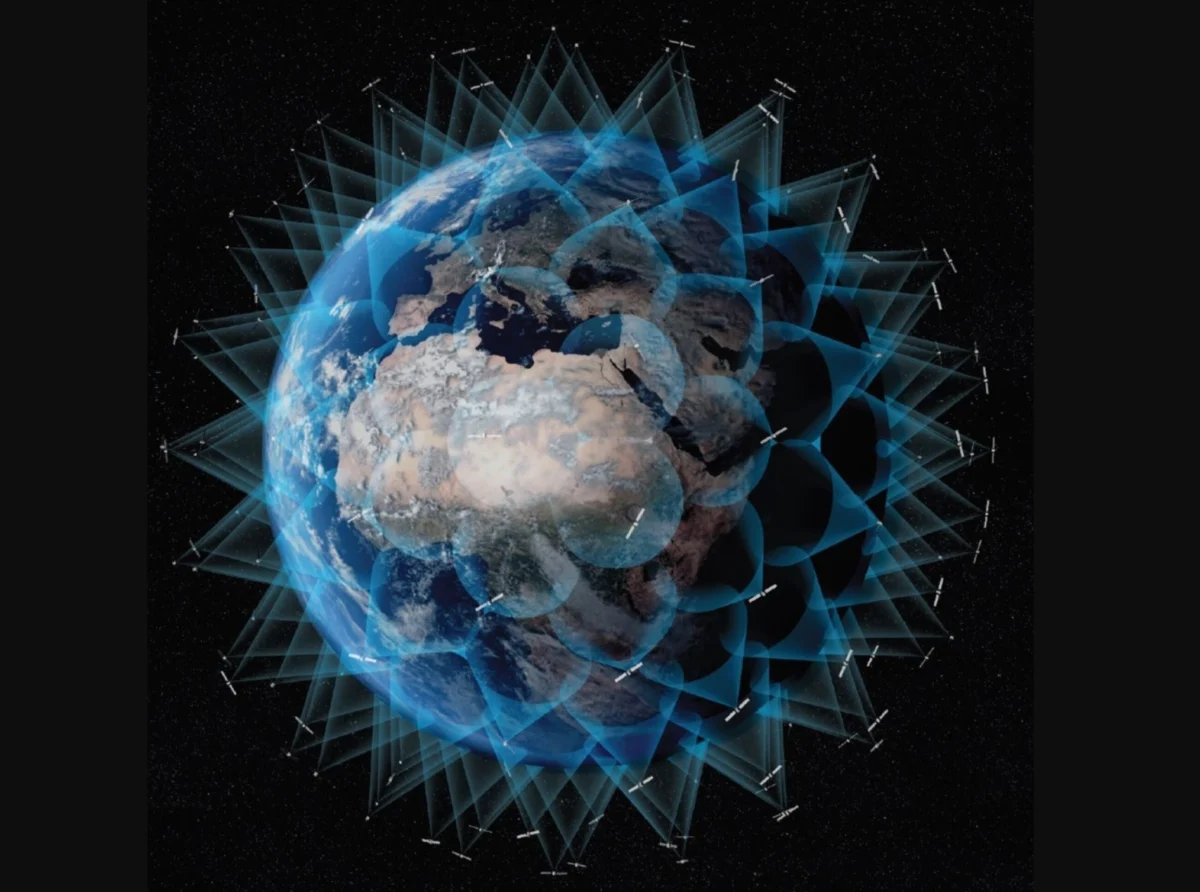
However, as commercial entities plan to launch hundreds of thousands of new satellites to support everything from global broadband to orbital artificial intelligence (AI) data centers, the industry faces an existential physical bottleneck: the overcrowding of Low Earth Orbit (LEO). To survive its own success, the space economy is undergoing a massive paradigm shift, moving even lower into Very Low Earth Orbit (VLEO). This transition represents a fundamental redesign of how humanity interacts with orbital mechanics, sustainability, and next-generation telecommunications.
Main Facts: The New Frontier of Space-Based Infrastructure
The modern space economy is no longer driven solely by exploration; it is driven by immediate, terrestrial utility. Three core developments are driving this transformation:
- The Valuation of Space Infrastructure: SpaceX’s capital market milestones, marked by capital raises exceeding $85 billion, signal that institutional investors now view space as a mature infrastructure play. The market is valuing near-term utility—such as Starlink’s global connectivity and future orbital data hosting—rather than distant interplanetary travel.
- The Orbital Congestion Crisis: There are currently more than 10,000 active satellites in space, the vast majority of which reside in LEO (500 to 700 kilometers above Earth). SpaceX has applied for spectrum and orbital allocations for up to 1 million new satellites. This exponential growth has dramatically increased collision risks. In 2025 alone, Starlink satellites executed approximately 300,000 collision-avoidance maneuvers—a 50% increase from 2024.
- The Rise of Orbital Data Centers: The massive energy footprint of terrestrial AI workloads is driving tech companies to look to space. With AI projected to consume a massive share of global electricity, and annual power grid investments expected to double to $970 billion by 2050, orbital data centers powered by continuous solar energy offer a viable alternative.
- The VLEO Solution: Operating at altitudes of 200 to 300 kilometers, Very Low Earth Orbit (VLEO) is emerging as the only sustainable destination for massive satellite constellations. At these altitudes, atmospheric drag naturally de-orbits debris within weeks, creating a "self-cleaning" environment that virtually eliminates the long-term risk of the Kessler syndrome.
Chronology: The Road to the Multi-Orbital Era
To understand the sudden urgency surrounding VLEO, it is necessary to trace the technological and commercial milestones of the past two decades:
[2015] -------------------> [2019] -------------------> [2024-2025] -------------> [2026 & Beyond]
SpaceX proves               First Starlink launch       300k collision maneuvers;     VLEO commercialization;
booster reusability;        initiates the era of        SpaceX capital milestones     propulsion innovations
launch costs plummet.       LEO megaconstellations.     exceed $85 billion.           enable 5+ year lifespans.
Phase I: The Reusability Revolution (2015–2018)
For decades, the space industry operated on an expendable model, where rockets were discarded after a single flight. This kept launch costs prohibitively high, limiting orbital access to government agencies and defense giants. The turning point came when SpaceX successfully commercialized the reusability of the Falcon 9 first-stage booster. By drastically lowering the cost per kilogram to orbit, space became economically viable for commercial infrastructure.
Phase II: The Megaconstellation Era (2019–2023)
With cheap access to space secured, the focus shifted from launch vehicles to payloads. In 2019, SpaceX launched its first major batch of Starlink satellites, proving that a network of thousands of small satellites in LEO could deliver low-latency, high-speed internet globally. Competitors and sovereign states quickly followed suit, proposing their own megaconstellations (e.g., Amazon’s Project Kuiper, China’s Guowang).
Phase III: The LEO Congestion Crisis and the AI Boom (2024–2025)
By 2024, the sheer volume of hardware in LEO began to strain orbital management systems. Collision-avoidance maneuvers surged by 50% year-over-year. Concurrently, the explosive growth of generative AI placed unprecedented strain on terrestrial power grids. Tech companies began seriously exploring orbital data centers to offload computing workloads, threatening to add hundreds of thousands of high-power satellites to an already crowded LEO environment.
Phase IV: The VLEO Transition (2026 and Beyond)
As LEO approaches its physical and regulatory limits, the industry is shifting toward VLEO. Startups and established aerospace firms are developing the specialized propulsion and materials science required to operate continuously within Earth’s upper atmosphere, turning a historically unusable orbit into the backbone of future space infrastructure.
Supporting Data: The Physics and Economics of Orbits
The shift from LEO to VLEO is dictated by rigid laws of physics and economics. The table below highlights the stark operational differences between these two orbital regimes:
| Metric / Feature | Low Earth Orbit (LEO) | Very Low Earth Orbit (VLEO) |
|---|---|---|
| Altitude Range | 500 km – 700 km | 200 km – 300 km |
| Atmospheric Density | Negligible | Moderate (creates continuous drag) |
| Debris Orbital Lifetime | Decades to centuries | Weeks (spontaneous decay) |
| Collision Avoidance Need | High and exponentially growing | Minimal (debris self-cleans) |
| Signal Latency | Low (~10–15 ms) | Ultra-low (<5 ms) |
| Imaging Resolution | Standard (requires larger optics) | Ultra-sharp (achieved with smaller optics) |
| Key Technological Challenge | Space debris mitigation, spectrum interference | Atmospheric drag, atomic oxygen erosion |
The Power Grid Crisis and the Case for Space-Based AI
The investment case for orbital data centers is directly tied to the resource constraints of terrestrial computing.
- Grid Spending Projections: According to industry estimates, global spending on electricity grids must double to $970 billion annually by 2050 to keep pace with decarbonization and digital demands.
- AI Energy Consumption: Former Google CEO Eric Schmidt has noted that the exponential growth of AI models could eventually consume a massive portion of localized grid capacities, leading to political and environmental friction over land-based data center construction.
- The Space Solution: In space, solar energy is up to 10 times more intense and continuous than on Earth’s surface, and cooling can be achieved passively via radiation into the vacuum of space, bypassing terrestrial environmental and regulatory hurdles.
Terrestrial AI Grid Constraints
  ├── Land acquisition limits
  ├── Water cooling shortages
  └── Grid capacity bottlenecks ($970B/year global grid upgrade cost)
       │
       ▼
Orbital Data Center Advantages (VLEO)
  ├── 10x solar intensity (continuous power)
  ├── Passive radiative cooling
  └── Self-cleaning orbit (zero long-term debris risk)
Official Responses and Regulatory Frameworks
The rapid commercialization of space has forced regulatory bodies and national governments to scramble to update decades-old frameworks.
The Federal Communications Commission (FCC) and National Agencies
In the United States, the FCC has taken a progressively aggressive stance on orbital debris. In 2022, the commission adopted a new "five-year rule" requiring satellite operators in LEO to de-orbit their spacecraft within five years of completing their missions, a sharp reduction from the previous 25-year guideline.
As LEO congestion mounts, regulators are privately warning that spectrum allocation and orbital slot approvals will become increasingly difficult to secure. This regulatory pressure is a primary driver for operators to look at VLEO, where compliance with de-orbit regulations is guaranteed by atmospheric drag.
The Inter-Agency Space Debris Coordination Committee (IADC)
The IADC, an international governmental forum, has repeatedly warned of the "Kessler effect"—a theoretical chain reaction where satellite collisions generate debris that triggers subsequent collisions, rendering entire orbits unusable.
While the IADC supports active debris removal (ADR) missions, experts admit that active cleanup is economically unviable at scale. The consensus among orbital safety officials is shifting: the most effective debris mitigation strategy is to avoid generating long-term debris in the first place, making the self-cleaning nature of VLEO highly attractive to international regulators.
NewOrbit’s Technical Breakthrough
Speaking on the commercial viability of VLEO, Anatolii Papulov, CEO and co-founder of NewOrbit, highlighted the historical barrier to lower-altitude operations:
"Historically, operating in VLEO was considered commercially impossible. The atmospheric drag at 200 kilometers pulls objects back to Earth within weeks. However, at NewOrbit, we have developed a unique electric propulsion system that allows satellites to continuously counteract this drag. This extends the operational lifespan of a VLEO satellite to more than five years."
This breakthrough fundamentally changes the financial model for VLEO, converting what was once a highly temporary environment into a stable platform for long-term commercial assets.
Implications: The Strategic Future of Space
The transition to VLEO carries profound economic, geopolitical, and technical implications that will shape the global technology landscape for the next century.
1. The Economics of Space Insurance and Asset Protection
As LEO becomes more crowded, the cost of insuring high-value satellites is expected to rise. A single collision can ruin an operator’s business model.
By contrast, VLEO offers a low-risk environment for expensive hardware like orbital data centers. Because debris de-orbits within weeks, the risk of a catastrophic cascading collision (the Kessler effect) is virtually zero. This safety profile is expected to translate into lower insurance premiums, making VLEO the preferred destination for institutional capital.
2. Geopolitical and Direct-to-Device Dominance
VLEO’s proximity to Earth’s surface yields massive performance advantages for telecommunications and earth observation:
- Direct-to-Device Connectivity: Standard smartphones can connect directly to VLEO satellites without specialized antennas, enabling seamless global cellular coverage even in the most remote regions.
- High-Resolution Imaging: Earth observation satellites in VLEO can capture images with unprecedented clarity using smaller, cheaper optical payloads, lowering the cost of intelligence gathering for both commercial and defense applications.
Orbital Altitude & Signal Path Comparison
┌────────────────────────────────────────────────────────┐
│ LEO (500-700 km): High signal loss, higher latency      │
│ ────────────────────────────────────────────────────── │
│ VLEO (200-300 km): 50% less path loss, <5ms latency    │
└────────────────────────────────────────────────────────┘
                          ▼
             [Direct-to-Device / Smartphone]
3. Structural Shifts in Satellite Design and Materials Science
Operating in VLEO requires a complete redesign of satellite architecture. At 200 kilometers, satellites must be aerodynamic to minimize drag, resembling sleek, dart-like structures rather than the boxy shapes typical of higher orbits.
Furthermore, materials must be engineered to withstand highly corrosive atomic oxygen (AO) found in the upper atmosphere. Companies that master VLEO-tolerant materials and ultra-efficient electric propulsion—such as air-breathing electric propulsion (ABEP) systems that use the ambient atmosphere as propellant—will hold a powerful competitive advantage.
4. Space Sustainability as a Core Design Requirement
For the past sixty years, space sustainability was treated as an afterthought. The SpaceX IPO and the resulting rush to build megaconstellations have proven that orbital real estate is a finite, vulnerable resource.
The industry is entering an era where sustainability is no longer just a corporate social responsibility goal; it is a strict operational requirement. If humanity is to build a long-term, space-based digital economy, it must align its commercial ambitions with the natural physics of Earth’s atmosphere. The future of global infrastructure is not just high in the clouds—increasingly, it is lower than we ever imagined.