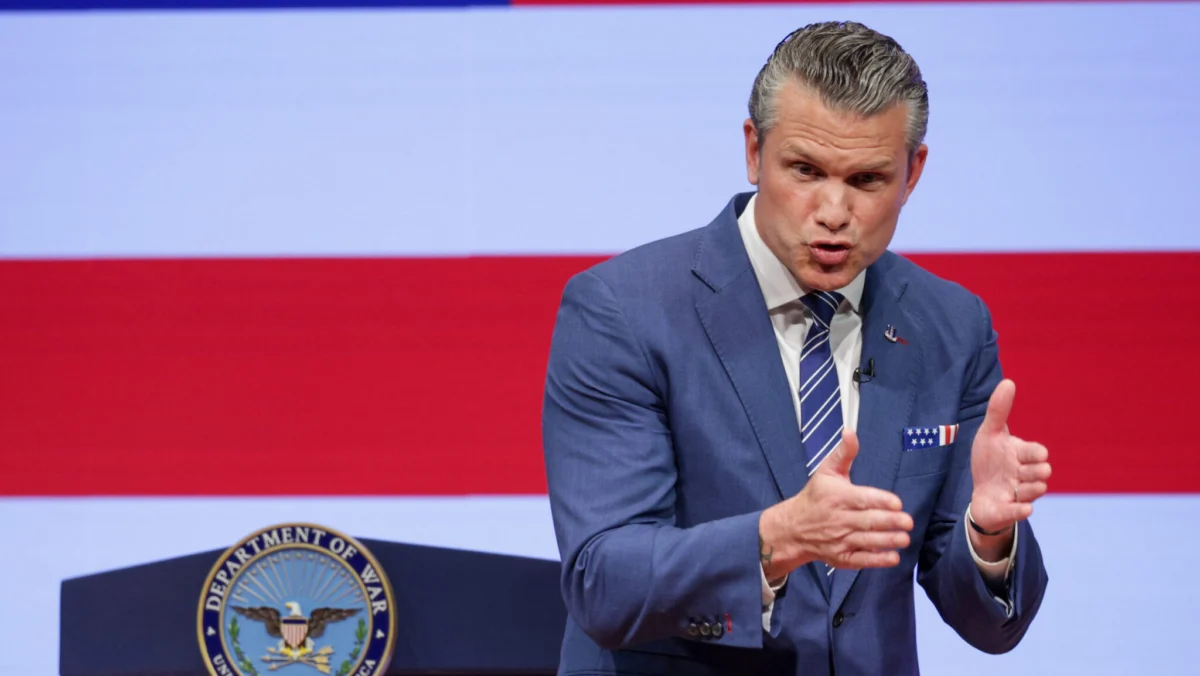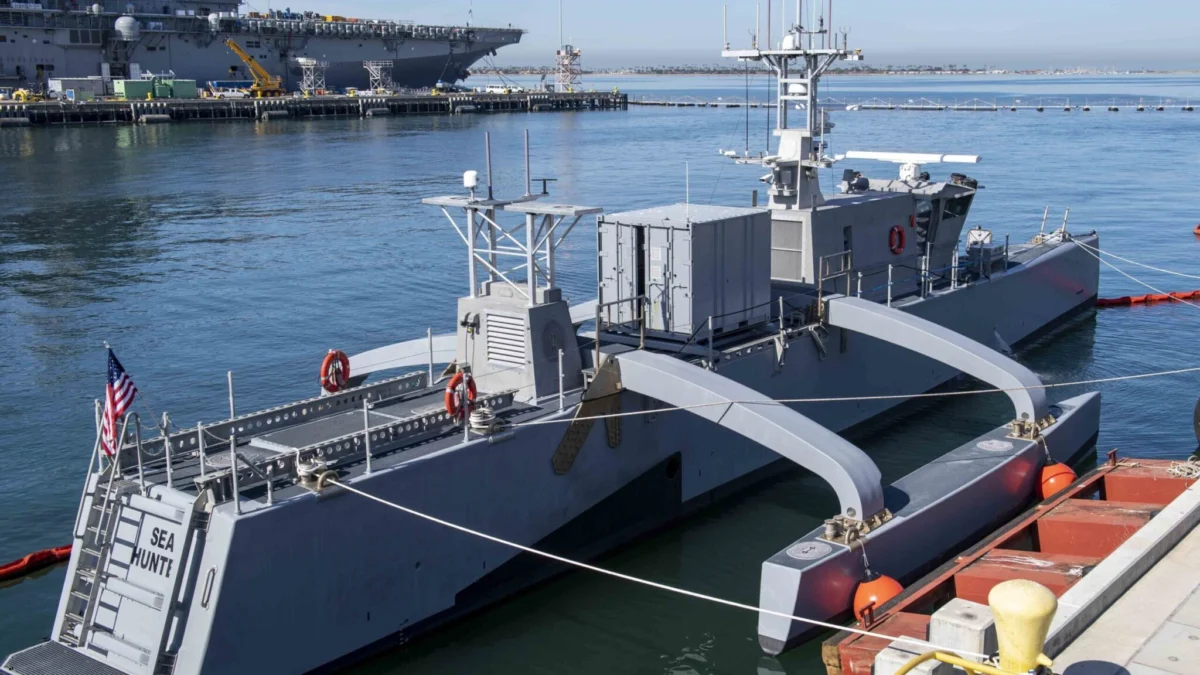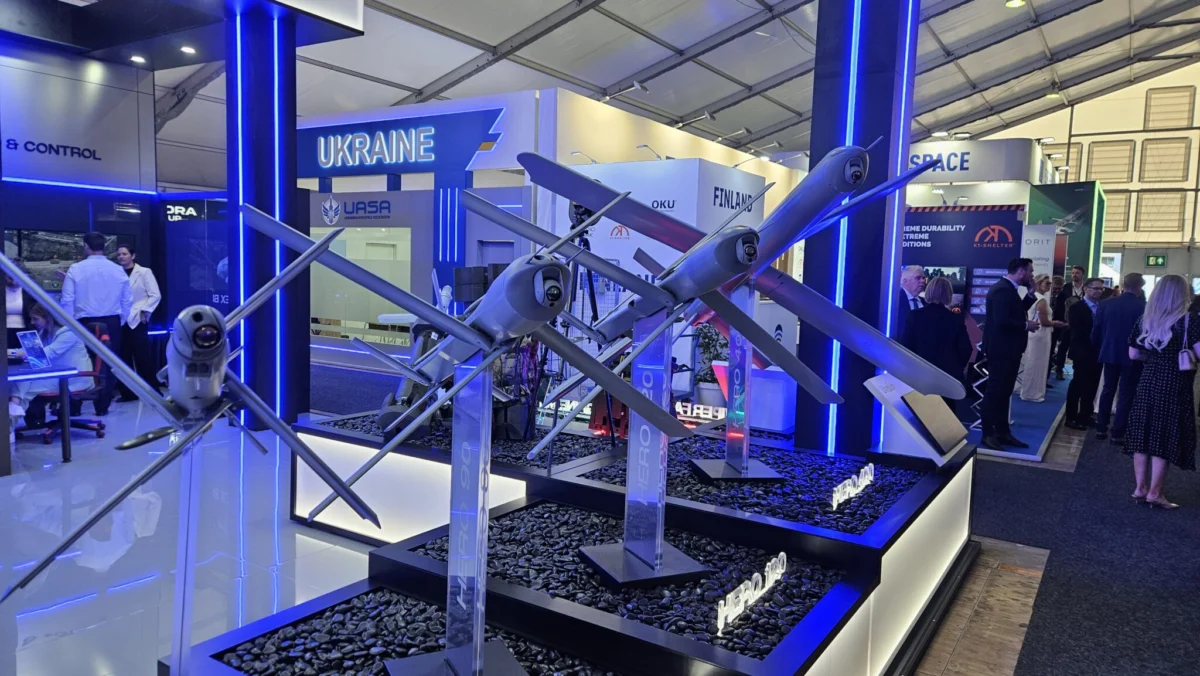
WASHINGTON — The future of the United States’ premier autonomous warfare initiative hangs in a precarious balance as the Pentagon’s top drone official sounds the alarm over critical funding shortfalls. Lt. Gen. Steven Marks, the three-star chief of the Defense Autonomous Working Group (DAWG), delivered a stark assessment this week at the National Defense Industrial Association’s (NDIA) Emerging Technologies Conference, warning that without significant legislative support, the momentum gained over the past year in drone development risks total collapse.
At the heart of the crisis is a $54.6 billion budget request for Fiscal Year 2027—a massive sum that the Trump administration has tied to complex legislative maneuvers, leaving the military’s most ambitious drone program fighting for its financial life.
The Core Conflict: A Budgetary Gamble
The Pentagon’s fiscal request for the DAWG initiative is not a straightforward appropriation. Of the $54.6 billion requested, a staggering $53.6 billion is tethered to the administration’s budget reconciliation process. This legislative vehicle is currently being used to bundle several top-tier national security priorities, including the "Golden Dome" missile defense system.
However, the political climate on Capitol Hill has grown increasingly hostile toward this reconciliation package. Should the effort fail—a scenario many political analysts and insiders now consider highly probable—the DAWG will be left with only $1 billion in its base budget. While that figure represents a fourfold increase over the $226 million allocated in FY26, General Marks insists it is a pittance compared to the expansive strategic vision initially presented to Congress.
"I don’t know if we’re going to get the full ask of $53.6 billion," Marks admitted during his address. "But my greatest concern is, if we don’t get something, then the momentum that we have created since DAWG has been stood up will be waning. It truly concerns me."
Chronology of a Strategic Pivot
The current landscape of U.S. drone development is the result of a multi-year, multi-administration evolution. Understanding the urgency requires looking at the trajectory of American autonomous capabilities:
- Late 2025: Following the success of the Biden-era "Replicator" initiative—which focused on mass-producing low-cost, attritable drones for potential conflict in the Pacific—the Trump administration sought to refine and accelerate these efforts.
- Early 2026: The Department of Defense formally stood up the Defense Autonomous Working Group (DAWG), absorbing existing Replicator efforts and expanding the scope to include collaborative autonomy and sophisticated platform integration.
- April 2026: Pentagon officials provided a public, albeit high-level, briefing on a $55 billion plan to "supercharge" drone development across all military branches.
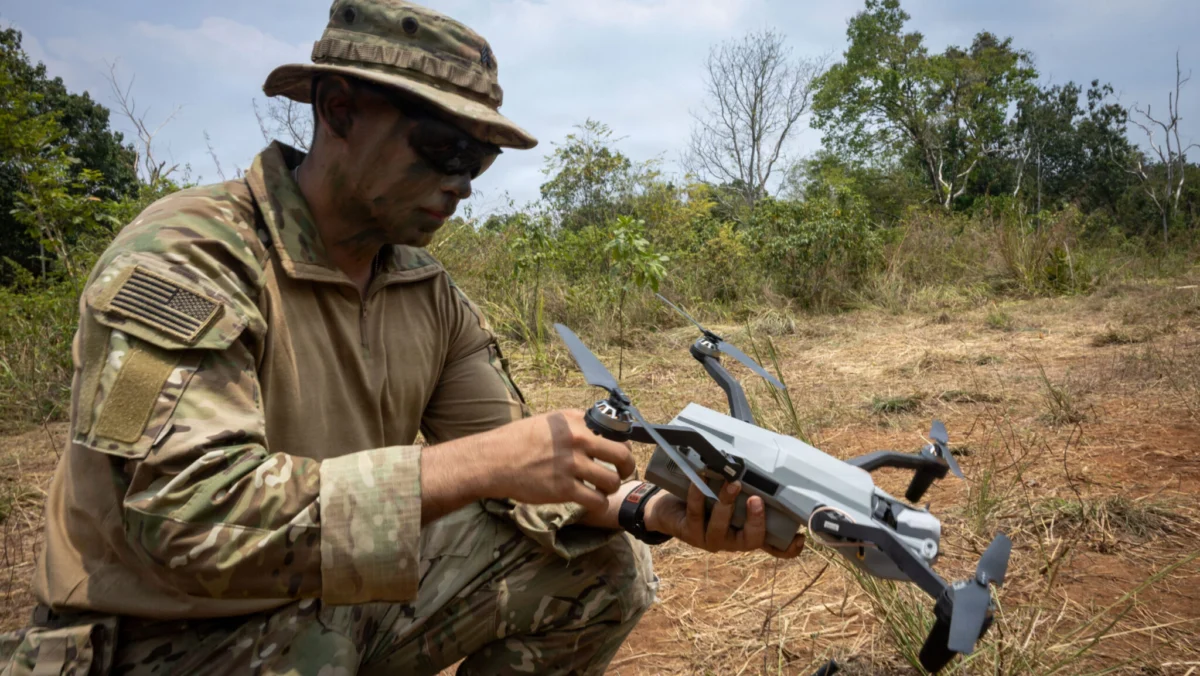
- September 2026: During the "Super Garuda Shield 26" exercises in Indonesia, the practical application of these systems was on full display. Soldiers were photographed testing advanced drone suites, signaling the transition from conceptual planning to field integration.
- Present Day: General Marks faces the reality that the ambition of the program has far outpaced the current legislative appetite for funding.
Supporting Data: The "Cost Imposition" Problem
General Marks’ frustration is not merely about raw dollar figures; it is rooted in a fundamental shift in modern warfare. The general highlighted the glaring disparity between the cost of U.S. exquisite weaponry and the low-cost, high-volume threats emerging from adversarial nations.
"The world has woken up," Marks noted. "They can’t keep up with our exquisite capability, and they know that. [But] they can take a $100,000 drone and conduct an attack against a $2 billion vessel. We are on the losing end of that cost imposition curve."
This "cost imposition" refers to the strategic disadvantage the U.S. faces when defending against cheap drones with expensive, precision-guided interceptors. To counter this, the DAWG was designed to flip the script—to develop, produce, and deploy thousands of "attritable" drones that force adversaries to expend their own precious, high-cost resources. Without the requested $54 billion, the scale necessary to achieve this parity becomes impossible.
The Standardization Challenge: Lessons from the Field
Beyond the headline-grabbing budget numbers, General Marks offered a candid look into the operational hurdles the military faces on the ground. During a recent site visit to Camp Clark, Alabama, home to the 20th Special Forces Group, the General observed a chaotic reality: a lack of commonality among current drone inventories.
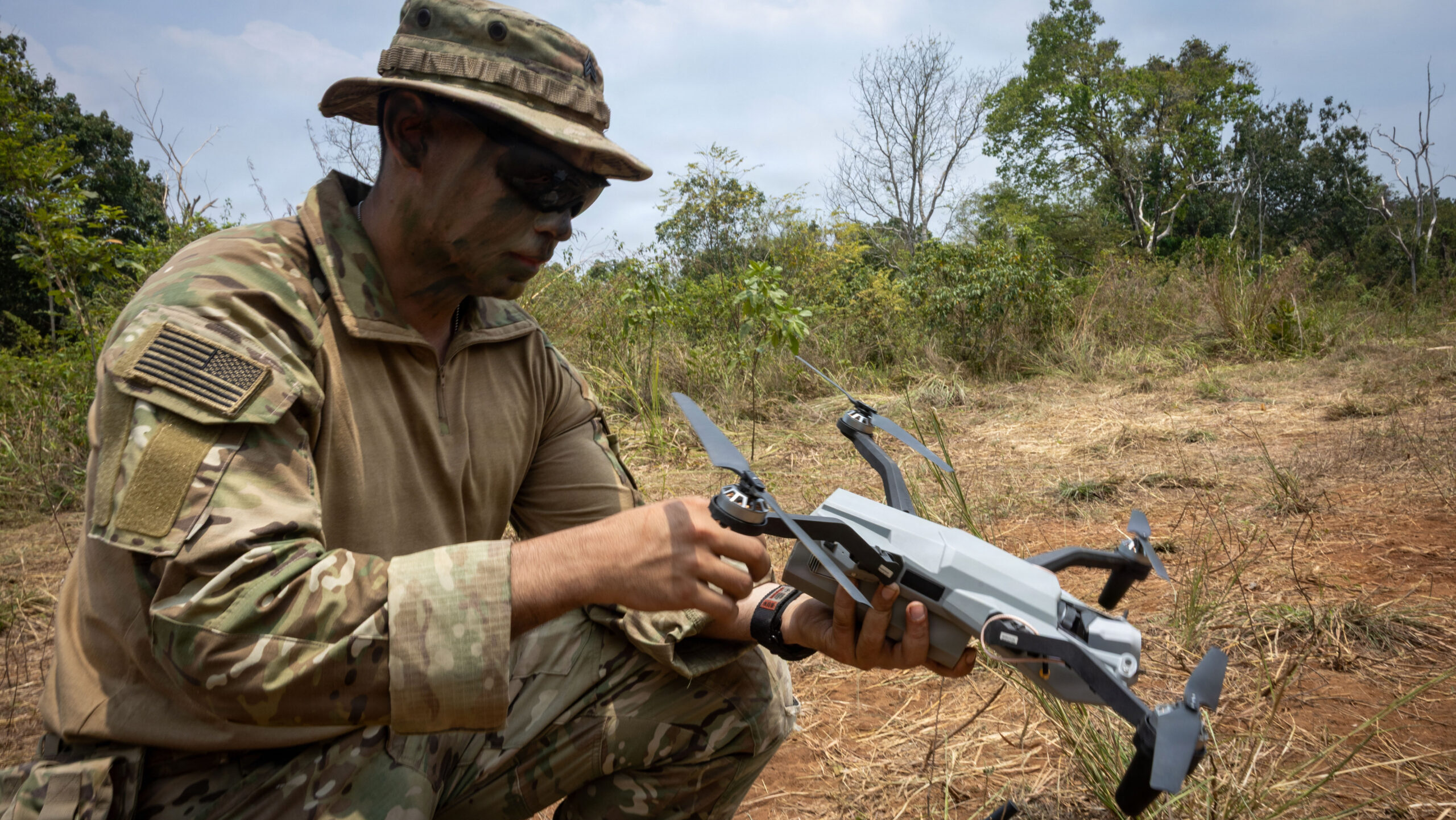
"I heard that we have six to eight systems that we’re operating," Marks explained. "We need to identify and pick one or two and standardize it. Standardize it across the entire formation, because each one of the systems requires a different skill set."
This lack of standardization is a hidden tax on readiness. When every unit uses a different controller, different software interface, and different training manual, the "friction" of war increases exponentially. The DAWG was tasked with solving this fragmentation by establishing universal control interfaces and common standards. However, as the General pointed out, such a massive integration effort is impossible if the funding to support training, acquisition, and technical overhaul is held hostage by congressional infighting.
Implications: A Vulnerable Future?
The implications of a failed funding bill extend far beyond the balance sheets of defense contractors. If the DAWG loses its funding, the U.S. risks a "capability gap" that adversaries like Russia—whose operations in Ukraine have fundamentally altered the doctrine of land warfare—and Iran—via its "Epic Fury" operations—are already exploiting.
1. Loss of Technological Momentum
The U.S. has made significant strides in the last 18 months in integrating AI-driven autonomy into drone swarms. A funding collapse could lead to a "brain drain" as engineers and researchers migrate to the private sector or as specialized programs are shuttered, leaving the U.S. to play catch-up for years to come.
2. Failure to Scale for the Pacific
The Pacific theater requires a massive volume of autonomous systems to overcome the logistical challenges of the "tyranny of distance." If the DAWG’s budget is cut to the bone, the vision of having thousands of drones ready for deployment in the Pacific becomes a pipe dream, leaving the U.S. military reliant on legacy systems that are increasingly vulnerable to modern jamming and electronic warfare.
3. The "Classified" Veil
When asked for specific details on the systems being developed, Marks maintained a strict silence. "Unfortunately, all of our systems are all classified, and so I will not be talking in detail about those." This lack of transparency, while standard in the defense industry, adds a layer of difficulty for lawmakers who are being asked to approve a multi-billion dollar budget for programs they cannot fully scrutinize.
Conclusion: The Path Ahead
As Congress returns to the legislative fray, the clock is ticking for General Marks and his team. The DAWG stands as a symbol of the Pentagon’s effort to modernize for an era of low-cost, high-impact autonomous combat. However, the disconnect between the administration’s requested funding and the political reality of the reconciliation process suggests that the Pentagon may be forced to scale back its ambitions significantly.
Whether the program receives the full $54 billion, a fraction of that amount, or is left to survive on the $1 billion base budget, the message from the Pentagon is clear: the era of "exquisite" warfare is being challenged by the era of "attritable" autonomy. If the U.S. fails to adapt its budget to this reality, it may find itself losing the next conflict not for lack of courage or technology, but for a failure to commit to the necessary scale of production.
With reporting contributed by Ashley Roque.