In the silent, dark expanse of the cosmos, gravity is the master architect. It pulls stars into clusters, spirals galaxies into elegant shapes, and, in its most violent moments, causes the very fabric of space and time to ripple like the surface of a disturbed pond. On November 23, 2023, the Laser Interferometer Gravitational-Wave Observatory (LIGO) recorded such a ripple—a fleeting, high-energy signature designated GW231123.
For months, this signal baffled the astrophysical community. The data suggested a binary black hole merger of such immense proportions—involving masses that defied standard models of stellar evolution—that it was quickly dubbed a "forbidden" merger. However, a groundbreaking study published on August 25 in The Astrophysical Journal Letters suggests that the universe may not be breaking the laws of physics after all. Instead, astronomers may have been the victims of a grand optical illusion orchestrated by the curvature of spacetime itself.
The Anomaly: A Collision That Shouldn’t Exist
To understand the confusion surrounding GW231123, one must first understand the "rules" of stellar life and death. When a massive star runs out of fuel, it collapses under its own gravity, forming a black hole. Current astrophysical models, rooted in our understanding of nuclear fusion and supernova mechanics, place strict upper limits on how massive these stellar-remnant black holes can be.
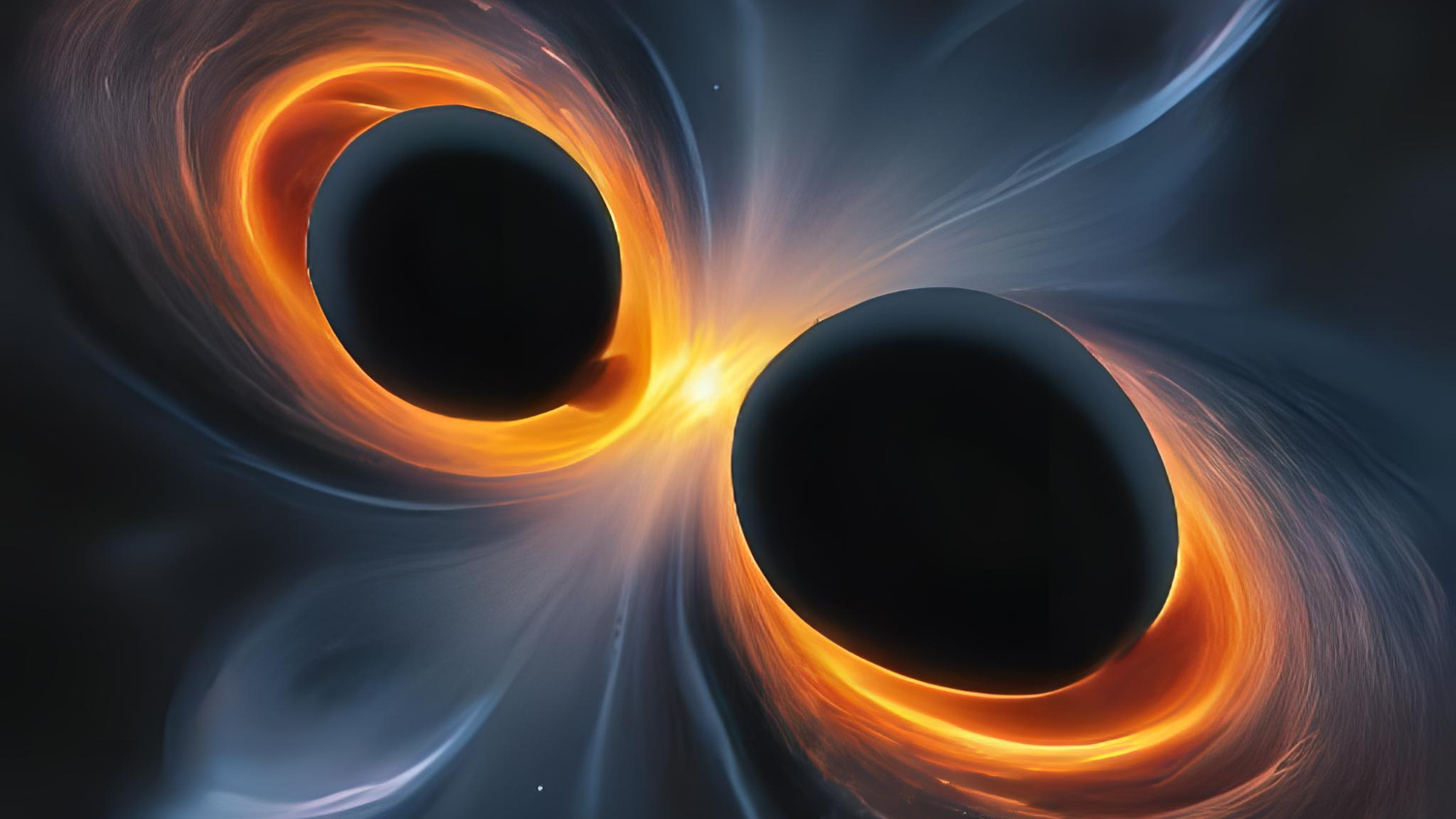
When LIGO detected the signal from GW231123, the inferred masses were staggering: a primary black hole of approximately 140 solar masses colliding with a secondary partner of 100 solar masses. This total system mass of 240 solar masses sits squarely in what researchers call the "pair-instability supernova gap"—a range where stars are theoretically obliterated completely by energetic explosions, leaving behind no black hole at all.
Furthermore, the signal suggested that these black holes were spinning at velocities that seemed physically implausible for objects formed through conventional stellar collapse. The scientific community was faced with a dilemma: either our fundamental understanding of how stars die and black holes form was deeply flawed, or something else was influencing the signal before it reached our detectors on Earth.
A Chronology of Discovery
The journey to resolving the GW231123 mystery began the moment the signal hit the LIGO detectors.
- November 23, 2023: LIGO registers the gravitational wave event GW231123. Initial automated processing highlights the event as an outlier due to its extraordinary mass.
- Late 2023 – Early 2024: Researchers perform detailed waveform analysis. The signal is confirmed to be consistent with a binary black hole merger, but the mass parameters remain stubbornly high, defying standard evolutionary tracks.
- Spring 2024: A research team led by experts at the Albert Einstein Institute (AEI) begins to hypothesize that the signal may not be a direct representation of the event. They shift their focus toward "gravitational lensing"—the potential that a massive object stood between the merger and Earth, magnifying the waves.
- August 25, 2024: The team publishes their findings in The Astrophysical Journal Letters, proposing that the "forbidden" masses are an illusion created by a gravitational lens.
The Physics of the Illusion: Gravitational Lensing
The key to unlocking this mystery lies in the legacy of Albert Einstein. In 1915, his Theory of General Relativity proposed that mass is not merely an object occupying space, but a force that warps the four-dimensional fabric of spacetime itself.
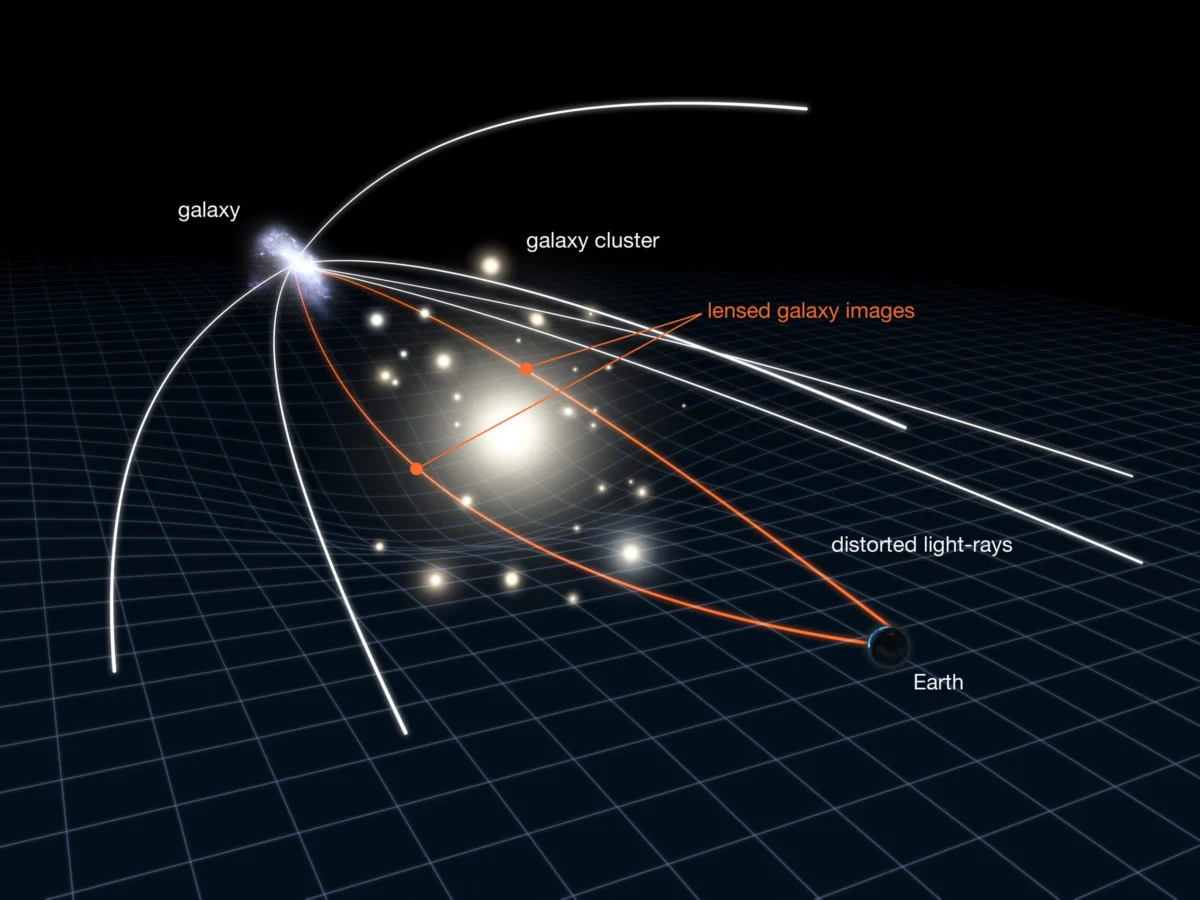
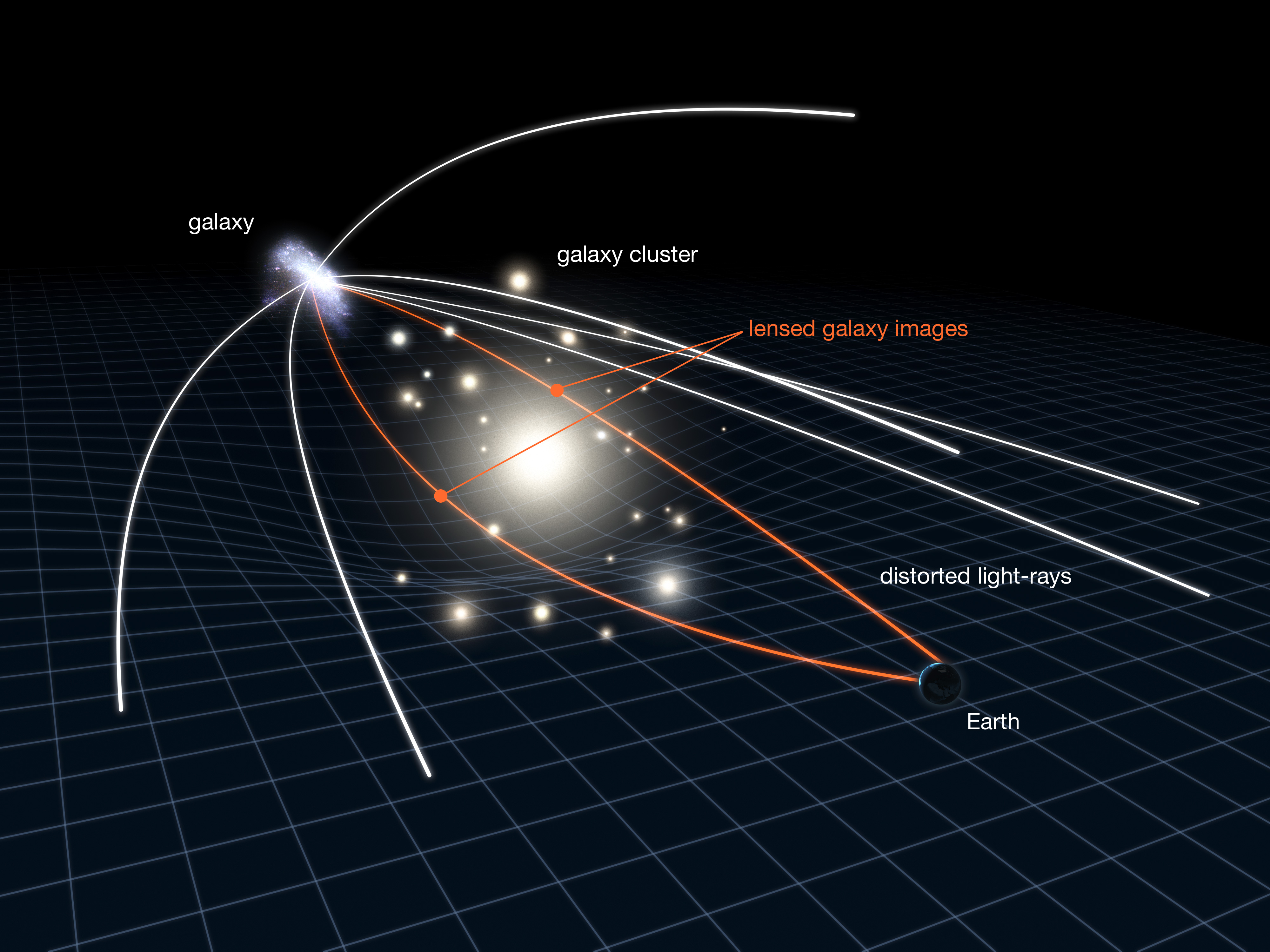
Gravitational lensing is a direct consequence of this warping. When light—or, as we have more recently discovered, gravitational waves—passes close to a massive foreground object, the path of that radiation is bent. If the alignment is precise, the foreground object acts as a cosmic magnifying glass. It can brighten, distort, or even split a single signal into multiple, distinct paths that reach the observer at different times.
While gravitational lensing has been used for decades to study faint, ancient galaxies, applying the concept to gravitational waves is a relatively new frontier.
"Like light, gravitational waves can also be deflected, magnified and split into multiple signals by massive objects," explained Miguel Zumalacárregui, a group leader in the Astrophysical and Cosmological Relativity Department at the Albert Einstein Institute (AEI). "For gravitational waves, diffraction and interference effects give us an additional way to identify and study lensed signals."
The Mathematical Correction: Reinterpreting the Data
To determine if lensing was indeed the culprit behind the "impossible" mass of GW231123, the research team developed a sophisticated mathematical model. They had to simulate how a compact object—or perhaps a dense, extended structure like a globular cluster—positioned between the merger and Earth would alter the signal received by LIGO.
The results were transformative. When the team factored in the magnifying effects of a hypothetical "lens" (an object or cluster with a mass between 190 and 850 solar masses), the observed parameters of the merger shifted dramatically. The math indicated that the true mass of the black hole system was likely closer to 140 solar masses—a much more "reasonable" figure that aligns with existing models of stellar evolution. Furthermore, the lensing model removed the requirement for the black holes to have had suspiciously high spin rates, effectively resolving the "forbidden" nature of the event.
The "Lens" Mystery: What is Out There?
While the team has provided a compelling explanation for the data, they admit that the identity of the lens remains a mystery. Identifying a compact, invisible object with the mass of 100 to 1,000 suns is a daunting task. Such objects are notoriously difficult to detect, as they do not emit light and interact only through gravity.
"The nature of the lens remains a major mystery in our analysis, as individual compact lenses with 100 to 1,000 solar masses should be exceedingly rare," Zumalacárregui noted. "Future work will need to establish whether such lenses can form, or whether an ensemble of lighter objects, including stars, can explain this event."
This leads to a secondary, perhaps equally fascinating, scientific question: If the lens is a massive, compact object, could it be a rare intermediate-mass black hole? Or is it a dense collection of stellar matter that has escaped our notice until now? The hunt for the lens itself may become the next major objective for gravitational-wave astronomers.
Implications for Modern Astronomy
The implications of this research extend far beyond a single, corrected data point. This study demonstrates the maturation of gravitational-wave astronomy as a precision science. We are no longer just "hearing" the collisions of the universe; we are learning to interpret the "distortion" in the messages we receive.
1. Validating Standard Models
By resolving the GW231123 anomaly through lensing rather than new physics, the study reinforces the validity of current stellar evolution models. It suggests that while the universe is vast and mysterious, it continues to operate within the established bounds of general relativity and nuclear physics.
2. A New Tool for Discovery
Gravitational lensing could become a primary tool for discovering objects that are otherwise invisible to electromagnetic telescopes. If we can identify more lensed gravitational wave signals, we can essentially use the entire universe as a giant telescope to "see" into regions of space that would otherwise be obscured or too distant to measure.
3. The Need for Enhanced Sensitivity
The research highlights a critical need for next-generation detectors. While LIGO, Virgo, and KAGRA have revolutionized our understanding of the cosmos, the ability to confirm lensing events requires higher sensitivity and more precise angular resolution. As these detectors are upgraded, the "noise" of the universe will become a map, guiding us toward previously unseen gravitational landscapes.
Conclusion: Looking to the Future
The "forbidden" merger of GW231123 serves as a poignant reminder of the complexity of our universe. What appeared to be a violation of cosmic law was, in reality, a beautiful demonstration of Einstein’s theory in action.
As the scientific community continues to analyze the ripple effects of such events, the work of researchers like Srashti Goyal and Miguel Zumalacárregui serves as a foundation for a new era of astrophysics. By understanding how the universe warps the signals we receive, we are not just correcting our data—we are expanding our ability to perceive the deep, interconnected architecture of reality. The search for the lens continues, and with it, the promise of discovering even more of the universe’s hidden, massive, and invisible inhabitants.