WASHINGTON — In a move signaling the rapid acceleration of the United States’ military presence in low Earth orbit (LEO), the Space Force’s Space Systems Command (SSC) has awarded two significant task orders to SpaceX. Valued at a combined $1.6 billion, these contracts fall under the expanded National Security Space Launch (NSSL) Phase 3 Lane 1 program, marking a critical milestone in the Department of the Air Force’s strategy to modernize its global sensing and targeting capabilities.
These awards represent the first major implementation of the program since the Department of the Air Force announced a staggering $11.4 billion increase to the NSSL contract ceiling in July 2026. This massive injection of capital raises the total program value to $17 billion, reflecting a fundamental shift in how the U.S. military approaches the logistics of space-based operations.
The Evolution of NSSL Phase 3 Lane 1
The NSSL Phase 3 Lane 1 program was designed to move away from the rigid, monolithic launch structures of the past, favoring a more agile, commercial-style procurement model. Lane 1 is specifically engineered to handle payloads that require transport to standard, easily accessible orbits, or missions that involve smaller, modular payloads.
By utilizing an indefinite delivery/indefinite quantity (IDIQ) contract vehicle, the Space Force creates a competitive marketplace. Pre-qualified vendors bid against one another for specific task orders, driving down costs while increasing the frequency of flight opportunities. The recent decision to ramp up planned launches from 60 to 170 between 2025 and 2034 highlights the Space Force’s transition toward a "proliferated" satellite architecture—a strategy designed to ensure resilience in the face of increasingly sophisticated anti-satellite threats.
Chronology of a Strategic Pivot
The current rapid pace of development is not an isolated event but the result of a multi-year effort to modernize the Department of the Air Force’s "eyes in the sky."
- May 2026: The Space Force awarded a $4.16 billion task order to SpaceX to "accelerate" the development of the Space-Based Airborne Moving Target Indicator (SB-AMTI) program. This signaled the military’s intent to move airborne surveillance capabilities into the orbital domain.
- July 17, 2026: The Department of the Air Force announced an $11.4 billion increase to the NSSL ceiling, effectively tripling the capacity of the Phase 3 Lane 1 program.
- September 2026: SpaceX, having already established a dominant role in the NSSL, was selected for the two new task orders currently under discussion.
- 2027 (Projected): The two newly awarded launches are slated to take place, delivering high-tech payloads designed to integrate with the Space Force’s sensing and targeting portfolio.
Supporting Data: Scaling for Resilience
The decision to procure 170 launches over the next decade is driven by the necessity of replacing aging assets with a larger, more distributed network of satellites. Historically, the U.S. relied on a small number of large, high-value, and vulnerable satellites. Today, the strategic doctrine has pivoted toward "disaggregated" systems.
The SB-AMTI program serves as the cornerstone of this shift. As the Air Force phases out its legacy E-3 Sentry Airborne Warning and Control System (AWACS) aircraft, it is looking to the E-7 Wedgetail to pick up the slack. However, in an era of anti-access/area-denial (A2/AD) environments, even the E-7 is vulnerable. By placing Moving Target Indicator (MTI) sensors into orbit, the Space Force can provide a persistent, global surveillance capability that cannot be easily grounded or shot down by conventional surface-to-air missile systems.
The $1.6 billion contract covers the launch of an undisclosed number of satellites for the Space Based Sensing and Targeting (SBST) portfolio. While SpaceX has not specified the exact manifest, the Falcon 9 vehicle’s ability to loft dozens of small-to-medium satellites into LEO in a single flight makes it the ideal workhorse for this type of mission.
Official Responses and Transparency Challenges
Despite the magnitude of the awards, the Space Force has remained characteristically guarded regarding the specifics of the missions. When queried by Breaking Defense regarding the number of satellites involved or the specific capabilities of the payloads, Space Systems Command declined to provide granular details.
This lack of transparency is a point of contention among defense analysts. While the government cites operational security—particularly given the sensitive nature of space-based targeting—the sheer scale of the expenditure has led some to call for greater oversight. The SB-AMTI program, for example, is being developed under an Other Transaction Authority (OTA) contract, which offers the Pentagon more flexibility but often bypasses the standard, more transparent public procurement review processes.
"The Space Force is in a race against time," says Dr. Elena Vance, a senior fellow at the Center for Aerospace Security. "They are trying to normalize the idea of rapid, repeated launches. The secrecy surrounding these specific task orders is a reflection of the fact that these aren’t just weather satellites; these are the future of how the U.S. will fight and win in a contested electromagnetic spectrum."
The Strategic Implications: A New Orbital Battlefield
The integration of SB-AMTI into the Space Force architecture carries profound implications for global military operations.
1. Countering A2/AD
Modern adversaries, specifically China and Russia, have invested heavily in A2/AD systems designed to push U.S. naval and air forces back from contested regions. By providing high-fidelity tracking of moving targets from space, the U.S. can maintain situational awareness without risking crewed aircraft in the initial stages of a conflict.
2. Reducing Reliance on Crewed Platforms
The move to space-based sensing is a direct response to the vulnerability of legacy platforms. The E-3 AWACS and even the E-7 Wedgetail require air refueling, personnel, and airbase support. Satellites, by contrast, are "always on." They provide global coverage without the logistical footprint of a sprawling air wing.
3. The Commercial-Military Synthesis
The success of the NSSL program marks a permanent shift in the relationship between the Pentagon and the commercial space industry. SpaceX, in particular, has evolved from a launch provider into a critical defense partner. This "commercialization of defense" allows the military to leverage the rapid innovation cycles of the private sector, but it also creates a dependency that requires careful management by the Department of Defense.
4. Competitive Procurement
The existence of the nine-firm pool competing for OTA contracts ensures that the Space Force isn’t putting all its eggs in one basket. While SpaceX currently leads the pack, the competition is expected to intensify as other providers demonstrate the capability to reach orbit reliably and cheaply.
Conclusion: Looking Toward 2034
The $1.6 billion award is more than just a purchase order; it is a down payment on a new way of conducting warfare. As the U.S. moves toward the 2034 goal of 170 launches, the orbital environment will become increasingly crowded and capable. The Space Force’s ability to master this domain—not just through hardware, but through the ability to launch, replace, and update that hardware on demand—will determine the future of American air and space superiority.
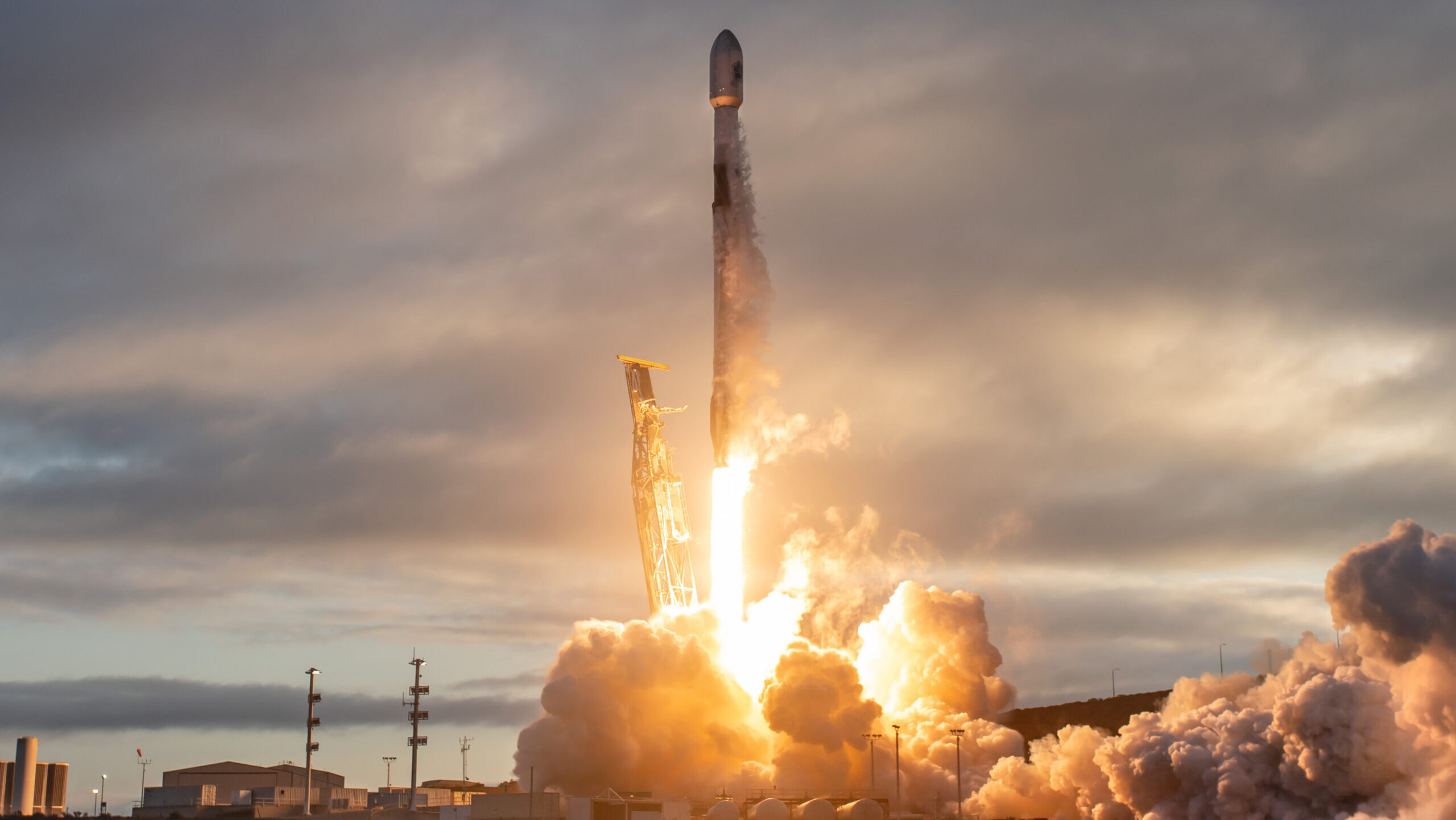
For now, the world watches the Vandenberg Space Force Base launch pads, where the frequent roar of Falcon 9 boosters has become the heartbeat of a new, orbital-centric military strategy. The question remains whether the Pentagon can maintain the pace of innovation required to stay ahead of adversaries who are watching the same sky, with their own ambitious designs for the final frontier.