Artificial intelligence has officially moved past its "experimental" phase. In the years since the generative AI explosion, the technology has fundamentally rewritten the rules of the startup ecosystem. It has overhauled product development lifecycles, shattered traditional data security paradigms, and redefined what it means to achieve rapid, sustainable scale.
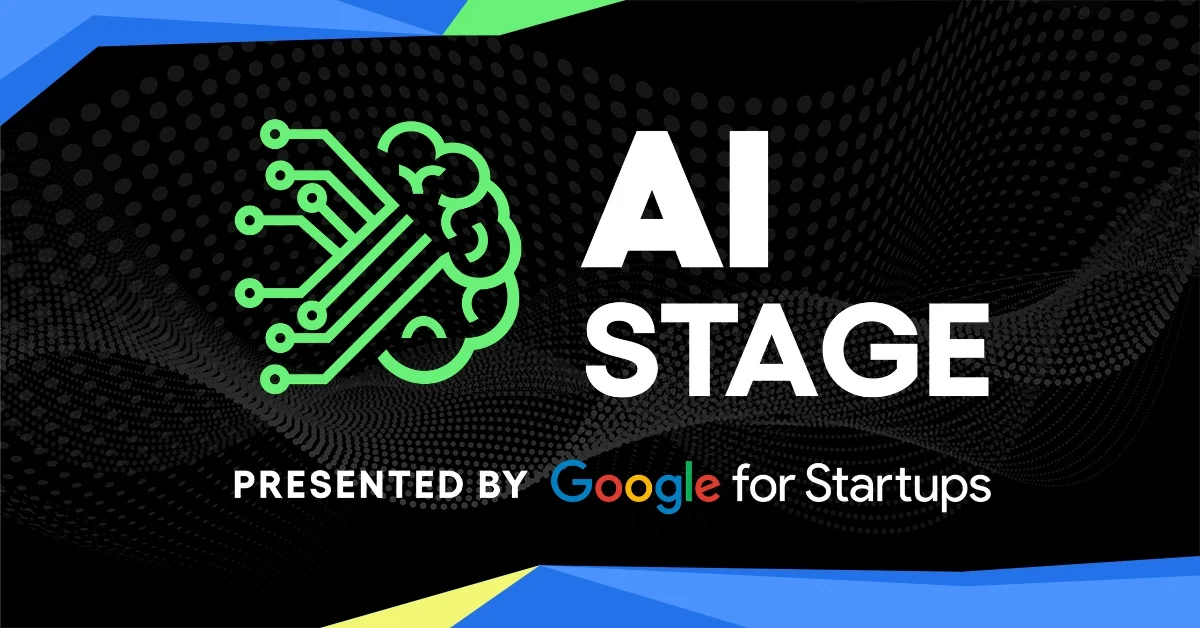
As we approach TechCrunch Disrupt 2026, taking place from October 13–15 at the Moscone Center in San Francisco, the industry finds itself at a critical inflection point. This year’s AI Stage, presented by Google for Startups, is not merely a showcase of new models; it is a clinical dissection of the business models, security vulnerabilities, and labor shifts that define the current era of AI-native commerce.
The State of the Industry: A Shift Toward Pragmatism
The current landscape of 2026 is markedly different from the wild west of 2023. Founders are no longer chasing the novelty of a chatbot; they are grappling with the structural challenges of commoditization, the complexities of enterprise-grade security, and the necessity of building sustainable Go-To-Market (GTM) strategies that don’t rely on brute-force venture capital spending.
The AI Stage at Disrupt 2026 is designed to address these "real-world" frictions. As the industry pivots from growth at all costs to efficiency and intelligence, the questions have become more granular: How do you price an AI product when the underlying model is essentially a utility? Why must we rethink infrastructure security from the bottom up? And, perhaps most importantly, what are the new job functions that will define the tech workforce for the next decade?
Chronology of the AI Transformation
To understand the urgency of this year’s summit, one must look at the rapid maturation cycle of the last 36 months:
- 2023–2024 (The Era of Discovery): This period was defined by the democratization of large language models (LLMs). Startups focused on "wrapper" applications, testing the limits of prompt engineering and UI-based AI interaction.
- 2025 (The Infrastructure Consolidation): As models became more powerful, the focus shifted to compute efficiency, vector databases, and the beginning of the "Agentic" revolution, where AI began taking autonomous actions rather than just generating text.
- 2026 (The Operationalization Phase): We are now in the age of integration. AI is embedded into core enterprise systems. Security, governance, and long-term business model viability have replaced the initial "wow factor."
The Enterprise Isn’t Broken: Addressing Security and Governance
One of the most pressing sessions on the AI Stage agenda features Arsalan Tavakoli, Co-founder and SVP of Field Engineering at Databricks. The session, titled "The Enterprise Isn’t Broken. Your Assumptions About It Are," tackles the central tension between rapid innovation and corporate risk.
Traditional security frameworks—designed for static databases and human-led software interfaces—are proving woefully inadequate for systems where AI models make autonomous, high-speed decisions. When an AI agent has the power to query a database, initiate a transaction, or move sensitive data across silos, the "human-in-the-loop" model often creates a bottleneck that slows down the very efficiency AI is meant to provide.
Tavakoli is expected to discuss the shift toward AI-native observability and governance. The core takeaway for attendees is clear: the divide in 2026 is not between companies that use AI and those that don’t, but between those that have architected their security to trust autonomous deployments and those that remain stuck in legacy frameworks.
The Visual Revolution: From Generation to Real-Time Intelligence
Beyond text, the "Video Intelligence Race" has emerged as a front-runner for the most disruptive sector in AI. Dean Leitersdorf (CEO, Decart) and Amit Jain (CEO, Luma AI) will headline a discussion on how visual AI has transcended the viral demo stage to enter the realm of physical reasoning.
For years, video AI was limited to frame-by-frame generation that lacked temporal consistency. In 2026, we are witnessing real-time inference—where AI processes visual input and makes decisions based on the physics and logic of the environment. This is a leap from "generative" to "reasoning" AI. This session will explore the implications for industries ranging from autonomous robotics and logistics to creative production, where the barrier between a prompt and a fully realized, high-fidelity visual experience is vanishing.
The Rise of the GTM Engineer
Perhaps the most significant workforce shift of the last two years is the emergence of the GTM (Go-To-Market) Engineer. Two years ago, this role did not exist as a formal discipline. Today, it is arguably the most critical hire for any AI-native startup.
Kareem Amin, Co-founder and CEO of Clay, will deep-dive into how this role is reshaping the growth engine of tech companies. The GTM Engineer sits at the intersection of sales operations, data engineering, and product strategy. They are responsible for building the automated workflows that replace traditional lead generation and SDR (Sales Development Representative) functions.
The economic implications are profound: independent practitioners are now using AI-native GTM stacks to build million-dollar businesses with minimal overhead. For startups, this means the cost of customer acquisition (CAC) is being fundamentally recalculated, moving away from human-heavy sales teams toward automated, data-driven pipelines.
Supporting Data and Economic Realities
The push toward these topics is supported by the changing economic reality of the startup ecosystem.
- Commoditization: With major cloud providers offering near-zero-cost inference for standard models, startups can no longer charge a premium solely for "access" to AI. The value has moved to the application layer and the proprietary data used to fine-tune those models.
- Security Spend: According to recent market analysis, enterprise spending on AI-specific cybersecurity is projected to triple by 2027, as C-suite executives prioritize data leakage prevention and AI-model poisoning defenses.
- Job Market Flux: Data from 2026 indicates that roles involving "AI Orchestration" and "GTM Engineering" have seen a 400% increase in demand compared to traditional marketing roles.
Official Perspectives: Why Now?
TechCrunch Disrupt remains the premier venue for these conversations because it brings together the three pillars of the ecosystem: founders, investors, and enterprise leaders. By hosting these sessions, the goal is to provide a roadmap for the "next wave."
As noted by the event organizers, the goal is to help founders survive the "valley of death" between the hype of the early AI bubble and the reality of long-term sustainable growth. Whether it is closing security gaps or perfecting the GTM playbook, the AI Stage is designed to provide actionable intelligence rather than speculative theory.
Implications for the Future
The implications of the discussions at Disrupt 2026 are far-reaching. We are likely to see:
- A massive shift in enterprise architecture: The "black box" model of AI will be replaced by highly observable, audited, and modular AI agents.
- A new standard for SaaS pricing: Expect a move away from "per-seat" pricing toward "per-task" or "per-outcome" pricing as AI agents begin to perform the work previously done by humans.
- The professionalization of the "Builder" class: With tools like those discussed by Amin and Tavakoli, the era of the solo-founder-led unicorn is no longer a pipe dream; it is becoming a standard business outcome.
Join the Conversation
As the event approaches, the opportunity to save $300 on ticket pricing is closing. For founders, VCs, and tech leaders, attending TechCrunch Disrupt 2026 is about more than just networking—it is about getting ahead of the curve in a year where AI has transitioned from a buzzword to a balance-sheet necessity.
With over 10,000 attendees expected, including participants in the Startup Battlefield and access to the expansive exhibition floor, this is the environment where the technical, financial, and cultural standards of the next five years will be set.
Register today to ensure you are part of the conversation that defines the next generation of the internet. The AI revolution isn’t coming; it’s here, and it is ready to be audited, scaled, and perfected.