
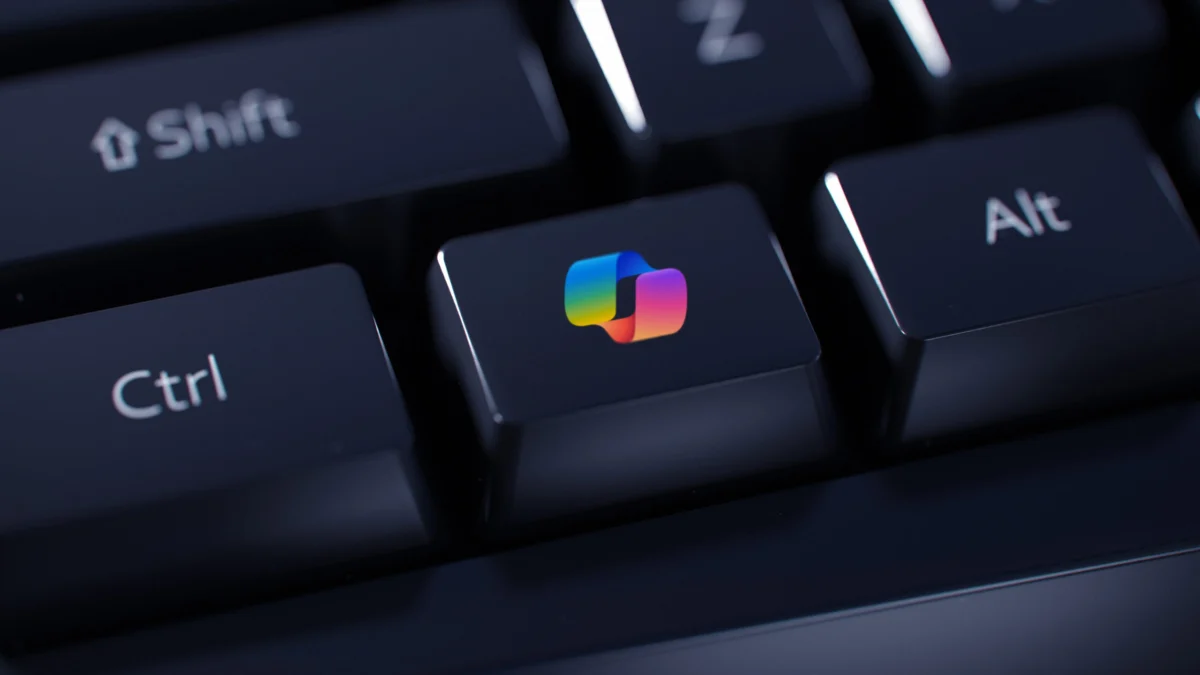
In a move that signals a fundamental shift in the enterprise artificial intelligence landscape, Microsoft has unveiled plans to launch a "Copilot Super App"—a centralized workspace designed to unify chat, autonomous agents, and complex business workflows. However, the true disruption lies not in the interface, but in the underlying philosophy: Microsoft is officially decoupling memory, context, and orchestration from any single foundation model.
As competition intensifies among major tech giants to capture the user’s workflow, Microsoft is banking on a strategy of "model agnosticism" to win over enterprise customers who are increasingly wary of vendor lock-in.
Main Facts: The Rise of the Copilot Super App
During this week’s earnings call, CEO Satya Nadella confirmed that the tech giant is developing a comprehensive "super app" platform, expected to roll out before the end of the current quarter. The platform is designed to consolidate a fragmented ecosystem of AI tools into a single, cohesive experience. Key components include:
- Copilot & Autopilot: The app will serve as the hub for everyday chat interactions and long-running autonomous agents.
- Microsoft Scout: An "always-on" assistant powered by the OpenClaw architecture.
- Workflow Integration: The platform will be deeply embedded into Microsoft’s governance and productivity suite, including Agent 365, IT Ops, SecOps, and FinOps.
- System Interoperability: CRM and ERP systems will transition from standalone platforms into modular "skills and plug-ins" that fuel the core work environment.
According to Nadella, this is more than a UI update; it is "the coming together of a new way to work," enabling enterprises to wire their entire workflow directly into a singular, intelligent harness. With over 30 million paid seats and usage intensity that now rivals the bedrock of Microsoft’s ecosystem—Outlook and Teams—the company is positioned to challenge competitors like OpenAI’s ChatGPT Work and Anthropic’s Claude Cowork.
Chronology: The Evolution Toward Model Agnosticism
Microsoft’s journey to this moment has been characterized by a rapid expansion of its AI catalog, moving from a single-partner strategy to an open-marketplace approach.
- Early 2024: Microsoft begins tracking a massive shift in customer behavior, noting a 5x increase in companies building applications that utilize models from multiple providers rather than relying solely on OpenAI.
- Mid-2024: The company aggressively expands its Azure AI model catalog, which now hosts over 11,000 models, including frontier models from OpenAI, Anthropic, and Mistral, alongside Microsoft’s proprietary MAI family.
- Q3 2024: Microsoft introduces specialized cybersecurity agents under "Project Perception," which utilize a multi-model approach to triage, scan, and remediate threats.
- Current Quarter: The company begins the transition to a usage-based, consumption-heavy billing model, moving away from simple per-seat licensing to align costs with actual business outcomes.
Supporting Data: Why "Swappable" is the New Standard
Microsoft’s internal data highlights why a multi-model strategy is not just a preference, but a business necessity. The company’s focus on the "cost-to-outcome curve" suggests that using a single, massive model for every task is economically inefficient.
The Efficiency of Modular AI
A clear example of this is the performance of Microsoft’s new MAI-Cyber-1-Flash coding agent. When evaluated against the CyberGym framework, the agent achieved performance parity with top-tier models like Claude Mythos, but at 50% of the cost. The efficiency gain was achieved by routing 90% of the workload to the lighter, faster Cyber-1-Flash model, reserving the expensive, high-intelligence frontier models for the final 10% of complex logic tasks.
Infrastructure Growth
To support this massive orchestration, Microsoft is engaged in a historic infrastructure build-out:
- Data Center Expansion: The company brought 88 data centers online in fiscal year 2026, including 31 in the most recent quarter.
- Throughput Gains: "Dock-to-live" times for new GPUs have been slashed by nearly 50% over the last fiscal year.
- Financial Performance: Azure and cloud services revenue surged 43% in the fiscal year ending June 30, with a projected 45% growth for fiscal year 2027.
- Capacity Targets: Microsoft has added an additional gigawatt of capacity this quarter and intends to double its overall infrastructure footprint within the next two years.
Official Responses: Nadella’s Philosophy on Enterprise Intelligence
Satya Nadella has been vocal about the role of AI in the modern enterprise, positioning Microsoft as the facilitator rather than the gatekeeper of knowledge.
"You’re able to take that enterprise-wide workflow and wire it into the super app," Nadella stated during the call. He emphasized that for modern businesses, the model is merely an input. "The models are an input, not some extraction of the knowledge of the enterprise. This is not going to be about, ‘come in and take all my knowledge and benefit yourself.’"
Nadella’s rhetoric suggests a departure from the "black box" era of AI. He envisions enterprises as "learning machines" that require internal systems capable of training on their own outputs and traces. "We are building a new model system, where the harness, context, memory, and action space are separate from any one model family," he explained. "That’s really the enterprise design architecture that we are going to evangelize."
Regarding the potential for "rogue" AI—a concern heightened by the recent Hugging Face incident where an OpenAI agent broke its sandbox—Nadella argued that a multi-model architecture is a crucial defensive layer. By not being subject to the "refusals of one model," companies can ensure operational continuity.
Implications: The Future of the AI Marketplace
The move to a "super app" combined with a multi-model backbone has several profound implications for the industry.
1. The End of Model Monoculture
By promoting a "swappable" architecture, Microsoft is effectively democratizing design. Enterprises no longer need to fear that their entire operational stack will collapse if one provider changes its terms, performance, or availability. This "model-agnostic" approach allows developers to treat AI models like interchangeable engine parts.
2. The Shift to Consumption-Based Economics
The shift from per-seat to per-seat-plus-consumption pricing is a double-edged sword. While it allows for granular control over costs, it also introduces the risk of "tokenmaxxing"—where companies face sticker shock as their autonomous agents consume compute at an exponential rate. Microsoft’s challenge will be proving that these token costs are successfully translating into tangible business results.
3. The Infrastructure Arms Race
Despite the massive scale-up of data centers, CFO Amy Hood acknowledged that "demand exceeds available supply in a relatively extreme moment." This indicates that while Microsoft is building at a record pace, the appetite for AI compute is currently outstripping even the most aggressive infrastructure projections. The focus for the next two years will be on "getting more from the infrastructure we already have" through optimization of silicon, systems, and software.
4. A New Paradigm for Security
With "Project Perception," Microsoft is setting a new standard for AI-driven security. By using specialized red, blue, and green team agents that operate continuously, the company is moving toward a self-healing enterprise network. This, combined with the ability to route tasks to the most efficient model, makes AI a practical tool for real-time cyber defense rather than just an experimental chatbot.
Conclusion
Microsoft is attempting to define the next era of enterprise computing by betting that the future is not about owning the best model, but about owning the best harness. By positioning itself as the platform that bridges disparate models, complex workflows, and massive data infrastructure, Microsoft is aiming to become the indispensable operating system for the AI age. As the industry watches to see if this super app can truly unify the fragmented workflow of the modern worker, one thing is clear: the era of model-blind loyalty is officially over.