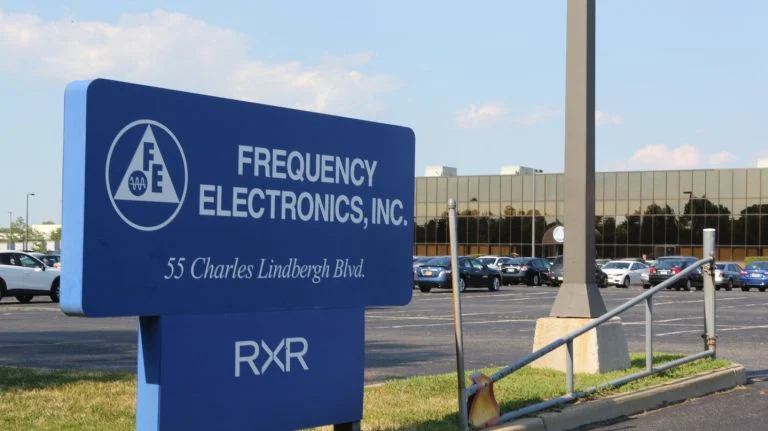
By Industry Desk
In a major development for the aerospace and defense supply chain, Frequency Electronics, Inc. (FEI) has announced a significant infusion of capital through $18 million in new contract wins. The awards, which include a landmark $11 million agreement with an undisclosed aerospace prime contractor, underscore the escalating demand for precision timing and frequency-generation technology as the global satellite landscape shifts toward proliferated architectures.
This latest financial milestone arrives at a pivotal moment for Frequency Electronics, which has been aggressively positioning itself as a critical vendor for the next generation of Low Earth Orbit (LEO) and proliferated satellite constellations.
Main Facts: A Strategic Win for Precision Engineering
Frequency Electronics has officially confirmed that the $18 million in new business is split between two primary streams: a new partnership with a major prime contractor and a series of follow-on production orders.
The centerpiece of this announcement is the $11 million contract to supply on-board precision frequency-generation systems for a proliferated satellite program. While the identity of the prime contractor remains under wraps due to the sensitive nature of aerospace procurement, the significance of the partnership cannot be overstated. It marks Frequency Electronics’ first engagement with this specific entity, effectively expanding the company’s footprint within the tier-one aerospace ecosystem.
In addition to the new project, the company secured $7 million in follow-on production contracts. These orders encompass both space-grade oscillators—the "heartbeat" of satellite communications—and non-space-related technology contracts for the U.S. government. These production orders are particularly lucrative for FEI, as they represent the maturation of previous R&D investments, allowing for higher profit margins compared to initial developmental contracts.
Chronology: The Road to a Record Backlog
The trajectory leading to this $18 million announcement has been carefully managed by FEI leadership over the past eighteen months.
Fiscal Preparation
Throughout the last fiscal year, Frequency Electronics undertook a proactive strategy of "front-loading" its operational capacity. Recognizing that the industry was moving toward large-scale satellite constellations, the company invested heavily in human capital, specifically recruiting specialized engineering talent. This hiring spree was not reactive; it was a calculated maneuver to ensure that when the expected surge in production requirements arrived, FEI would have the bandwidth to deliver.
The Recent Wins
- Early 2026: The company began signaling to investors that its order pipeline was tightening and that capacity was being reserved for large-scale production runs.
- Mid-2026 (The Current Announcement): The culmination of these efforts resulted in the $18 million in total contract value, representing the second "significant" win for proliferated satellite programs this year.
- The Backlog Milestone: This announcement follows a record-setting period where FEI reported a funded backlog of $111 million. This figure represents a nearly 60% year-over-year increase, reflecting the rapid transition of the company from a niche supplier to a vital component provider for national security and commercial satellite networks.
Supporting Data: The Economics of Proliferation
To understand the scale of these wins, one must look at the macro-shift in satellite technology. "Proliferated satellite programs" refers to the movement away from large, exquisite, and expensive satellites toward constellations comprising hundreds or thousands of smaller, cheaper, and more resilient satellites.
Margin Optimization
Frequency Electronics’ business model relies on a cycle of engineering innovation followed by high-margin production. According to the company’s internal data, the follow-on production awards are highly desirable because the "heavy lifting"—the engineering and development costs—has already been amortized. As the company transitions from the design phase to the manufacturing phase for these new contracts, they expect to see an upward trend in corporate gross margins.
Workforce and Production Scalability
The $111 million backlog serves as a quantitative validation of the company’s "invest-to-grow" strategy. By hiring engineering talent in advance, FEI has effectively mitigated the risk of production bottlenecks. This proactive scaling is vital, as satellite primes require vendors who can guarantee delivery timelines that align with the rapid deployment schedules of proliferated LEO constellations.
Official Responses: Insights from the C-Suite
Tom McClelland, President and CEO of Frequency Electronics, has framed these developments as the dawn of a new era for the firm. In a recent statement to investors, McClelland emphasized the strategic importance of the new prime contractor partnership.
"This is our first contract with this prime contractor," McClelland noted. "It serves as a testament to the reliability and technical superiority of our frequency-generation systems. As the industry moves toward these large-scale proliferated programs, we expect significantly more wins in this area going forward."
McClelland also addressed the financial health of the company, focusing on the efficiency of their production cycles. "The follow-on awards we won are also very attractive for FEI, as they tend to come at higher than average corporate gross margins, as we leverage previous engineering and development costs."
This commentary suggests that the company is moving past the phase of speculative growth and into a phase of consistent, scalable revenue generation.
Implications: The Future of Satellite Timing
The implications of Frequency Electronics’ recent wins extend far beyond their quarterly earnings. They serve as a barometer for the health of the broader satellite supply chain.
The Critical Role of Timing
In the world of satellite communications, precision is everything. Whether it is for GPS-denied navigation, secure data transmission, or high-speed internet connectivity, every satellite in a constellation requires an ultra-stable clock or oscillator to synchronize its activities with the rest of the network. As constellations grow, the demand for these precision components is scaling exponentially. Frequency Electronics’ success suggests that they have secured a "moat" around this critical technology.
Strengthening U.S. Industrial Base
The inclusion of U.S. government-focused non-space programs in the contract mix highlights the role of FEI as a pillar of the national security industrial base. By diversifying its portfolio between commercial aerospace and defense-oriented government work, the company is insulating itself against the volatility of any single sector.
A New Standard for Prime-Sub Relationships
The "undisclosed prime contractor" nature of the deal is standard in the defense industry, but it hints at a deeper integration between specialized component manufacturers and massive systems integrators. Prime contractors are increasingly looking for partners who can handle the manufacturing load for "mass-produced" space hardware. If FEI can successfully execute on these contracts, it will likely become the go-to vendor for future constellations, potentially leading to long-term master service agreements that would provide further stability to their revenue model.
Competitive Outlook
The 60% year-over-year increase in backlog is a clear signal to competitors. By securing these wins, FEI is not just taking on more work; they are capturing "real estate" within the design phase of future satellite architectures. When a company is selected for a new program, they often become the baseline for that platform’s life cycle. Consequently, these $18 million in wins represent a potential foundation for years of follow-on maintenance and upgrade contracts.
Conclusion
Frequency Electronics has reached a significant inflection point. By successfully navigating the transition from engineering-heavy developmental work to high-margin production, the company has proven that its business model is well-aligned with the needs of the modern aerospace industry.
As the satellite sector continues to prioritize the rapid deployment of proliferated constellations, the demand for precision timing and frequency generation will only intensify. With a $111 million backlog, a robust engineering team, and a growing list of prime contractor partnerships, Frequency Electronics appears to be firmly positioned to capture a disproportionate share of this expanding market. For investors and industry analysts alike, the coming year will be a critical test of the company’s ability to execute on these promises at scale, but the current momentum suggests that FEI is more than ready for the challenge.