By Technology Desk
September 23, 2026
In a monumental leap for telecommunications and aerospace engineering, a collaborative mission between Sceye, the pioneer of High-Altitude Platform Station (HAPS) technology, and telecommunications giant SoftBank has successfully demonstrated the viability of laser-based tracking for stratospheric platforms. This achievement, conducted during a record-breaking flight spanning from New Mexico to Japan and back, signals a transformative shift in how global data networks may function in the near future.
The mission, which concluded on September 5, 2026, did more than just prove the efficacy of a “cell tower in the sky”; it effectively bridged the gap between ground-based optical systems and aerial platforms. By successfully utilizing Free Space Optical (FSO) communication—specifically a laser-ranging demonstration—the companies have laid the groundwork for an era where the stratosphere acts as a seamless relay for secure, high-bandwidth data transmission.
The Core Achievement: A Laser-Linked Frontier
The primary objective of this mission was to prove that a ground-based laser system could maintain a precise, directional lock on a HAPS vehicle operating in the stratosphere. While HAPS vehicles have long been envisioned as platforms for connectivity, the challenge has always been the physical tracking of a platform drifting at high altitudes.
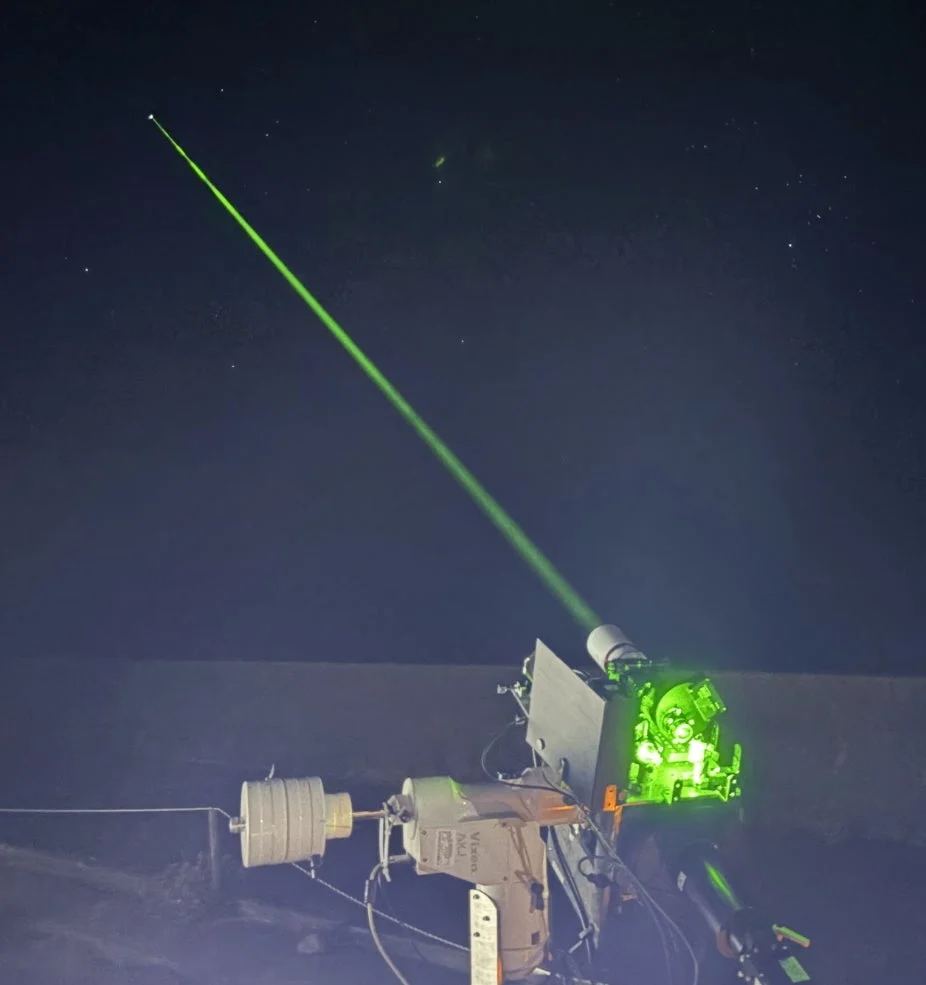
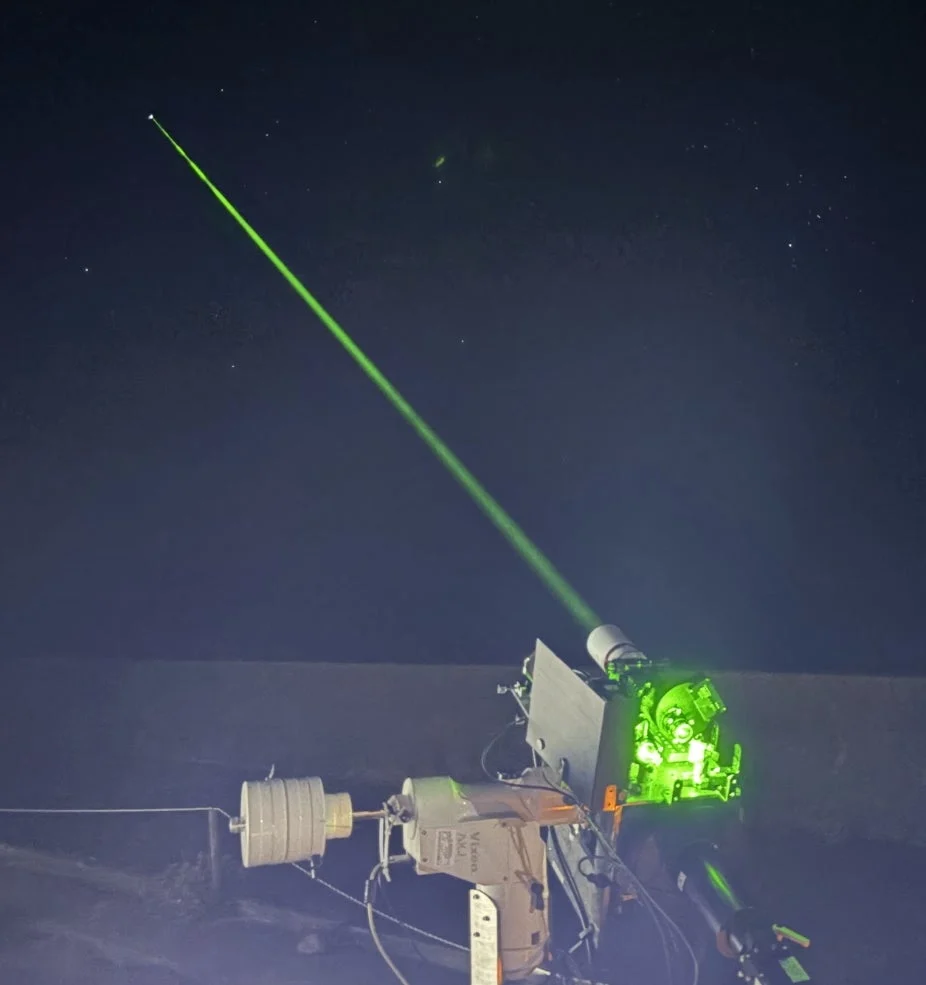
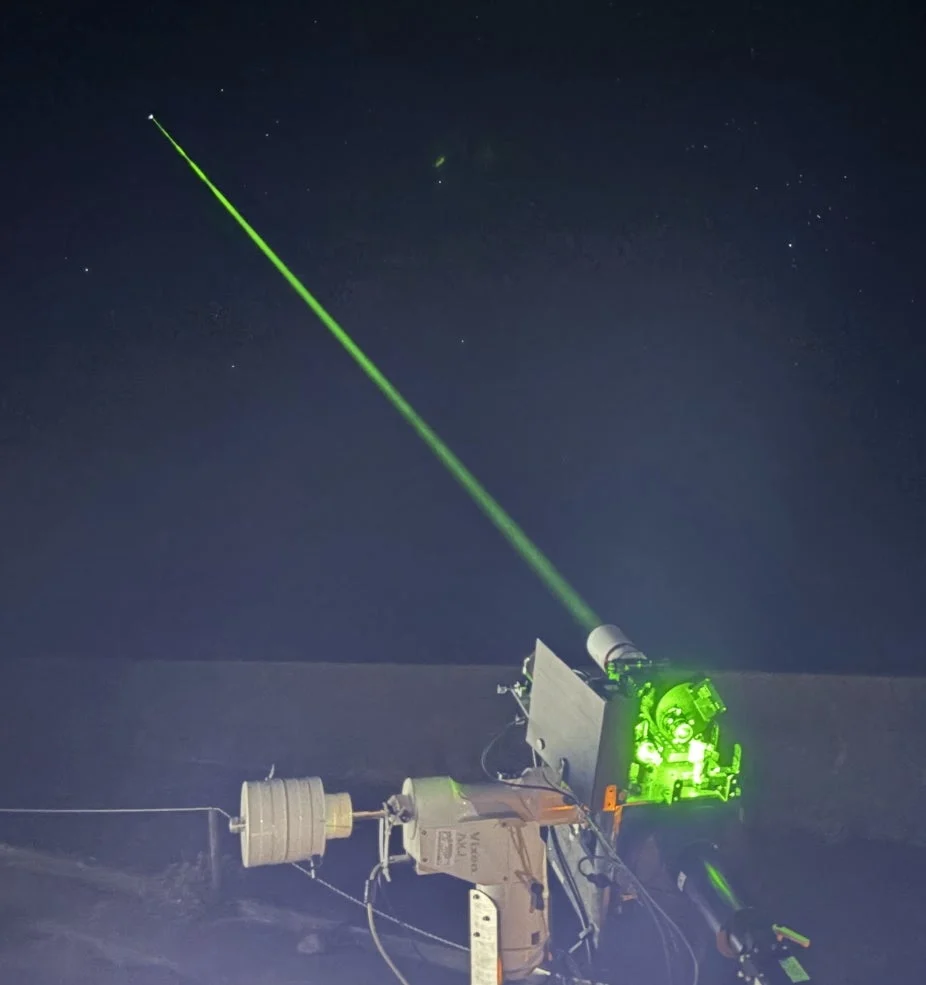
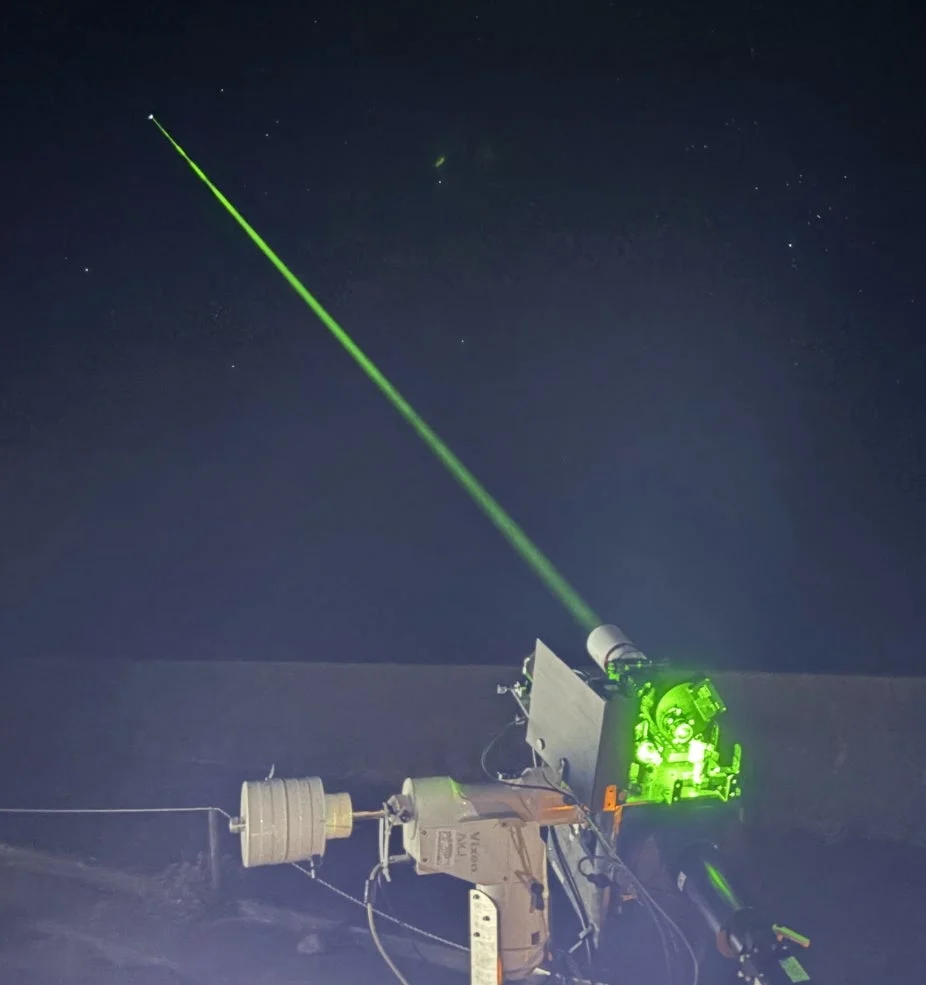
Sceye’s ST1 vehicle, acting as the testbed, served as the target for a portable laser-ranging system. The ground equipment, based on the innovative "Omni-SLR" technology developed by Hitotsubashi University, transmitted signals to a specialized reflector assembly mounted on the HAPS. This assembly incorporated a Corner Cube Reflector (CCR) designed specifically for this mission by Japan’s National Institute of Polar Research (NIPR).
This configuration allowed for the acquisition and tracking of the vehicle with a highly directional laser beam, a feat previously considered exceptionally difficult due to atmospheric turbulence and the inherent instability of high-altitude platforms. The success of this demonstration suggests that optical wireless communications—which offer significantly higher data rates than traditional radio-frequency (RF) systems—can be reliably integrated into the global infrastructure.
Mission Chronology: A Month in the Stratosphere
The mission, designated as the first of Sceye’s "Service Test" program, was an exhaustive endurance and technology validation exercise.
- August 9, 2026: The Sceye ST1 HAPS launched, marking the commencement of its ambitious trans-Pacific-bound flight path. The vehicle, designed to loiter in the stratosphere, demonstrated its ability to operate autonomously over long durations.
- Mid-August 2026: As the vehicle moved through its operational profile, the focus shifted to the FSO demonstration. Ground teams in Japan synchronized their Omni-SLR systems to intercept the ST1’s trajectory. The successful "lock" on the vehicle confirmed that laser-ranging could be maintained despite the vast distance between the Earth’s surface and the stratosphere.
- Late August 2026: Alongside the optical testing, the ST1 continued to perform its primary function: the SceyeCELL demonstration. The platform provided direct-to-device connectivity to unmodified smartphones, successfully handling voice, text, and streaming data traffic.
- September 5, 2026: The mission concluded as the ST1 completed its testing cycle. Having spanned nearly four weeks of continuous operation, the data gathered from this flight has provided engineers with a wealth of information regarding power management, atmospheric navigation, and multi-modal communications.
Supporting Data: The "Cell Tower in the Sky" Performance
The Sceye ST1 did not merely exist in the sky; it functioned as a sophisticated node in a telecommunications network. During the mission, the platform proved that HAPS technology could replace or augment traditional ground-based infrastructure in challenging environments.
Technical Capabilities Demonstrated:
- Direct-to-Device (D2D) Connectivity: The platform enabled standard, off-the-shelf mobile phones to connect to the network without requiring any hardware modifications. This is a crucial metric for humanitarian and disaster-response scenarios where standard cell towers may be incapacitated.
- Edge Computing: By processing data directly on the platform, Sceye demonstrated a reduction in latency. Rather than routing all data through a ground station for processing, the ST1 performed computational tasks in the stratosphere, optimizing bandwidth usage.
- Multi-Platform Integration: The vehicle maintained communications not just with ground terminals, but also with other drones, proving that HAPS can act as a central hub for autonomous aerial vehicle (AAV) swarms.
The integration of the Omni-SLR laser system added an entirely new layer of performance. Laser communication is inherently more secure than RF because it is extremely difficult to intercept without detection, and it provides a near-infinite spectrum compared to the crowded radio bands used by current cellular networks.
Official Perspectives: The Future of Global Connectivity
The leadership involved in the project has been vocal about the implications of these results. For Sceye, the success is a vindication of their platform design and their strategic partnership with SoftBank.
"During a single mission, our first Service Test flight supported direct-to-device connectivity, edge computing, communications with drones, and now a world-first laser-ranging demonstration," said Mikkel Vestergaard Frandsen, founder and CEO of Sceye. "The ability to connect ground, stratosphere, and space through optical links could fundamentally change how information moves securely around the world."
SoftBank’s involvement highlights the strategic importance of HAPS for major telecommunications providers. By diversifying their network infrastructure to include stratospheric assets, providers can bridge the "digital divide," bringing high-speed internet to remote or rural areas where building physical towers is economically or geographically unfeasible.
Implications: The Strategic Shift to Optical Wireless
The success of this mission points toward a radical redesign of global telecommunications architecture. Here is how this impacts the future:
1. Security and Sovereignty
As geopolitical tensions rise, the need for secure, unhackable communication channels has become paramount. Optical links provide a level of security that traditional satellites and towers cannot match. Because the beam is so narrow and directional, the signal is virtually immune to jamming and intercept, providing a reliable backbone for government and military operations.
2. The Decentralization of the Cloud
Edge computing on a HAPS platform allows for data processing to occur closer to the end-user. As the Internet of Things (IoT) continues to expand, having "floating" data centers that can loiter over cities or disaster zones will reduce the strain on centralized, land-based server farms.
3. Bridging the Digital Divide
Perhaps the most significant humanitarian implication is the ability of Sceye’s technology to provide connectivity to the billions of people currently offline. Because the SceyeCELL system works with unmodified phones, it requires zero investment from the end-user, making it an ideal solution for developing nations and regions with limited telecommunications infrastructure.
4. A New Era for Aerospace
This mission marks a shift in how we perceive "space." The stratosphere is no longer just a layer of the atmosphere to be traversed; it is an operational domain. By proving that we can track and interact with platforms at these altitudes using lasers, Sceye and SoftBank have opened the door for a permanent, high-speed, and high-altitude communications network that bridges the gap between the ground and space-based satellites.
Conclusion: Looking Ahead
The August-September 2026 flight is only the beginning. With the ST1 mission now validated, the industry is expected to see a rapid scaling of HAPS deployments. The next phase will likely involve testing these laser links between multiple HAPS platforms, creating a "mesh" network in the sky that can reroute data autonomously based on demand or environmental conditions.
As Sceye and SoftBank continue to iterate on their technology, the dream of a truly global, ubiquitous, and secure internet—one that is accessible from anywhere on Earth—appears closer to reality than ever before. The transition from radio-based connectivity to a hybrid system incorporating advanced optical links is a pivotal moment in the history of telecommunications, and the ST1 mission will undoubtedly be remembered as the flight that initiated this new, high-altitude era.