By Industry News Desk
September 23, 2026
In a landmark achievement for telecommunications and aerospace engineering, Sceye, the pioneer of High-Altitude Platform Station (HAPS) technology, has successfully concluded its inaugural "Service Test" mission. The flight, which spanned from August 9 to September 5, 2026, did more than just prove the viability of a "cell tower in the sky"; it ushered in a new era of optical wireless communications. By integrating advanced free-space optical (FSO) laser tracking with mobile broadband and edge computing, Sceye and its partner, SoftBank, have demonstrated that the stratosphere is no longer just a transit zone—it is a critical node in the future of global information architecture.
The Core Achievement: A Multi-Modal Stratospheric Powerhouse
The mission of the ST1 HAPS vehicle was ambitious from its inception. Unlike traditional satellite constellations that operate in Low Earth Orbit (LEO) or Geostationary Orbit (GEO), Sceye’s HAPS platform offers a unique middle ground. By loitering in the stratosphere—well above commercial air traffic and weather systems—the platform maintains a persistent presence over specific geographic regions.
During this latest test, the ST1 vehicle demonstrated a trifecta of technological capabilities:
- Direct-to-Device (D2D) Connectivity: The platform acted as a high-altitude base station, providing standard mobile broadband services—including text, voice, and high-definition video streaming—directly to unmodified, off-the-shelf smartphones.
- Edge Computing: The platform processed data onboard, reducing latency by eliminating the need to relay information back to terrestrial servers before making decisions or filtering data.
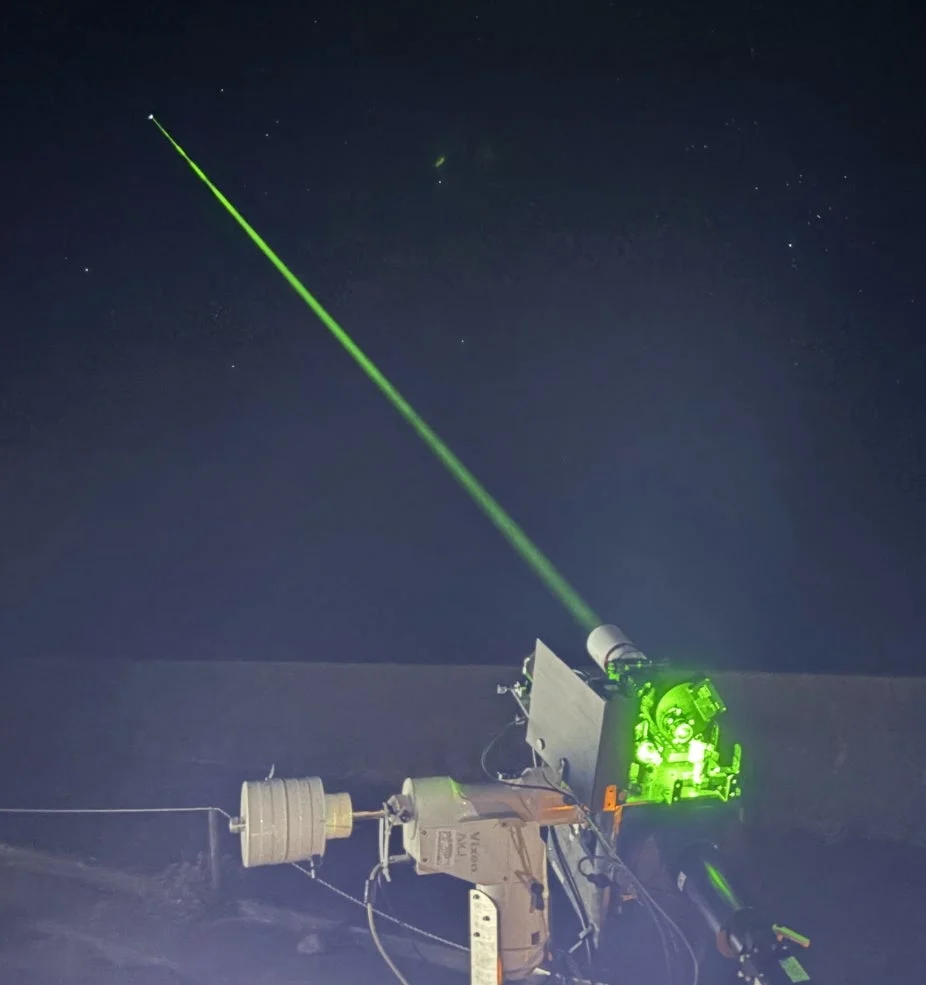
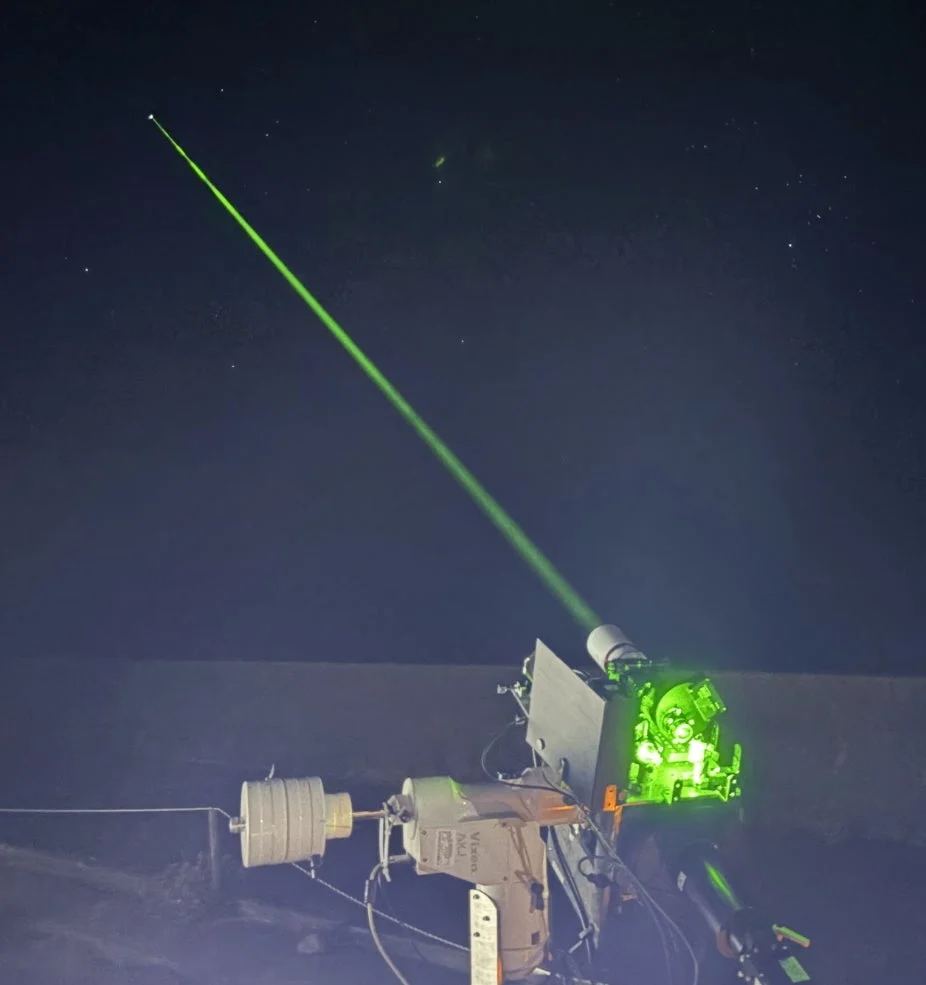
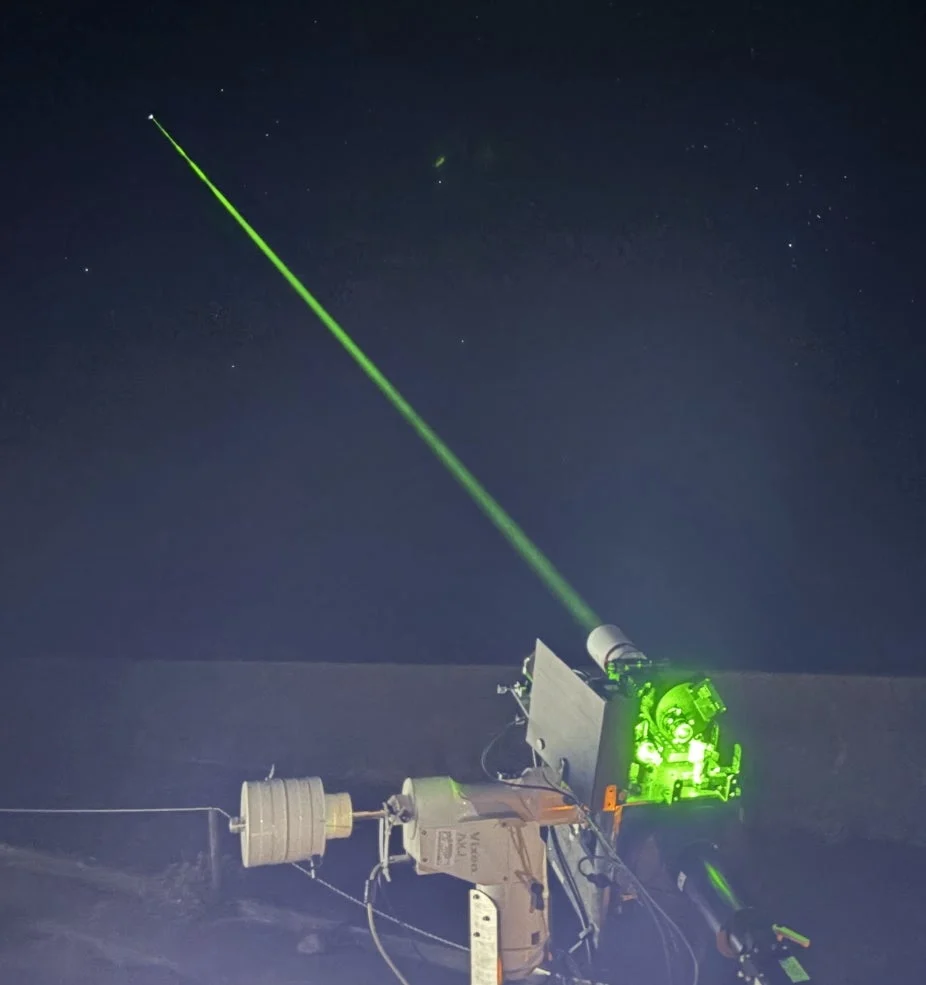
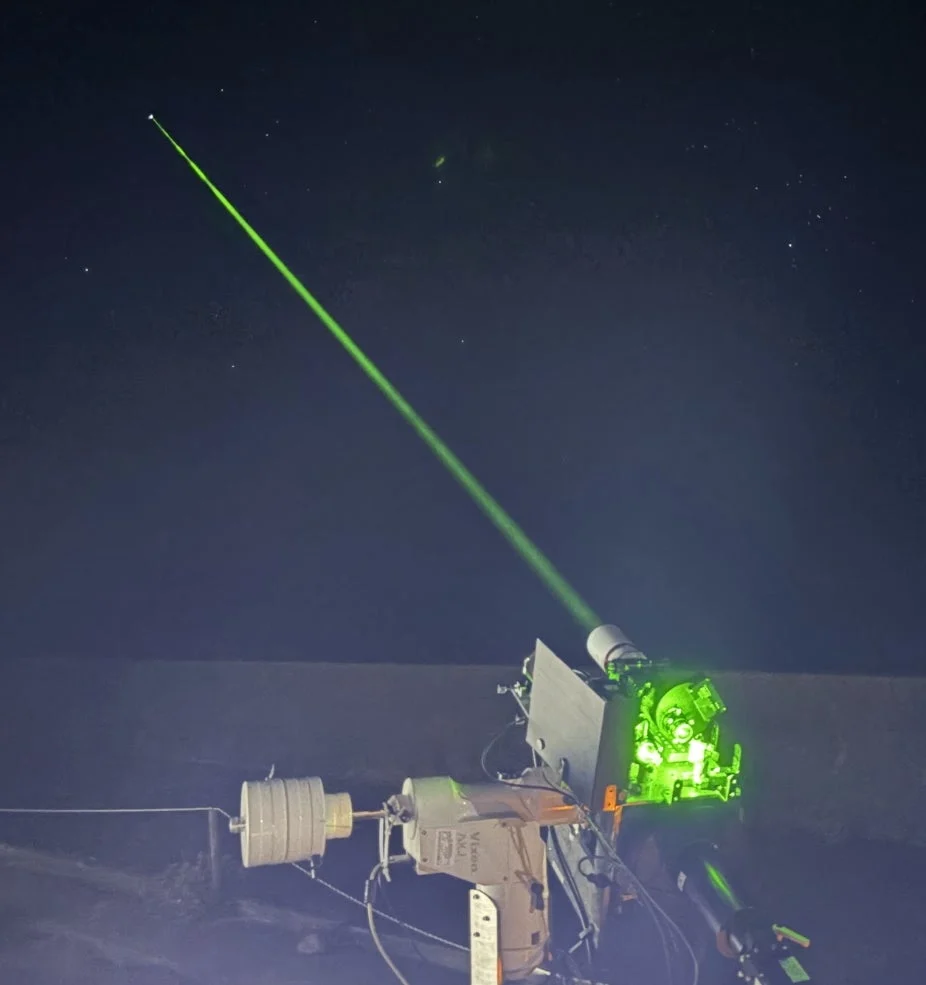
- Free Space Optical (FSO) Tracking: In a world-first demonstration, the team successfully tracked the stratospheric vehicle using a ground-based laser system, proving that high-bandwidth, secure optical links between the ground and the stratosphere are not just theoretically possible, but operationally mature.
Chronology of the Mission: From New Mexico to the Global Stage
The ST1 mission was characterized by a rigorous testing schedule that pushed the boundaries of current aerospace operations.
- August 9, 2026: The ST1 HAPS launched from its base in New Mexico, marking the commencement of the Service Test program. The primary objective was to validate the "SceyeCELL" architecture, which utilizes advanced antenna arrays to mimic a terrestrial cell tower while covering a massive footprint.
- Mid-August: As the vehicle reached its operational altitude, the team initiated a series of connectivity tests. Observers reported seamless handovers and stable data throughput, confirming that the "cell tower in the sky" concept could support real-time user traffic without degradation.
- Late August (The Optical Milestone): The mission reached a critical technical inflection point when researchers in Japan initiated the laser-ranging demonstration. Using the "Omni-SLR" system designed by Hitotsubashi University, the team locked onto the ST1 vehicle as it traversed the sky. By transmitting signals to a specialized Corner Cube Reflector (CCR) developed by the National Institute of Polar Research (NIPR) and integrated into a reflector assembly by SoftBank, the team established a precise, directional optical path.
- September 5, 2026: The mission concluded following nearly a month of continuous flight. The data gathered during this period confirmed the resilience of the platform, the stability of the HAPS-to-ground laser link, and the efficiency of the onboard edge computing suite.
Technical Foundations: The Science of the "Omni-SLR" and CCR
The integration of laser tracking into a HAPS platform represents a significant leap forward in signal security and data capacity. Unlike radio frequency (RF) transmissions, which are subject to interference and spectrum congestion, FSO links offer a massive, unregulated bandwidth.
The Role of the Corner Cube Reflector (CCR)
The CCR is a sophisticated piece of optical engineering. By design, a CCR returns an incident light beam directly to its source, regardless of the angle of incidence. In the context of the ST1 flight, this meant that even as the HAPS vehicle moved due to stratospheric winds or flight corrections, the laser beam remained locked. The assembly, developed by SoftBank, was ruggedized to survive the extreme cold and low-pressure environment of the stratosphere, ensuring that the optical path remained unobstructed and precise.
The Omni-SLR System
The ground-based transmitter, based on the "Omni-SLR" (Satellite Laser Ranging) architecture, allowed the ground station to maintain a "lock" on the vehicle with high pointing accuracy. By utilizing highly directional laser beams, the system can transmit data at rates far exceeding those of conventional radio waves. This capability is essential for future applications where massive datasets must be offloaded from HAPS platforms to ground-based data centers in real-time.
Official Perspectives: The Vision of Mikkel Vestergaard Frandsen
In a formal statement released Wednesday, Sceye founder and CEO Mikkel Vestergaard Frandsen underscored the strategic importance of the mission.
"During a single mission, our first Service Test flight supported direct-to-device connectivity, edge computing, communications with drones, and now a world-first laser-ranging demonstration," Frandsen noted. "The ability to connect ground, stratosphere, and space through optical links could fundamentally change how information moves securely around the world."
Frandsen’s sentiment reflects a broader shift in the aerospace industry. By creating a seamless "optical bridge" between ground infrastructure and the stratosphere, companies like Sceye are effectively creating a private, high-speed data backbone that bypasses the limitations of traditional terrestrial fiber or crowded satellite links.
Implications for the Future: A New Telecommunications Paradigm
The success of the ST1 flight has profound implications for several industries, ranging from disaster response to global defense and rural connectivity.
1. The Death of Digital Deserts
By providing direct-to-device connectivity to unmodified phones, Sceye is addressing the "last mile" problem in a way that terrestrial infrastructure cannot. For remote regions, mountainous terrain, or maritime zones where cell towers are impractical or impossible to build, a HAPS-based network offers a cost-effective, rapidly deployable alternative.
2. Secure, High-Bandwidth Communications
The FSO demonstration is particularly significant for defense and national security sectors. Laser communication is inherently more secure than radio transmission; it is virtually impossible to intercept or jam without physical access to the line-of-sight path. As the world moves toward more secure, sovereign data networks, the ability to create "laser-linked" stratospheric nodes will likely become a cornerstone of military and government communications.
3. Edge Computing in the Stratosphere
The ability to perform edge computing on the platform itself means that latency-sensitive applications—such as autonomous drone traffic management or real-time disaster surveillance—can be processed in situ. By the time data reaches the ground, it is already refined, analyzed, and actionable.
4. Convergence of Space and HAPS
The "Omni-SLR" demonstration suggests a future where HAPS platforms serve as the missing link between Earth and the growing mesh of LEO satellites. A HAPS platform could act as a relay, gathering data from terrestrial IoT devices and beaming it via laser to a satellite passing overhead, effectively creating a global, multi-layered data network that is resilient to terrestrial disruption.
Conclusion: The Horizon Ahead
The August-September 2026 ST1 flight was more than just a test; it was a proof of concept for the next generation of global connectivity. By successfully demonstrating the orchestration of laser tracking, edge computing, and direct-to-device mobile services, Sceye and SoftBank have moved the HAPS sector from the realm of experimental curiosity to industrial-grade utility.
As the industry looks toward the next phase of development, the focus will likely shift toward scaling these operations. The challenge now lies in operationalizing the fleet, ensuring long-term persistence in varied meteorological conditions, and integrating these systems into existing global telecommunications standards. However, if the success of the ST1 mission is any indication, the stratosphere is rapidly becoming the most valuable piece of real estate in the modern digital economy. With the "cell tower in the sky" now a verified reality, the promise of universal, secure, and high-speed connectivity is closer than ever before.