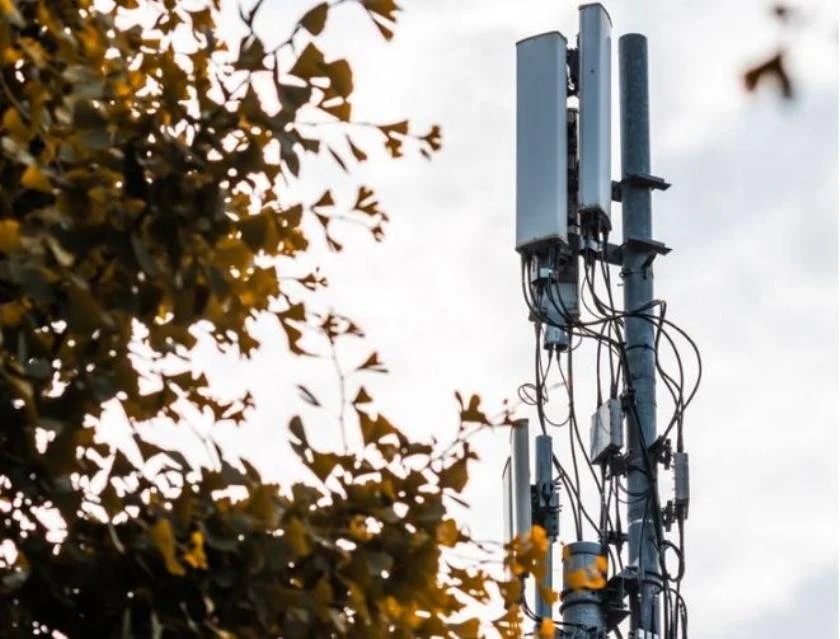
Taipei, Taiwan – Taiwan’s vibrant mobile services market is charting a course for sustained and significant growth through 2030. This upward trajectory is primarily propelled by the accelerating adoption of 5G technology, a dramatic surge in mobile data consumption, and strategic investments by leading telecom operators in artificial intelligence (AI), cloud computing, comprehensive enterprise digital services, and premium mobile offerings. Projections indicate a steady expansion of the market, underscoring Taiwan’s position as a leader in technological advancement within the Asia-Pacific region.
The Shifting Landscape: From Voice to Data and Beyond
The core of this market evolution lies in the fundamental shift away from traditional voice services towards robust mobile data consumption. According to the latest Taiwan Mobile Broadband Forecast (Q1 2026) by GlobalData, the total mobile services revenue in Taiwan is anticipated to grow from an estimated $6.3 billion in 2025 to $6.9 billion by 2030. This represents a Compound Annual Growth Rate (CAGR) of 1.8 percent, a testament to the market’s resilience and adaptability.
The decline of voice revenue, projected to fall at a significant CAGR of 9.9 percent between 2025 and 2030, is a direct consequence of evolving consumer behavior. Over-the-top (OTT) messaging applications and internet-based voice services have become the preferred communication channels for Taiwanese consumers, rendering traditional voice plans increasingly obsolete. This trend, while marking the end of an era for voice services, simultaneously opens vast new avenues for growth in data-centric offerings.
In stark contrast, mobile data services are emerging as the undisputed engine of revenue generation. GlobalData forecasts a healthy CAGR of 4.1 percent for mobile data revenue. This expansion is underpinned by a dual force: the increasing availability and uptake of higher Average Revenue Per User (ARPU) 5G plans, and a burgeoning demand for digital content that necessitates faster and more reliable mobile broadband.
Kantipudi Pradeepthi, a Telecom Analyst at GlobalData, highlighted the escalating data appetite. "Average monthly mobile data usage is expected to increase from 35.8 GB per subscriber in 2025 to around 43.5 GB in 2030," Pradeepthi stated. "This surge is largely driven by the insatiable demand for video streaming, immersive social media experiences, advanced cloud applications, and other bandwidth-intensive services that are becoming integral to daily life and work."
5G Dominance: A Near-Universal Adoption
Taiwan has firmly established itself as one of Asia’s most advanced 5G markets, and this leadership is set to intensify. GlobalData estimates that 5G already commands the majority of mobile subscriptions in 2025, a figure projected to surpass an astonishing 94 percent by 2030. This near-universal adoption of 5G is being facilitated by a confluence of factors: the expanding availability of 5G-compatible smartphones at increasingly competitive price points, continuous and strategic network expansion by telecom operators, and a growing consumer and enterprise demand for the unparalleled speed and low latency that 5G provides.
A prime example of this commitment to network enhancement is Taiwan Mobile’s extended partnership with Nokia in July 2026. This collaboration aims to further bolster and expand its nationwide 5G network infrastructure, ensuring broader coverage and improved service quality across the island.
As 5G penetration deepens, the major players in Taiwan’s telecommunications landscape – Chunghwa Telecom, Taiwan Mobile, and Far EasTone Telecommunications – are strategically pivoting their focus. Their objective is no longer solely on subscriber acquisition but on enhancing ARPU and maximizing customer value. This is being achieved through a multi-pronged approach: the introduction of premium 5G plans tailored to specific user needs, and the aggressive development and monetization of AI, cloud services, and specialized enterprise solutions that leverage the capabilities of 5G.
Leading Operators: Driving Innovation and Monetization
The competitive landscape is characterized by a relentless pursuit of innovation and revenue diversification among the leading telecom operators. Each of these giants is actively investing in next-generation technologies and services to capture market share and drive profitability.
Chunghwa Telecom: A Market Leader’s Strategic Investments
Chunghwa Telecom, the undisputed market leader, reported a robust performance in the first quarter of 2026. The company boasted 13.34 million mobile subscribers, marking a healthy year-over-year growth of 1.7 percent. Its mobile service revenue saw an impressive increase of 4.4 percent, reaching NT$17.70 billion. This growth was particularly evident in its postpaid mobile ARPU, which, excluding IoT SIMs, rose by 3.6 percent to NT$573. This uptick is a direct reflection of a growing number of subscribers migrating to higher-tier, premium 5G plans.
Chunghwa Telecom’s strategic vision extends far beyond basic connectivity. The company is making substantial investments across a broad spectrum of technological domains, including 5G infrastructure, high-speed fiber broadband, comprehensive enterprise ICT solutions, advanced cloud computing, and cutting-edge AI. Concurrently, it is actively expanding its suite of digital services. This includes offerings in cloud gaming, high-definition streaming video, music services, robust cybersecurity solutions, and critical support for enterprise digital transformation initiatives. This holistic approach positions Chunghwa Telecom as a comprehensive digital solutions provider, not just a telecommunications carrier.
Taiwan Mobile: 5G as the Revenue Backbone
Taiwan Mobile has also demonstrated strong momentum, reporting a 3 percent increase in mobile service revenue during the first quarter of 2026. Its 09x postpaid ARPU saw a year-over-year increase of 3 percent. A significant contributor to this performance is the company’s 5G offerings, which have experienced a substantial 9 percent revenue expansion. Notably, 5G subscribers now account for a commanding 68 percent of Taiwan Mobile’s total mobile service revenue. Furthermore, over 44 percent of its postpaid subscribers have already embraced 5G technology.
The transition to 5G is proving to be a significant value enhancer for Taiwan Mobile’s customer base. Subscribers upgrading from 4G to 5G are generating approximately 50 percent higher monthly tariffs, while contract renewals are contributing an average of 6 percent increase in monthly tariffs. To sustain and amplify this growth, Taiwan Mobile is actively investing in AI-powered customer service platforms, sophisticated cloud infrastructure, integrated enterprise ICT solutions, and nationwide 5G network expansion. These strategic investments are crucial for enhancing monetization strategies and boosting overall profitability.
Far EasTone Telecommunications: Leading in 5G Penetration and ARPU
Far EasTone Telecommunications has continued its impressive growth trajectory, reporting a 3 percent increase in mobile service revenue during the first quarter of 2026. This marks the company’s 20th consecutive quarter of sustained growth, a testament to its consistent market performance. Far EasTone stands out with the highest 5G penetration rate among Taiwan’s telecom operators, reaching an impressive 48.4 percent.
The financial benefits of 5G adoption are clearly visible for Far EasTone. Customers upgrading to 5G are contributing to a significant 42 percent increase in monthly fees. Moreover, the company has achieved a record-low postpaid churn rate of just 0.68 percent, indicating high customer loyalty and satisfaction. Far EasTone also proudly maintains the highest ARPU in Taiwan’s competitive telecom market, a strong indicator of its ability to attract and retain high-value customers.
Beyond its mobile operations, Far EasTone’s ICT and fixed-line business has also experienced robust growth, recording a 12.8 percent revenue increase. This expansion is fueled by a strong demand for its comprehensive suite of services, including cloud computing, AI solutions, smart city initiatives, the Internet of Things (IoT), and critical enterprise digital transformation projects. Looking ahead, Far EasTone has earmarked approximately NT$9.6 billion for capital expenditure in 2026. These investments will be strategically directed towards enhancing its 5G infrastructure, expanding enterprise connectivity solutions, bolstering its cloud services, and developing AI-enabled network capabilities.
AI and Digital Services: The New Frontiers of Revenue Generation
The strategic pivot of Taiwan’s telecom operators towards AI, cloud computing, cybersecurity, cloud gaming, streaming services, enterprise ICT, private 5G networks, and digital entertainment is not merely a diversification strategy; it is a fundamental necessity for future growth. As voice revenue continues its inevitable decline, these new digital services are rapidly emerging as crucial revenue engines.
The projections paint a clear picture: while the overall mobile market is expected to grow from $6.3 billion in 2025 to $6.9 billion by 2030, the disparity in growth drivers is stark. Mobile data revenue is projected to grow at a healthy 4.1 percent CAGR, while voice revenue is set to decline at a 9.9 percent CAGR. This widening gap underscores the critical importance of the digital services sector.
With 5G penetration poised to exceed 94 percent of mobile subscriptions and average monthly data usage climbing from 35.8 GB to 43.5 GB by 2030, Taiwan’s next phase of telecommunications growth will be intrinsically linked to its ability to effectively monetize 5G. This will involve not only attracting more subscribers to higher ARPU plans but also successfully expanding into the lucrative domains of AI, cloud computing, and a broad array of enterprise digital services. The future of Taiwan’s mobile market is no longer just about connecting people; it’s about empowering them with intelligent, integrated, and transformative digital experiences.
By Fasna Shabbir