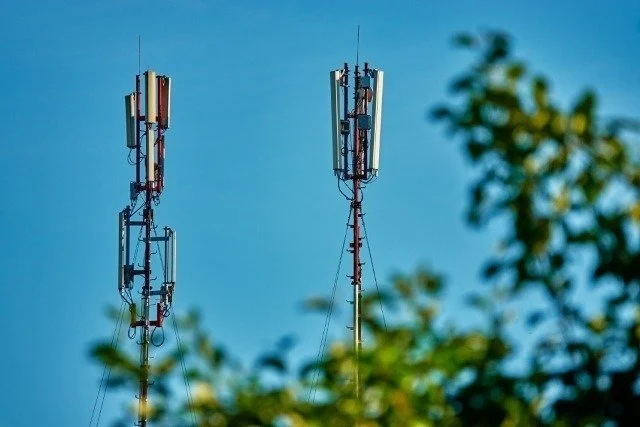
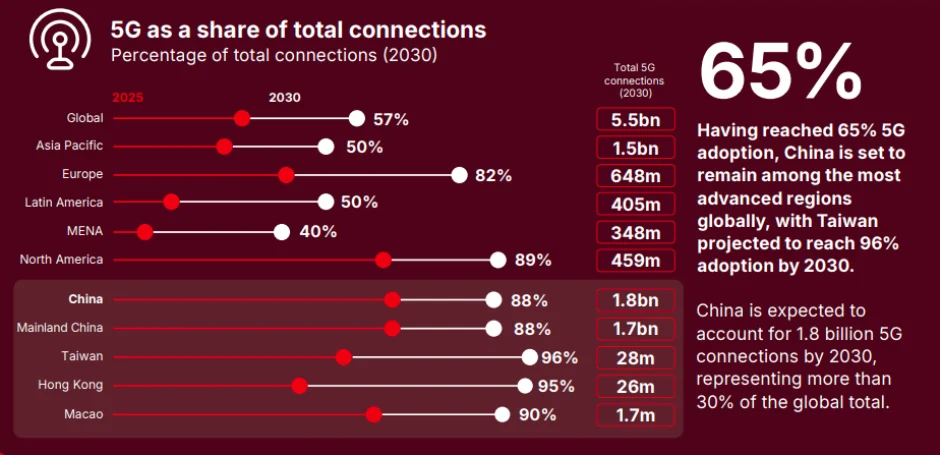
Beijing, China – [Date] – China is set to solidify its unparalleled leadership in the global 5G market, with projections indicating a staggering 1.8 billion 5G connections by 2030. This monumental figure, representing over 30 percent of all worldwide 5G connections, underscores the nation’s relentless pursuit of advanced mobile infrastructure and digital transformation. According to the latest "Mobile Economy China 2026" report by the GSMA, a global organization representing mobile network operators, continued substantial investments in next-generation networks, the expansive rollout of 5G-Advanced capabilities, and strategic spectrum allocations are poised to fuel unprecedented subscriber growth, bolster operator revenues, and drive profound digital innovation across a multitude of industries.
The Unstoppable March of 5G in China: A Timeline of Dominance
The GSMA report paints a vivid picture of China’s rapid ascent in the 5G era. By 2025, China had already achieved a remarkable 65 percent adoption rate for 5G technology. Looking ahead, the trajectory is even more impressive, with forecasts suggesting that 88 percent of all mobile connections in mainland China will be powered by 5G by 2030. This translates to an estimated 1.7 billion 5G connections solely within the mainland.
The report also highlights the advanced adoption rates across other Chinese territories. Hong Kong is expected to reach a near-universal 95 percent 5G adoption by the end of the decade, closely followed by Taiwan at 96 percent, and Macao at 90 percent. These figures are set against a global backdrop where total 5G connections are anticipated to reach 5.5 billion, with the Asia-Pacific region emerging as a significant contributor with 1.5 billion connections.
China’s commitment to pushing the boundaries of mobile technology is further evidenced by its pioneering role in the commercialization of 5G-Advanced, an enhanced iteration of 5G. As of 2025, five major operators had already launched commercial 5G-Advanced services, extending their reach to over 330 cities and attracting a substantial user base exceeding 30 million subscribers. This cutting-edge technology is not merely an incremental upgrade; it is actively underpinning transformative applications in artificial intelligence (AI), delivering immersive consumer experiences, driving industrial automation, powering intelligent manufacturing processes, and facilitating the development of sophisticated smart city infrastructures.
Financial Foresight: Operator Revenues and Strategic Investments
The economic implications of China’s 5G dominance are equally compelling. The GSMA report forecasts a robust increase in China’s mobile operator revenues, climbing from an estimated $191.0 billion in 2025 to a projected $222.8 billion by 2030. This substantial growth is directly linked to the escalating demand for data-intensive services, particularly those driven by AI.
To meet this surging demand and to sustain the deployment of advanced mobile infrastructure, Chinese operators are set to make significant capital investments. Between 2025 and 2030, the report anticipates a colossal investment of $194.1 billion in network capital expenditure. This ongoing financial commitment underscores China’s strategic imperative to maintain its leadership in advanced mobile infrastructure, ensuring its networks are not only capable of handling current traffic but are also future-proofed for the emerging demands of 6G and beyond.
5G-Advanced: Fueling the Next Wave of Innovation
The widespread adoption and rapid commercialization of 5G-Advanced in China represent a significant leap forward in mobile capabilities. By 2025, leading operators such as China Mobile, China Telecom, and China Unicom, alongside other industry players, had successfully rolled out 5G-Advanced services across more than 330 cities. The immediate uptake of over 30 million subscribers demonstrates the market’s readiness and appetite for the enhanced services offered by this next-generation technology.
The applications being enabled by 5G-Advanced are diverse and transformative. Mobile AI is being integrated to provide more intelligent and personalized user experiences. Immersive consumer services, including enhanced augmented reality (AR) and virtual reality (VR) applications, are becoming a reality. On the industrial front, 5G-Advanced is a critical enabler of intelligent manufacturing, facilitating greater automation, real-time control, and enhanced efficiency in production lines. Furthermore, the technology is playing a pivotal role in the development of smart city initiatives, improving urban safety, optimizing traffic management, and enhancing public services through integrated sensing and advanced data analytics.
Expanding Horizons: Non-Terrestrial Networks and AI Integration
Beyond traditional terrestrial networks, Chinese operators are also demonstrating foresight by expanding their Non-Terrestrial Network (NTN) capabilities. By early 2025, a significant milestone had been reached with over 8.2 million direct-to-device (D2D) users enabled, alongside the connection of more than 26 million satellite-enabled devices. This expansion extends robust connectivity to a wider array of applications and devices, including wearables, vehicles, and a vast ecosystem of Internet of Things (IoT) devices, bridging connectivity gaps in remote or underserved areas.
The integration of Artificial Intelligence (AI) is another cornerstone of China’s mobile strategy. Operators have already deployed large-scale AI models to optimize network performance, automate operational processes, and enhance customer service. The next phase of this AI integration involves extending these advanced capabilities to enterprise services, creating new business opportunities and driving digital transformation for businesses. AI is evolving beyond internal operational efficiencies to become a fundamental component of cross-device, real-time intelligent services, seamlessly integrated with the power of 5G-Advanced networks.
Open Gateway and Digital Inclusion: Building an Interconnected Future
China’s commitment to fostering an open and innovative mobile ecosystem is further demonstrated by the adoption of GSMA Open Gateway APIs. By December 2025, eight Chinese operators had embraced these APIs, representing a significant 26 percent of China’s mobile market by connections. This adoption is crucial for enabling greater interoperability between different networks and platforms, paving the way for new developer services and fostering a more dynamic digital economy.
The GSMA report also underscores China’s remarkable progress in expanding digital connectivity for its population. Approximately 91 percent of the population is now connected to the internet. Crucially, the mobile internet usage gap has narrowed to a mere 8 percent, and the coverage gap has been reduced to an impressive 1 percent. These achievements are a testament to years of sustained and strategic investment in digital infrastructure, ensuring that the benefits of the digital revolution are accessible to a vast majority of the Chinese populace.
The Crucial Role of Spectrum Policy: Paving the Way for 6G
Looking ahead, spectrum policy is identified as a central determinant for the next phase of China’s mobile growth. The report highlights the emerging significance of the upper 6 GHz band, which has been identified for International Mobile Telecommunications (IMT) at the World Radiocommunication Conference 2023 (WRC-23). This band is poised to become a key capacity spectrum for 5G-Advanced deployments.
Furthermore, future spectrum resources in the 4.5 GHz and 7-8 GHz bands, currently under consideration for WRC-27, will be indispensable for expanding network capacity and facilitating the eventual transition towards 6G technology. While these next-generation spectrum bands are crucial for future growth, the report also acknowledges the continued importance of existing low-band spectrum, which will remain vital for providing consistent and nationwide coverage. This strategic approach to spectrum allocation ensures a balanced development, catering to both advanced capacity needs and ubiquitous access.
The comprehensive insights from the GSMA’s "Mobile Economy China 2026" report paint a clear picture of China’s unwavering commitment to leading the global mobile revolution. With its massive scale, aggressive investment, and forward-thinking technological adoption, China is not just participating in the 5G era; it is defining its future. The nation’s continued advancements in 5G and its proactive embrace of 5G-Advanced and AI are set to redefine connectivity, drive economic growth, and shape the digital landscape for decades to come.