In the rapidly evolving landscape of artificial intelligence, most organizations and power users have found themselves trapped in a "fragmentation tax." A typical modern team might juggle a ChatGPT subscription for brainstorming, Claude for coding, Midjourney for creative assets, and a patchwork of raw API calls for data pipelines. This siloed approach is not only expensive—often exceeding $100 per user monthly—but fundamentally inefficient, as these tools operate in total isolation, requiring users to manually bridge the gaps between them.
Enter Abacus AI, a platform that proposes a radical departure from the chatbot-centric status quo. By shifting from a single-product model to an all-in-one ecosystem, Abacus AI seeks to consolidate the fragmented AI landscape into a unified, high-performance infrastructure.
The Core Philosophy: From Chatbots to Autonomous Ecosystems
The premise behind Abacus AI is that the industry has reached a plateau in terms of "chat-only" utility. While LLMs are excellent at answering questions, they are notoriously poor at executing complex, multi-step tasks in the background. Abacus AI addresses this by building two distinct, yet interconnected, layers.
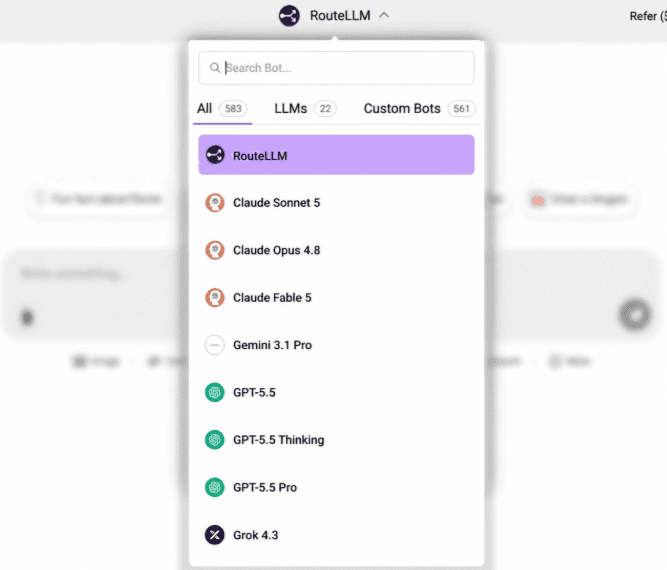
The first layer, ChatLLM, functions as the interface for human-AI interaction. It serves as a central hub where users can access virtually every top-tier model on the market, including GPT-5.5, Claude 3.5 Sonnet, Gemini 3.1 Pro, and various open-source powerhouses like DeepSeek and Qwen.
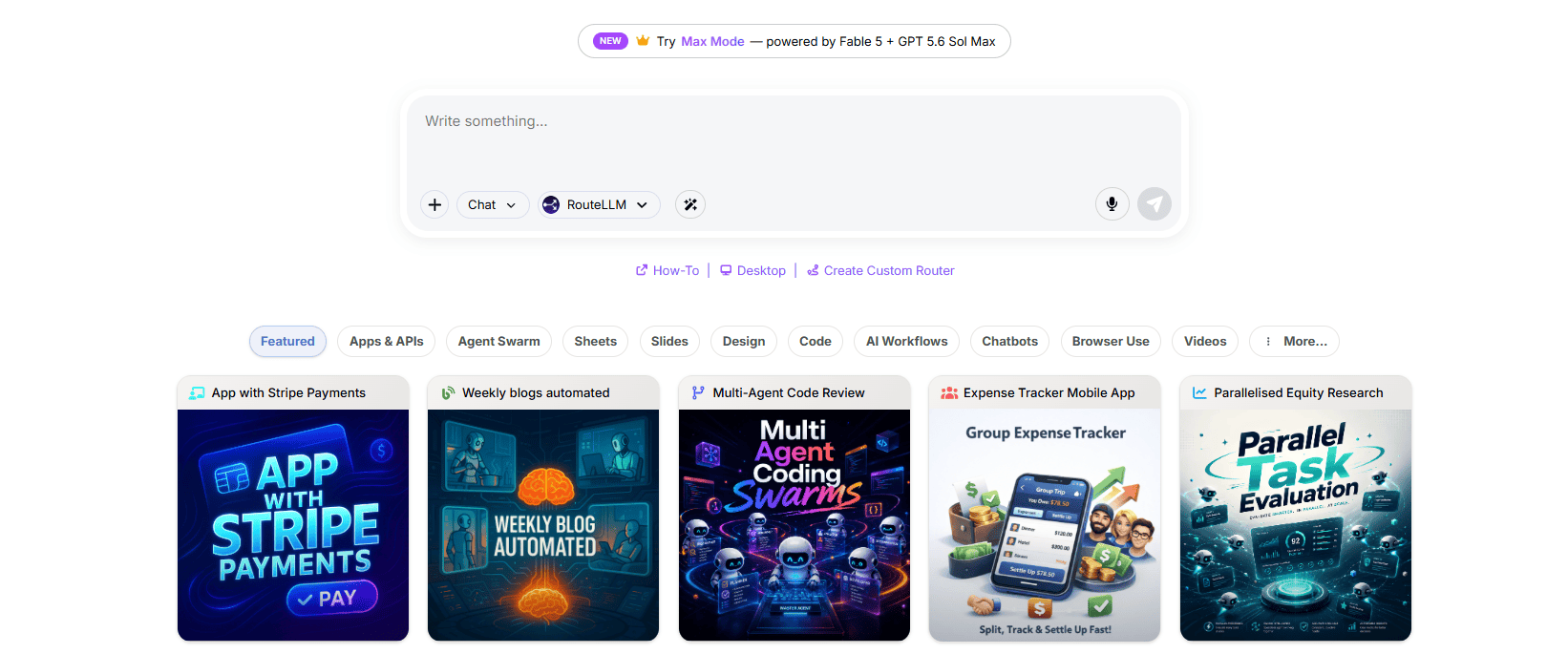
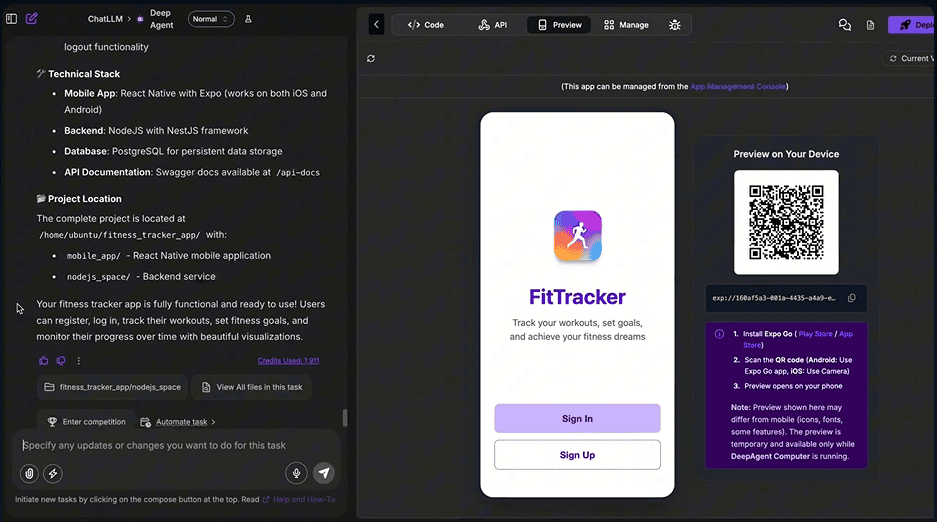
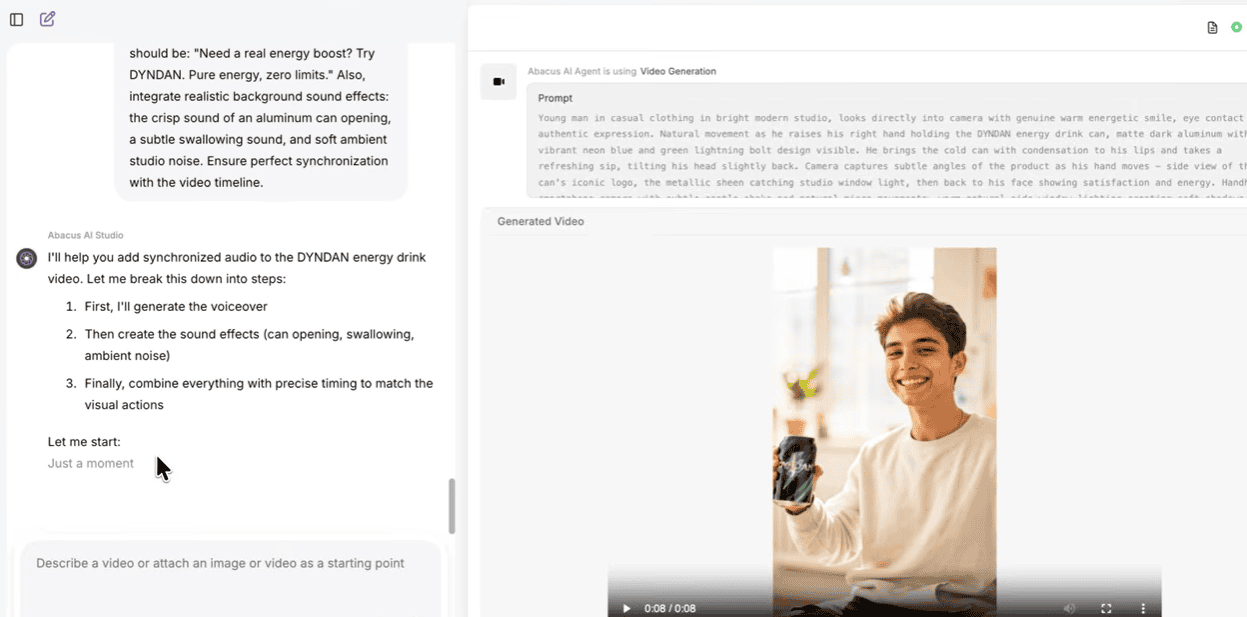
The second, and more transformative layer, consists of the agentic and infrastructure suite. This includes DeepAgent, Claw, Hermes, AppLLM, and the SuperComputer environment. These tools handle the "heavy lifting"—deploying applications, managing real-time data pipelines, and maintaining persistent, self-evolving agents that operate even while the user is offline.
Chronology and Provenance: The Minds Behind the Platform
Abacus AI did not emerge from a weekend hackathon. The company was founded in 2019 under the name RealityEngines.AI by a trio of industry veterans with deep roots in the world’s most sophisticated technical organizations:
- Bindu Reddy (CEO): Formerly responsible for Forecasting and Personalization at AWS.
- Arvind Sundararajan (CTO): Former head of the Autonomous Systems department at Uber.
- Siddartha Naidu: A core architect behind Google BigQuery and the Amazon fulfillment systems.
The firm has secured over $90 million in venture capital from prominent investors, including Eric Schmidt’s venture firm, Tiger Global, and Index Ventures. This backing has allowed the company to bypass the "wrapper" phase of AI development, focusing instead on building a robust, production-ready environment that meets the rigorous standards of enterprise-level reliability.
Supporting Data: Efficiency Through Consolidation
The economic argument for Abacus AI is compelling. By centralizing services, the platform eliminates redundant subscription costs.
Pricing and Resource Allocation
- Basic Tier ($10/month): Provides access to the full ChatLLM suite, RouteLLM API, and basic agentic workflows.
- Pro Tier ($20/month): Unlocks the full power of the infrastructure, including unlimited agent access, 30,000 monthly credits for compute-heavy tasks, and the full suite of always-on personal agents (Claw and Hermes).
- Enterprise Tier: Custom-tailored for organizations requiring private model deployments, MLOps, and SOC-2 Type 2 compliance.
The platform employs a credit-based system for resource-intensive operations such as high-resolution image/video generation and complex agentic task execution. This ensures that while casual users benefit from the low entry cost, power users only pay for the specific compute resources they consume.
Technical Deep-Dive: The Agentic Stack
The true differentiator for Abacus AI lies in its autonomous capabilities.
DeepAgent: The Execution Engine
Unlike standard chatbots that simply provide text, the Abacus AI Agent (DeepAgent) is designed for action. It operates across five distinct levels: Perception (data input), Planning (goal-directed sub-tasking), Execution (API/tool invocation), Memory (cross-session context), and a Reinforcement Loop for continuous improvement. Whether it is building a full-stack SaaS product or performing complex DCF (Discounted Cash Flow) financial valuations, DeepAgent shifts the role of the user from "prompter" to "project manager."
The "Always-On" Agents: Claw and Hermes
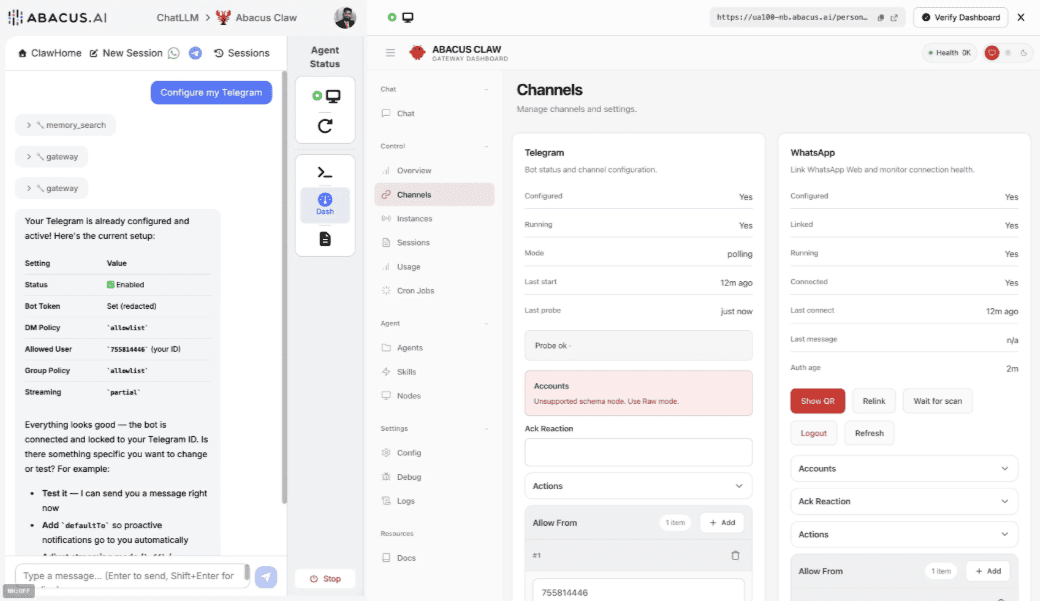
- Abacus Claw: A cloud-hosted version of the open-source OpenClaw framework. It acts as a personal assistant that lives on messaging platforms like WhatsApp, Telegram, and Slack, handling routine queries and maintaining conversation continuity without the user needing to manage server configurations.
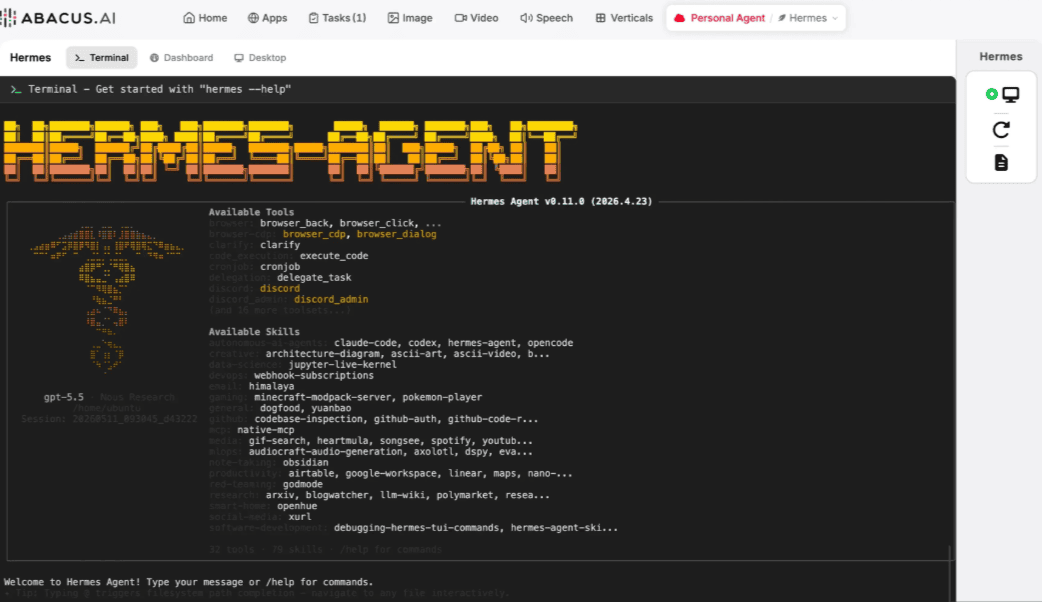
- Abacus Hermes: A self-evolving agent designed for sophisticated, long-running workflows. Hermes is capable of generating its own "skills"—reusable patterns for solving problems—allowing it to become more efficient at specific business processes the longer it is deployed.
SuperComputer: Infrastructure as a Service
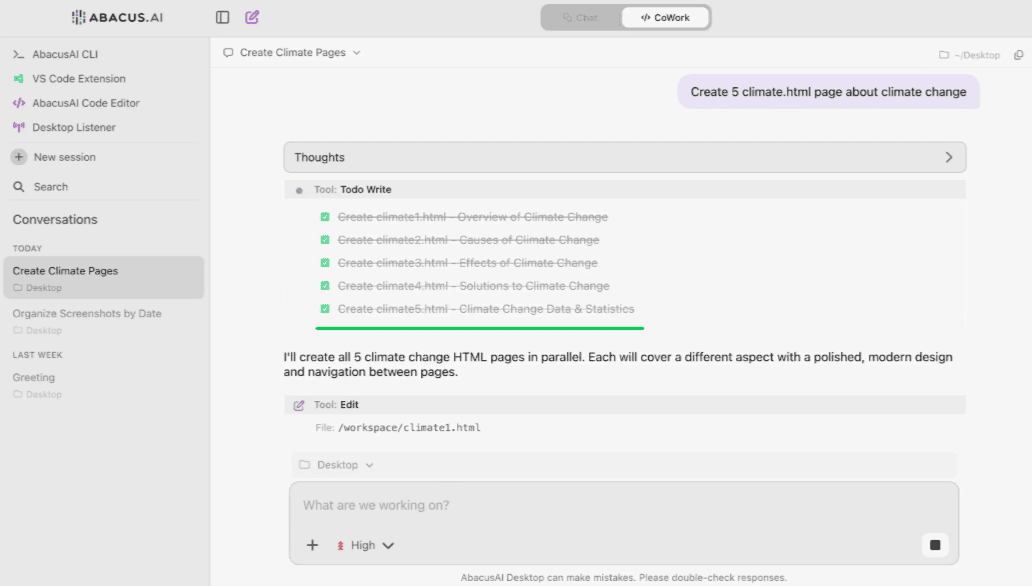
For developers, the Abacus AI SuperComputer offers a persistent Linux environment (Ubuntu) with root access, S3-style storage, and GitHub integration. It serves as the "backbone" for users who need to host AI projects, deploy models, or run background processes that persist indefinitely.
Official Stance on Security and Compliance
Privacy is the primary barrier to AI adoption in professional settings. Abacus AI has positioned itself as an enterprise-grade solution by undergoing rigorous independent validation. The platform is SOC-2 Type 2 and HIPAA compliant, ensuring that customer data is not used for model training. This commitment to data sovereignty makes it an attractive alternative for industries such as finance, healthcare, and manufacturing, where regulatory compliance is non-negotiable.
Implications for the Future of Work
The rise of the Abacus AI ecosystem suggests a shift in how we define "AI productivity." We are moving away from the era of "AI as a tool" and toward "AI as a colleague."
The Competitive Landscape
When compared to the industry standard—ChatGPT Plus—the divergence is clear. ChatGPT remains the gold standard for users who want a polished, OpenAI-centric conversational experience. However, for those who require cross-model flexibility, autonomous application deployment, and continuous, background task execution, Abacus AI provides a functional advantage that the current ChatGPT interface cannot match.
Potential Challenges
Despite its technical superiority, the platform is not without its hurdles. User feedback indicates that:
- Learning Curve: The breadth of the ecosystem requires a time investment to master.
- Support Responsiveness: As the platform scales, the support infrastructure has occasionally struggled to keep pace with user growth.
- Credit Transparency: While the credit system is fair, it can be opaque for new users who are unaccustomed to budgeting for "agent run-time" and "video generation compute."
Final Assessment: Is It Worth the Transition?
For individual power users, software developers, and small-to-medium teams, the value proposition is undeniable. The ability to replace multiple $20 subscriptions with a single $10 or $20 seat, while simultaneously gaining access to autonomous agents and cloud infrastructure, represents a significant leap in operational efficiency.
The platform is not, however, designed for the "casual" user. If your primary AI need is a simple, browser-based interface to generate an occasional email or summary, the complexity of the Abacus ecosystem may be overkill. But for those who view AI as a foundational pillar of their professional workflow—those who need to build, automate, and deploy rather than just "chat"—Abacus AI is currently one of the most robust platforms available.
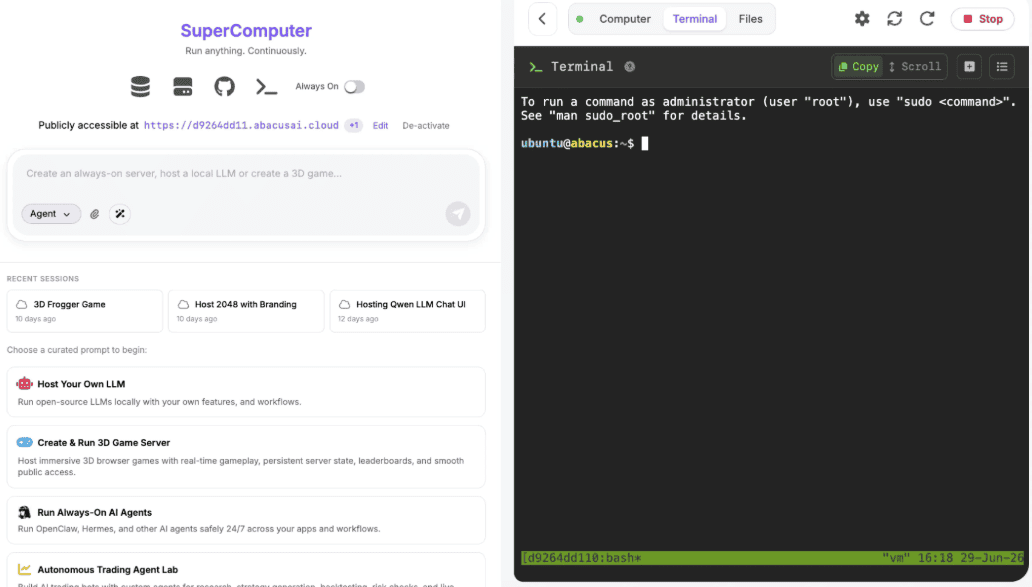
By integrating the chat layer with the infrastructure layer, Abacus AI is not just reacting to the market; it is defining the next generation of AI-native operations. Whether you are a solo founder trying to ship a product in an afternoon or a data scientist looking to deploy a custom model pipeline, the platform offers a "one-stop shop" that is rapidly becoming the industry benchmark for productivity.
Verdict: 9/10 – A powerful, ecosystem-first solution that effectively solves the problem of AI fragmentation.