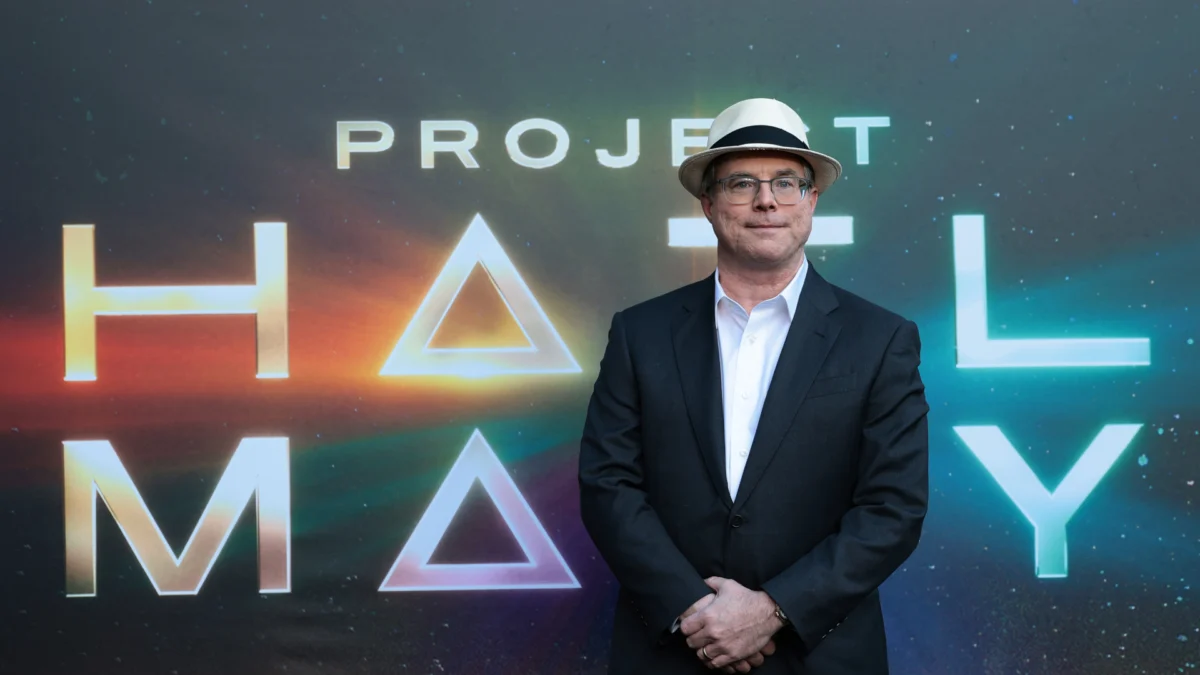
The landscape of science fiction storytelling is undergoing a radical shift. While the medium has long been dominated by the printed page and the silver screen, a new, immersive frontier is opening up in the realm of high-fidelity audio production. On November 5, 2026, Audible is set to release Exoplanet, an ambitious, star-studded celestial thriller that marks a departure from traditional narrative formats. Executive produced by Andy Weir—the mastermind behind the global phenomena The Martian and Project Hail Mary—and penned by veteran novelist and comic book scribe Benjamin Percy, Exoplanet is poised to redefine the limits of the audio drama format.
The Core Premise: A Broken Ship Across Time
At the heart of Exoplanet lies a high-concept premise that leans heavily into the hard science and existential dread that have become the hallmarks of Weir’s brand. The story follows the crew of the starship Wild Blue Yonder, a vessel that meets a catastrophic fate when it is torn apart by a mysterious quantum anomaly.
The resulting wreckage doesn’t just scatter the crew across the surface of a hostile alien world; it fragments them across the dimension of time itself. Each survivor finds themselves stranded on the same exoplanet, yet separated by vast, unbridgeable chronological gaps.
The narrative focuses on three primary survivors, each grappling with a different, nightmarish reality:
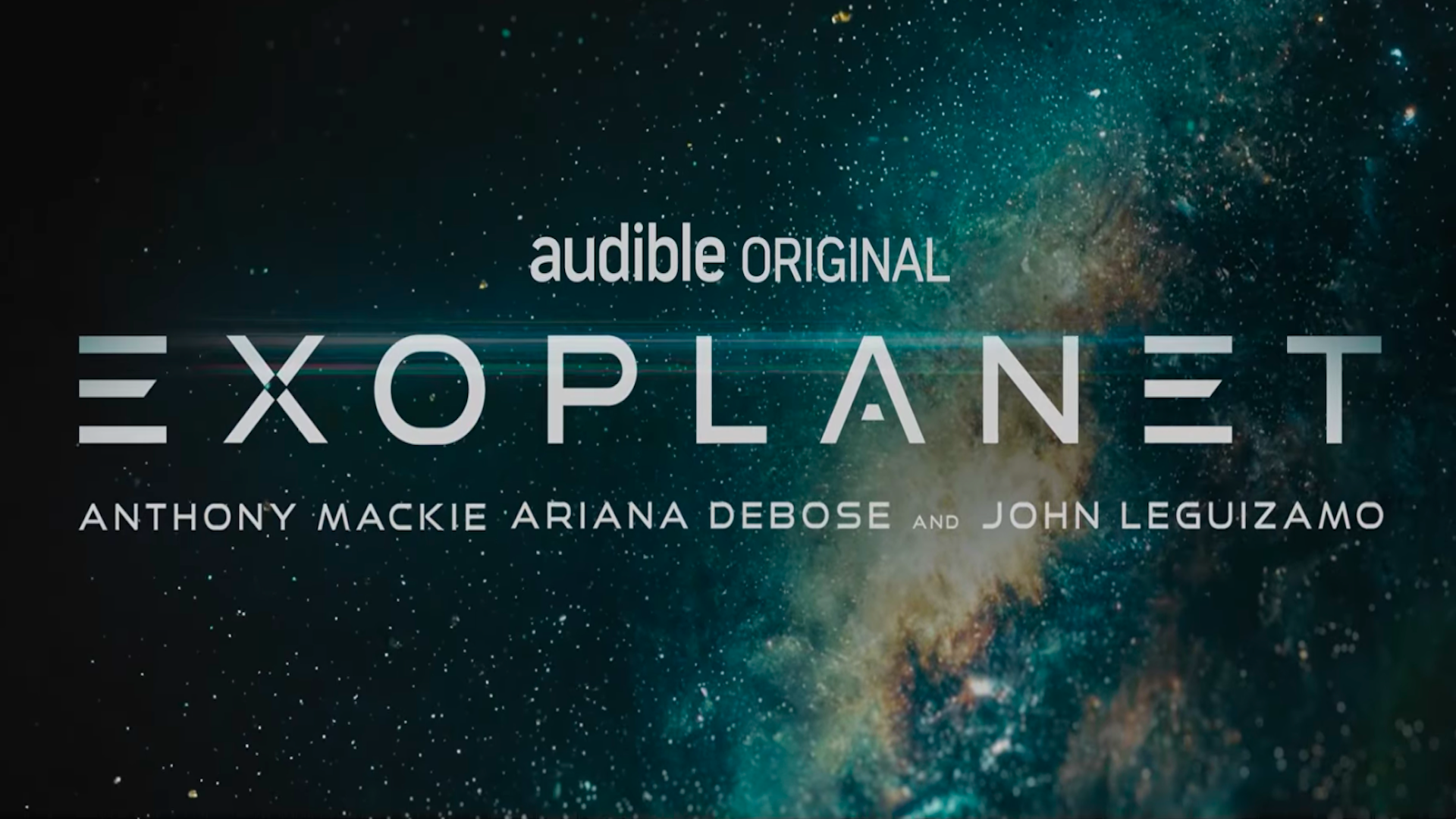
- Chief Engineer Jeff Shaw, voiced by Anthony Mackie, struggles to survive in a brutal, unforgiving present, his only anchor being a virtual assistant and a desperate, singular drive to return to his daughter.
- First Officer Becca Bang, portrayed by the Oscar-winning Ariana DeBose, must navigate the perils of a hostile, prehistoric past, fighting to maintain her humanity in a world that is fundamentally alien.
- Science Officer Logan Bowers, voiced by John Leguizamo, awakens in a cold, machine-ruled future—a timeline that, according to the laws of physics they understood, should not exist.
The mystery deepens as the survivors realize the anomaly was no accident. A malevolent, highly intelligent alien force is actively hunting them, feeding on human technology and waiting patiently across every timeline for the crew to fall. To survive, they must find a way to communicate across the centuries, bridging the gap between their isolated realities before the planet consumes them entirely.
A Chronology of Collaboration
The development of Exoplanet represents a unique convergence of talent. For Andy Weir, this project signifies a pivot from the solitary act of novel writing to the collaborative, symphonic world of audio production.
- Initial Development: Following the massive success of Project Hail Mary and its subsequent film adaptation, Weir sought a project that would exploit the specific advantages of the audio medium.
- The Partnership: Weir joined forces with Benjamin Percy, whose background in both prose (notably Red Moon) and graphic storytelling (including acclaimed runs on Wolverine and Ghost Rider) provided the necessary structural expertise to handle the complex, non-linear narrative of Exoplanet.
- Production Phase: Audible invested heavily in the soundscape of the drama, bringing in the sonic architects from Lucasfilm’s Skywalker Sound to ensure that the "crackle across a 500-year gap" sounds as visceral and terrifying as intended.
- Release Date: The production is slated for a worldwide premiere on November 5, 2026, marking a significant milestone in Audible’s original content strategy.
Production Excellence: Behind the Soundboard
What sets Exoplanet apart from standard audiobook fare is its commitment to cinematic sound design. In an era where audiences are increasingly demanding high-production value, Audible has opted to treat this project more like a film minus the visuals.
The inclusion of Skywalker Sound—a name synonymous with the sonic identity of the Star Wars universe—suggests that Exoplanet will utilize spatial audio and atmospheric layering to place the listener directly inside the Wild Blue Yonder. Furthermore, the original score, composed by Rob Cairns (known for his work on Love, Death & Robots and the upcoming Secret Level), is designed to function as an emotional compass, guiding the listener through the disorienting shifts in time and space.
The casting is equally formidable. Beyond the primary trio of Mackie, DeBose, and Leguizamo, the project features a deep bench of talent including:
- Cherry Jones: Bringing gravitas from her celebrated roles in Succession and The Handmaid’s Tale.
- Sufe Bradshaw: Known for her sharp performances in Veep and Vice.
- Charlie Plummer: A rising star with credits in The Long Walk.
- Ray Porter: A familiar voice to fans of Weir’s Project Hail Mary and The Bobiverse.
- Aida Osman: Expanding her range from Rap Sh!t into the realm of hard sci-fi.
The "Weir" Philosophy: Why Audio?
In an official statement released by Audible, Andy Weir provided insight into why he chose to step back from sole authorship to co-shepherd this project.
"I’m obsessed with problems," Weir stated. "The kind where one person and a lot of math are all that stand between survival and disaster. Benjamin Percy’s writing in Exoplanet takes that and adds a twist that genuinely kept me up at night: What if the people trying to save each other were separated not by distance, but by centuries?"
Weir’s realization that some stories are better heard than read is the core thesis of the project. The limitations of text—the inability to convey the raw, static-filled desperation of a voice trapped in a different epoch—are bypassed by the immediacy of audio. By forcing the listener to rely solely on the nuances of performance and sound, the production taps into a primordial level of fear and empathy.
Implications for the Science Fiction Genre
The success or failure of Exoplanet will likely serve as a litmus test for the future of "audio-first" science fiction.
- Narrative Complexity in Audio: For years, audio dramas were often relegated to episodic mystery or historical fiction. Exoplanet pushes the envelope by introducing complex, hard-science concepts (time dilation, quantum anomalies, and advanced engineering) that are notoriously difficult to explain in a visual medium without resorting to heavy exposition.
- The Rise of the "Super-Audio" Production: Much like the shift from radio plays to television in the 20th century, we are seeing a shift from simple audiobooks to immersive, sound-engineered dramas. This creates a new market for authors who excel at pacing and dialogue.
- Cross-Platform Storytelling: With Weir’s influence, the lines between books, audio, and film continue to blur. If Exoplanet succeeds, it is not unreasonable to speculate that it could serve as a pilot for future transmedia franchises, where the audio experience serves as the "canon" source material.
Conclusion: A Date with Destiny
As the November 5, 2026, release date approaches, the anticipation among the sci-fi community is palpable. Exoplanet is more than just an audio drama; it is an experiment in sensory storytelling. It challenges the listener to inhabit a broken universe where time is the ultimate barrier to survival.
Whether you are a devotee of Weir’s mathematical, problem-solving protagonists or a fan of Percy’s high-stakes narrative tension, Exoplanet promises to be a landmark release. It asks the ultimate question: when all that remains of your life is a voice in the dark, and five centuries of silence separate you from the ones you love, what are you willing to do to be heard?
Weir and his team are banking on the fact that the answer to that question is one that audiences are ready to hear. As the industry looks toward this November, it is clear that the future of science fiction may not be seen at all—it will be heard.