By Space.com Staff
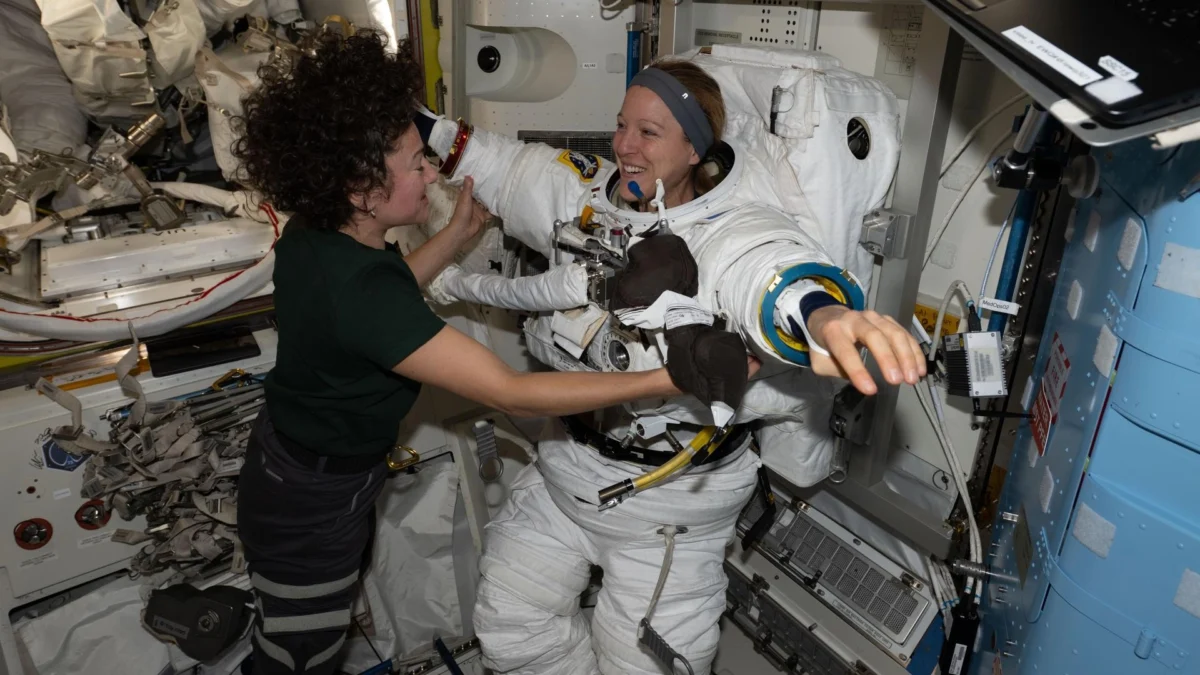
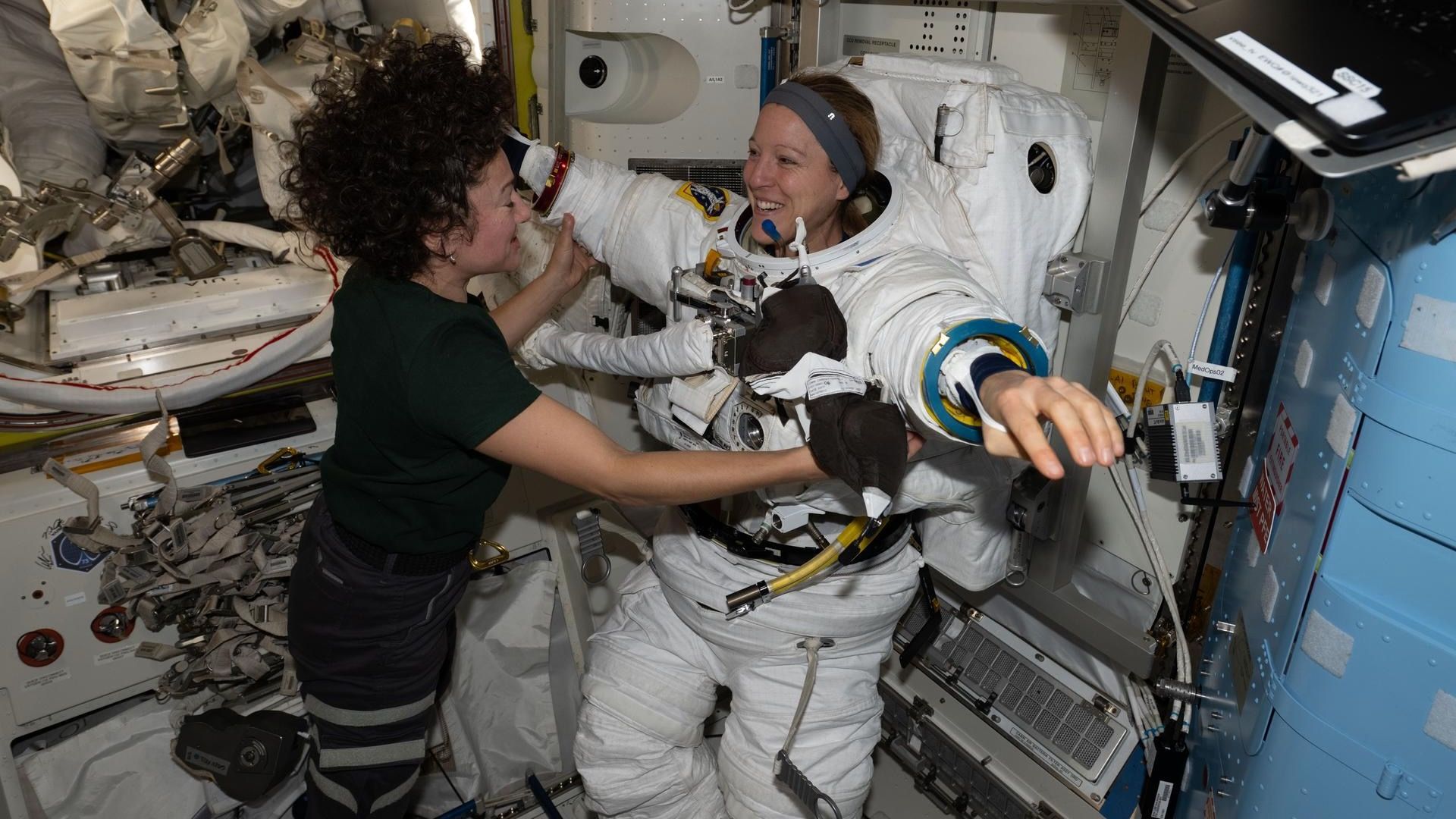
In a milestone for international space cooperation and gender representation in aerospace, two veteran astronauts are set to step into the vacuum of space today, Sept. 1, for the sixth all-female spacewalk in the history of the International Space Station (ISS). NASA astronaut Jessica Meir and European Space Agency (ESA) astronaut Sophie Adenot will egress the station’s Quest airlock to perform critical maintenance, representing a significant moment in the ongoing effort to normalize diverse crew compositions in long-duration orbital missions.
The excursion, which is expected to span approximately six and a half hours, is more than a symbolic gesture; it is a vital operational necessity. The duo will execute a complex series of tasks designed to upgrade the station’s external infrastructure, ensuring the ISS remains a viable laboratory for the remainder of its service life.
For those wishing to witness this feat of engineering and human endurance, live coverage is available via NASA TV, the agency’s official website, and Space.com. The broadcast is scheduled to begin at 7:00 a.m. EDT (11:00 GMT), with the official start of the Extravehicular Activity (EVA)—the technical term for a spacewalk—slated for 8:30 a.m. EDT (12:30 GMT).
Main Mission Objectives: Maintaining the Orbital Outpost
The primary goal of today’s EVA is to bolster the station’s technical capabilities. According to official briefings from NASA, Meir and Adenot have a dense itinerary. The most immediate priority is the replacement of a retroreflector on the forward port of the Harmony module. This hardware is critical for the automated navigation and docking systems used by visiting spacecraft, including commercial cargo vehicles and crewed capsules.
Beyond navigation, the astronauts will pivot to broader structural maintenance. The plan includes:
- Data-Relay Upgrades: The team will install high-bandwidth jumper cables to improve the station’s internal and external data-relay systems.
- Radiator Maintenance: They will prepare the Alpha Magnetic Spectrometer’s (AMS) radiator for future maintenance. The AMS is a $2 billion state-of-the-art particle physics instrument attached to the station’s exterior. Its mission—searching for dark matter and studying cosmic rays—remains one of the most significant scientific endeavors currently underway in orbit.
- Visual Hardware: The crew will replace a high-definition camera on the station’s exterior truss, a task that requires precision to ensure the station’s external monitoring capabilities remain sharp for ground control teams.
The Chronology of the EVA
The preparation for an EVA is an exhaustive process, often beginning hours before the actual egress. The crew must perform rigorous suit fit checks and verify the integrity of the Quest airlock’s seals.
Adenot, designated as "crew member 1," will be easily identifiable to viewers by the red stripes on her suit—a standard convention used by ground control to distinguish between the two astronauts during complex tasks. Meir, acting as "crew member 2," will operate in an unmarked suit.
The timeline for the mission is as follows:
- 7:00 a.m. EDT: Live broadcast coverage commences, providing an overview of the mission goals and technical challenges.
- 8:30 a.m. EDT: Formal start of the EVA as the astronauts transition to internal battery power, signaling the official exit from the ISS.
- 9:00 a.m. – 2:00 p.m. EDT: The core maintenance window, involving the installation of the retroreflector, the jumper cables, and the camera replacement.
- 2:30 p.m. – 3:00 p.m. EDT: Re-entry into the airlock, followed by the repressurization process.
A Legacy of Excellence: Contextualizing the Milestone
Today’s event is the sixth all-female spacewalk, a series that has only occurred in the last five years. The history of women in space is one of steady, hard-won progress. Jessica Meir is no stranger to these records; she was part of the inaugural all-female spacewalk on October 18, 2019, alongside NASA astronaut Christina Koch. She followed that historic event with two additional spacewalks in January 2020.
For Sophie Adenot, today marks a rapid ascent in her professional career. Only two weeks ago, she etched her name into the history books as the first French woman to perform an EVA. By joining Meir today, she adds another prestigious line to her biography.
Meir, meanwhile, continues to cement her status as one of the most experienced spacewalkers in the world. This will be her seventh EVA, placing her third in the pantheon of female NASA astronauts, trailing only the legendary Peggy Whitson, who completed 10, and Suni Williams, who completed nine. The trajectory of these numbers—from zero all-female EVAs before 2019 to six in just half a decade—reflects a fundamental shift in NASA’s recruitment and training philosophies.
Scientific Implications: The Alpha Magnetic Spectrometer
The maintenance performed on the Alpha Magnetic Spectrometer (AMS) is of particular interest to the scientific community. The AMS is a particle physics experiment designed to measure cosmic rays with unprecedented precision. By observing these high-energy particles before they are distorted by the Earth’s atmosphere, the experiment seeks to answer fundamental questions about the nature of the universe.
The primary target of the AMS is the hunt for dark matter—a mysterious, invisible substance that makes up roughly 27% of the mass-energy content of the universe. By keeping the instrument in peak condition, the astronauts are effectively acting as technicians for the most sophisticated laboratory in the cosmos. Any delay or failure in these upgrades could lead to gaps in data, making today’s physical work in the harsh environment of low Earth orbit vital to the global physics community.
Official Responses and Strategic Significance
NASA officials have emphasized that today’s mission is about more than just the "all-female" moniker; it is about mission readiness. In a recent media advisory, agency leadership underscored that the rotation of crew members for EVAs is dictated by skill sets, physical training, and mission requirements. The fact that the current crew rotation resulted in an all-female team is, according to the agency, a testament to the high caliber of both the NASA and ESA astronaut corps.
"The expertise required to conduct these maintenance tasks is significant," a NASA spokesperson stated. "Our astronauts undergo thousands of hours of training in the Neutral Buoyancy Laboratory to simulate these conditions. Whether it is Meir, Adenot, or any of our other qualified professionals, the priority remains the safety of the station and the success of the science."
Looking Toward the Future
The success of this spacewalk will also serve as a blueprint for future deep-space exploration. As NASA moves toward the Artemis program—which aims to return humans to the lunar surface and eventually move toward Mars—the ability for crews to perform complex, unassisted exterior repairs will become increasingly important.
The International Space Station continues to serve as the ultimate proving ground for these technologies. From the miniaturization of tools to the development of more ergonomic, flexible spacesuits, the lessons learned during today’s six-hour excursion will be applied to the next generation of human spaceflight.
As the world watches the feed from the ISS today, the focus will undoubtedly be on the skill and steady hands of Meir and Adenot. They are not merely performing repairs; they are participating in a continuous legacy of exploration that has moved from the first steps in orbit to the sustained presence required for the future of humanity among the stars. Whether one views this through the lens of gender equality or the lens of technological achievement, the reality remains clear: the frontiers of space are expanding, and today, two remarkable individuals are at the helm.