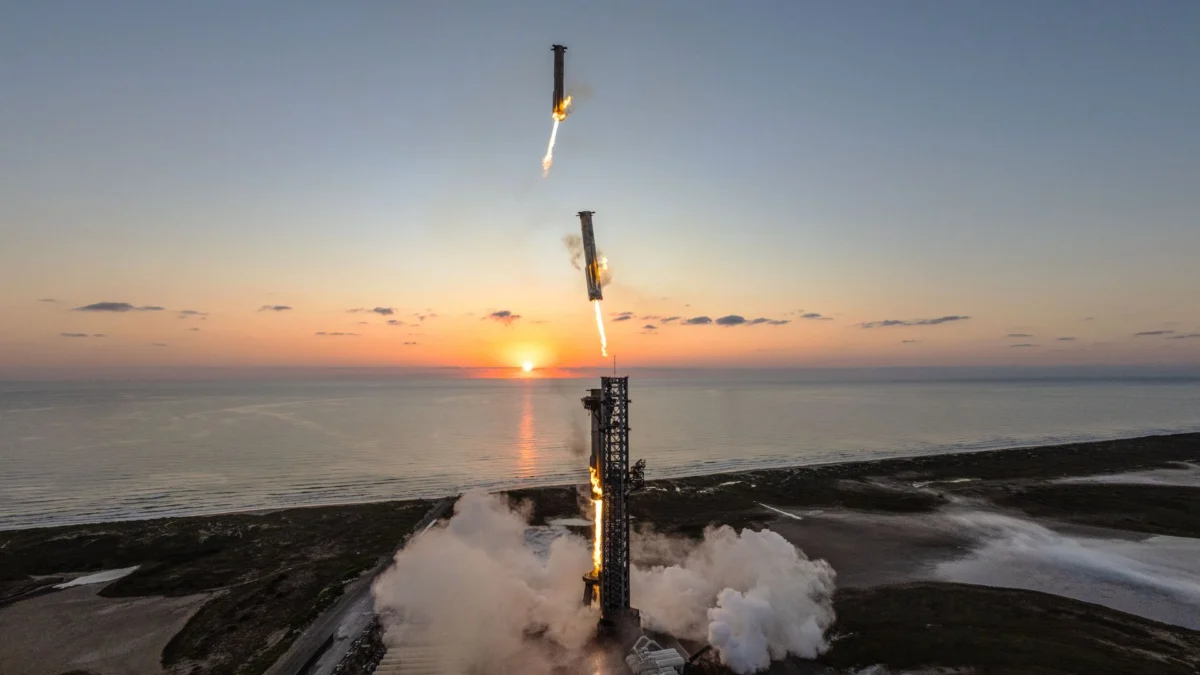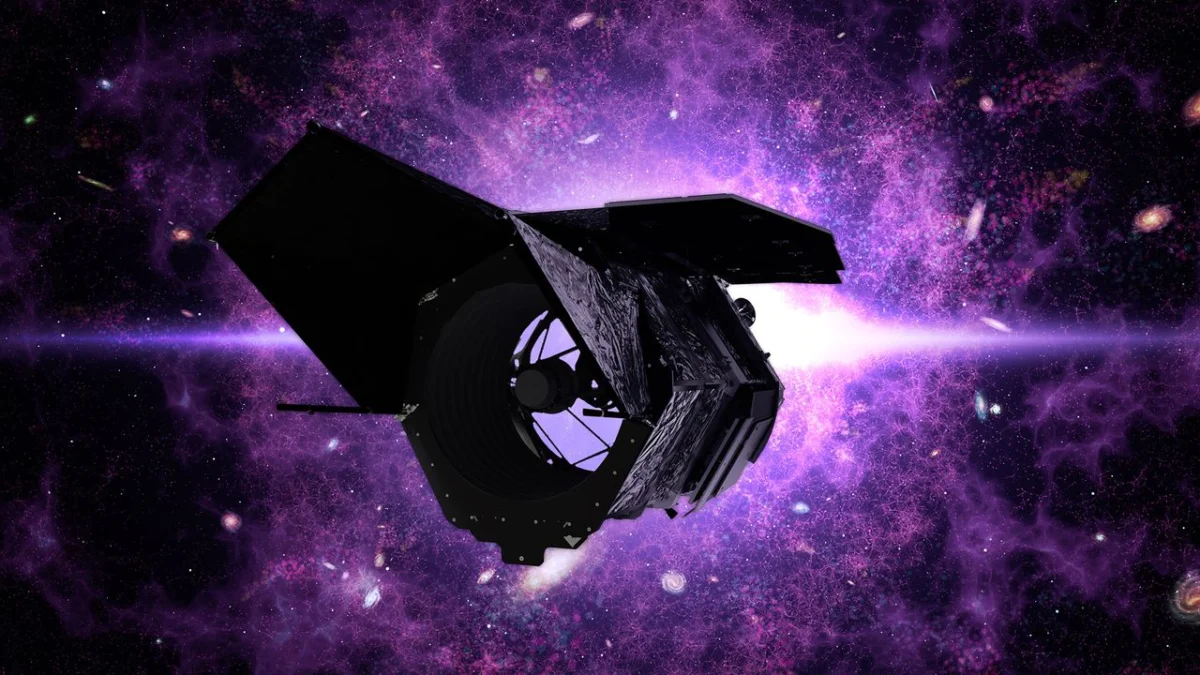
On August 30, 2026, the silence of the Florida coastline was shattered by the thunderous ascent of a SpaceX Falcon Heavy rocket, carrying aloft what many astronomers believe will be the most significant leap in observational capability since the deployment of the Hubble Space Telescope. The payload, NASA’s Nancy Grace Roman Space Telescope, successfully cleared the atmosphere, beginning a million-mile journey to the second Lagrange point (L2). While the successful launch marks a triumph of modern engineering, the true scientific odyssey is only just beginning.
The Mission: Unveiling the Dark Universe
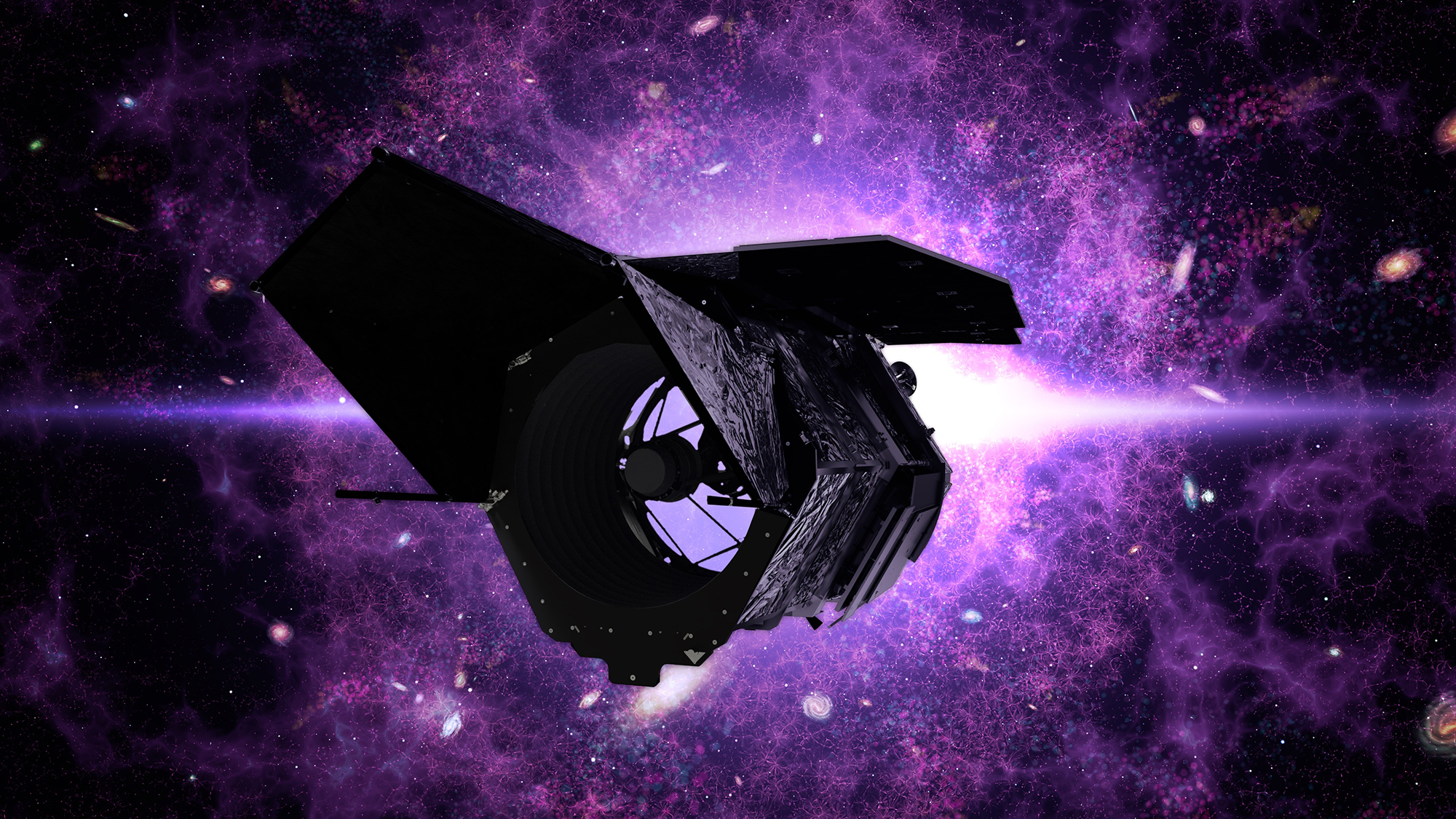
Named in honor of Dr. Nancy Grace Roman—NASA’s first Chief of Astronomy and the woman often credited as the "Mother of Hubble"—this mission is designed to address some of the most profound mysteries in cosmology. The telescope is not merely an imaging tool; it is a time machine. By peering into the infrared spectrum with unprecedented clarity, the Roman Space Telescope will attempt to map the history of the universe’s expansion, providing critical data on the nature of dark energy and dark matter.
Dark energy, the mysterious force accelerating the expansion of the cosmos, remains one of the greatest enigmas in modern physics. Roman is equipped to perform large-scale surveys of galaxies, enabling researchers to measure the "cosmic web" with a precision that was previously impossible. By understanding how the universe has evolved over billions of years, scientists hope to discern whether dark energy is a static constant or a dynamic force that changes over time.
Chronology: From Launch to First Light
The path from the launchpad to scientific discovery is a delicate, months-long process. The following timeline outlines the critical milestones for the mission’s first year:
- August 30, 2026: Successful launch via SpaceX Falcon Heavy. The observatory separates from the launch vehicle and begins the transit to its destination.
- September 2026: The 30-day "cruising phase." During this time, the telescope will execute a series of trajectory correction maneuvers to ensure it arrives at the L2 point with the correct velocity and orientation.
- October 2026 – December 2026: The commissioning phase. Once at L2, the observatory will undergo rigorous testing. This includes the deployment of the sunshield, the calibration of the Wide Field Instrument (WFI), and the verification of the Coronagraph Instrument (CGI).
- Early 2027: Official commencement of the primary mission. This period marks the start of the "first light" observations, where the telescope will begin its planned multi-year survey of the heavens.
Destination: The L2 Advantage
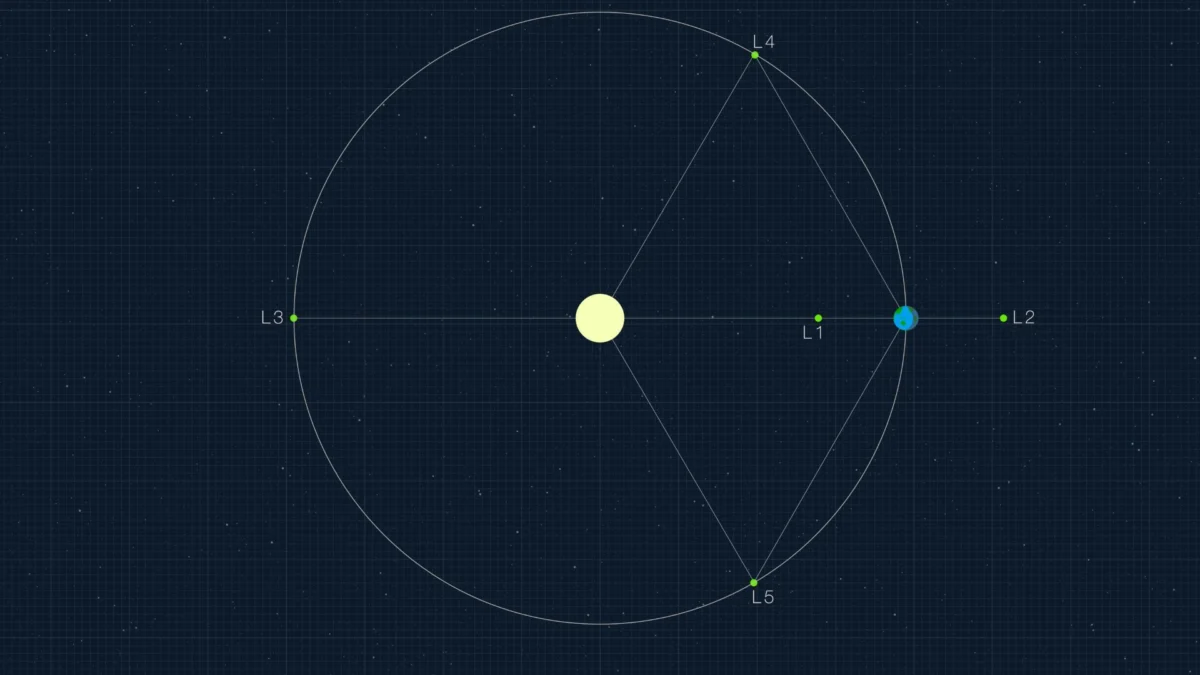
The Nancy Grace Roman Space Telescope is headed to the Sun-Earth Lagrange Point 2 (L2), a location approximately 930,000 miles (1.5 million kilometers) from Earth. This location is not arbitrary; it is a gravitational sweet spot where the combined pull of the Sun and Earth allows a spacecraft to maintain a stable, halo-like orbit with minimal fuel consumption.
L2 offers several distinct advantages. First, the telescope will be positioned with the Earth, Moon, and Sun behind its massive sunshield. This ensures that the instrument remains in near-total darkness, shielding it from the thermal and optical interference that would otherwise degrade its sensitive infrared cameras. Second, the thermal stability of L2 allows the telescope to operate at cryogenic temperatures, which is essential for capturing the faint thermal signatures of distant exoplanets.
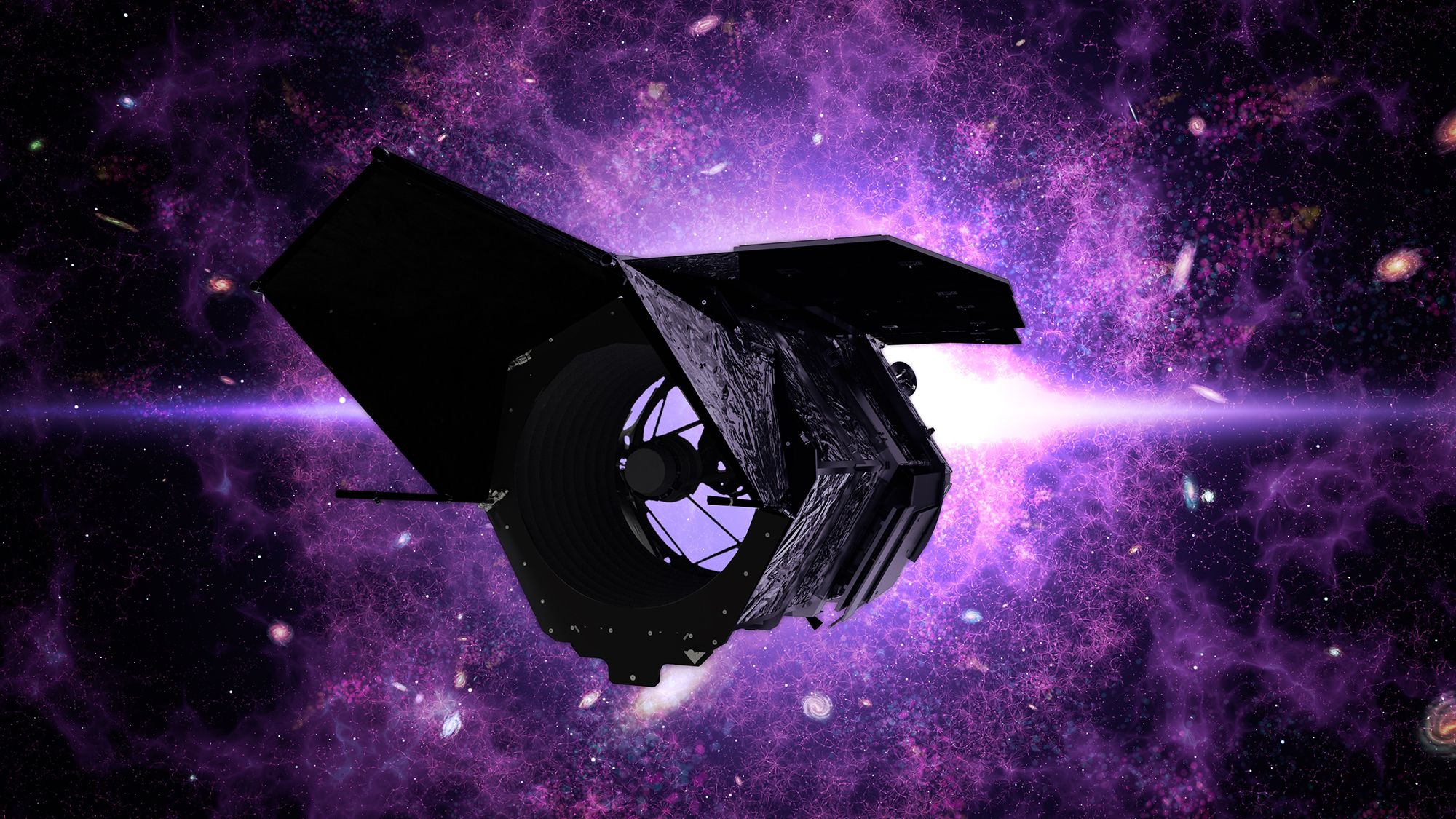
Despite the crowded nature of this region—already home to the James Webb Space Telescope (JWST) and the European Space Agency’s Euclid—there is no risk of collision. The Roman telescope will trace a wide, complex orbit around the L2 point, ensuring that it remains safely separated from its predecessors by hundreds of thousands of miles.
Technical Specifications: The Power of the WFI and CGI
The scientific payload of the Roman telescope is divided into two primary instruments, each serving a unique, high-stakes function.
The Wide Field Instrument (WFI)
The WFI is the heart of the mission. It is a 300-megapixel infrared camera that boasts a field of view 100 times larger than that of Hubble. This "panoramic" capability allows Roman to conduct wide-area surveys that would take Hubble centuries to complete. By capturing vast swaths of the sky, the WFI will generate a census of galaxies, helping to create a three-dimensional map of the universe that reveals how matter has clumped together over cosmic time.
The Coronagraph Instrument (CGI)
While the WFI looks at the macro-scale, the CGI focuses on the micro-scale—or, more accurately, the stellar-scale. A coronagraph is an instrument designed to block the blinding light of a host star, allowing astronomers to detect the faint light reflected by orbiting planets. The Roman CGI is a technology demonstration, but it is expected to be a generational leap in sensitivity, capable of spotting planets that are a billion times fainter than their parent stars. This will provide unprecedented insight into the chemical compositions of exoplanetary atmospheres, potentially identifying markers of habitability.
Official Perspectives
NASA leadership has framed the Roman telescope as a critical pillar of the agency’s "Great Observatories" lineage. During the post-launch press conference, mission leads emphasized the collaboration required to reach this stage.
"We are standing on the shoulders of giants," said a spokesperson from the Roman project office. "By combining the heritage of Hubble’s longevity and Webb’s infrared sensitivity, we have created an observatory that doesn’t just see further; it sees wider and faster. We are no longer just looking at the universe; we are surveying it as a living, evolving organism."
The scientific community has echoed this enthusiasm. While the mission is formally slated for a five-year lifespan, there is a pervasive optimism that it will, like its predecessors, outlast its design specifications. Given the success of missions like the Chandra X-ray Observatory, which has remained operational for over a quarter-century, there is every reason to believe that Roman will be a cornerstone of astronomy well into the 2030s.
Implications for the Future of Astronomy
The implications of the Roman mission extend beyond the data it will collect. It represents a shift in how NASA approaches "survey science." Rather than focusing on single, isolated targets, Roman is designed to produce massive data sets that will be utilized by the global scientific community for decades.
Furthermore, the technology being tested in the CGI—specifically the advanced masks and adaptive optics used to suppress starlight—will serve as the blueprint for future flagship missions, such as the proposed Habitable Worlds Observatory. If Roman can successfully image a terrestrial planet in a distant solar system, it will effectively turn the search for extraterrestrial life from a theoretical exercise into a systematic observation program.
Conclusion
As the Nancy Grace Roman Space Telescope coasts through the vast, cold expanse of space, the world waits in anticipation. We are currently in the "quiet period" of the mission—a time of intense monitoring by ground controllers at the Goddard Space Flight Center. However, when the shutters finally open in 2027, the images and data that return will fundamentally rewrite our textbooks.
The history of space exploration is a testament to human curiosity, and with the launch of the Roman telescope, that curiosity has been rewarded with a new set of eyes. Whether it is confirming the nature of dark energy or identifying the next "Earth 2.0," the mission promises to be a crowning achievement in our collective attempt to understand our place in the cosmos. For now, we wait—a few more months for the most sophisticated eye ever built to focus its gaze on the infinite.