

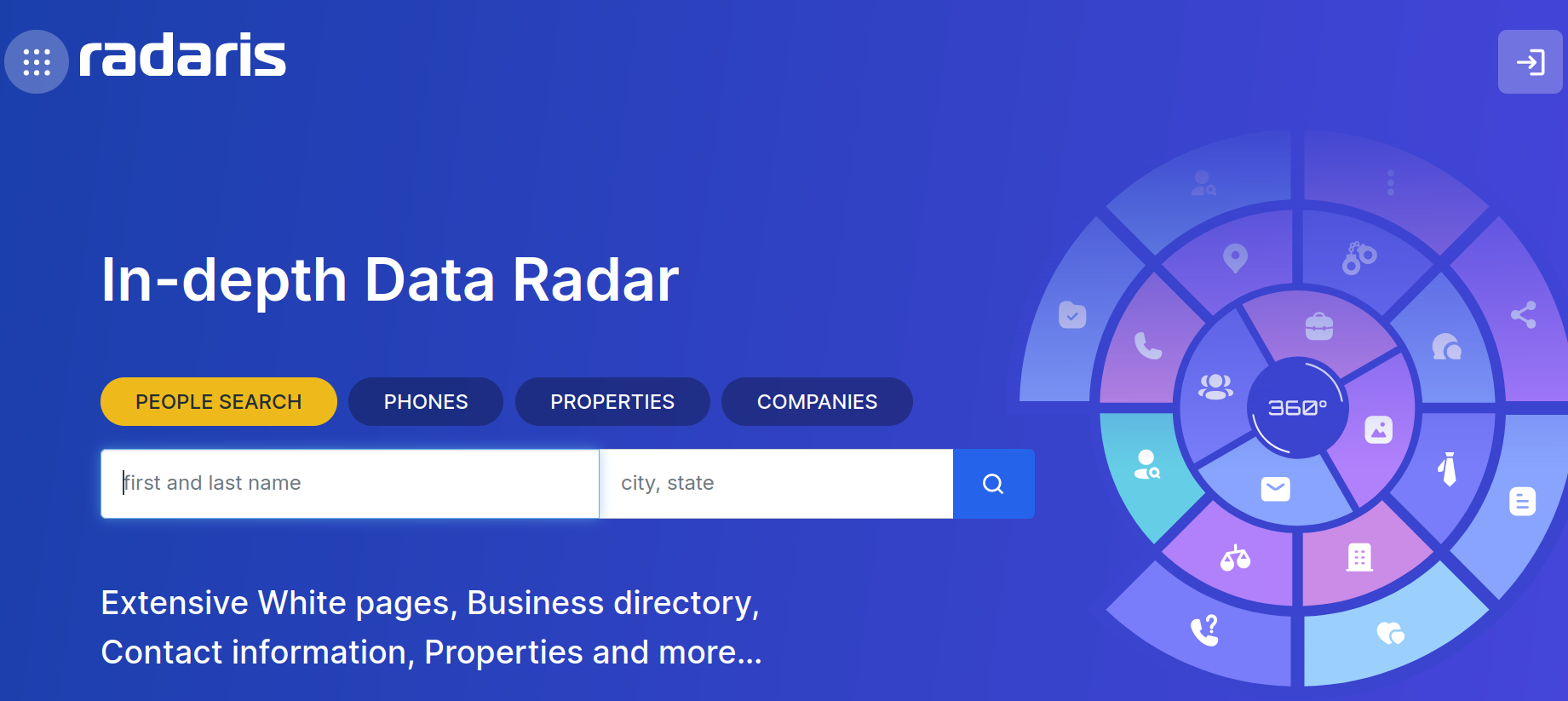
For years, the consumer data broker Radaris.com operated with a sense of untouchable impunity. As a massive aggregator of personal information—pulling everything from home addresses and criminal records to marriage certificates and professional licenses—it built an empire on the premise that privacy was a commodity to be sold, not a right to be protected. However, that reputation for stonewalling removal requests finally collided with the relentless machinery of the judicial system.
In a landmark development, a New Jersey court has ordered the transfer of Radaris.com and over a dozen associated data-broker domains to Atlas Data Privacy Corp. This move follows a protracted legal war centered on "Daniel’s Law," a New Jersey statute designed to shield law enforcement officers, government personnel, and their families from the invasive practices of the people-search industry.
The Genesis of a Legal Reckoning
The conflict began in February 2024, when Atlas Data Privacy Corp initiated litigation against Radaris, alleging systematic violations of Daniel’s Law. The statute is explicit: it empowers protected classes of public servants to demand the total removal of their personal data from commercial databases, with non-compliance triggering fines of $1,000 per violation.
Radaris, which had long ignored such requests, attempted to leverage its typical strategy: obfuscation. The company’s legal representatives engaged in a cycle of delay, procedural maneuvering, and what Atlas executives characterize as a "shell game" regarding the true ownership and physical origin of their operations.
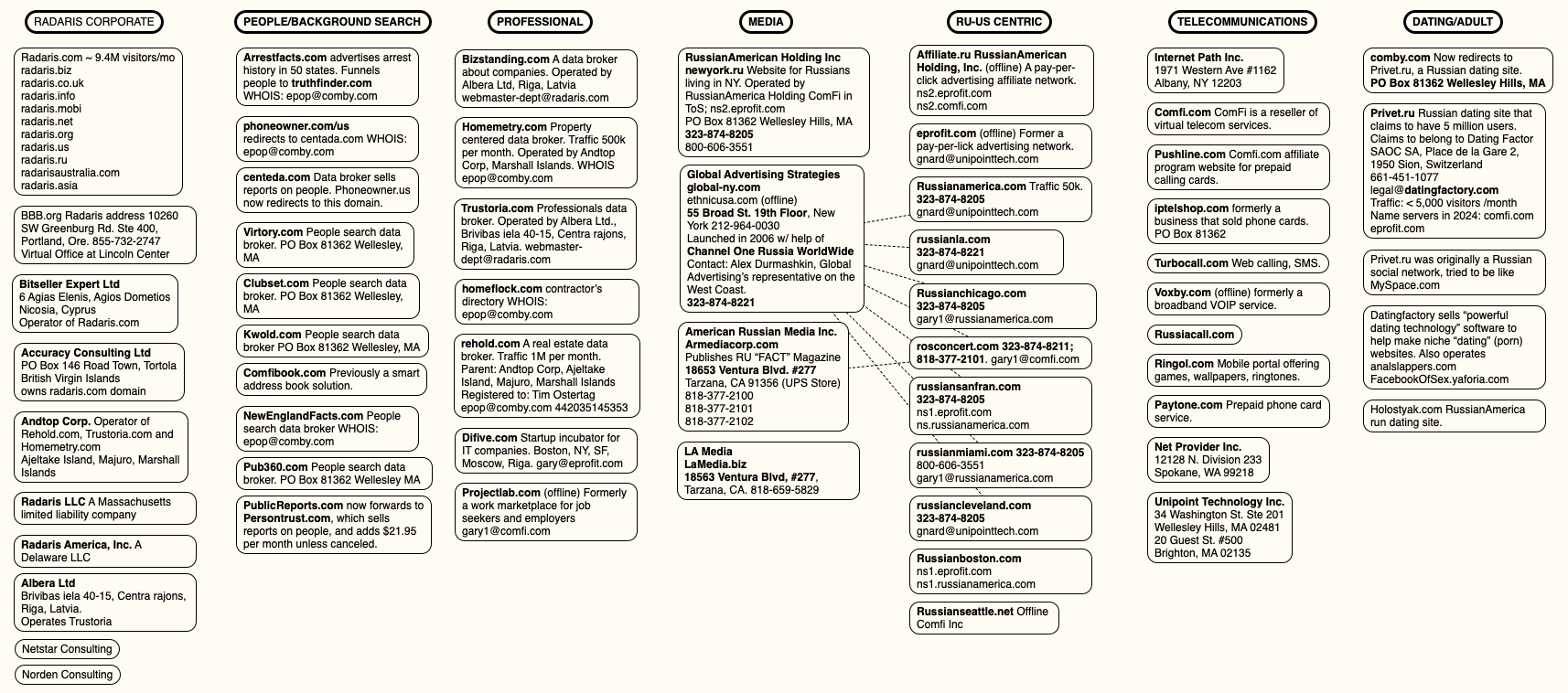
The Lubarsky brothers—Igor and Dmitry—who were revealed to be the masterminds behind the operation, initially fought back by threatening defamation lawsuits against investigative journalists who sought to pull back the curtain on their network. Despite these threats, court filings and independent investigations have confirmed that Radaris was just one node in a sprawling, interconnected web of entities designed to shield its owners from accountability.
Chronology of the "Island-Hopping" Defense
The legal battle exposed a sophisticated, multi-year strategy used by the Lubarsky brothers to evade jurisdiction.
- 2017: Radaris lost a class-action lawsuit by failing to appear in court. When a $7.5 million default judgment was issued, the court initially ordered the transfer of the domain. However, Radaris successfully appealed, arguing the plaintiffs hadn’t named the "true" owner—a Cyprus-based company called Bitseller Expert Limited. The plaintiffs, exhausted by the procedural hurdles, failed to refile.
- 2020: Following the 2017 near-miss, the operators shifted the management of Radaris to "Andtop Company," an entity incorporated in the Marshall Islands.
- February 2024: Atlas Data Privacy Corp sued Radaris, marking the start of a more aggressive, well-resourced legal campaign.
- March 2024: Investigative reporting by KrebsOnSecurity exposed that Radaris had been utilizing a fictitious CEO, "Gary Norden," to solicit investment and provide a veneer of corporate legitimacy.
- June 2025: After Radaris attorneys attempted to dismiss the case by claiming the wrong parties had been served, Atlas re-filed, expanding the scope to cover an array of sister companies.
- August 2026: A New Jersey judge, citing the defendants’ consistent failure to defend the claims despite ample opportunity, ordered the transfer of 14 domains, including the flagship Radaris.com, to Atlas.
Matt Adkisson, CEO of Atlas Data Privacy, described this period as the company’s "island-hopping phase." By constantly shifting corporate registration between the Seychelles, the British Virgin Islands, and the Marshall Islands, the operators hoped to turn the litigation into a war of attrition.
The Mechanics of the Data Empire
The scale of the operation is staggering. According to evidence gathered by Atlas during the discovery process—which included over 10,000 emails and internal documents—Radaris was never an independent entity. Instead, it was part of a centralized machine that shared bank accounts, payment processors, and technical infrastructure.
Internal documents reveal that the "Radaris family" includes entities such as Radaris America, Inc., Virtura Corp, Veripages Inc., and Nuform Solutions Inc. These sites, which claim to be distinct, are all administered from the same Boston-area hub.
Financial disclosures within these documents suggest that Radaris.com generates roughly $42,000 in monthly revenue, while its sister site, Veripages.com, earns approximately $45,000. These revenue streams are bolstered by partnerships with mainstream advertising firms, such as the Lifetime Value Company, and—ironically—data-removal services like Onerep, which have themselves been criticized for operating their own data-search portals.

Official Responses and Legal Friction
The transition of the domain has not been without pushback. Mr. Victor Worms, the current attorney for the Radaris interests, maintains that the court’s order is fundamentally flawed.
"We have made a motion to vacate that default judgment on the grounds that it is void since a non-entity has no legal capacity to sue or be sued," Worms stated. He further argued that the forfeiture of the domain violates constitutional principles regarding due process.
Conversely, the plaintiffs view the transfer as a necessary intervention. Raj Parikh, a partner at PEM Law who represents Atlas, noted that the legal victory was essential for public safety. "We were acutely aware of the threat this website posed to law enforcement officers… we decided early on to commit whatever time and resources were necessary to remove that threat."
The Broader Implications: A Privacy Vacuum
The Radaris case is a microcosm of a much larger crisis in American digital privacy. While Daniel’s Law offers a reprieve for specific public servants, it is currently being challenged in federal courts as an unconstitutional infringement on the First Amendment.
The data broker industry is fighting these laws tooth and nail, backed by powerful lobbying efforts. As privacy expert Justin Sherman points out, the lack of a comprehensive federal privacy law creates a "regulatory Swiss cheese" effect.
"The average person can look at Daniel’s Law and have a perfectly normal reaction, which is that everyone should be covered, not just police and judges," says Sherman. "But we don’t need more wake-up calls. We’ve had eight million wake-up calls already."
The reality is that state-level laws often exclude "public records"—a category so broad it captures voter registries, property filings, marriage certificates, and motor vehicle records. Without a federal mandate that treats the sale of personal data as a systemic security risk rather than a commercial opportunity, companies like the ones operated by the Lubarsky brothers will simply continue to pivot.
Conclusion: The Road Ahead
As of today, Radaris.com no longer functions as a search engine for private information. Instead, it serves as a digital monument to the court-ordered transfer, displaying a notice from Atlas and linking to the investigative journalism that helped bring the operation to light.
However, the legal war is far from over. With dozens of similar lawsuits working their way through federal courts and the potential for a Supreme Court showdown looming, the future of personal data regulation in the United States remains precarious. For now, the transfer of Radaris represents a rare, tangible victory for privacy advocates—a reminder that even the most well-hidden, island-hopping data brokers can, under the right pressure, be held accountable for the data they harvest and the threats they enable.
As Congress continues to deliberate on the necessity of comprehensive privacy reform, the American public remains the product in an unregulated market, waiting for the day when their digital lives are no longer the default currency of the internet.