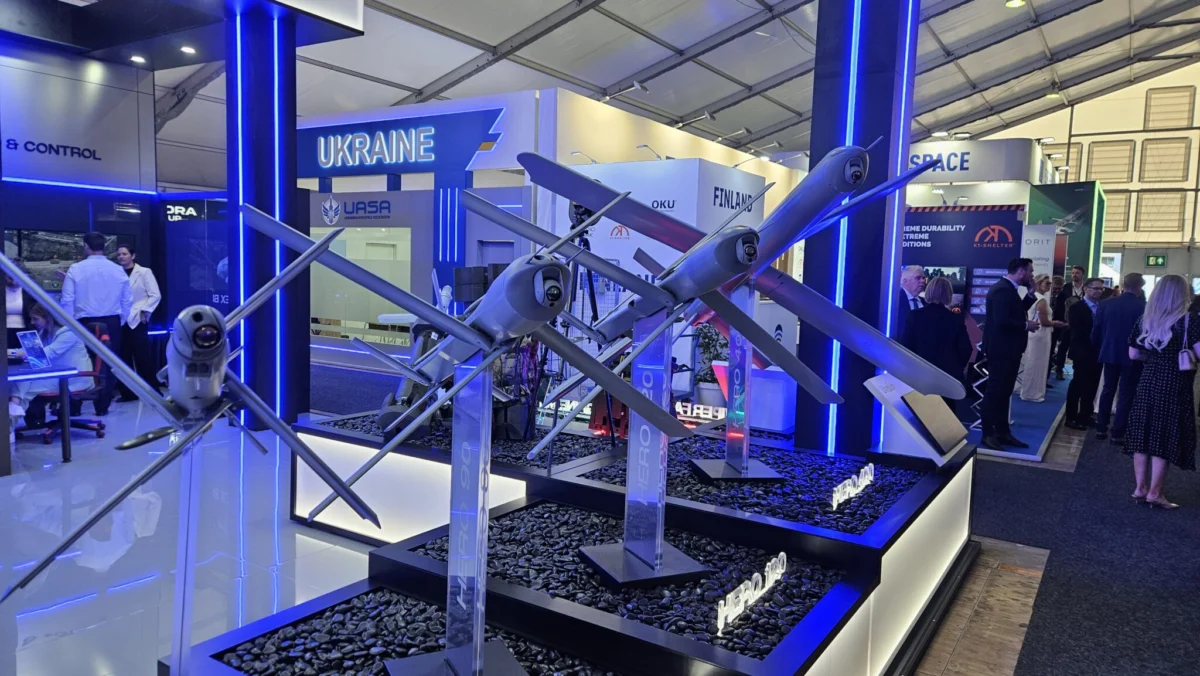
JERUSALEM — In a move that signals a significant shift toward the integration of artificial intelligence in tactical warfare, Israeli loitering munition specialist Uvision has announced a strategic partnership with Estonian autonomous systems developer Lendurai. The collaboration, formalized on September 24, 2026, aims to equip Uvision’s fleet of "Hero" loitering munitions with advanced software suites specifically designed to navigate the complexities of modern, contested operational environments.
The agreement marks a pivotal moment for both companies. For Uvision, it represents a concrete expansion into the Baltic defense market—a region currently characterized by an urgent, high-stakes modernization drive. For Lendurai, it serves as a high-profile validation of its "Neocortex" software, a system that has reportedly earned its reputation in the crucible of the war in Ukraine.
Main Facts: A Convergence of Hardware and Software
At the heart of this partnership is the integration of Lendurai’s proprietary software—notably the Neocortex system—into Uvision’s combat-proven Hero platforms. While the companies have remained tight-lipped regarding the specific variant of the Hero series being modified, the deal is explicitly destined for an unnamed NATO customer.
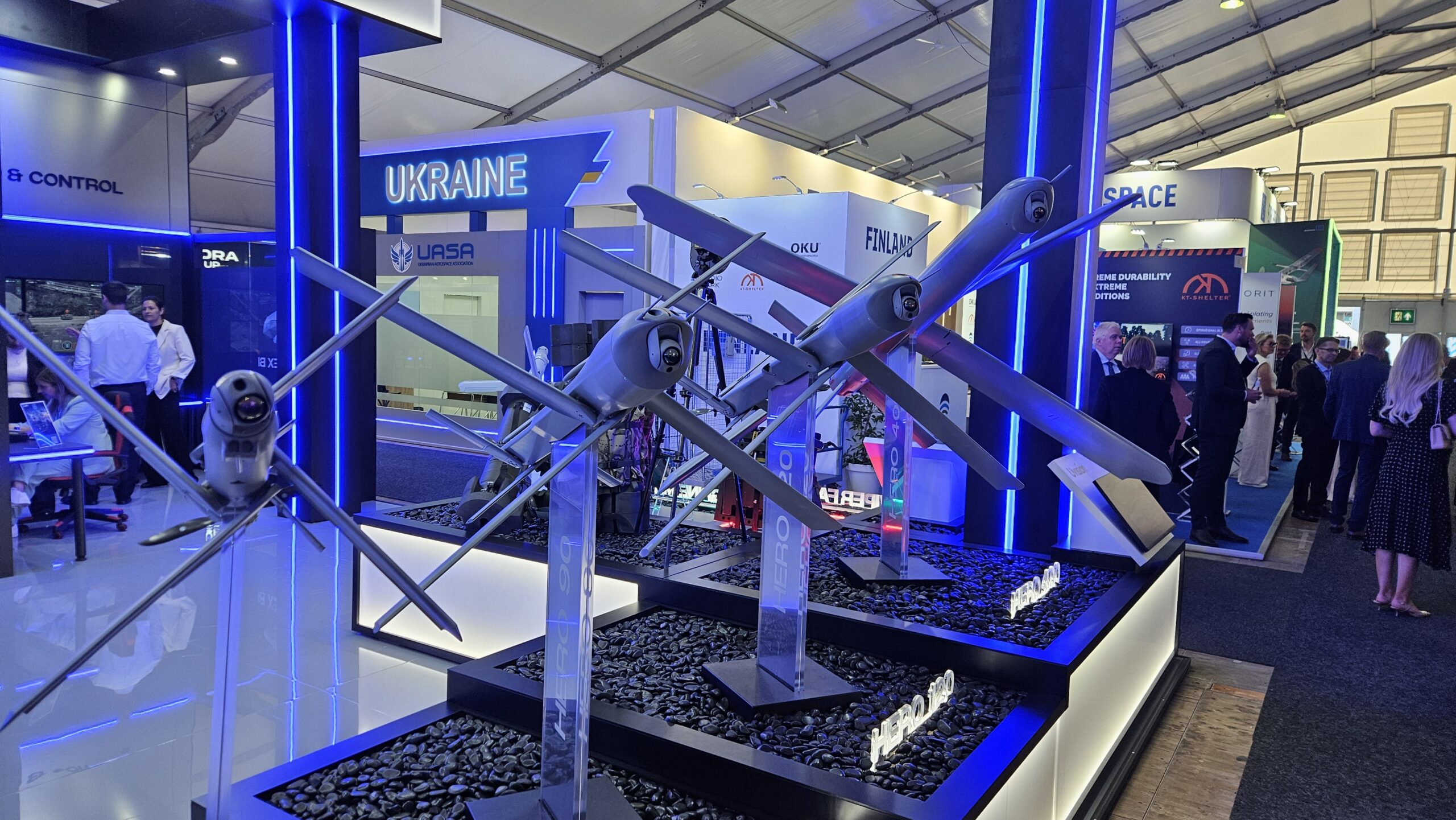
Uvision, a pioneer in the loitering munition sector since its founding in 2011, has built its reputation on the "Hero" family of systems. These munitions are characterized by their ability to deploy wings post-launch, allowing them to loiter over a target area, identify high-value threats, and execute precision strikes. By incorporating Lendurai’s AI-driven autonomy, Uvision aims to move beyond traditional teleoperated strikes toward a model where munitions can autonomously identify, track, and potentially engage targets with minimal human intervention, even in environments where GPS and communications are jammed by electronic warfare (EW).
Chronology: Building the Modern Arsenal
The path to this partnership reflects the rapid acceleration of the global drone market over the last two years:
- 2011: Uvision is founded in Israel, beginning its focus on loitering munitions.
- 2023–2024: The war in Ukraine demonstrates the paradigm-shifting role of low-cost, AI-enabled loitering munitions. Lendurai’s Neocortex system gains "battle-proven" status through its deployment in these high-intensity conditions.
- October 2025: Uvision secures a landmark nearly $1 billion contract, partnering with US-based Mistral to supply Hero-120 munitions to the United States Army, signaling a massive scale-up in manufacturing and international trust.
- March 2026: Recognizing the growing demand in Europe, Uvision establishes "Uvision Europe," a Munich-based subsidiary intended to act as a hub for its continental operations.
- June 2026: At the Berlin Air Show, Uvision unveils "Cortex," a battle management system designed to unify its disparate platforms—the Hero series, the Viper, and the Peregrine—into a singular, sensor-fused network.
- September 24, 2026: The partnership with Estonia’s Lendurai is signed, marking Uvision’s first major public entry into the Baltic security ecosystem.
Supporting Data: The Baltic Security Context
The choice of an Estonian partner is not coincidental. Estonia, alongside its Baltic neighbors Lithuania and Latvia, has become a frontline in the efforts to modernize NATO’s eastern flank. Faced with an increasingly aggressive and unpredictable posture from the Russian Federation, these nations have been forced to rapidly re-evaluate their defense budgets and procurement priorities.
Estonia, in particular, has emerged as a European leader in digital sovereignty and autonomous software. The nation’s defense strategy prioritizes "asymmetric capabilities"—solutions that allow a smaller force to neutralize a technologically or numerically superior adversary.
Lendurai’s portfolio, which includes the Accipiter drone interceptor, aligns perfectly with this strategy. The Neocortex system is designed to process massive amounts of visual and sensor data in real-time, allowing drones to maintain mission objectives even when the "human-in-the-loop" connection is severed. As the Baltic states look to replenish their munitions stockpiles, the integration of Israeli hardware with Estonian software offers a "best-of-breed" solution that is highly attractive to NATO procurement officials.
Official Responses: Aligning for the Future
The leaders of both firms emphasized that this is not merely a vendor-client relationship, but a foundational step toward long-term technological synergy.
Ran Gozali, CEO of Uvision:
"AI-enabled autonomy is becoming increasingly important in addressing the complexity of modern operational environments. This partnership allows us to integrate sophisticated software capabilities directly into our combat-proven smart systems, ensuring we remain at the forefront of the evolving needs of NATO Forces. We are building the future of precision strike capability."
Siim Maivel, CEO of Lendurai:
"Combining our AI and autonomy expertise with Uvision’s proven unmanned systems creates a unique opportunity. We are delivering capabilities that are not just theoretical, but tailored to the real operational requirements we see on the battlefield today. This deal lays the essential groundwork for broader, deeper cooperation in the future."
Implications: The Future of NATO Tactical Warfare
The Uvision-Lendurai partnership carries profound implications for the future of warfare in Europe and beyond.
1. The Death of the "Dumb" Munition
The transition toward AI-enabled munitions suggests that the era of "dumb" bombs or basic teleoperated drones is coming to a close. By offloading target identification to an onboard AI, munitions can operate in "denied" environments. This reduces the cognitive load on the operator, who can manage a swarm of assets rather than focusing on a single flight path.
2. Strengthening the "Baltic Shield"
For NATO, this partnership represents a hardening of the eastern flank. By localizing the production and integration of these systems within Europe—specifically through the Munich subsidiary and Baltic partnerships—Uvision is reducing the logistical tail and political risks associated with relying on non-European supply chains during a period of high-intensity conflict.
3. The Rise of the "System-of-Systems"
With the introduction of the Cortex battle management system earlier in 2026, Uvision is clearly moving toward a "system-of-systems" approach. The inclusion of Lendurai’s software into the Hero platforms ensures that these munitions are not isolated units, but nodes in a larger, interconnected network. In this environment, a reconnaissance drone could spot a target, the Cortex system could assign it to a Hero munition, and the Neocortex AI could handle the final terminal guidance—all in a matter of seconds.
4. Competitive Pressure on Global Defense Contractors
This alliance puts significant pressure on legacy defense contractors who have been slower to adopt AI integration. As smaller, agile firms like Uvision and Lendurai demonstrate that they can deploy battle-ready AI, the expectation for larger defense conglomerates to innovate at a similar pace will grow. The near $1 billion US Army contract suggests that the appetite for these agile, high-tech systems is insatiable.
Conclusion
The partnership between Uvision and Lendurai is more than a commercial agreement; it is a tactical evolution. As the security architecture of Europe continues to transform, the ability to deploy intelligent, autonomous, and precise munitions will become the hallmark of a credible deterrent. By marrying Israel’s decades of combat experience with Estonia’s cutting-edge software engineering, the two companies have positioned themselves as essential architects of the modern NATO battlefield.
Whether this technology will be tested in the near term remains a matter of geopolitical speculation, but the intent is clear: the next generation of NATO defense will be powered by code, guided by AI, and delivered with surgical precision.