WASHINGTON and DAYTONA BEACH, FLA. — The U.S. Department of Defense (DoD) finds itself locked in an increasingly precarious cycle: despite repeated, high-level pledges to modernize its arsenal and accelerate the delivery of cutting-edge weaponry, the Pentagon’s acquisition apparatus is stalling. A comprehensive new report from the Government Accountability Office (GAO) paints a stark picture of a system struggling under the weight of its own complexity, technological ambition, and chronic workforce shortages.
The report, released today, indicates that the average time required to deliver a new military capability has surged to over 12 years. Perhaps more alarming is the GAO’s assessment that this figure may actually be an optimistic undercount, as many program managers have opted to omit updated delivery timelines, effectively masking the true extent of the delays.
The Structural Breakdown: Why Timelines Are Crumbling
The Pentagon has long sought to circumvent traditional, sluggish procurement cycles through "Middle Tier Acquisition" (MTA) authorities. Designed to fast-track the design and fielding of weapons within a five-year window, these pathways were intended to provide a much-needed injection of agility into the DoD’s portfolio. However, the GAO’s findings suggest these shortcuts have become victims of their own design.
Many of these rapid-fielding programs are faltering because they rely on "immature technologies"—industry jargon for hardware and software that have yet to be proven reliable or ready for mass deployment. The GAO’s overarching recommendation to the Pentagon is clear: military programs must be forced to start with mature technologies or, at the very least, develop unproven systems as independent research efforts before integrating them into major acquisition programs. The DoD has formally agreed with this assessment, yet the current portfolio remains littered with programs that continue to bypass these fundamental engineering safeguards.
Chronology of Stagnation: A Service-by-Service Review
The GAO report serves as an annual audit of the state of the nation’s weapons systems, and the 2026 data reveals a pervasive trend of "significant delays" across all military branches.
The Air Force: Training and Secrecy
The Air Force’s T-7 Red Hawk jet trainer has become a case study in procurement friction. Despite an April decision to initiate production, the service remains years away from full developmental testing, which is now not expected to conclude until April 2028. Secondary requirements are slated to drag on into 2029. The delays are attributed to a trifecta of systemic failures: insufficient maintenance personnel, a persistent lack of spare parts, and unforeseen complications in finalizing the aircraft’s complex software suites.
Meanwhile, the VC-25B—the next generation of "Air Force One"—remains a high-stakes puzzle. While the program has achieved a milestone by finalizing its cabin configuration and resolving early cabin-pressure risks, the project is still plagued by structural rework and a grueling certification process. The Air Force is currently struggling to transition airworthiness certification duties from the FAA to internal military teams, a move that adds significant administrative risk to an already compressed testing schedule.
Perhaps most critically, the Air Force’s Hypersonic Attack Cruise Missile (HACM) program is now operating with "zero margin" for error. Having already reduced its planned test flights from seven to five, the program faces the reality that a single failed test could derail the entire rapid-prototyping effort, jeopardizing the goal of fielding the weapon by fiscal year 2027.
The Army: The Hypersonic Hurdle
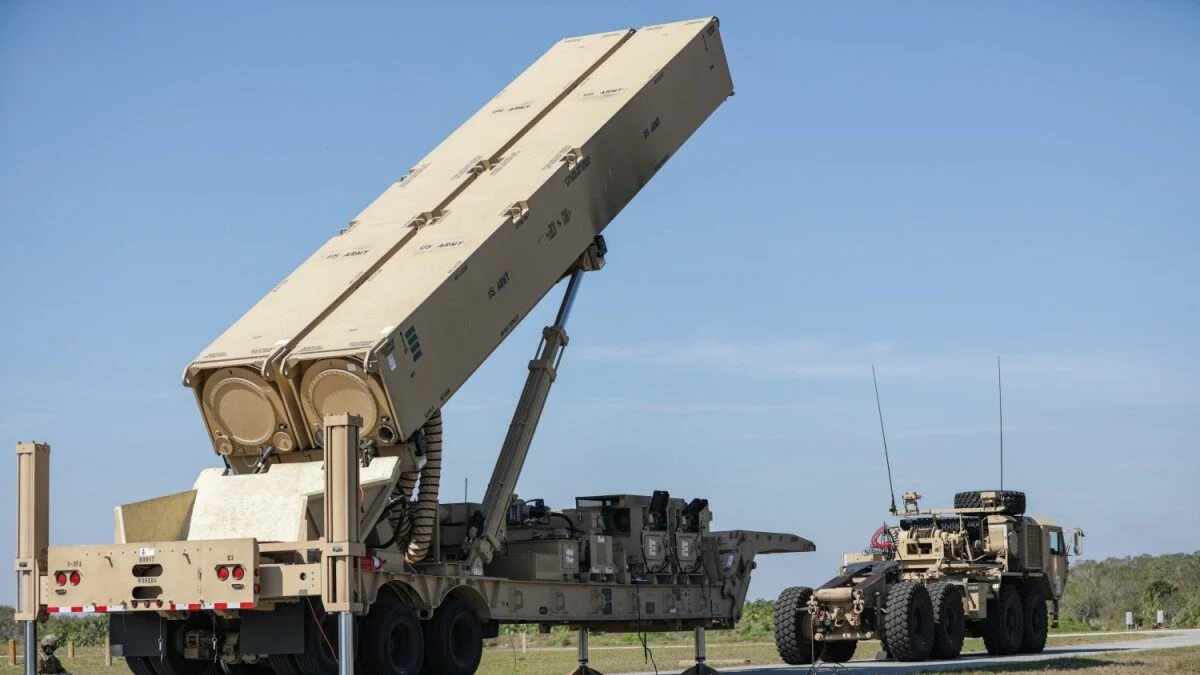
The Army’s Long Range Hypersonic Weapon (LRHW), known as "Dark Eagle," is emblematic of the challenges inherent in high-speed, high-precision manufacturing. The second battery, originally slated for deployment in 2027, has been delayed until 2028. The cause? A fundamental breakdown in quality control characterized by "missing, inconsistent, and unclear work standards" for missile production.
Furthermore, the M-SHORAD Increment 3 program, designed to provide the service with next-generation short-range interceptors, is grappling with a disconnect between contractor claims and independent government assessments. While contractors like Raytheon and Lockheed Martin suggest their technologies are maturing, the Army’s own evaluations indicate a lower state of readiness, creating a discrepancy that officials have yet to explain—but one that threatens to push the production start date well beyond the second quarter of fiscal 2028.
The Navy: A Fleet in Wait
The Navy’s shipbuilding efforts are suffering from a chronic, industry-wide labor crisis. The first 13 follow-on DDG-51 Flight III destroyers are now 55 months behind their original schedules, a significant regression from the 41-month delay reported just last year. The root cause is a volatile mix of a diminished workforce, uncompetitive wages, and a fragile supply chain.
The DDG-1000 program is similarly strained, with the integration of the Conventional Prompt Strike (CPS) hypersonic system falling nine months behind schedule. The Navy’s Orca Extra Large Unmanned Undersea Vehicle (XLUUV) program has also seen its remaining four prototypes pushed into 2027, a year later than previously projected.
The Space Force: The Cost of Ambition
The Space Force accounts for half of the Pentagon’s total MTA expenditures, yet it is not immune to the pervasive schedule slippage. The Next-Gen OPIR-GEO missile warning program is seeing substantial cost overruns, including a $340 million spike in sensor payload costs due to software and engineering hurdles. Launch schedules are also being squeezed; the first satellite, completed in January 2026, will not reach orbit until at least October 2026, hampered by a "crowded launch manifest."
Supporting Data: The Cost of Delay
The GAO report highlights a troubling correlation between the rush to innovate and the resulting budget bloat. When programs are launched with immature technologies, the cost to "fix" those systems mid-development often eclipses the initial investment.
- Average Delivery Time: 12+ years (up from previous years).
- Space Force MTA: 50% of total DoD MTA costs, with 13 out of 13 programs experiencing delays in 2025.
- Destroyer Delays: 55 months (DDG-51 Flight III).
- Next-Gen OPIR-GEO: $340 million cost increase for sensor payloads alone.
Official Responses and Tactical Shifts
Pentagon leadership has acknowledged the validity of the GAO’s findings. In response to the report, the Department of Defense has committed to a more rigorous vetting process for "technology readiness levels" before moving programs into the prototype phase.
"We are essentially paying a premium for speed and getting neither," noted one defense analyst familiar with the report. The consensus among military planners is that the Pentagon must pivot away from the "concurrency" model—where development, testing, and production happen simultaneously—in favor of a more linear, milestone-driven approach. However, in an era of near-peer competition with China and Russia, the political pressure to deliver "fast" often overrides the engineering wisdom of "slow."
Implications for National Security
The implications of these persistent delays are profound. As the U.S. military pivots its focus toward contested environments in the Indo-Pacific and Eastern Europe, the absence of promised capabilities creates a vacuum in deterrence. When hypersonic weapons, next-generation destroyers, and advanced satellite arrays are pushed years into the future, the window for maintaining a technological edge narrows.
Furthermore, the workforce challenges cited by the GAO—ranging from hiring freezes in the Space Force to the lack of skilled mechanics for the VC-25B—suggest that the bottleneck is not just about funding or engineering; it is a human capital crisis. Without a robust industrial base and a workforce capable of executing these complex designs, the Pentagon’s procurement goals will remain aspirational rather than achievable.
Ultimately, the GAO report serves as a warning: the Pentagon’s current strategy of "buying the future" on a accelerated, high-risk timeline is yielding diminishing returns. Until the Department of Defense reconciles its procurement ambitions with the realities of technological maturity and industrial capacity, the 12-year delivery average is likely to remain the new, unfortunate baseline for the American warfighter.